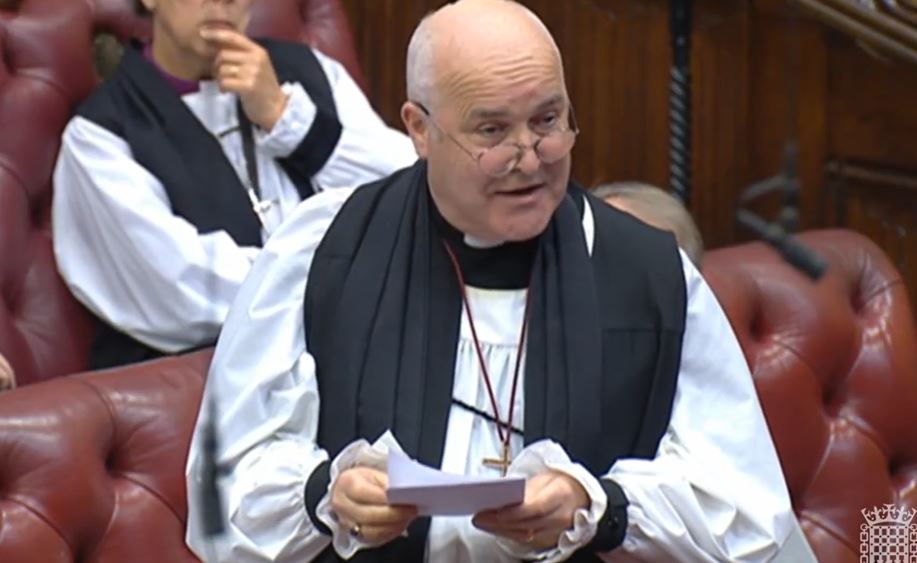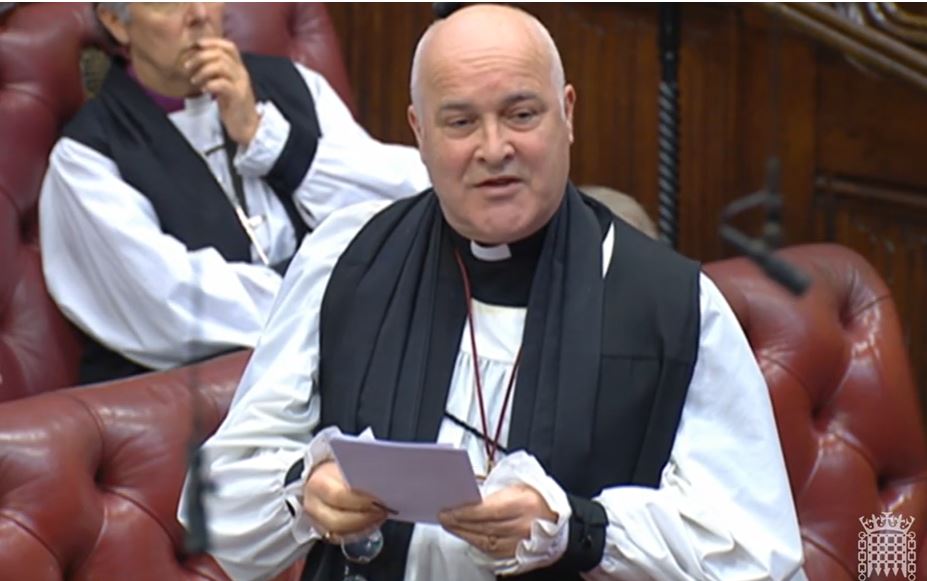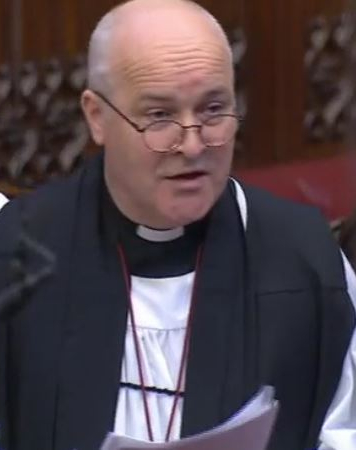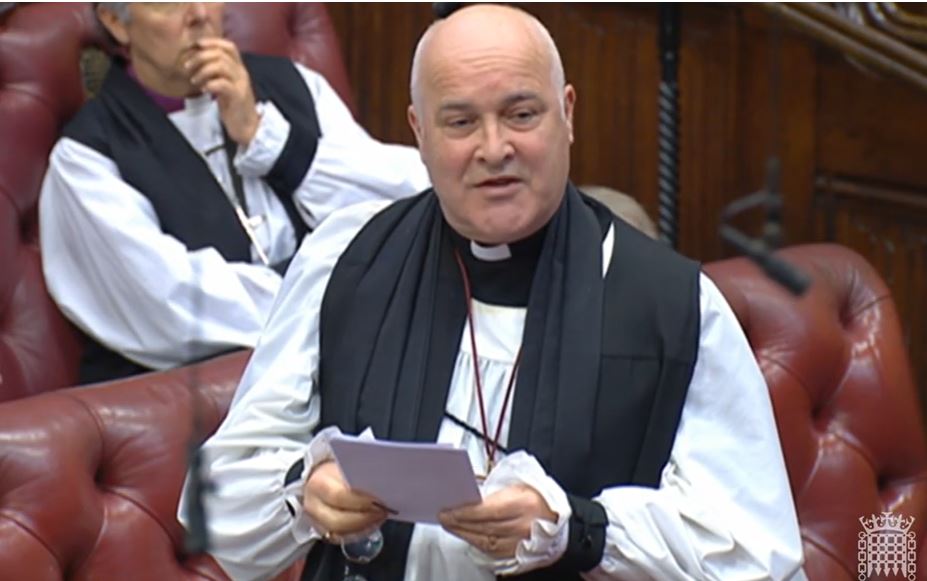
Terminally Ill Adults (End of Life) Bill: Archbishop of York speaks at second reading, highlighting risks of legislation

The Archbishop of York spoke at the second reading of the Terminally Ill Adults (End of Life) Bill on 19th September 2025, pointing out the need for better palliative care in the UK and the risks of implementing this legislation:

The Lord Archbishop of York: My Lords, it is an honour to follow the noble Baroness, Lady Hollins. I will of course speak for myself, but I also know that I represent views held by many faith leaders—not just Christian leaders—across our nation, with whom I have been in discussion and who have written to me.

Jesus teaches us that how we live our lives in relationship to others is vital for the health of our society and our own personal well-being. We belong with and for each other. The Bill is wrong because it ruptures relationships, serving one need but creating many others.

The noble Lord, Lord Baker, and several others in this important and moving debate gave the game away early on: no Government, he said, will be prepared to provide palliative and social care in the way it is needed, thus revealing that the Bill’s impact will be economic as well as social. Several speakers said there were too many safeguards; others, that provision for assisted dying ought to be expanded.

Continue reading “Terminally Ill Adults (End of Life) Bill: Archbishop of York speaks at second reading, highlighting risks of legislation”

Archbishop of York asks about work of the Red Cross in Azerbaijan

The Archbishop of York received the following written answer on 12th April 2025:

The Lord Archbishop of York asked His Majesty’s Government what representations they have made to the government of Azerbaijan advocating for the continued operation of the International Committee of the Red Cross in the country.

Continue reading “Archbishop of York asks about work of the Red Cross in Azerbaijan”

Archbishop of York leads debate on social cohesion

The Archbishop of York led a debate on Social Cohesion and Community during Periods of Change on 6th December 2024:

The Lord Archbishop of York: That this House takes note of the importance of social cohesion and strong, supportive community life during periods of change and global uncertainty.

My Lords, on Monday 29 July this year, just before 11.50 am, police officers were called to a property in Southport, where children attending a dance school had been appallingly and ferociously attacked by a man with a knife. Three of the children—Elsie Dot Stancombe, Alice Dasilva Aguiar and Bebe King —died. Many others sustained terrible injuries, and a whole community and many families were devastated and traumatised.

Understandably, horror and anguish convulsed not just Southport but the whole country. Rumours quickly circulated on the internet that the man to blame for this attack was an asylum seeker who had arrived in the UK illegally and was on the MI6 watch-list. This was not true. As a reporter put it a few days later, once lit, the torch paper of disinformation burned quickly. Although this rumour was quickly debunked, in the days that followed, as we know, riots broke out all over our country.

Continue reading “Archbishop of York leads debate on social cohesion”

King’s Speech Debate: Archbishop of York raises importance of faith and representation in public life

During the King’s Speech debate on 23rd July, 2024, the Archbishop of York gave a speech on the topic of the constitution, devolution and trust in democracy, raising the importance of faith in public life and the potential for other faith communities to be better represented in the House of Lords:

The Lord Archbishop of York: My Lords, it is an honour to respond to the gracious Speech. I, along with others on these Benches, welcome the noble and learned Lord, Lord Hermer, the Attorney-General, and thank him for a really moving maiden speech—not least his desire that we listen to and respect one another and work consensually.

Like others, I want to focus on one thing, which is rebuilding trust in democracy itself. The turnout on 4 July was shockingly low. Research also shows a 13% gap in turnout between constituencies with the highest and lowest proportions of home ownership. Furthermore, an estimated 400,000 people were turned away at the polling station because they did not have the right ID. These are alarming statistics, and I look forward to the changes outlined in the Government’s manifesto that could start to address them, including reducing the voting age to 16.

Continue reading “King’s Speech Debate: Archbishop of York raises importance of faith and representation in public life”

Archbishop of York asks about access to green spaces

The Archbishop of York asked a question on what steps the government are taking to improve access to outdoor and green spaces, particularly for disadvantaged communities, on 7th March 2024:

The Lord Archbishop of York: My Lords, during Covid, we all became aware of how important it is to have access to outside space. Yet we know that many people do not have access to outside space, let alone green space, and we know the health benefits of having that space, particularly for mental health. In my work, I often visit communities, particularly in Hull and Middlesbrough, where so many people simply do not have this kind of access, and I see the consequences. I am wondering what steps the Government are taking to try to improve the situation. It is estimated that 10 million people in this country may not have ready access to green space. What steps are being taken to address this?

Continue reading “Archbishop of York asks about access to green spaces”

Archbishop of York asks about introduction of an essentials guarantee for benefits claimants

On 28th February 2024, the Archbishop of York asked a question on whether the government had assessed a recent proposal by the Joseph Rowntree Foundation and the Trussell Trust for the introduction of an “essentials guarantee” to universal credit, during a discussion on the adequacy of the housing benefit subsidy for temporary accommodation:

The Lord Archbishop of York: My Lords, I thank the Minister for his commitment to trying to make headway on this issue. We are all aware of the terrible strains that local authorities are under because of temporary accommodation being necessary and, of course, we also know that the reason is that incomes are just not meeting housing needs. Have the Government assessed the recent proposal from the Joseph Rowntree Foundation and the Trussell Trust for what they call an essentials guarantee? This would guarantee that universal credit was enough to cover the essentials—rent—which would therefore reduce the number of households in temporary accommodation, creating a virtuous cycle that would reduce the budget strain on local councils.

Continue reading “Archbishop of York asks about introduction of an essentials guarantee for benefits claimants”

Archbishop of York asks about reasons for increased policing of face-masks at protests

The Archbishop of York asked a question on the issue of face masks being worn at protests on 13th February 2024, following a government statement on new measures being introduced to police these activities:

The Lord Archbishop of York: My Lords, like others, I entirely share the views about war memorials and their desecration, and fireworks and flares—there is a lot that is sensible in this. On face coverings, what concerns me is the law which we often do not often think about—the law of unintended consequences. To those dissidents, I would add religious minorities to the list of those who may be concerned about this. I wonder whether the effect of this will be that more people will wear face coverings, not fewer, because they are concerned about facial recognition. I find it hard to understand why this should be a matter for the law. If somebody commits a criminal offence while on a march, we already have the powers to deal with them. If somebody on a peaceful protest chooses to wear a face covering, I find it hard to understand why that, in and of itself, is a problem. The Minister has explained that this will be used only under certain circumstances, but if I have heard him correctly it is around the “risk” of criminal activity and violence. We do not arrest people because we think that they might be doing something. If the protest is peaceful, why should somebody not wear a face mask? I am struggling to understand why this has become such an issue, and I am concerned about minority groups who could be adversely affected by this.

Continue reading “Archbishop of York asks about reasons for increased policing of face-masks at protests”

Archbishop of York asks about non-consensual creation and sharing of intimate images

On 13th February 2024, during a discussion on the proliferation of AI being used to create intimate images without consent, the Archbishop of York raised a point of clarification on the difference between malicious and non-malicious sharing of these images:

The Lord Archbishop of York: My Lords, it would be very helpful if the Minister could explain. If I heard him correctly, he said that sharing has a six month ban but for malicious sharing it could be up to two years. Could he explain what non-malicious use would be?

Continue reading “Archbishop of York asks about non-consensual creation and sharing of intimate images”

Kings Speech Debate: Archbishop of York speaks on devolution in the North of England

The Archbishop of York spoke on devolution, with a particular focus on the North of England on 8th November 2023, in a debate following the Kings Speech:

The Lord Archbishop of York: My Lords, from these Benches I too express our sadness at the news of the death of Lord Judge and offer prayers and condolences to his family. I look forward with others to the speeches of the noble and learned Lord, Lord Burnett of Maldon, and the noble and learned Lords, Lord Houchen of High Leven and Lord Bailey of Paddington.

The focus of my speech is devolution, looking particularly at devolution in and within the regions of England, not least because devolution and devolved government allow us to seek consensus in our decision-making, and therefore to be better able to take a longer view, which in turn is the best way of tackling some of the huge issues facing us that were mentioned in the gracious Speech: the greening of the economy; poverty; and criminal justice. Yesterday, the order was laid by the Government for the establishment of the mayoral combined authority for York and North Yorkshire, the area where I live and serve. This is very good news for the north and is the first deal of its kind that includes a large rural area in combination with a small city, and therefore is an opportunity for a new model that does not require a big city for its success.

Continue reading “Kings Speech Debate: Archbishop of York speaks on devolution in the North of England”

Archbishop of York speech in Lords debate on Israel/Gaza

On 24th October 2023 the Archbishop of York spoke in a House of Lords debate on the situation in Israel/Gaza.

The Archbishop of York: My Lords, I too begin by expressing great thanks to the noble Lord, Lord Ahmad, for the grace, wisdom and fortitude with which he has led us in this debate. I welcome the consensus that I have heard across the Chamber from all sides. Like others, I have learned so much this evening. I also want to echo what the most reverend Primate the Archbishop of Canterbury said earlier: I too deeply mourn and cry out for all those who have been brutally murdered in this conflict and rightly note the duty of Israel to guard and defend her citizens, yet at the same time I cry out on behalf of the innocent in every community and appeal for a peace with justice.

Continue reading “Archbishop of York speech in Lords debate on Israel/Gaza”