
In the House of Lords on Monday 20th January 2020, Lord Foulkes asked a Private Notice Question, “to ask Her Majesty’s Government what consideration is being given to relocating the House of Lords out of London”, following media reports that the Government was considering relocation of the House to York. The Bishop of Chelmsford (and Archbishop of York designate) Rt Revd Stephen Cottrell, followed up –
Continue reading “Bishop of Chelmsford asks Government not to relocate House of Lords to York”
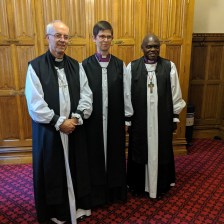 From Hansard: “On 2nd July, 2019, Rt Revd Elizabeth Jane, Lord Bishop of Derby, was introduced and took the oath, supported by the Archbishop of Canterbury and the Archbishop of York, and signed an undertaking to abide by the Code of Conduct of the House of Lords.”
 The Archbishop of York: My Lords, I want to support the main thrust of the speech from the noble Lord, Lord Stevenson, about debt. Julia Unwin, who was chief executive of the Joseph Rowntree Foundation, did a big research project on why people were going to Wonga. They went to Wonga because it asked no questions; people knew they could get their payday loan. Other lenders asked more questions and were far more intrusive and credit was not readily available. Noble Lords know that my archiepiscopal colleague, the most reverend Primate the Archbishop of Canterbury, said that he intended not only to reform Wonga but to do away with it, and we know what has happened to Wonga.
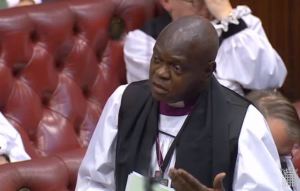 The Archbishop of York: My Lords, I have had the chance to study the Attorney-General’s comments and I agree with the noble and learned Lord, Lord Mackay, that the Attorney-General is right. There will always be a legal risk and he would be wrong not to tell us that it remains. But that is the nature of risk. I am told that in Chinese the word “risk” is made up of two pictures—opportunity and danger. We have to look at the opportunities and then the danger, but not always concentrate on the danger.
  On 22nd January 2019 the House of Lords considered a motion to approve the Floods and Water (Amendment etc.) (EU Exit) Regulations 2019. The Archbishop of York, Most Revd John Sentamu, asked a question of the Minister:

You must be logged in to post a comment.