
On 14th January 2019 the House of Lords voted to pass a ‘Motion to Regret’ the Government’s EU Withdrawal Agreement, tabled by the Leader of the Opposition Baroness Smith of Basildon. Five bishops voted, and whilst the Archbishop of Canterbury attended and spoke in the debate, he abstained in the vote.
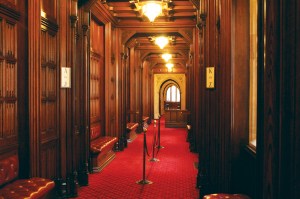
Baroness Smith of Basildon moved ‘That this House, while noting that it is for the House of Commons to determine the matter, considers that a no deal outcome to negotiations under Article 50(2) of the Treaty on European Union must be emphatically rejected, and regrets that withdrawal from the European Union on the terms set out in the Withdrawal Agreement and Political Declaration laid before Parliament would damage the future economic prosperity, internal security and global influence of the United Kingdom.
Continue reading “Votes: EU Withdrawal Agreement and Political Declaration”
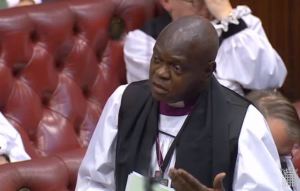 On 14th January 2019 Baroness Finn tabled an Oral Question ‘To ask Her Majesty’s Government what assessment they have made of the potential consequences of adopting an official definition of Islamophobia.’ The Archbishop of York, the Most Revd and Rt Hon Dr John Sentamu, asked a follow up question:
 On 27th June 2018 the Advocate-General for Scotland, Lord Keen of Elie, repeated a Government answer to an Urgent Question on privately financed prisons that had been asked in the House of Commons earlier that day. The Archbishop of York, the Most Revd and Rt Hon Dr John Sentamu, asked a follow up question to raise his concern about indebtedness to private companies:
  On 27th June 2018 Lord Pearson of Rannoch asked an Oral Question in the House of Lords: ‘To ask Her Majesty’s Government whether, in pursuit of their anti-terrorism strategy, they will require preaching in mosques and teaching in madrassas in England and Wales to be monitored for hate speech against non-Muslims.’ The Archbishop of York, the Most Revd and Rt Hon Dr John Sentamu, followed up with a point about collective responsibility for resisting terrorism:
 On 21st March 2018, Peers debated the European Union (Withdrawal) Bill on its ninth day at Committee Stage. The Archbishop of York, the Most Revd John Sentamu, spoke during debate on an amendment relating to the powers of devolved assemblies. It can be read in the wider context of the debate
 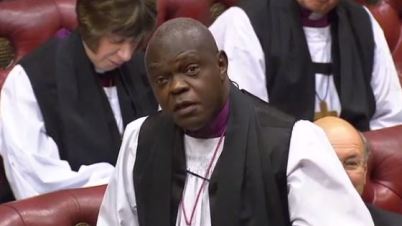 On 5th March peers debated the EU Withdrawal Bill on its fourth day at Committee Stage. The Archbishop of York, the Most Revd John Sentamu, spoke in the debate about reciprocal rights:
 On 31st January 2018, Baroness Lister asked Her Majesty’s Government ‘whether they have a policy goal to reduce income inequality; and if so, what is their strategy for achieving that goal.’ The Archbishop of York, Most Revd John Sentamu, asked a follow-up question:

You must be logged in to post a comment.