
On 25th March 2020 the House of Lords passed the Government’s emergency Coronavirus Bill. It then rose for the Easter recess. The Lord Bishop of Rochester, Rt Revd James Langstaff, praised the spirit of collaboration in which all sides had worked to get the Bill through.
Author: parliamentaryunit
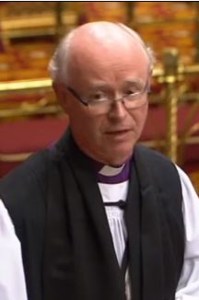 The Lord Bishop of Rochester: My Lords, from these Benches I echo everything that has just been said. Noble Lords and noble Baronesses who come in to Prayers will know that one of the prayers said by the duty bishop concerns the purpose for which this House is here—namely, the commonwealth, the common well-being, of our nation—and, in some senses, the way in which its business is to be conducted.
Bishop of St Albans asks about nutritional values
On 25th March 2020 the Bishop of St Albans, Rt Revd Alan Smith, received a written answer to a question on nutrition:
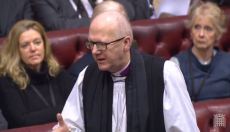 The Lord Bishop of St Albans: HL2452 To ask Her Majesty’s Government what safeguards they have put in place to ensure that protein fermentation products (1) provide good nutritional value, and (2) do not add to existing dietary and food standards concerns.
Continue reading “Bishop of St Albans asks about nutritional values”
Bishop of Rochester asks Government about discussions with charities on coronavirus response
On 24th March 2020 Lord Dannatt asked the Government “what plans they have to provide additional support to charities working with people who are self-isolating as a result of the COVID-19 pandemic”. The Bishop of Rochester, Rt Revd James Langstaff, asked a follow up question:
 The Lord Bishop of Rochester: My Lords, the noble Baroness has indicated that conversations are going on between the Government and the sector. I wonder whether she could give us more detail on that and on whether new networks are being put in place in the present circumstances, especially to link not just with the larger charities but with the wider sector, particularly those on the ground.
Coronavirus Bill: Bishop of Rochester responds on church closures and care for vulnerable
On 24th March 2020 the House of Lords debated the emergency legislation from the Government to deal with the Coronavirus pandemic. The Bishop of Rochester, Rt Revd James Langstaff, spoke in the debate, highlighting issues to do with church closures, funerals, and care of the vulnerable, including the homeless, and those in prison or immigration detention:
The Lord Bishop of Rochester: My Lords, in these days I have been reflecting on the words of the Hebrew psalmist who, at the time of his people’s exile, articulated the question:
“How can we sing the Lord’s song in a strange land?”
In many ways we are entering into a strange land, and indeed in some ways a land of exile: a land in which we are exiled from many of our normal patterns of living, in which people of faith are not able to attend their places of worship and in which many people find themselves having to live life in entirely new ways.
Church Commissioners’ written answer: cashless giving
On 24th March 2020 the Second Church Estates Commissioner, Andrew Selous MP, answered a written question from Steve Baker MP on cashless donations in parishes:
Mr Steve Baker (Wycombe): 32147 To ask the right hon. Member for South West Bedfordshire, representing the Church Commissioners, what steps the Church of England is taking to change the way parish donations are collected in response to reductions in the use of cash.
Continue reading “Church Commissioners’ written answer: cashless giving”
Church Commissioners’ written answer: graveyard maintenance
On 24th March 2020 the Second Church Estate Commissioner, Andrew Selous MP, answered a written question from Aaron Bell MP, on graveyard maintenance:
Aaron Bell (Newcastle-under-Lyme): 32199 To ask the right hon. Member for South West Bedfordshire, representing the Church Commissioners, what steps the Church is taking to ensure the maintenance of its burial grounds.
Continue reading “Church Commissioners’ written answer: graveyard maintenance”
Coronavirus Bill: Andrew Selous supports new clause on postponing General Synod elections
On 23rd March 2020 the House of Commons considered the emergency legislation from Government to respond to the coronavirus pandemic. Part of the Bill provided powers to delay scheduled elections for devolved and regional assemblies and other bodies. A new clause to extend that provision to the General Synod of the Church of England had been tabled by the Second Church Estates Commissioner, Andrew Selous MP, and was accepted by Government. Andrew spoke about it during the Committee stage of the Bill in the Commons:
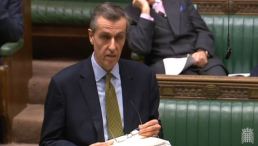 Andrew Selous (South West Bedfordshire) (Con): I will not detain the House long. I rise to speak to new clause 1, which I understand has been agreed in advance with the Government, and I will move it at the end of this evening’s proceedings.
New clause 1 is very straightforward. It enables the elections to the General Synod of the Church of England to be postponed. Quite recently, we postponed all the elections that we in the House are involved in—the mayoral, local government and police and crime commissioner elections—but the General Synod is the National Assembly of the Church of England, and it is a Church that is episcopally led and synodically governed. The General Synod is a devolved body of this Parliament. It is the first devolved body of the Westminster Parliament and has been since 1919. Synods last five years, just as Westminster Parliaments do. The last one was elected in summer 2015 and therefore would expire this summer.
Bishop of Carlisle asks Government about persecution of Falun Gong in China
On 23rd March 2020 the Bishop of Carlisle, Rt Revd James Newcome, received a written answer to a question on the persecution of Falun Gong practitioners in China:
The Lord Bishop of Carlisle: HL2425 To ask Her Majesty’s Government why the government of China’s persecution of Falun Gong practitioners has not been referenced in relation to their proposals for a new Magnitsky-style sanctions regime.
Continue reading “Bishop of Carlisle asks Government about persecution of Falun Gong in China”
Bishop of Southwark asks Government about visas for ministers of religion
On 23rd March 2020 the Bishop of Southwark, Rt Revd Christopher Chessun, received a written answer to a question on visas for ministers of religion:
 The Lord Bishop of Southwark: HL2370 To ask Her Majesty’s Government, further to the UK’s points-based immigration system: policy statement, published on 19 February, what changes, if any, they plan to make to the existing Tier 2 Minister of Religion Category.
Continue reading “Bishop of Southwark asks Government about visas for ministers of religion”
Week in Westminster, 16th-20th March 2020
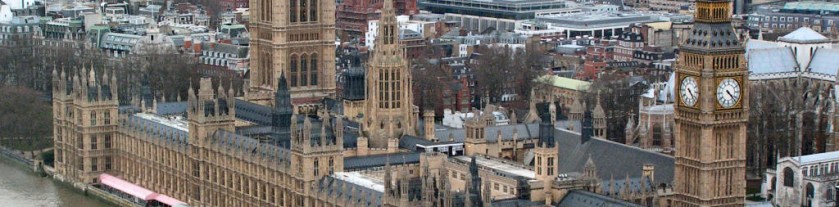 This week in Parliament the Archbishop of Canterbury spoke in response to Government statements on the coronavirus pandemic, the Budget and the Windrush Lessons Learned Review. He also asked about plans to build communities and affordable housing.
The Bishop of Rochester spoke in a debate on the Chancellor’s Budget statement, and the Bishop of Carlisle supported two amendments to the Government’s Divorce, Dissolution and Separation Bill.
The Bishop of St Albans asked a question on the humanitarian situation in Yemen and received written answers to questions on a review of the Gambling Act, and rural connectivity. The Bishop of Winchester received a written answer to a question about further education college mergers, and the Bishop of Salisbury received a written answer to a question on climate change and migration.
In the House of Commons the Second Church Estates Commissioner, Andrew Selous MP, answered questions on church closures, coronavirus, persecution of Christians, and marriage support.
He also answered seven written questions from Jim Shannon MP, on carbon reduction, cashless donations, South Sudan, Uganda, lead theft and graveyard records, and a written question from Sir Desmond Swayne MP on marriages. Continue reading “Week in Westminster, 16th-20th March 2020”


You must be logged in to post a comment.