
On 12th February 2020 the House of Lords debated a motion from Lord Clement-Jones, “To ask Her Majesty’s Government what steps they have taken to assess the full implications of decision-making and prediction by algorithm in the public sector.” The Bishop of Oxford, Rt Revd Steven Croft, asked a follow-up question:
 The Lord Bishop of Oxford: My Lords, I declare an interest as a board member of the CDEI and a member of the Ada Lovelace Institute’s new Rethinking Data project. I am also a graduate of the AI Select Committee. I am grateful to the noble Lord, Lord Clement-Jones, for this important debate.
Almost all those involved in this sector are aware that there is an urgent need for creative regulation that realises the benefits of artificial intelligence while minimising the risks of harm. I was recently struck by a new book by Brad Smith, the president of Microsoft, entitled Tools and Weapons—that says it all in one phrase. His final sentence is a plea for exactly this kind of creative regulation. He writes:
“Technology innovation is not going to slow down. The work to manage it needs to speed up.”
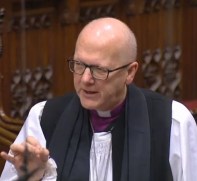 The Lord Bishop of St Albans: My Lords, in this important area Britain is proud to be a leader in many ways—in technology, computing and so on—and many of these projects, which are transforming the lives of some people with certain kinds of disabilities, have been run across Europe, so there are worries that some of these projects may not continue. Can the Minister assure the House that priority will be given to helping this world-leading development continue? It is making an impact on people with disabilities not only in our own country but right across the world as the technology is rolled out.
 The Lord Bishop of Durham: My Lords, perhaps we might return to the north-east. The noble Lord, Lord Shipley, and I, along with many others, have argued previously that this infrastructure should have begun in the north and the south at the same time. In the review, can we please ensure that we are working not just south to north but north to south? This would help speed up the process. Can the Minister also answer a question on the production of the trains and
  The Lord Bishop of Leeds: My Lords, there are some wonderful examples of how old mills being rejuvenated and given new life, such as Salts Mill in Saltaire and Manningham Mills, although there is a vast amount of empty space there. If they were icons of the old northern powerhouse, they are now becoming icons of dereliction. Does the Minister agree that if nothing is going to happen, then it would be better to knock them down? I do not favour that, but there needs to be a strategy that allows these wonderful buildings to be brought back into life, to be given a sort of resurrection.
 The Lord Bishop of Winchester:
  The Lord Bishop of Southwark: My Lords, following on from the previous question*, will the Minister consider whether or not it is appropriate for this country to seek to deal with the offences and aftermath of those brought up here as children, rather than expel them to countries of which they know little, save in the most exceptional circumstances?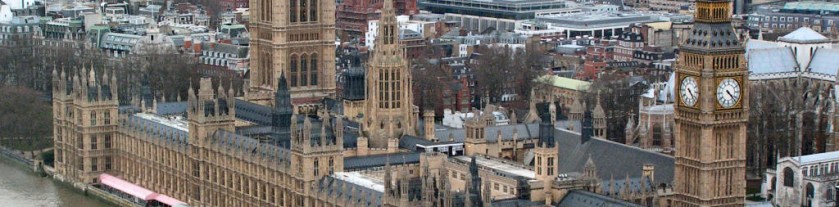
 Andrew Selous (South West Bedfordshire) (Con): It is a pleasure, albeit a sad necessity for many of us, to speak on a debate on this issue yet again in this House. The analysis I have seen from Open Doors and others shows that in the past three years alone more than 10,000 Christians have been killed for their faith—that is a staggering number. We are right to hold this debate today, because, as others have mentioned, the evidence shows that Christians are the target of about 80% of all the acts of religious discrimination or persecution around the world.
 The Lord Bishop of Oxford: My Lords, I warmly welcome this report and this vital debate. Never before in the scale of human history has there been such a wide and deep threat to our ecosystem or to human flourishing that was so clear and predictable on the horizon. Technology alone is not enough.

You must be logged in to post a comment.