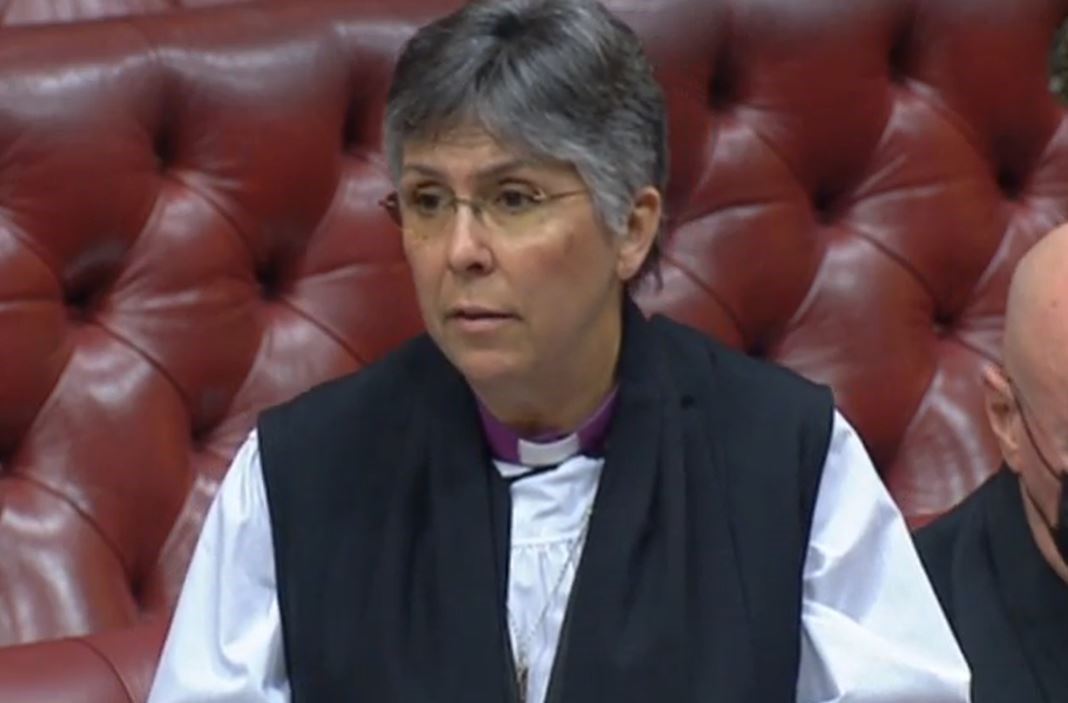
Bishop of Chelmsford raises impact of cost of living and financial insecurity on family planning

The Bishop of Chelmsford spoke in a debate on declining birth rates on 4th June 2026, pointing out the impact of shifting costs of living on the ability to start families:

The Lord Bishop of Chelmsford: My Lords, as we have heard, declining birth rates carry profound economic and social consequences. The story of human origins in the Book of Genesis begins with a God-given mandate to populate the Earth, and supports the basic goodness of family life. The Christian tradition has consistently affirmed the value of children. The baptism liturgy declares that children are a blessing and a gift from God. That conviction remains important, not only for people of faith but for society as a whole. Children represent continuity, connecting us with the generations that have gone before us and giving hope for the future. They are a gift to the whole community, not only to their parents and others who may raise them.

It is important, however, to understand the complex factors behind declining birth rates, which, as mentioned by the noble Lord, Lord Davies of Brixton, include women’s choice but also fearfulness about the future, difficulties in combining career and family and financial pressures. The expense of housing, student loan repayments and the rising cost of living all contribute to delaying family formation. Couples now marry later, start a family later and often have fewer children than hoped for, not least because, by the time financial circumstances may seem more favourable, biology may well be less co-operative.

Continue reading “Bishop of Chelmsford raises impact of cost of living and financial insecurity on family planning”
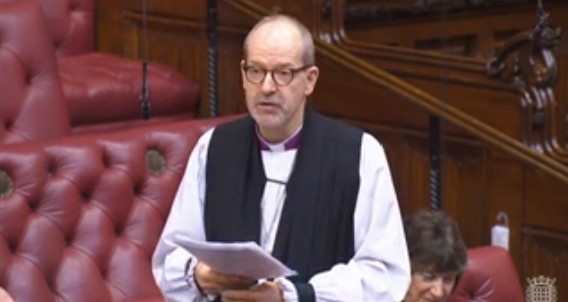
Bishop of Chelmsford speaks in debate on fertility treatments

The Bishop of Chelmsford spoke in a debate on the regulation of fertility treatments, emphasising the importance of the issue and the need for consideration in forming policy:

The Lord Bishop of Chelmsford: My Lords, I recognise the depth of expertise in this Chamber and that my background is not a scientific one. However, it is incumbent on us all to engage in these crucial issues, which hold wide significance and implication. I approach this debate in the knowledge of what it is to long deeply for children. I am profoundly grateful for the gift of my own three children following the experience of difficult and intrusive treatment over many years, including miscarriages and several cycles of IVF. Indeed, if I may be personal, I was for a number of years a patient under the care of the noble Lord, Lord Winston, for whom I have both affection and great admiration and to whose speech I listened very carefully indeed.

I want to recognise the highly complex and agonising experiences of infertility that many go through, and what it is like to have an unfulfilled longing for a child. This debate takes place in a profoundly challenging scientific, moral, legal and emotional context. I recognise that the lives of my children are the result of extraordinary scientific and medical advances, but, ultimately, like any child, they are a remarkable gift from God. Throughout the treatment, I was always aware that they were never a right of mine to be claimed. Good legislation, thoughtful limits and sober weighing of the implications of those limits are vital if we are to continue responsibly in this work with clarity for all. Indeed, I know personally the importance of those limits for tempering what can be a very human dimension, which, if unchecked, can lead to desperation and a willingness to do anything to have a child.

Continue reading “Bishop of Chelmsford speaks in debate on fertility treatments”

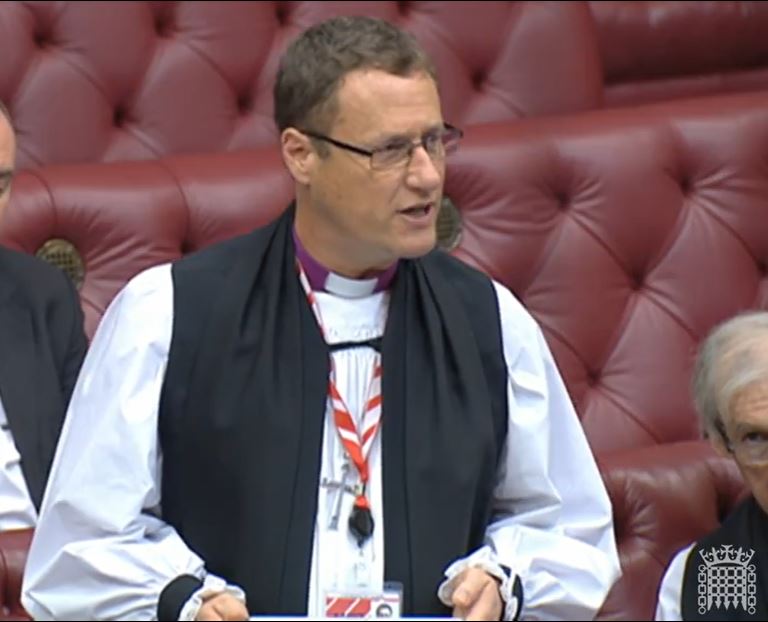
Bishop of Hereford asks about impact of AI on jobs

The Bishop of Hereford asked a question on impact of AI in the job market on 4th June 2026:

The Lord Bishop of Hereford: My Lords, I want to ask the Minister about the issue of AI in this context. I speak with some personal experience, in that my son’s partner has recently been made redundant as the result of an AI system that she herself developed. It is inevitable that AI systems will grow, unchecked and unregulated, and will continue to reduce entry-level jobs across a range of sectors. What projections have the Government made of this, and what action do they plan to take to ensure that a healthy entry-level job market will remain for young people?

Continue reading “Bishop of Hereford asks about impact of AI on jobs”

Bishop of Leicester urges government to tackle knife crime and misinformation following unrest over recent murder

On 3rd June 2026, the Bishop of Leicester asked a question on government commitments to tackling knife crime and expressed solidarity with the Sikh community in response to a government statement on the recent unrest following the murder of Henry Nowak in Southampton:

The Lord Bishop of Leicester: My Lords, my thoughts and prayers are also with the family and friends of Henry Nowak in their grief and suffering. Like many others, I echo the courageous words of Henry’s father in his powerful call that his son’s death should not,

“be used to create further division, hatred or tension”.

Continue reading “Bishop of Leicester urges government to tackle knife crime and misinformation following unrest over recent murder”

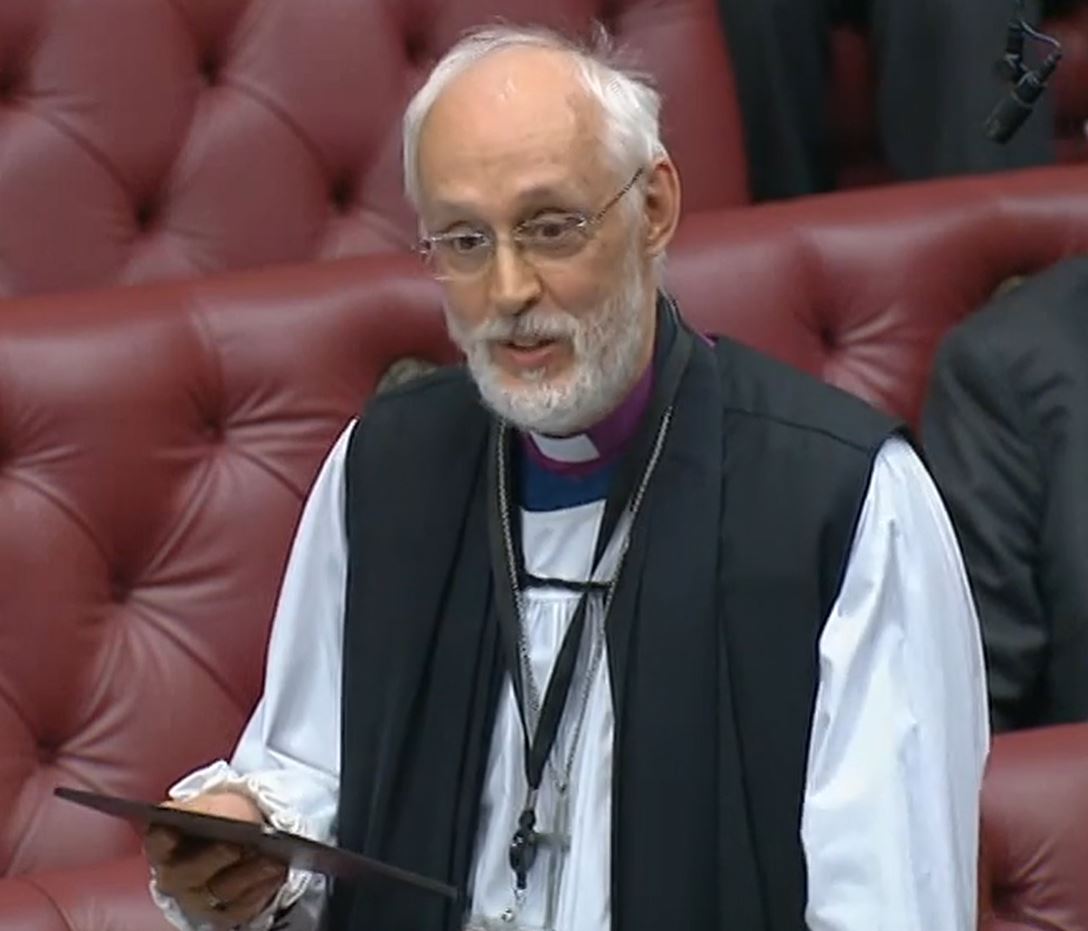
Social Housing Bill: Bishop of Manchester speaks at second reading

The Bishop of Manchester spoke at the second reading of the Social Housing Bill on 1st June 206, noting the need for secure and high-quality social housing to combat child poverty and help build communities:

The Lord Bishop of Manchester: My Lords, it is always daunting to follow the noble Lord, Lord Best, on a matter to do with housing. I begin by declaring my interest: I am the chair of the Church Housing Association, a recently formed, not-for-profit social housing provider that we are seeking to build, literally and metaphorically, on the five core values that were set out in the most reverend Primate the Archbishop of Canterbury’s commission on housing, Coming Home, which was debated in your Lordships’ House a few years ago. Those values—that social housing should be safe, secure, sustainable, sociable and satisfying—provide a set of tests against which any proposed legislation could be measured, hence I warmly welcome the Bill. It will make social housing better.

Housing is a fundamental human right. It is a foundation for other core rights, including things such as health, dignity, sanitation and sometimes the right to life itself. The Bill rightly addresses the concern that there is not enough stock in this country to house those in need.

Continue reading “Social Housing Bill: Bishop of Manchester speaks at second reading”

Bishop of Manchester asks about overseas aid

The Bishop of Manchester asked a question on the possibility of increasing overseas aid to mitigate harm to minority and disenfranchised communities in the Middle East, following a government statement on the economic response to the war in Iran on 1st June 2026:

The Lord Bishop of Manchester: My Lords, as this debate has continued, I have become increasingly concerned that the phrase “Middle East” in the title is referring to somewhere between Nottinghamshire in the north and Northamptonshire in the south. The Middle East to me is a series of countries where war is currently raging and people are suffering incredible consequences—I am thinking, for example, of Afghan refugees in Iran, who are one of the most vulnerable groups there, and many other Iranian citizens, and thinking of some of the Palestinians in the West Bank. Is this not the time, as well as looking after our own people, for the Government and Treasury to think about increasing our overseas aid to mitigate some of the severe harm that is being done to some minority communities or oppressed communities in different parts of the Middle East?

Continue reading “Bishop of Manchester asks about overseas aid”

Bishop of Manchester highlights concerns for mental health of trans people following supreme court judgement

The Bishop of Manchester asked a question on support for the mental health of trans people during a discussion on the implementation of Supreme Court judgment in For Women Scotland Ltd v The Scottish Ministers on 1st June 2026:

The Lord Bishop of Manchester: My Lords, alongside other faith leaders, I am increasingly coming across trans people—men and women, often young and quite fragile—who are increasingly frightened. They are frightened about participating in public life and about being challenged. Some are even frightened about going to the doctor. What assessment have His Majesty’s Government made of the mental health of trans people, and how will they support them with these changes?

Continue reading “Bishop of Manchester highlights concerns for mental health of trans people following supreme court judgement”

Bishop of Chelmsford asks about affordable housing in rural areas

The Bishop of Chelmsford received the following written answer on 1st June 2026:

The Lord Bishop of Chelmsford asked His Majesty’s Government what steps they are taking to ensure the provision of sufficient affordable housing in rural areas to enable young people to remain in the villages where they live and work, ensuring the long-term viability of those communities.

Continue reading “Bishop of Chelmsford asks about affordable housing in rural areas”

Bishop of Chelmsford asks about process for supporting asylum seekers

The Bishop of Chelmsford received the following written answers on 1st June 2026:

The Lord Bishop of Chelmsford asked His Majesty’s Government what plans they have to resettle refugees through community sponsorship and humanitarian programmes.

Continue reading “Bishop of Chelmsford asks about process for supporting asylum seekers”

King’s Speech Debate: Bishop of Manchester speaks on importance of civil liberties

The Bishop of Manchester spoke during the King’s Speech Debate on foreign affairs, defence, and diplomacy on 21st May 2026, emphasising the need to balance security with civil liberties:

The Lord Bishop of Manchester: My Lords, before turning to the main substance of today’s debate, I briefly say that I warmly welcome the inclusion in the gracious Speech of a promise to tackle so-called conversion practices. These have severely damaged and traumatised many LGBT people over decades, not least when performed in the name of religion. I welcome that promise just as warmly today as I welcomed it from this same Bench on the three or four occasions when it has previously been made. I hope that, this time round, we will actually get to the point of legislating. Indeed, the General Synod of the Church of England overwhelmingly voted to press the Government to do just that several years ago.

Turning to today’s main topics, I want to speak briefly about Britain’s soft power, covert foreign influence and defending liberal democracy. As international threats grow more complex and less overt, Britain’s foreign policy and influence abroad depends less on traditional hard power alone and increasingly on proactive British diplomacy. Noble Lords have already alluded to this but, alongside our formal diplomatic missions, key institutions such the British Council and the World Service extend our cultural influence. Many of our universities, along with our public schools, play a key role in shaping future global leaders. They must be sufficiently supported and resourced to do the job we need them to do.

Continue reading “King’s Speech Debate: Bishop of Manchester speaks on importance of civil liberties”