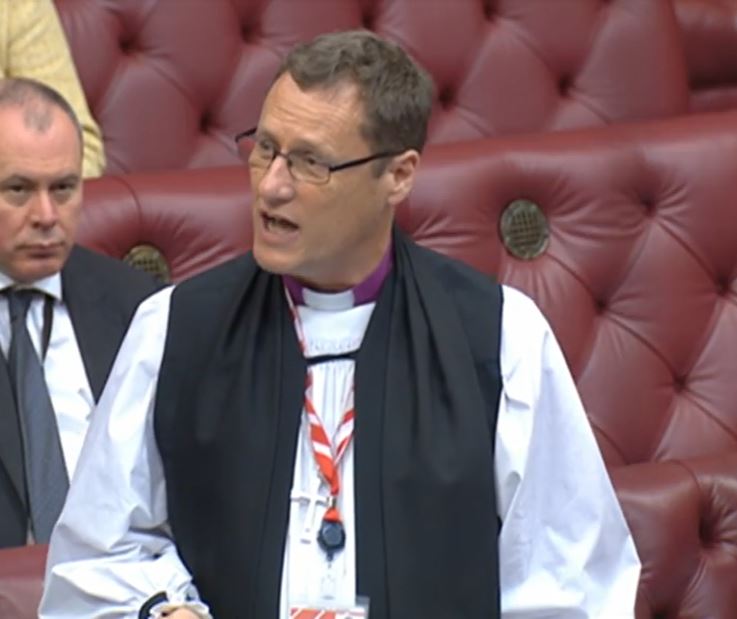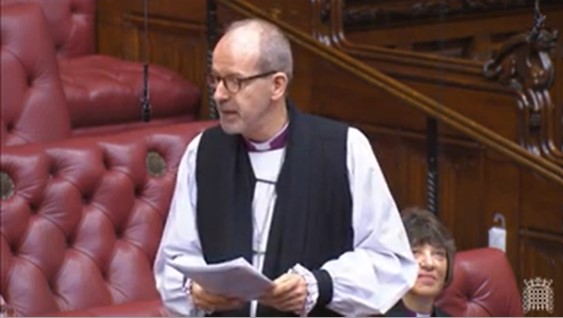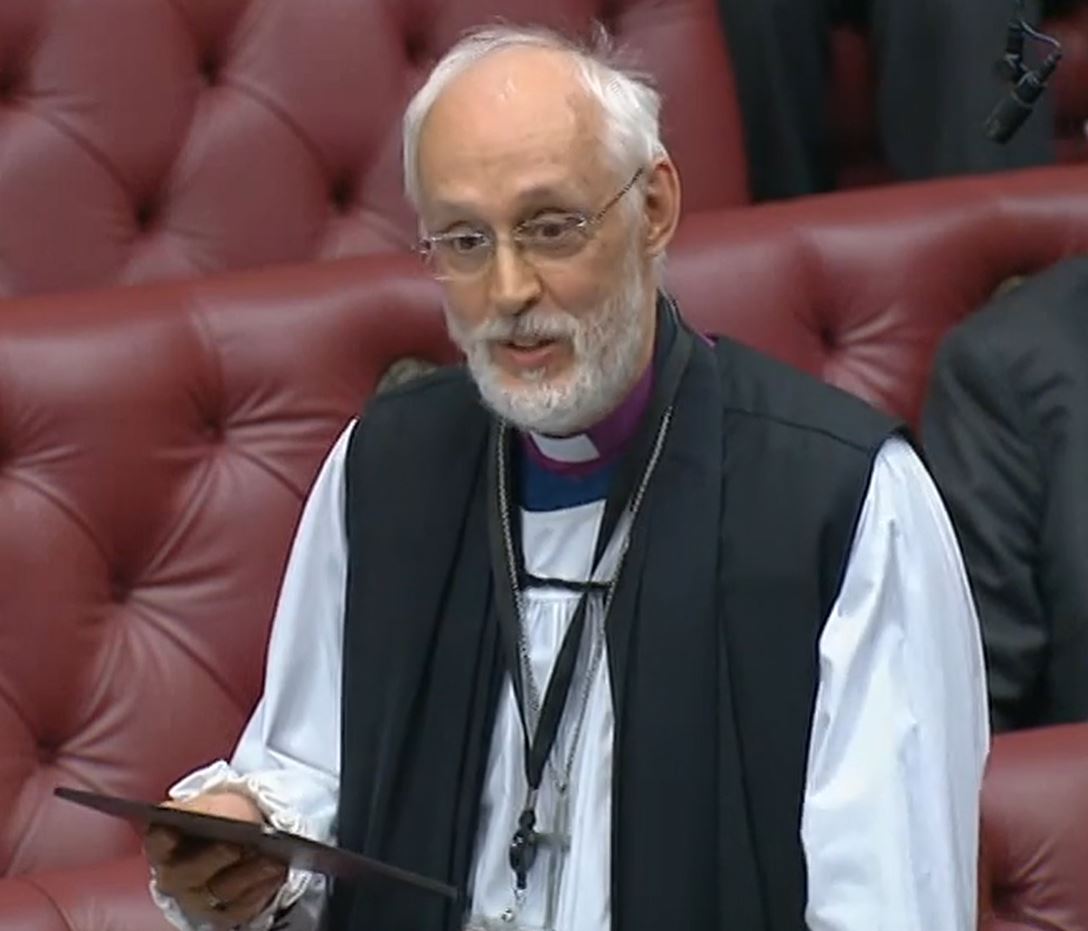
Financial Services and Markets Bill: Bishop of Manchester speaks at second reading

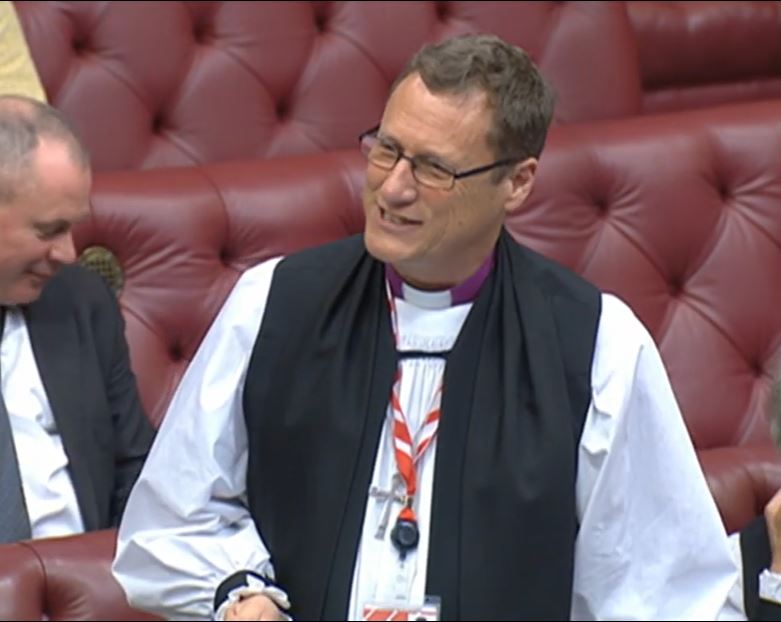
The Bishop of Manchester spoke at the second reading of the Financial Services and Markets Bill on 8th June 2026, raising the issue of access to credit and impact of debt on vulnerable people and communities:

The Lord Bishop of Manchester: My Lords, I declare my interests as set out in the register. As with all my colleagues on these Benches—not that there seem to be many of them here today—my stipend, pension contributions, housing and working costs are provided by the Church Commissioners for England. As an issuer of bonds, something we started when I was chairing, it is a regulated body.

I welcome the intention behind the Bill to modernise our financial services and to support economic growth. However, our aim must be to enable economic opportunity for all communities. Amid what is still a cost of living crisis, we must measure economic success not only by the growth of the economy itself but by how it promotes the dignity of those most in need and protects individuals at times when the system fails. It is a large Bill, so I will focus on just a few main aspects: access to credit, credit unions, consumer protection, and access to wider banking services. These are probably the issues that are most appropriate for one who is a bishop, not a banker.

Continue reading “Financial Services and Markets Bill: Bishop of Manchester speaks at second reading”

Bishop of Manchester responds to government statement on children’s social care

The Bishop of Manchester asked a question on support for care leavers following a government statement on reform of children’s social care on 8th June 2026:

The Lord Bishop of Manchester: My Lords, from these Benches, I also warmly welcome what is in the strategy. Enabling children in care to sustain or make long-lasting relationships is absolutely crucial. When it comes to the lifelong relationship ceremonies, we on these Benches are certainly very interested in looking at what can be done to effect that. My question has come out of the work I did on my Private Member’s Bill for care leavers in the last Session. So many care leavers need to move from one local authority area to another, perhaps to maintain those relationships or to rebuild a relationship with a sibling, yet what traditionally happens is that the authority they have left washes its hands of them and the authority they land in considers it has no responsibility because they were never in care in that authority. What will the Government do to ensure that, where young people move from one authority area to another after they have just left care, they do not fall through the net any longer?

Continue reading “Bishop of Manchester responds to government statement on children’s social care”

Bishop of Manchester asks about housing and mental health

The Bishop of Manchester asked a question on the housing needs of young people with mental health concerns and other issues in need of support, during a discussion on affordable housing for young people on 8th June 2026:

The Lord Bishop of Manchester: My Lords, young people under 35 who require support for their housing get only the shared accommodation rate of benefits, yet they are often disproportionately the people who have mental health concerns or other issues. Does the Minister agree that this needs looking into to ensure that the most vulnerable young people are not the ones who are pushed to the bottom of the housing situation?

Continue reading “Bishop of Manchester asks about housing and mental health”

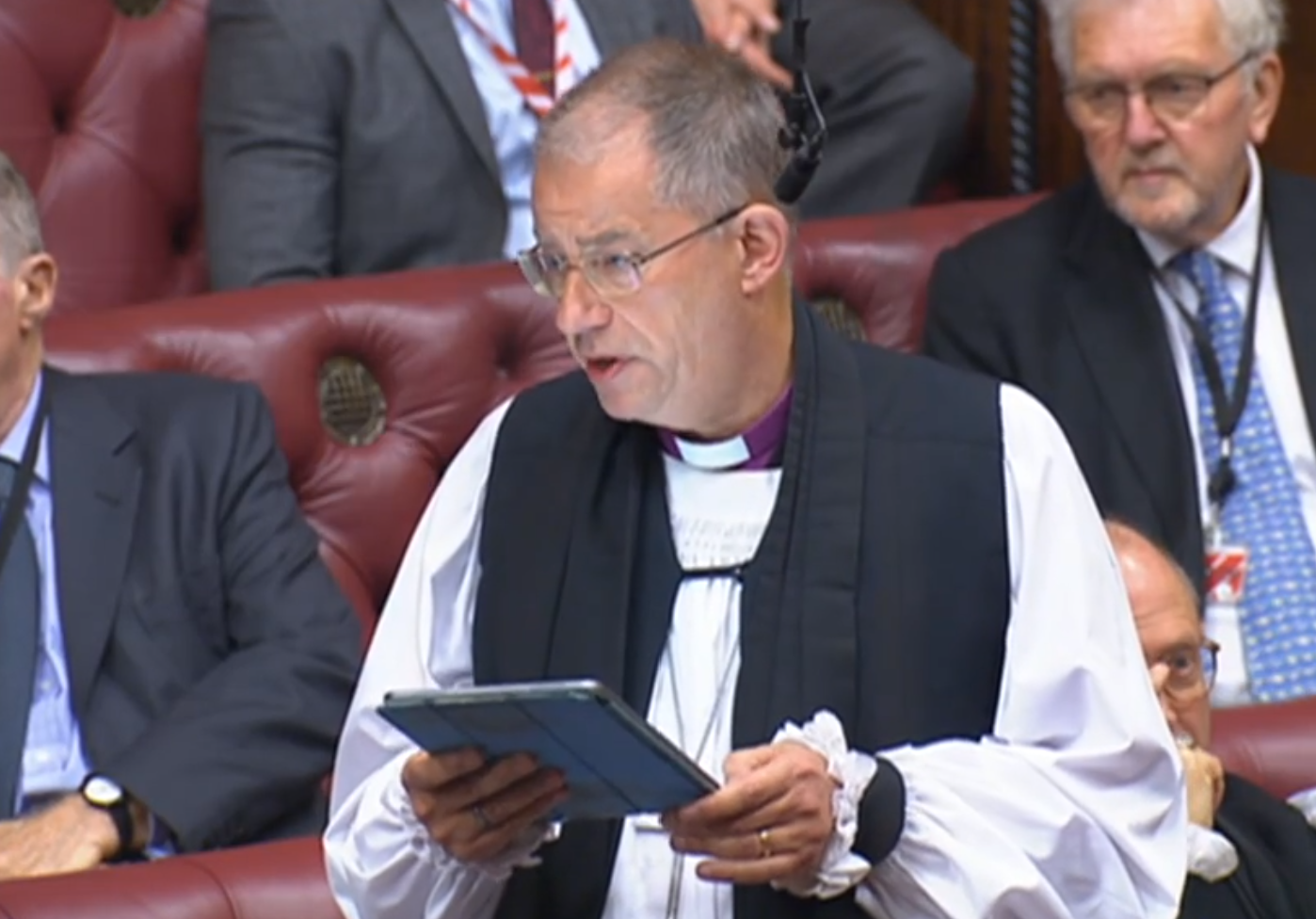
Bishop of Portsmouth raises impact on education and young people during debate on AI

The Bishop of Portsmouth spoke in the Archbishop of Canterbury’s debate on the effects of AI on society on 5th June 2026, nothing the impact of AI on education, children, and young people:

The Lord Bishop of Portsmouth: My Lords, I welcome this debate and congratulate my most reverend friend on initiating such a profoundly helpful and timely discussion. I wish to add a few reflections in my capacity as the Church of England’s lead bishop for education and the chair of the National Society for Education, which serves more than 1 million of our country’s young people and supports Church schools, MATs, and further and higher education institutions countrywide.

In responding to AI within the space of education— it is nothing short of a fourth education revolution, as Sir Anthony Seldon has argued so powerfully— we will need to act with purposeful and collective determination. We will need to build strong alliances and, at every point, own our own agency in shaping the impacts of AI on a generation of children and young people.

Continue reading “Bishop of Portsmouth raises impact on education and young people during debate on AI”

Bishop of Leicester highlights importance of trust in communities during debate on AI

The Bishop of Leicester took part in the Archbishop of Canterbury’s debate on AI and society on 5th June 2026, highlighting the importance of trust in communities and the pitfalls of algorithmic content

The Lord Bishop of Leicester: My Lords, in the past, if you wanted to persuade people to think badly of others, you were limited by two things: the number of people you personally knew and the number of conversations you could physically have. Social media removed the second of those limits, letting one person reach millions at once. Artificial intelligence is now loosening the first. It allows one person to produce vast quantities of content of increasingly high quality. The frictions that once limited the spread of contempt have disappeared. We should not, then, be surprised that the fabric of our society is being torn.

For society to function, we need a broadly common understanding of the world and what is happening in it. Democracy is about disagreements over what to do about the opportunities and challenges we face, but for that disagreement to be constructive, we must all be able to access the bare facts: what is happening, who is involved and who is affected? Generative AI throws all this into question. Anyone, anywhere can now produce an image of an event that has never occurred or a video of a public figure saying something they never said. I really do mean anyone, anywhere. The BBC recently reported that accounts producing AI-generated anti-immigration content that appeared to be British were in fact run from east Asia, the Gulf and the United States.

Continue reading “Bishop of Leicester highlights importance of trust in communities during debate on AI”

Bishop of Oxford takes part in debate on role of AI in society

The Bishop of Oxford spoke in the Archbishop of Canterbury’s debate on AI and society, raising the impact of AI adoption in the workplace and the need for meaningful employment pathways for UK workers:

The Lord Bishop of Oxford: My Lords, it is a real pleasure to take part in the debate and particularly to follow the noble Lord, Lord Tarassenko, with his wisdom and great knowledge of the field.

Humanity stands at a real crossroads in the present moment. Artificial intelligence brings many potential benefits, as the most reverend Primate the Archbishop of Canterbury said, but also great jeopardy for the world. The Prophet Jeremiah invites the people of his generation facing crisis to:

“Stand at the crossroads, and look, and ask for the ancient paths, where the good way lies; and walk in it, and find rest for your souls”.

Continue reading “Bishop of Oxford takes part in debate on role of AI in society”

Archbishop of Canterbury leads debate on impact of AI on human relationships

The Archbishop of Canterbury led a debate on the role and impact of artificial intelligence on society and human relationships on 5th June 2026:

The Lord Archbishop of Canterbury: My Lords, I wish to thank the usual channels for allowing me to hold this debate today and the parliamentary staff who have enabled it to happen.

In the Bible, the writer of the Book of Hebrews says of human beings:

“You made them a little lower than the angels; you crowned them with glory and honour and put everything under their feet”.

God created human beings in His own image, with glory and honour—each and every one of us, regardless of who we are or what we do. We carry an inherent dignity and immeasurable value. This is not in spite of our weakness, vulnerabilities or limitations but in many ways because of and through them. God made us to be relational beings, in need of Him and in need of others, not sufficient on our own.

Continue reading “Archbishop of Canterbury leads debate on impact of AI on human relationships”

Bishop of Winchester asks about aid delivery and civilian safety in the Democratic Republic of Congo

The Bishop of Winchester received the following written answer on 5th June 2026:

The Lord Bishop of Winchester asked His Majesty’s Government what steps they are taking to facilitate (1) humanitarian aid delivery, and (2) the safe passage of civilians, in South Kivu’s Hauts Plateaux in the Democratic Republic of the Congo.

Continue reading “Bishop of Winchester asks about aid delivery and civilian safety in the Democratic Republic of Congo”

Bishop of Leicester calls for increase in overseas aid to combat conditions leading to atrocity crimes

The Bishop of Leicester spoke in a debate on combatting genocide and atrocity crimes on 4th June 2026, calling for greater investment in overseas development aid to combat conflict and related conditions:

The Lord Bishop of Leicester: Like other noble Lords, I am in awe of the noble Lord, Lord Alton, for his patience and persistence in keeping the question of atrocity prevention before this Chamber. I thank him and indeed all those who have spoken. It is not my intention to repeat any of what has already been said: rather, I shall go deeper into the area of the relationship between conflict prevention and overseas aid.

The wholesale dismantling of the United States Agency for International Development has given us for the first time something close to a controlled experiment in what happens when a major donor abruptly walks away from fragile states. A study published last month in Science examined 870 subnational regions across most of the African continent in the 10 months before and after USAID came to an abrupt stop. Using a difference-in-differences design, it compared places that had been heavily reliant on USAID with otherwise comparable places that had not.

Continue reading “Bishop of Leicester calls for increase in overseas aid to combat conditions leading to atrocity crimes”

Bishop of Hereford takes part in debate on regulation of artificial intelligence

The Bishop of Hereford spoke in a Grand Committee debate on the possibility of a cross-sector AI regulation bill on 4th June 2026:

The Lord Bishop of Hereford: I too congratulate the noble Lord, Lord Holmes, on securing this debate. Given the pace of AI development, it could not be more timely. As Pope Leo said in his recent encyclical:

“Each generation inherits the task of shaping its own era, of guiding history to become a place where the dignity of every person is safeguarded, justice is promoted and fraternity is made possible”.

Continue reading “Bishop of Hereford takes part in debate on regulation of artificial intelligence”