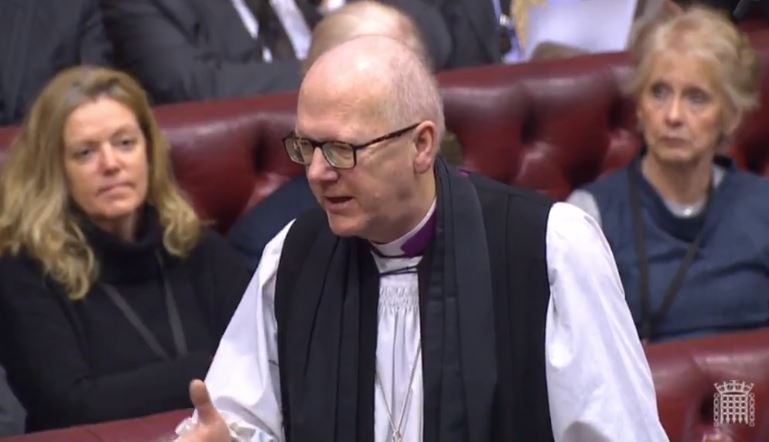
Public Order Bill: Bishop of Manchester expresses concerns on amendments relating to protests at abortion clinics

During a debate on amendments to the Public Order Bill on 30th January 2023, the Bishop of Manchester expressed concerns regarding amendments to clause 9 of the bill:

Clause 9: Offence of interference with access to or provision of abortion services.
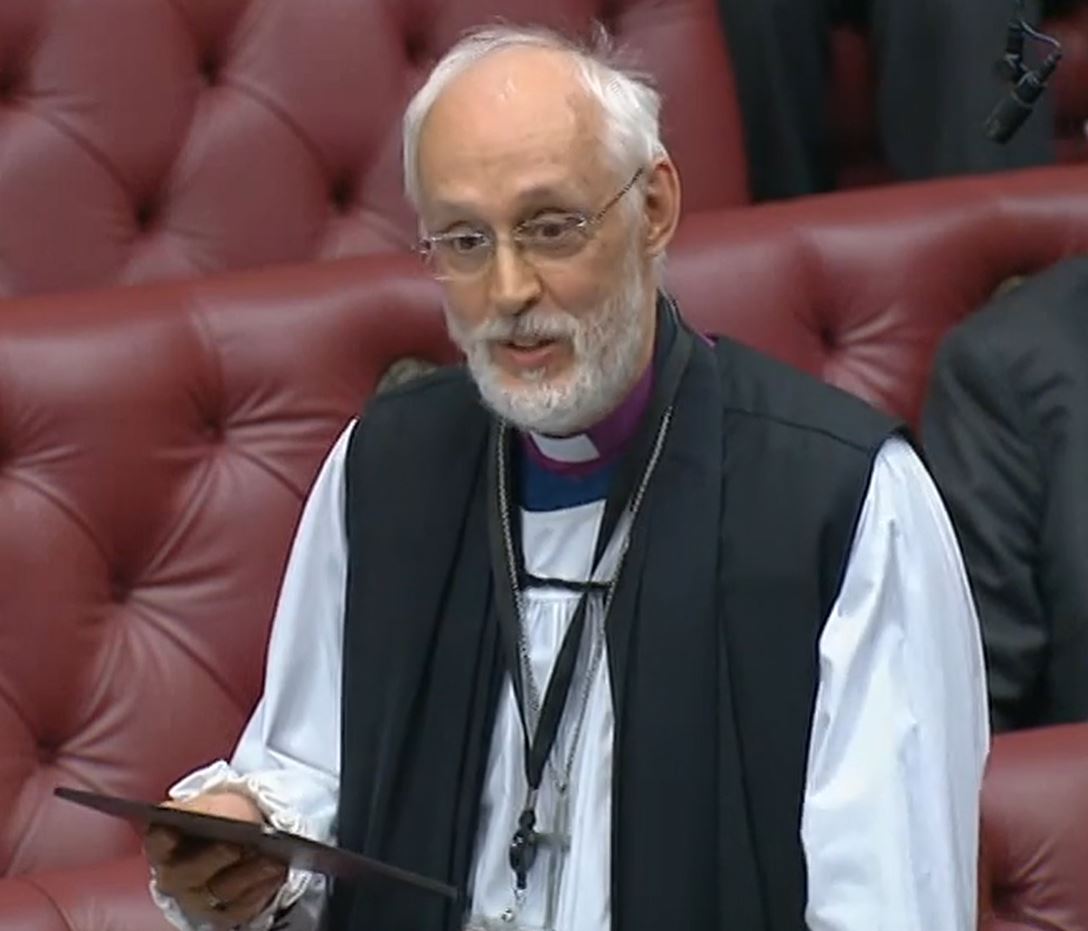
The Lord Bishop of Manchester: My Lords, in Committee I shared my concerns about Clause 9 as it then stood. I am grateful for conversations that have taken place since. I particularly thank the noble Baronesses, Lady Sugg and Lady Barker. The latter has listened patiently and sympathetically to me and my friends on these Benches at some length.

My concerns regarding Clause 9 had nothing to do with the moral merits or otherwise of abortion; they lie in my passion to see upheld the rights of citizens of this land, both to receive healthcare and to protest. Women must be able to access lawful medical interventions without facing distressing confrontations, directed at them personally, when they are identifiable by their proximity to the clinic or hospital. At the same time, anyone who wishes to protest in general about abortion law must be able to do so lawfully, with the least restriction on where and when they may do so.

Continue reading “Public Order Bill: Bishop of Manchester expresses concerns on amendments relating to protests at abortion clinics”
Public Order Bill: Bishop of Manchester speaks in favour of amendments on police powers

On 30th January 2023, the House of Lords debated amendments to the Public Order Bill. The Bishop of Manchester spoke in the debate, supporting amendments by Baroness Chakrabarti concerning police powers to arrest protestors for “locking on” offences:

The Lord Bishop of Manchester: My Lords, I shall speak very briefly in support of the amendment to remove Clauses 1 and 2 that my right reverend friend the Bishop of Bristol signed. She regrets that she cannot be in her place today. As the noble Baroness, Lady Chakrabarti, said, establishing new offences of locking on and being equipped for locking on have very significant consequences for the right to protest. A few days ago I got an email from a retired vicar in my diocese. He wrote to tell me he is awaiting sentencing: he has just been convicted of obstruction by gluing himself to a road during a protest by an environmental group. The judge has warned him and his co-defendants that they may go to prison. I cite his case not to approve of his actions—which I fear may serve to reduce public support for his cause rather than increase it—but because it clearly indicates to me that the police already have sufficient powers to intervene against those who are taking an active part in such protests. Anything extra, as the noble Lord, Lord Paddick, has just so eloquently illustrated, is superfluous.

Continue reading “Public Order Bill: Bishop of Manchester speaks in favour of amendments on police powers”

Votes: Public Order Bill

On 30th January 2023, the House of Lords debated amendments to the Public Order Bill (2022) in the first day of the report stage. Votes were held on amendments to the bill, in which Bishops took part:

Division 1:

The Archbishop of Canterbury, the Bishop of Manchester and the Bishop of Southwell & Nottingham took part in a vote on an amendment to the bill tabled by Lord Coaker: “to insert a new clause: Meaning of ‘serious disruption.’

Continue reading “Votes: Public Order Bill”

Levelling Up Bill: Bishop of Bristol raises concerns about support for parish churches and housing development

On 17th January 2023, the House of Lords debated the Levelling Up Bill in its second reading. The Bishop of Bristol spoke in the debate, raising concerns about financial support for parish churches and the services they provide, and the importance of housing and development planning:

The Lord Bishop of Bristol: My Lords, it is good to be here considering this much-awaited piece of legislation. I declare my interest as a member of the Church Commissioners board, as set out in the register. I congratulate the noble Baroness, Lady Anderson, on her powerful maiden speech and on the stories of her female antecedents. I look forward to the maiden speech of the noble Lord, Lord Jackson.

I am also grateful to the noble and right reverend Lord, Lord Chartres, for his speech on the role of heritage in levelling up. As the current Church of England lead bishop for church buildings, I want to look at one detail in this Bill, which provides an opportunity for the clarification of the law on local council funding for parish church buildings. Across the country, parish churches are vital to the flourishing of their local communities. Initiatives have brought about much transformation in recent years. Exemplifying this is the current Warm Welcome campaign. Since its launch, thousands of churches and other places of worship across the country have welcomed 2.6 million people, providing space for relationship and community building and practical support as the days, like today, get colder. Add to this the ongoing work done in every region by church-run food banks, debt advice centres, domestic abuse support services and so much more. As your Lordships can imagine, I want to live in a world where such services are not needed, but it is important that action can be taken now to address systemic inequalities.

Continue reading “Levelling Up Bill: Bishop of Bristol raises concerns about support for parish churches and housing development”

Levelling Up Bill: Bishop of Carlisle speaks on health inqualities

The House of Lords debated the Levelling Up Bill in its second reading on 17th January 2023. The Bishop of Carlisle spoke in the debate, focusing on health inequalities between the North and South of England:

The Lord Bishop of Carlisle: My Lords, in the brief time available, I will address health inequalities between the north of England, where I live, and the south, and their implications for levelling up and regeneration. Health inequalities are defined as avoidable, unfair and systematic differences in health between different groups of people. In 2010, Sir Michael Marmot conducted his celebrated review into such inequalities, in the hope that this might lead to some improvement. Instead, we have seen an increase, rather than a reduction, of such inequalities over the last 12 years. For instance, life expectancy in deprived areas of the north-east is at least five years lower than it is in similar areas here in London. A baby boy born in Blackpool today can expect an additional 17 years of poor health compared with a baby born in Richmond upon Thames. People in all social groups in the north of England, male and female, are consistently less healthy than those in the south, and premature death rates are about 20% higher across all age groups in the north, due not least to lower lifetime chances.

These statistics—there are many more—are a stark reminder that inequalities in health are often closely linked to people’s socioeconomic circumstances. This has been forcefully illustrated by the Covid pandemic, which, in the words of one commentator, exposed “deep fractures of inequality” running across our society. During the first year of the pandemic, the mortality rate was 17% higher in the north than in the south, unemployment was 19% higher and there were significant differences in mental well-being between the north and the south. It is now reckoned that health issues account for about 30% of the gap in productivity between the north and the south.

Continue reading “Levelling Up Bill: Bishop of Carlisle speaks on health inqualities”

Levelling Up Bill: Bishop of Leeds highlights the importance of transport and education

On Tuesday 17th January 2023, the House of Lords debated the Levelling Up Bill in its second reading. The Bishop of Leeds made a speech on the importance of good transport links and amending discrepancies in education:

The Lord Bishop of Leeds: My Lords, I am delighted to follow the noble and right reverend Lord, who has already stolen some of what I was going to say—great minds and all of that, maybe. When I first heard the phrase “levelling up”, I thought, “Here we go again—another slogan in search of substance”. Yet what we have heard today so far is that there is a great deal of potential substance to this Bill. I applaud the motivation and ambition behind it, and the attempt in the 12 missions to have a holistic approach rather than simply to pick off bits of our society. But I do think we need to take seriously, after the honest analysis that we had from the Minister, the argument that it gives the lie to the opening assertion of the White Paper that the UK is an unparalleled success story. If it was, we would not need the detail that we have before us. This sort of language of hubris can very easily militate against us taking seriously the scale of the task.

Continue reading “Levelling Up Bill: Bishop of Leeds highlights the importance of transport and education”

Financial Services and Markets Bill: Bishop of St Albans speaks on cryptocurrency, access to cash, credit unions, and net zero

The House of Lords debated the Financial Services and Markets Bill in its second reading on 10th January 2022. The Bishop of St Albans spoke in the debate concerning issues of access and regulation:

The Lord Bishop of St Albans: My Lords, theologians sometimes discuss the personal and social ethics in the teaching of Christ under the three headings of money, sex and power, those three areas which can be the most extraordinary gift and blessing when used rightly and for the common good but which, when they are an end in themselves, can become extraordinarily disruptive. Of these three areas, Christ had most to say about money, as its use reveals our values as individuals and as a society, often in a very stark way. A close reading of this Bill reveals a set of cultural assumptions and values about what is considered important and valuable. There are four areas that I want to highlight and which we need to consider if a growing and vibrant financial sector will work for the common good.

First, on crypto asset regulation, as others have said, we need to act fast both to protect our citizens and so that we do not fall behind the rest of the world. The problem at the moment is that the almost complete lack of regulation means that, for many people, crypto- currencies are just another form of gambling. The recent collapse of FTX has demonstrated the volatility of this market and its vulnerability to fraud. Some have made a fortune, while others have lost their life savings and will now be looking to the state to provide for them. Just as we need a sensible and balanced approach to the regulation of online gambling, so we need sensible, balanced regulation of crypto- currencies. The provision in this Bill to ensure that crypto is treated as a regulated activity and giving the FCA and the PSR the power and, as others have noted, the resources to do their work and to protect customers, is welcome.

Continue reading “Financial Services and Markets Bill: Bishop of St Albans speaks on cryptocurrency, access to cash, credit unions, and net zero”

Financial Services and Markets Bill: Archbishop of Canterbury stresses importance of serving the common good

On 10th January 2023, the House of Lords debated the Financial Services and Markets Bill in it’s second reading. The Archbishop of Canterbury spoke in the debate, highlighting the need for good practice and quality of service in the finance industry:

The Lord Archbishop of Canterbury: My Lords, this year marks the 10th anniversary of the final report of the Parliamentary Commission on Banking Standards, Changing Banking for Good. I declare my interest having served on that commission, and I welcome the presence in this debate of the noble Baroness, Lady Kramer, who also served, as did the current Lord Speaker. I also welcome the maiden speeches of three noble Lords today: the noble Lords, Lord Ashcombe and Lord Remnant, and the noble Baroness, Lady Lawlor.

We need to remember that the extraordinary crisis in 2008—which led to the various commissions, reports and changes in regulations, including the financial services Act 2013, in which the Parliamentary Commission on Banking Standards played a part—caused huge and ongoing crises. While welcoming the Bill very strongly, I join some of the hesitations mentioned by the noble Lords, Lord Hunt, Lord Sharkey and Lord Vaux. It has been estimated that the financial services industry, and particularly the major banks, have an effective subsidy as a result of the implicit government guarantee that they receive, which is worth approximately £30 billion a year. If there is £30 billion a year going spare, many other industries and not a few churches would welcome that very warmly. However, that subsidy, which is at the risk of the taxpayer, as we saw in 2008 and 2009, is what gives the result of the banks having heavy social obligations; we must look carefully at that when the Bill reaches Committee, as has already been said. The issues of inclusion, stability and access at all levels, especially for micro-businesses, are very important, not least for levelling up.

Continue reading “Financial Services and Markets Bill: Archbishop of Canterbury stresses importance of serving the common good”

Public Order Bill: Bishop of Chelmsford speaks in favour of amendments on Serious Disruption Prevention Orders and police powers

On 13th December 2022, the House of Lords debated amendments to the Public Order Bill in the third day of Committee. The Bishop of Chelmsford spoke in support of two sets of amendments to the bill:

  • firstly to amendments tabled by Lord Paddick, with the support of the Bishop of St Albans, which would raise the burden of proof required to impose a serious disruption prevention order on protesters.
  • secondly to amendments tabled by Baroness Chakrabarti and the Bishop of Manchester, which would place a moratorium on extending existing police powers without a parliamentary debate on current recruitment, vetting, and discipline of police officers.
Continue reading “Public Order Bill: Bishop of Chelmsford speaks in favour of amendments on Serious Disruption Prevention Orders and police powers”

Public Order Bill: Bishop of Manchester supports amendments related to access to abortion clinics and to curtailing excessive police powers

On 22nd November 2022, the House of Lords debated the Public Order Bill in the second day of the committee stage. The Bishop of Manchester spoke regarding two sets of amendments: firstly, in support of amendments to Clause 9, pertaining to access issues around abortion providers, and secondly in opposition to clauses remaining in the bill which would grant excessive police powers, particularly regarding the right to protest.

The Lord Bishop of Manchester: I rise to address Amendments 85 to 88, 90 and 92, to which my right reverend friend the Bishop of St Albans has added his name. He regrets that he is unable to be in his place today. I also have sympathy with a number of other amendments in this group.

It is a heated and emotive debate on this clause, and it was heated and emotive when it was added in the other place. The danger is that we get dragged into debates about whether abortion is morally right or wrong. Indeed, I have had plenty of emails over the past few days, as I am sure other noble Lords have, tending in that direction. As it happens, I take the view that the present law on abortion strikes a reasonable balance; in particular, it respects the consciences of women faced, sometimes with very little support, with making deeply difficult decisions.

Continue reading “Public Order Bill: Bishop of Manchester supports amendments related to access to abortion clinics and to curtailing excessive police powers”