On Monday 7th December, the House of Lords debated the Government’s Welfare Reform and Work Bill during its first day of Committee. The Bishop of Portsmouth, Rt Revd Christopher Foster, spoke in support of a motion from Baroness Sherlock and Lord McKenzie opposing the question that clauses 11 and 12 (limiting child tax credits to the first two children) should stand part of the bill. His speech is included below, along with an extract of the Minister’s reply. The full debate, including speeches by other Members, can be seen at: Parliament.uk
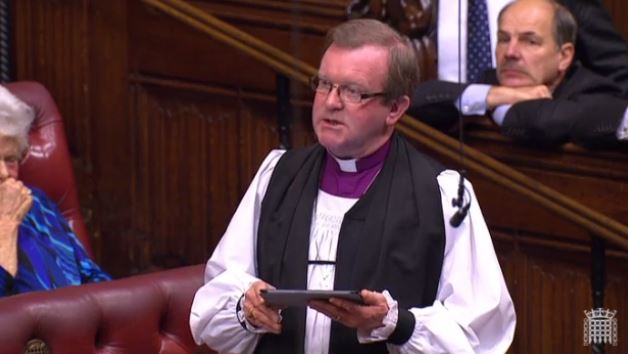 The Lord Bishop of Portsmouth: My Lords, I express my strong concern about these clauses remaining part of the Bill. I offer three straightforward and, I hope, succinct comments: first, about the implications of these clauses; secondly, about the motivation of parents that is implied; and, thirdly, about where responsibility lies.
First, the Government place great emphasis on choice and personal responsibility for family size. I have to say that that assumes a remarkable assumption about the fail-safe effectiveness of contraception—or, if not, an apparent willingness for abortion to be appropriate as a sort of emergency contraception to keep family size to two children. I doubt the assumption, and would deeply regret driving people to seek termination on economic grounds. Is that really what the Government wish? Continue reading “Welfare Reform Bill – Bishop of Portsmouth opposes two-child limit for new claimants”
 The Lord Bishop of Portsmouth: My Lords, I highlight two particularly vulnerable groups in my Amendments 5, 6, 13 and 14, groups that I believe should be exempted from this measure. These are bereaved parents and victims of domestic abuse. In focusing so heavily on promoting personal responsibility, there is always a danger with welfare reforms that we neglect our collective responsibility to look after those who fall on difficult times, people we will probably never meet but whom we support through our taxes in their time of need so that we, too, will be supported when we need help.
 The Lord Bishop of Portsmouth: My Lords, my concerns about this measure, along with those of other faith groups and organisations, are set out in the briefing note that my colleague the right reverend Prelate the Bishop of Durham circulated to all Members of the House prior to the Second Reading debate. In that note we expressed our belief that children are a blessing and that anything that sends an implicit or explicit message that a child is unwanted or burdensome should be strongly resisted.
  The Lord Bishop of Durham: My Lords, I support many of the principles underlying this Bill: the importance of personal, as well as collective, responsibility; the value of decent work, not just financially, but for human dignity; the role of the welfare system in encouraging positive behaviours; the recognition that poverty is not simply about lack of income; and the desire for fairness for those who receive from and contribute to the system, including the vast majority of us who do both at different points in our lives. None of these is completely new, but the Government’s approach to welfare reform has certainly reinvigorated the debate about poverty, helping to challenge implicit assumptions and some very tired thinking. Governments naturally want to distinguish themselves, but in seeking to introduce a fresh perspective on old problems, there is always a danger of going too far or of throwing out the good with the bad. That is my concern about some of the measures being discussed today.


You must be logged in to post a comment.