
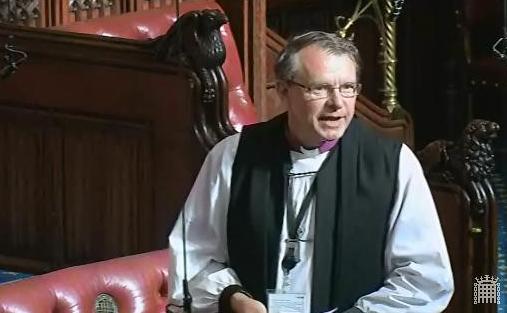
On 16th December 2015 the House of Lords considered the Government’s Education and Adoption Bill at Report Stage. Ther Bishop of Ely, Rt Revd Stephen Conway, spoke during debate on amendments to clause 7 of the Bill on the Secretary of State’s duty to make Academy orders where a school is judged to be failing. The Bishop supported the Government’s position.
 The Lord Bishop of Ely: My Lords, I am very keen to support the idea of effective communication with our parents, not least about the ethos and character of schools, given that they have a deep effect. We see in the good key stage 2 results this last year the impact of character and ethos on effective academic results. Our parents are really keen to ensure that in any change of school, its ethos and character are maintained and that that is effectively communicated to them by any academy proprietor.
I had submitted my own amendment, which I have now withdrawn because I am content, following conversation with the Minister, that he agrees that ethos and character can be maintained and should be safeguarded effectively. I understand that parents around the country want, of course, to have even more say in what happens, but consider that church schools, in particular, have something significant to offer in relation not only to academic performance and ethos but future guarantees of religious literacy in the way in which our country is served. Continue reading “Education and Adoption Bill – Bishop of Ely welcomes Government assurances on church school ethos and academy conversion”


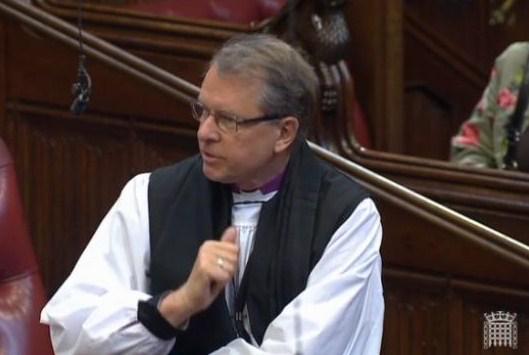
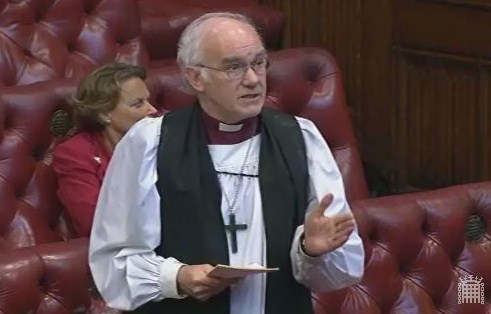
 The Lord Bishop of Portsmouth: My Lords, I tabled Amendment 21 to highlight the impact of this measure on different faith communities who share our concerns with this part of the Bill in particular. Noble Lords who attended the special briefing we organised two weeks ago will have heard Chaya Spitz, chief executive of the Interlink Foundation, speak passionately about the implications for the Orthodox Jewish community that she represents and is a member of. For her community, larger families are the norm and the central pivot around which everything else revolves. There is a positive, faith-based imperative to have children, to create the next generation in service of God. There is also a commonly held conscientious objection to the use of artificial contraception, except in prescribed circumstances, and to abortion, except in rare circumstances. By limiting financial support to the first two children, this policy is making a judgment that touches on deeply personal and strongly held religious and cultural beliefs about the family, and that threatens the viability of whole faith communities.

You must be logged in to post a comment.