The Archbishop of Canterbury received the following written answer on 27th January 2021:
The Lord Archbishop of Canterbury asked Her Majesty’s Government what plans they have to increase the (1) capacity, and (2) resilience, of the Port of Dover.
The Bishop of Gloucester asked a question on the importance of crime diversion and community police provision on 26th January 2021, during a discussion on the crown court backlog for serious criminal cases:
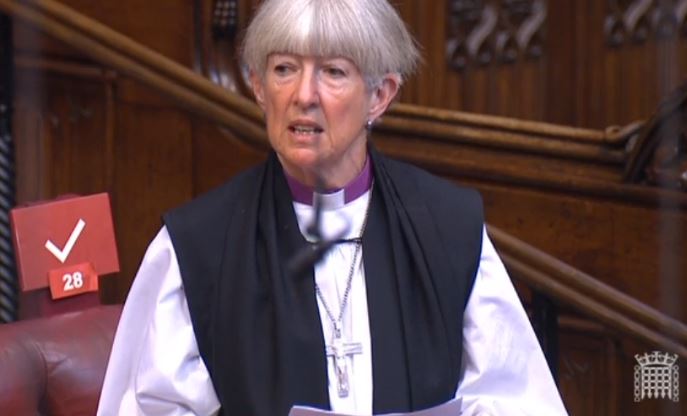
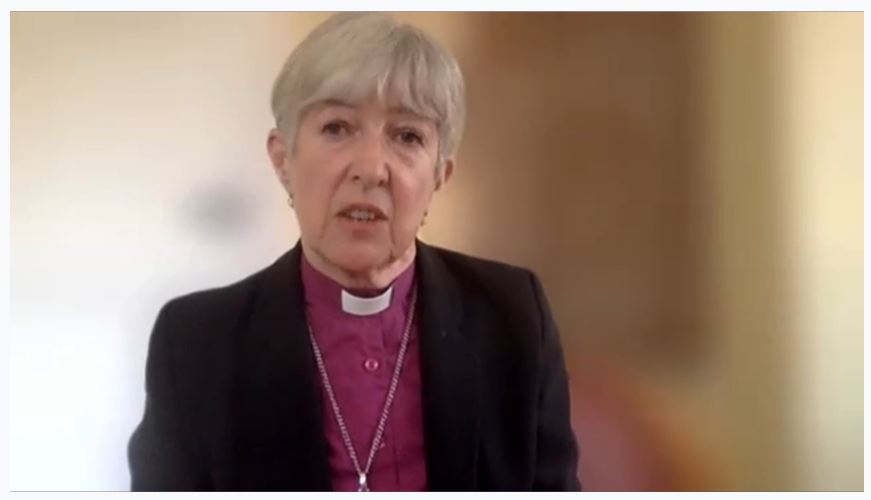
The Lord Bishop of Gloucester: I draw attention to my interest on the register as the Anglican bishop for Her Majesty’s prisons. The backlog of cases has a serious impact on offenders, victims and witnesses. On top of this, projections from the Ministry of Justice show that the prison population is expected to jump to almost 100,000 in 2026, which adversely affects prison staff as well as prisoners. Does the Minister agree that resources could be better spent on police-led diversion work and community-based provision, which could start now?
On 26th January 2021, the Archbishop of Canterbury asked a question on the criteria used by the government to define affordable housing, in advance of a Church of England report on housing and communities:
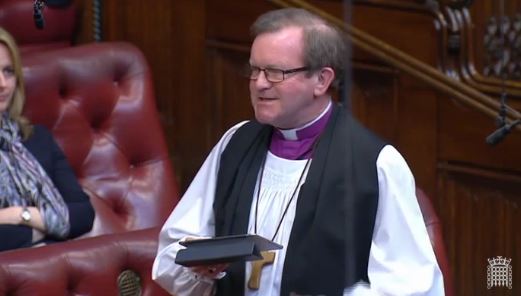
The Lord Archbishop of Canterbury: My Lords, I declare non-financial interests in various Church lands through numerous charities of which I am a member. The Church will be publishing a housing, church and communities report in February. Can the Minister tell us what criteria Her Majesty’s Government use to define affordable housing? Is it genuinely affordable in the sense that most people would use the word?
The Bishop of Gloucester asked a question on the need to prioritise vaccination in prisoners and schools on 25th January 2021, following a government statement on the COVID-19 vaccine rollout:
The Lord Bishop of Gloucester: I wish to make two points and I draw attention to my interests as listed in the register. First, I am very concerned about prisons. There are reports that about 71 prisoners have died, and the number of prison staff who have tested positive continues to rise alarmingly. There is great flux within a prison, with staff coming and going, and those being released from prison and those coming into prison. Will the Government consider prioritising the vaccinating of prisoners and those who work in prisons? Secondly, I add my voice to those calling for teachers and early years staff to be prioritised. Schools are open and our dedicated teachers and early years staff must be able to continue their work safely and not be off sick, if we are to do the right thing by our children.
On 25th January 2021, the Bishop of Gloucester asked a question on the role of faith communities and churches in helping to rebuild social and spiritual capital in the aftermath of the COVID-19 pandemic:
The Lord Bishop of Gloucester: Churches and other faith communities bring together a diversity of people across all ages and backgrounds, and thus are often a strong source of social capital, as well as spiritual capital, as we have seen during the pandemic. Will the Minister say what Her Majesty’s Government are doing, both financially and in other ways, to enable local and faith communities to invest in and rebuild their social capital, as we emerge from this pandemic?
On 25th January 2021, the Second Church Estates Commissioner, Andrew Selous MP, gave the following written answer to a question from an MP:
Rachael Maskell (Lab, York Central): To ask the Member for South West Bedfordshire, representing the Church Commissioners, what progress has been made on the review of the Clergy Discipline Measure.
On 25th January 2021, the Bishop of St Albans received the following written answer:
The Lord Bishop of St Albans asked Her Majesty’s Government what assessment they have made, if any, of the potential impact of the restrictions in place to address the COVID-19 pandemic on the processing of Hong Kong British National (Overseas) visa applications; and what steps they are taking to address any such impact.
The Archbishop of Canterbury spoke during a discussion on global access to COVID-19 vaccinations on 21st January 2021, asking how the government planned to tackle issues facing vaccine distribution:
The Lord Archbishop of Canterbury: My Lords, we must welcome warmly the exceptional moral leadership in this remarkable donation to the COVAX programme, which I think is the largest of any country. However, in order to make the money work, and to follow up what the British ambassador, Julian Braithwaite, said at the WHO, we need a global vaccination campaign if we are to overcome this global pandemic. There are three particular obstructions to overcome. One relates to the use of surplus supplies of vaccine; for example, Canada has ordered more than five times what it needs for its population. The second is misinformation, mythical dangers or false stories being deliberately spread about the vaccines. Thirdly, in many parts of the countries that will need the vaccine, there are immense logistical difficulties in distributing it. To make the most of the financial leadership we have set and given our expertise, experience and success in the rollout in this country, what will the Government do to validate that gift by overcoming these three challenges?
The Bishop of Coventry tabled a question on the UK government’s view on the United Nations Treaty on the Prohibition of Nuclear Weapons on 21st January 2021:
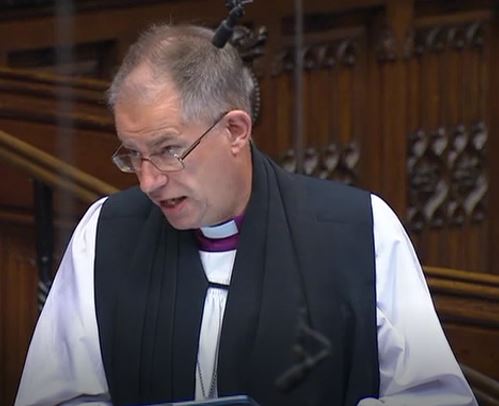
The Lord Bishop of Coventry: To ask Her Majesty’s Government what assessment they have made of the United Nations Treaty on the Prohibition of Nuclear Weapons.
You must be logged in to post a comment.