 On 2nd July 2019 Lord Evans of Watford asked the Government “what steps they are taking to increase the number of homes for social rent”. The Most Revd and Rt Hon Justin Welby, Archbishop of Canterbury, asked a follow-up question:
Lord Bourne of Aberystwyth: My Lords, I thank my noble friend for his point about social housing delivery. He is right that it has been a challenge for successive Governments. We have delivered 79,000 social homes since 2010, which, it has to be said, is better than the numbers achieved in the previous nine years. In relation to his point about garden villages, we had previously announced 29 and last week we announced another 19. That is significant. It includes providing a special community village for dementia-friendly housing, which again is very good news, and I hope that that will also feed into the discussions that we are having about modern methods of construction.
The Lord Archbishop of Canterbury: My Lords, I welcome very much that last answer. In that connection I declare an interest, in that I have set up a commission to look into the housing crisis and the contribution that can be made by civil society and particularly the Churches. It comprises a former Permanent Secretary and a huge number of significant experts. One of the commission’s earliest priorities is to look at how we create communities rather than simply build houses. That means that there is a need for multipurpose community facilities and for looking at the sociological aspects as well as the mere physical construction. Will the Minister undertake to listen to the representations from that and similar inquiries over the next 18 months to two years?
Continue reading “Archbishop of Canterbury asks Government to listen to Church commission on housing”

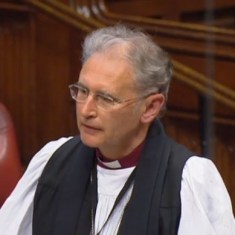 On 3rd July 2019 Baroness Williams of Trafford answered a written question from the Bishop of Coventry, Rt Revd Christopher Cocksworth, on their definition of persecuted groups:
 On 26th June 2019 the Second Church Estates Commissioner, Rt Hon Dame Caroline Spelman MP, answered two written questions from Jim Shannon MP (Strangford) on Church-based tourism and community development:
 On 2nd July 2019 the House of Lords debated a motion “that this House should take note of the Review of Post-18 Education and Funding led by Philip Augar”. The Bishop of Winchester, Rt Revd Tim Dakin, spoke in the debate:
 On 2nd July 2019 the Parliamentary Under-Secretary of State at the Department for Digital, Culture, Media and Sport repeated a Government Statement about industry support for those affected by problem gambling. The Bishop of St Albans, Rt Revd Alan Smith, asked a follow-up question:
 On 2nd July 2019 Baroness Goldie (Con) repeated a Government statement on Hong Kong. The Bishop of Carlisle, Rt Revd James Newcome, asked a follow-up question:
 On 2nd July 2019 Baroness McIntosh of Pickering asked the Government “what measures they propose to take to ensure that there is adequate provision of GP services in rural areas”. The Bishop of London, Rt Revd Sarah Mullally, asked a follow-up question:
 On 1st July 2019 the Parliamentary Under-Secretary of State, Department of Health and Social Care repeated a statement made by the Secretary of State for Health and Social Care on the implementation of the NHS long-term plan. The Bishop of Carlisle, Rt Revd James Newcome, asked a follow-up question:
 On 1st July 2019 the Bishop of St Albans, Rt Revd Alan Smith, received a written answer from the Government in reply to questions about forced marriage:

You must be logged in to post a comment.