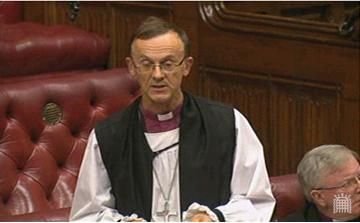
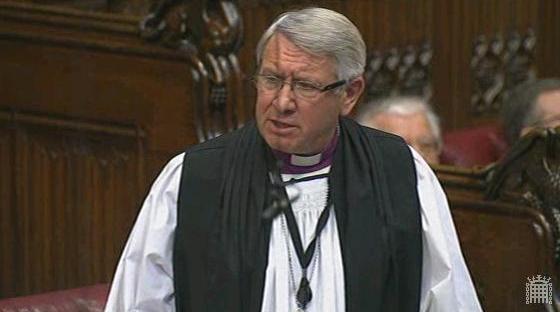
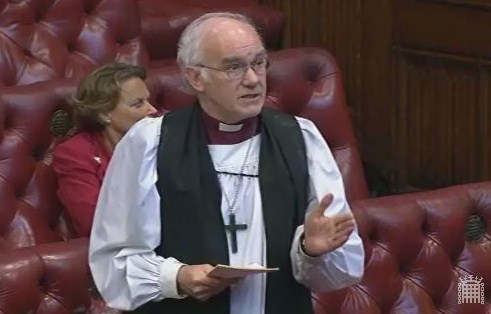
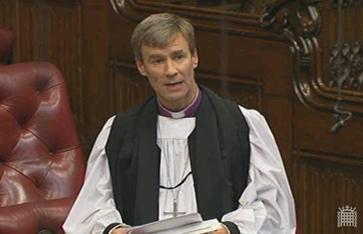
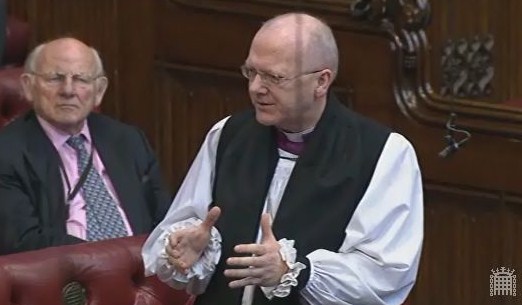
On 11th July 2013, Lord Patel led a take-note debate in the House of Lords on future models of funding of health and social care in England. The Bishop of Derby, the Rt Revd Alastair Redfern, took part in the debate. The Bishop spoke of the need to develop community-based approaches to health and social care and called for a more holistic and whole-life approach to their provision.
The Lord Bishop of Derby: My Lords, I, too, congratulate the noble Lord, Lord Patel, on securing the debate. As we have heard from all speakers so far, there is a strong narrative about how precious the NHS is, how high public expectation remains and the problem of rising costs—it’s own health check has just been referred to.
I want to talk a little about care systems and the models that we might need to develop. Experience on the ground tells us that care systems are very fragmented. As systems such as family stability collapse, many people are isolated and struggle to access care and health services. The current system is very skewed towards the delivery of episodic interventions around particular crises. We need to look below that. We need to step back and see how we can create a culture of engagement, support and well-being for people that puts those episodic interventions in a different context and perhaps provides a context in which they would be less necessary and less frequent. I shall raise some questions about models and capacity, not least in relation to the elderly.
I work in the county of Derbyshire. Last year, in the city of Derby, I organised a commission, the Redfern commission, which looked at models of care in our community and how we could contribute alongside the statutory provision. We had a public hearing looking at models of care for the elderly. One of the experts who came as a witness to that public hearing raised three issues. She started by talking about people’s feet and the fact that proper foot care is very important to allow people to continue to have mobility—to be able to shop, do their cleaning and have social intercourse. Very simple things that require microengagement make a huge difference to people’s well-being and health. She also talked about the reluctance of doctors to diagnose depression in elderly patients who suffer a lot of loss. She said that something like 2 million elderly people are diagnosed with clinical depression, but there are probably far more, and it is hard for them to get treatment or even support on the ground. She also raised the lack of provision of advice for elderly people about sexual health. Continue reading “Bishop of Derby calls for development of community-led health and social care provision”


On the 14th May 2013 the Bishop of Winchester, the Rt Revd Tim Dakin gave his maiden speech in the House of Lords. Following the convention of the House the Bishop spoke about his diocese and then addressed the debate covering his areas of interest education, social cohesion and agriculture.
On the 13th May 2013 the Bishop of Birmingham responded to the Queens Speech focusing on the areas of unemployment, business and the economy. The Bishop welcomed proposals for economic development and investment in transport which he hope would bring benefits to Birmingham and the wider region. He hoped the Government would tackle three areas, youth unemployment, personal debt and banking reform, quoting former Archbishop William Temple he urged the Government to “Give us the tools in the regions and we will finish the job”.
On the 9th May 2013 the Bishop of Exeter, the Rt Revd Michael Langrish responded to the Queen’s Speech addressing his remarks to devolution, community cohesion, and the need to address the increasing London-centric bias of policy making. Bishop Michael used the Church of England as an example of a way to successfully balance competing interests to create a sense of cohesion and mutual belonging in our society.
On the 9th May 2013 the Bishop of Lichfield, the Rt Revd Jonathan Gledhill spoke in the debate responding to the Queen’s Speech. Bishop Jonathan addressed the areas of immigration and asylum reform along with a range of other areas relating to his interests in Home Affairs. Concluding his remarks the bishop reminded the House of the importance of ensuring a unified society, adopting polices which do not disproportionately impact those least able to make choices for themselves.
You must be logged in to post a comment.