Bishop of Wakefield urges proactive response to crisis in Central African Republic

“It is not surprising that the violence and insecurity that now plagues this country has hampered the delivery of humanitarian aid. As a result, local faith groups and a few national and international NGOs are the primary responders” – Bishop of Wakefield, 18.11.13

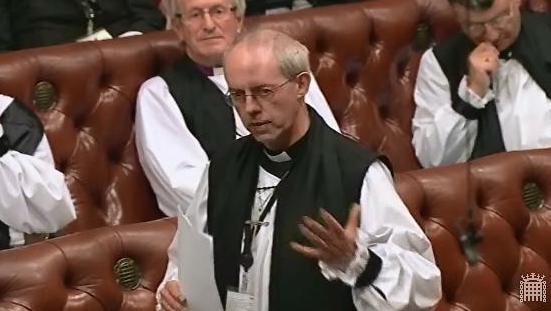
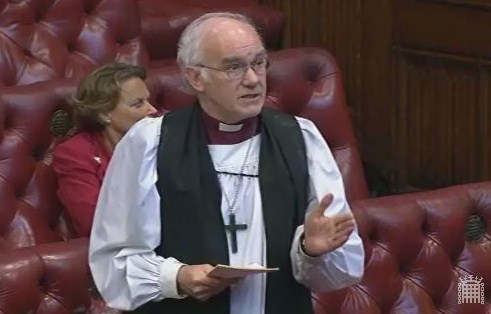
On 18th November 2013, Conservative Peer Baroness Berridge led a short debate to ask Her Majesty’s Government what assessment they have made of the security and humanitarian situation in the Central African Republic and the Great Lakes region of Africa. The Bishop of Wakefield, the Rt Revd Stephen Platten, took part in the debate, focusing his remarks on the need to sanction the perpetrators of violence in the Central African Republic and the urgent need to tackle sexual violence in conflict.

Bishop of Wakefield PlattenThe Lord Bishop of Wakefield: My Lords, I warmly congratulate the noble Baroness, Lady Berridge, for securing this debate and for introducing it with such clarity of purpose. Those of us of a certain age will remember graphically the tragedy of the Congo, going all the way back to independence itself. This was followed by the Katanga breakaway movement and the instability there, and the subsequent tragedies made the entire Great Lakes region a terrible, open wound on our common humanity. As we know, that conflict, which began all those years ago, continues in a number of countries. Continue reading “Bishop of Wakefield urges proactive response to crisis in Central African Republic”

Bishop of Guildford warns of further destabilisation if situations in Sudan and South Sudan are not resolved

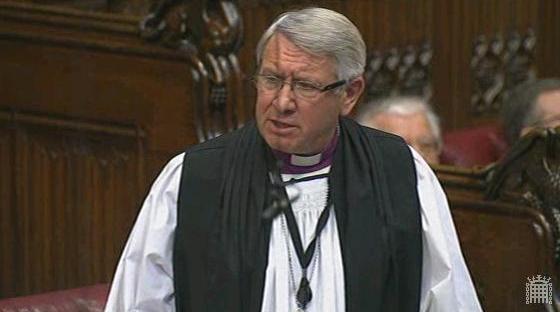
On 7th November 2013, Baroness Cox led a short debate on what assessment Her Majesty’s Government have made of the situation in Sudan, and the implications for citizens of the Republic of South Sudan. The Bishop of Guildford, the Rt Revd Christopher Hill, took part in the debate.

guildfordThe Lord Bishop of Guildford: My Lords, I completely endorse what has been said so far in this discussion. I want to raise a rather different point, but equally I want to express my distress—and, indeed, my shared anger—about the humanitarian, agrarian and political disaster about which we have been speaking.

My rather different point is a question about the implications of further destabilisation of Sudan for the country’s international neighbours. I think that that is an important point. I visit Nigeria regularly, and I am due to fly out to Abuja on Sunday. Four years ago, I was able to go to the province of Maiduguri up in the north-east. I cannot go there now, at the moment anyway, because of the political situation. Maiduguri is a long, long way from Sudan—many miles away. Nevertheless, I believe that there is a connection. Continue reading “Bishop of Guildford warns of further destabilisation if situations in Sudan and South Sudan are not resolved”

Bishop of Guildford highlights long history of Christianity in China

“There are huge numbers of practising Christians in China, amounting to many tens of millions, although I agree that the exact figure is very hard to determine…. The Chinese Government have a close interest in how religion helps in building a harmonious society, now that communism is not the only player in China’s major global role.”

On 7th November 2013 the Bishop of Guildford, the Rt Revd Christopher Hill, took part in Lord Dobbs take-note debate on the recent developments in the relationship between the United Kingdom and China. He focused on the long-standing relationship between the West and China, particularly in terms of  the long history of Christianity in China. He noted contemporary initiatives to strengthen the relationship between the Church of England and the church in China, particularly the role of the Bishop of Birmingham as the Archbishop’s envoy to China.

The Lord Bishop of Guildford: My Lords, the right reverend Prelate the Bishop of Birmingham deeply regrets that he cannot be in his place today. He is the envoy of the most reverend Primate the Archbishop of Canterbury in relation to China. I am sorry that he is not here speaking, and not only because I am speaking in his place.

We are hearing, and shall continue to hear, many fascinating things in this debate about China, not least from the two maiden speeches, to which we look forward. The importance of student academic exchanges, stressed by some noble Lords, particularly resonates with me. I declare an interest in the University of Surrey with its developing—indeed burgeoning—links with China. That is wonderful. Continue reading “Bishop of Guildford highlights long history of Christianity in China”

Financial Services (Banking Reform) Bill – Consideration of Legislative Timetable

On 6th November 2013, the Chief Whip in the House of Lords, Baroness Anelay of St Johns, responded to concerns regarding the timetabling of the Financial Services (Banking Reform) Bill by a number of Peers. The Bishop of Norwich, the Rt Revd Graham James, raised some concerns, speaking on behalf of the Archbishop of Canterbury.

Continue reading “Financial Services (Banking Reform) Bill – Consideration of Legislative Timetable”

Bishop of Derby takes part in debate on the cost of living

“Over the past 12 months in the city of Derby, we have seen a 100% increase in the use of food banks. The point I want to make in this debate is that the shift has moved away from the normal suspects, who are, tragically, homeless people, towards families who are housed, but whose incomes are so low that they cannot feed themselves seven days a week.”

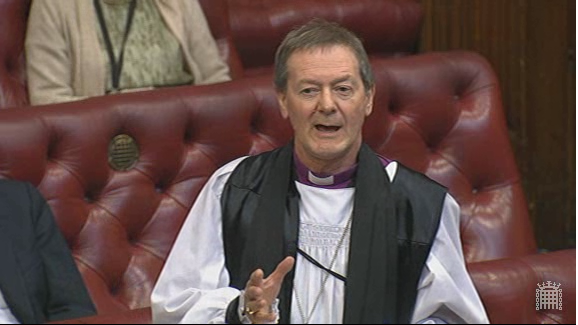
On 31st October 2013, Baroness Prosser led a take-note debate on the current cost of living and its impact on family budgets. The Bishop of Derby, the Rt Revd Alastair Redfern, took part in the debate, focusing his remarks on the response of civil society to issues of food poverty in the UK, particularly the role of churches in providing food banks. He also spoke about work and income, questions around lifestyle, and the role of the state.

Bishop of DerbyThe Lord Bishop of Derby: My Lords, I, too, congratulate the noble Baroness, Lady Prosser, on securing this debate and on setting such a good framework in her introduction. I want to look particularly at the human cost of this issue and at the family budgets of those who are at the sharp end of the struggle in trying to deal with rising living costs. I shall begin with the big picture. Earlier this year I organised a hunger summit in Derby. We looked at food poverty in what we call the developing countries, but we also looked at food poverty in our own city. We took the opportunity to launch a remodelled food bank system to provide a more comprehensive service to meet the growing food poverty that we are finding in our own back yard. That is the context in which we should begin to look at the pressure on family budgets. We were supported by the Fair Share Trust. Indeed, the noble Lord, Lord Newby, was in the House earlier this week when there was a Question about food waste, and I hope that one of the things we can do with excess food is redirect some of it towards organisations such as the Fair Share Trust so that it can be used to supplement those families whose budgets are so stretched that they cannot afford to eat properly. Continue reading “Bishop of Derby takes part in debate on the cost of living”

Bishop of Coventry leads debate on humanitarian crisis in Syria

“Even with a political solution, the scars of this conflict will take many generations to heal. It will require the continued generosity of the international community in a sustained and strategic humanitarian commitment. I hope that Her Majesty’s Government will continue to take a courageous lead and make this not the last business of a long day but the priority of every morning until the holy land of Syria is healed.”

On 30th October 2013, the Bishop of Coventry, the Rt Revd Christopher Cocksworth, led a short debate in the House of Lords, to ask Her Majesty’s Government what steps they are taking to address the humanitarian crisis caused by the ongoing conflict in Syria. In his opening speech, the Bishop commended the Government for its response to the humanitarian crisis in Syria, but called for all pledged humanitarian assistance to be supplied as quickly as possible. He called on the Goverment to look into the resettling of Syrian refugees and noted the negative impact that the humanitarian crisis was having on the broader region. 

13.10 Bishop of CoventryThe Lord Bishop of Coventry: My Lords, despite the admirable diplomatic activity of recent weeks, the humanitarian costs of the ongoing conflict in Syria show no sign of abatement. As violence expands exponentially and cruelty abounds, no one can fail to be moved by the scale of the crisis, which is nothing short of a catastrophe.

This debate seeks neither to underestimate the efforts of Her Majesty’s Government to rise to the challenge of humanitarian support, nor to question their resolve to work towards a political resolution of the civil war. Rather, I hope that it will give an opportunity for your Lordships’ House to focus its expert attention on the humanitarian costs of the conflict and the humanitarian imperative of bringing the conflict to an end, and, in so doing, of checking that every stone is being turned in the cause of compassion and the pursuit of peace. Continue reading “Bishop of Coventry leads debate on humanitarian crisis in Syria”

Bishop of Wakefield leads debate on religious freedom in the Middle East and North Africa

“States need to feel comfortable and confident enough in their own skins, as one might put it, to uphold their core values for all citizens regardless of religious or non-religious background. Even in our own nation, it can sometimes appear to be a fragile commodity but we have the comfort of two centuries’ experience of relative tolerance. If freedom of religion is in many ways the fundamental right upon which all other rights turn, it is important for our and other Governments to remain actively engaged over the long term, pressing for the rights of all religious minority communities.”

On 29th October 2013, the Bishop of Wakefield, the Rt Revd Stephen Platten, led a debate in the House of Lords to ask Her Majesty’s Government what is their assessment of the situation of religious minorities in the Middle East and North Africa after the events of the Arab Spring. He noted that the Arab Spring and resulting events were about issues of identity, political organisation and rights, all of which impact on the place of religious minorities. He urged wisdom and patience from the international community and urged for governments based on consent to be established throughout the region. He noted in particular the persecution of Christians in the region, including many groups historically amongst the earliest Christian communities. He commended the work of the Government in prioritising the freedom of religion but called for there to be consideration around the appointment of an Ambassador-at-Large for Religious Freedom. 

Bishop of Wakefield PlattenThe Lord Bishop of Wakefield: My Lords, I am very grateful for this opportunity to speak about the situation of religious minorities in the Middle East and north Africa since the Arab spring. The debate will, I hope, provide the opportunity to take a more detached view on developments over the past few years and to look at the underlying dynamics affecting religious minorities in the region.

Events in the Middle East since the start of the Arab spring have been a challenge not only to those living in the region but to all of us. Many, myself included, have viewed the series of uprisings which started in Tunisia through the lense of our experience of the Cold War. We wrongly assumed then that the fall of the Berlin Wall would usher in an era of tolerance and political pluralism throughout Europe. The reality was very different. Released from the uniformity of authoritarian rule, the former states of the USSR struggled with weak Governments to meet the diverse and competing aspirations of all their people. Often, as in the case of Balkans, those struggles turned horribly violent, with religion politicised as a marker of identity. Of course, the lessons of our own European history are seminal when trying to understand the transformations shaping the Middle East today. Revolutions are never simple and straightforward affairs. The Reign of Terror and the Vendée in France at the end of the 18th century were perhaps the beginning in our own modern era. Continue reading “Bishop of Wakefield leads debate on religious freedom in the Middle East and North Africa”

Bishop of Ripon and Leeds speaks during debate on UK-Iran relations

“I am not yet convinced that a change in Iran’s human rights agenda will come with the Rouhani presidency, because critical decisions continue to be made by the Supreme National Security Council. This remains populated by a cohort of people who spent much of their careers in the military and security services.”

On 24th October 2013, the Bishop of Ripon and Leeds, the Rt Revd John Packer, took part in a short debate led by Baroness Afshar to ask Her Majesty’s Government, in the light of the recent elections in Iran, what steps they are taking to facilitate closer commercial and educational ties with that country. The Bishop asked what the Government considered a normalisation of relations between Iran and the UK to look like. He also raised concerns about human rights abuses in Iran and the importance of the respect of religious freedom and noted the need for strengthening of relations between UK and Iranian Churches. 

R_LThe Lord Bishop of Ripon and Leeds: My Lords, I am very grateful to the noble Baroness, Lady Afshar, for initiating this debate and for introducing it so comprehensively. I am aware, through contacts, of Iranian students in Leeds and of some of the difficulties of which noble Lords have been speaking in terms of their education and the way that that has developed, and of the struggle to keep them at Leeds University.

Like others, I have been heartened by the change of political rhetoric following the elections in Iran, and share the high expectations that a more pragmatic stance from Tehran will see progress made on a range of issues, not least the nuclear issues. In view of the speed of recent diplomatic developments and the ambitious timetable set at this month’s talks in Geneva—the six to nine months to which a number of noble Lords have already referred—it would be helpful to have some idea from the Minister as to what she understands to be the end game. What would a normalisation of relations look like? What might be the trade-offs that each party might be required to make? That seems to be at the heart of the question that the noble Baroness has put before us today. Continue reading “Bishop of Ripon and Leeds speaks during debate on UK-Iran relations”

Bishop of Ripon and Leeds calls for post-2015 agenda to focus on tackling inequality

On 23rd October 2013, Baroness Jenkin of Kennington led a short debate in the House of Lords to ask Her Majesty’s Government what assessment they have made of the United Nations High-level Panel report into the successor agenda to the Millennium Development Goals. The Bishop of Ripon and Leeds, the Rt Revd John Packer, spoke during the debate, calling on the Government to support a post-2015 agenda focused on tackling inequality as well as extreme poverty.

R_LThe Lord Bishop of Ripon and Leeds: My Lords, I am grateful to the noble Baroness, Lady Jenkin, and I share the welcome for the high-level panel report. I believe it could be strengthened in two areas. The first area is environmental sustainability. The millennium goals are weak on climate change and the high-level panel report does not make it sufficiently clear that global warming already damages the economies, and therefore the poor, in poorer countries such as Bangladesh. The panel has the laudable aim of eliminating $1.25 a day poverty but that needs to be inextricably linked with a new climate equilibrium, which we are far from attaining. Do Her Majesty’s Government agree that there needs to be a legally binding global climate deal in 2015 in line with the scientific consensus? Continue reading “Bishop of Ripon and Leeds calls for post-2015 agenda to focus on tackling inequality”

Bishop of Derby takes part in debate on demographic change in the UK

On 17th October 2013, Independent Peer Lord Filkin led a take-note debate in the House of Lord on the Report of the Public Service and Demographic Change Committee ‘Ready for Ageing?’ The Bishop of Derby, the Rt Revd Alastair Redfern, took part in the debate, focusing his remarks on the important role civil society play in supporting the elderly. He also raised concerns about the language used to talk about the elderly and highlighted the very significant contribution played by older people in society.

Bishop of DerbyThe Lord Bishop of Derby: My Lords, I, too, thank the noble Lord, Lord Filkin, and his colleagues on the Select Committee for introducing such a comprehensive and expert report. I shall pursue the theme mentioned of the contribution of civil society.

My first point is about the language that we use and the signals that we give out. The noble Baroness, Lady Tyler, talked about the importance of a public debate. It is easy to use language such as “retirement”, which indicates something negative, about stopping and ceasing to contribute. In the diocese where I work, we have 200 clergy who are retired; 80% of them make an enormous contribution, not just filling in but front-line, active contribution to the life of the church. Some cultures use the word senior rather than the word ageing. We must be very careful how we frame the debate. I invite the Minister to comment on the language that we use and the signals that we give out, so that it is not about a problem of decline and desperation but celebrating life at different stages and in different ways. Continue reading “Bishop of Derby takes part in debate on demographic change in the UK”