Safety of Rwanda (Asylum and Immigration) Bill: Bishop of St Edmundsbury and Ipswich supports amendment challenging disapplication of the human rights act

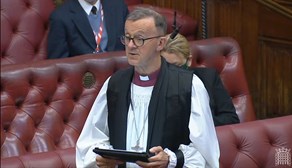
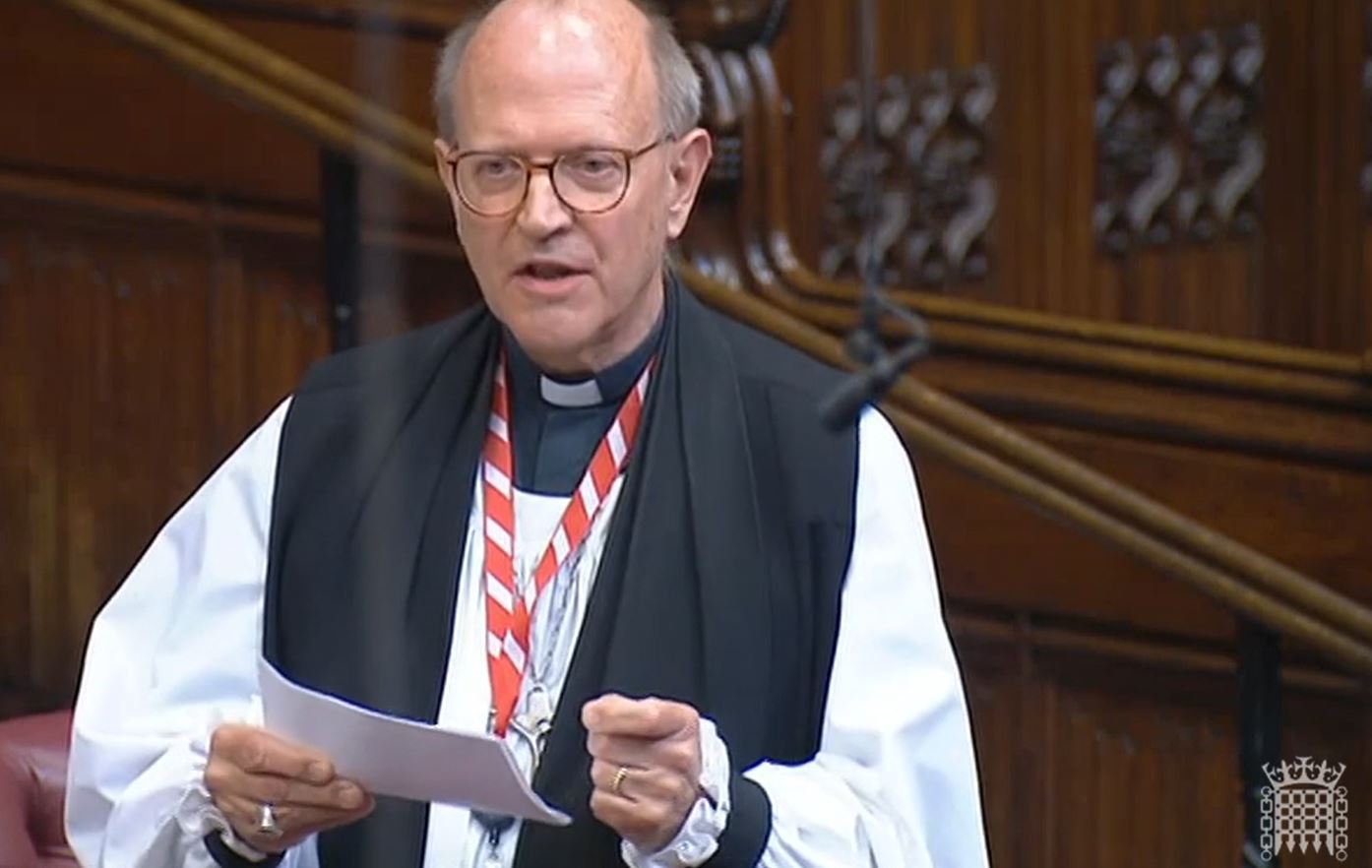
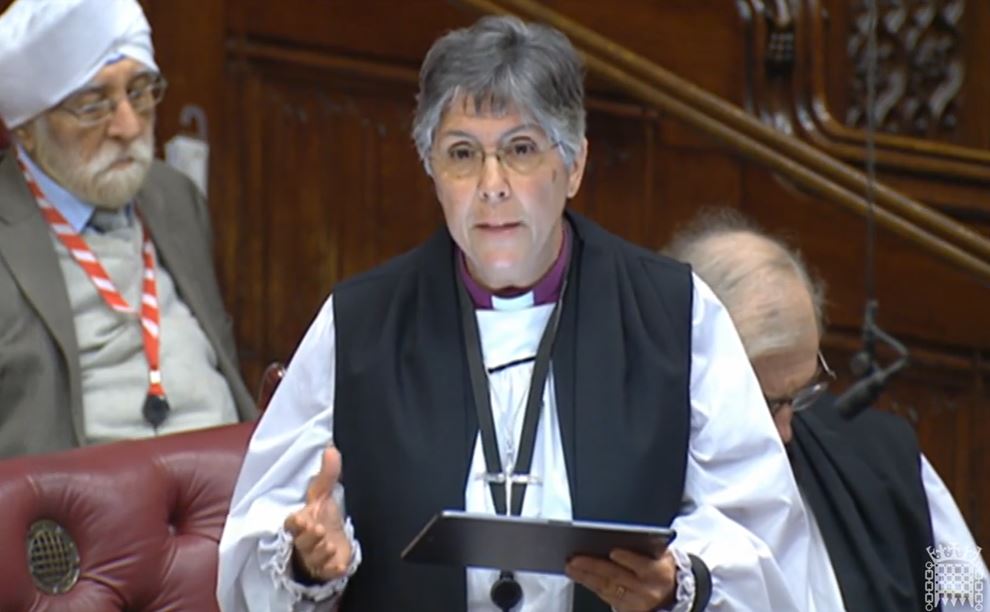
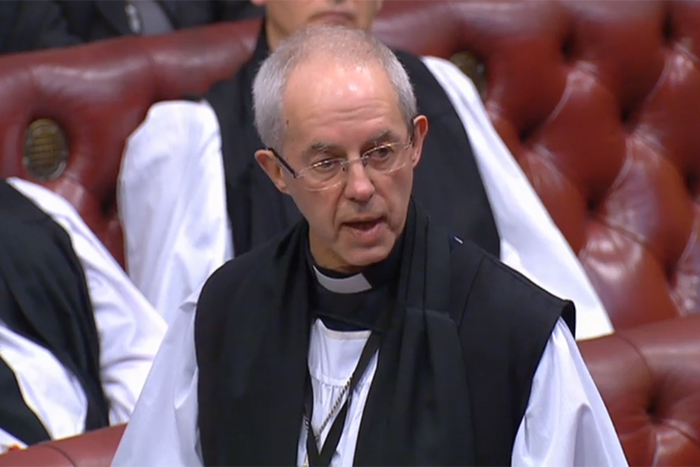
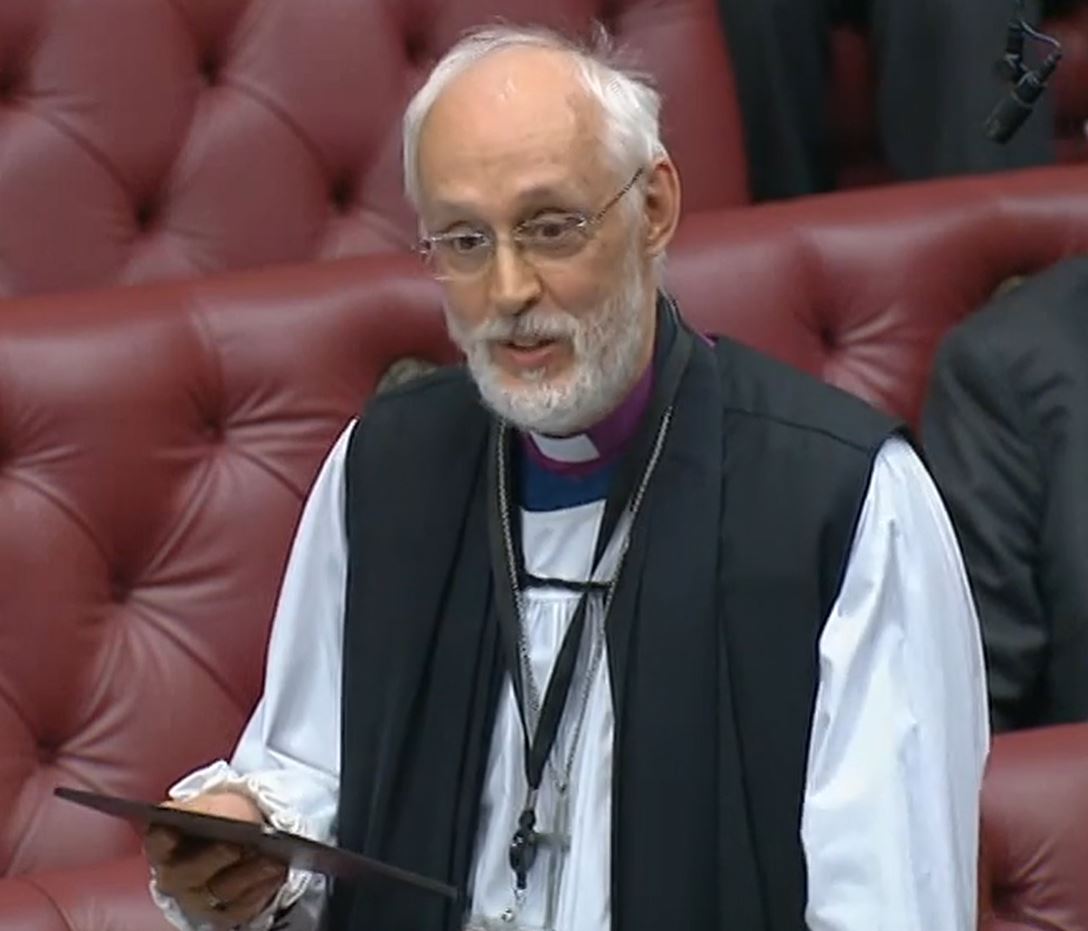
On 14th February 2024, the House of Lords debated the Safety of Rwanda (Asylum and Immigration) Bill in committee. The Bishop of St Edmundsbury and Ipswich spoke in support of amendment 36 to the bill, on behalf of the Archbishop of Canterbury. The amendment would leave out clause 3 of the bill, in order to “limit the Bill’s disapplication of the Human Rights Act to immunising the Secretary of State from challenge of his decision to lay positive UNHCR advice.” The Bishop also pointed out the risks associated with disapplying the universal principle of human rights to asylum seekers:

The Lord Bishop of St Edmundsbury and Ipswich: My Lords, it is a pleasure to follow the noble Lord from Suffolk. The most reverend Primate the Archbishop of Canterbury regrets that he cannot be in his place to speak to Amendment 36, tabled in the name of the noble Baroness who has just briefly left, and to which he has added his name. I will speak briefly and again repeat the moral point.

The amendment leaves out Clause 3, where the Bill disapplies large chunks of the Human Rights Act and replaces it instead with one very limited disapplication of the Act to allow the Secretary of State to lay positive UNHCR advice before Parliament. This seems a necessary corrective to the wider issues in the Bill and supports the other amendments tabled by the noble Baroness, Lady Chakrabarti, to Clause 1 of the Bill, to give the UNHCR a role in providing positive advice on the safety of Rwanda before any asylum seekers can be sent there.

Continue reading “Safety of Rwanda (Asylum and Immigration) Bill: Bishop of St Edmundsbury and Ipswich supports amendment challenging disapplication of the human rights act”

Safety of Rwanda (Asylum and Immigration) Bill: Bishop of Chelmsford points out importance of equality before the law

On 14th February 2024, the Bishop of Chelmsford spoke in a committee debate on the Safety of Rwanda (Asylum and Immigration) Bill, in support of amendment amendment 33 to the bill, which specified the route to be taken by Parliament if a court declares the bill incompatible with the Human Rights Act 1998:

The Lord Bishop of Chelmsford: My Lords, I support Amendment 33 from the noble Lord, Lord Kirkhope of Harrogate, to which I am a signatory. I am grateful to the noble Lord for the amendment and I welcome the opportunity to discuss the role of Parliament if a higher court were to declare this legislation to be incompatible with the convention right, or indeed a number of rights.

We should not forget that the Government have been unable to make a statement in the Bill that it is compatible with convention rights. As the Government nevertheless wish Parliament to proceed with the Bill, it seems prudent to probe what the role of Parliament would be in determining how any potential incompatibility should be addressed. In fact, the Attorney-General has said in the Government’s own legal position paper that it should be for Parliament to address any determination of incompatibility by the courts. The noble Lord, Lord Kirkhope, has eloquently set out the motivation for this amendment, and I agree that what it does is simply to expound what parliamentary sovereignty would look like in this context.

Continue reading “Safety of Rwanda (Asylum and Immigration) Bill: Bishop of Chelmsford points out importance of equality before the law”

Safety of Rwanda (Asylum and Immigration) Bill: Bishop of Leeds raises concerns over indefinite declaration of Rwanda’s safety

The Bishop of Leeds spoke in a debate on the Safety of Rwanda (Asylum and Immigration) Bill on 14th February 2024, pointing out the need for demonstration of Rwanda’s safety, and the risks associated with the country’s safety being declared indefinitely:

The Lord Bishop of Leeds: My Lords, I will be very brief. I endorse the speech by the noble Lord, Lord Deben. I want to question slightly the use of truth because there is a difference between truth and factuality. Something can be not factual, but it can be true. Let us look at a parable, for example. We have not even got as far as factuality when we are talking about truth. To put it very simply—I am in terrible danger of evoking Immanuel Kant here, but I will try to avoid that—if I say I am a banana, it does not make me a banana. There has to be some credible questioning of that. I am not a banana. A country does not become safe because someone says it is, even if a Government say that. That has to be demonstrated, and it has to be open to question, particularly, as has been said many times, because the word “is”—we are getting very Clintonesque in his impeachment hearings when we get into the meaning of “is”—has a permanence about it that does not allow for the possibility of change. I fail to see rationally how this is such a problem for the Government, other than that there is an ideological drive in this which is not open to argument.

Hansard

Safety of Rwanda (Asylum and Immigration) Bill: Bishop of Bristol supports amendments related to implementation of UK-Rwanda Treaty

On 14th February 2024, during a debate on the Safety of Rwanda (Asylum and Immigration) Bill, the Bishop of Bristol spoke in support of amendments 19, 21, 25 and 28 to the bill on behalf of the Bishop of Manchester, relating to the proper implementation of the Rwanda Treaty, and introducing further safeguards relating to verifying Rwanda’s safety:

The Bishop of Bristol

The Lord Bishop of Bristol: My Lords, my right reverend friend the Bishop of Manchester regrets that he cannot be here today to speak to Amendments 19, 21, 25 and 28 in the name of the noble Lord, Lord Carlile of Berriew, to which he has added his name. I am grateful to the noble Lord, Lord Anderson of Ipswich, for setting out the case clearly, and I am particularly grateful to follow the noble Lord, Lord Clarke of Nottingham, as he has made the case so powerfully.

The Bishop of Manchester

My right reverend friend and I are concerned, not as lawyers but as citizens, about the constitutional precedent the Bill sets. The role of the judiciary as distinct from the Government and Parliament must not be infringed. Parliament creates laws but judges and juries are responsible for the finding of facts. Where the Supreme Court has ruled that Rwanda is not safe, it is an abuse of Parliament’s powers, as we have just heard, for it to attempt to declare otherwise. 

We are concerned that the Bill represents a dangerous step. The amendments in the name of the noble Lord, Lord Carlile, therefore attempt to preserve the important principle that facts should be considered by the courts. We must surely be able to take into account credible evidence that Rwanda is not a safe country.

Continue reading “Safety of Rwanda (Asylum and Immigration) Bill: Bishop of Bristol supports amendments related to implementation of UK-Rwanda Treaty”

Safety of Rwanda (Asylum and Immigration) Bill: Bishop of Bristol speaks in favour of amendments protecting armed forces workers and victims of modern slavery

On 14th February 2024, the House of Lords debated the Safety of Rwanda (Asylum and Immigration) Bill in committee. The Bishop of Bristol spoke in support of amendment 75 to the bill, which would introduce an exemption clause to prevent those who had worked with UK armed forces or the UK government overseas, or their families, from being sent to Rwanda. She also spoke in support of amendments 70, 73, and 85, on the issue of protecting victims of modern slavery from removal to Rwanda:

The Lord Bishop of Bristol: My Lords, I am grateful to all those supporting Amendment 75 and for the speeches on it. I am further grateful to the noble Lords, Lord Kerr and Lord Alton, and the noble Baroness, Lady Chakrabarti—they are all helping us to delve deeper into the legal and moral issues in these amendments. I am particularly grateful to the noble and learned Baroness, Lady Butler-Sloss, who has set out her Amendments 70, 73 and 85, to which I have subscribed my name.

This issue is close to my heart, as I speak on behalf of the Church of England on human trafficking and modern slavery issues. I do so from the city of Bristol, with its history of slavery and its current commitment to prevent human trafficking and slavery, including domestically—we train our lay officers to spot the signs of those hiding in plain sight—and to provide refuge for those on their journey through the NRM. I was also particularly grateful to the noble Lord, Lord Deben: I think that I will miss church downstairs, so I am grateful that he has brought church upstairs in his Ash Wednesday words to us about the deep moral issues in our debate today.

Continue reading “Safety of Rwanda (Asylum and Immigration) Bill: Bishop of Bristol speaks in favour of amendments protecting armed forces workers and victims of modern slavery”

Safety of Rwanda (Asylum and Immigration) Bill: Bishop of Southwark queries timeline for legislation relating to Rwanda treaty

During a debate on the Safety of Rwanda (Asylum and Immigration) Bill on 12th February 2024, the Bishop of Southwark spoke in favour of a group of amendments centred around ensuring that Rwanda not be considered safe until the full implementation of the UK-Rwanda treaty, querying when a new Rwandan Asylum bill required by the treaty would be published and made operational:

The Lord Bishop of Southwark: My Lords, I will speak in favour of this group, particularly Amendments 6, 14 and 20, but I wish to avoid the circularity, as the noble Baroness, Lady Chakrabarti, was saying, that has been inevitable on something so interconnected.

The Home Secretary has said that

“we will not operationalise this scheme until we are confident that the measures underpinning the treaty have been put in place; otherwise, the treaty is not credible”.

Continue reading “Safety of Rwanda (Asylum and Immigration) Bill: Bishop of Southwark queries timeline for legislation relating to Rwanda treaty”

Safety of Rwanda (Asylum & Immigration) Bill: Bishop of Lincoln supports amendments stipulating automatic right of return to the UK for refugees

During a debate on the Safety of Rwanda (Asylum & Immigration) Bill on 12th February 2024, the Bishop of Lincoln spoke in support of amendment 8 to the bill, which would insert a stipulation that those granted refugee status have automatic right of return to the UK into the bill, explaining his experience of Rwanda and urging that the UK not place a burden on the Rwandan people that the country may not be able to cope with:

The Lord Bishop of Ely: My Lords, I rise to speak because I suspect I am in a minority as one of the very few Members of this House who have had direct contact with Rwanda, having had 10 years’ engagement with the diocese of Kigali, the capital city, and the great joy of visiting the country and seeing life outside in the countryside. One of the most moving things of my nearly 40 years of ministry was praying at the national memorial for the holocaust in Kigali with a local bishop who had lost so many members of his family. He was still so distraught that I had to find the words for our prayer together.

I put on record that I have come across so many wonderful Rwandans who would be hugely great examples to us individually of the practice of forgiveness and trying to make life beautiful again after a terrible tragedy. I can think of one instance where I met a priest; most of his family had been murdered, and in an act of forgiveness he took the murderer of his loved ones into what was left of his family, because he felt there was a requirement upon him to demonstrate and show forgiveness in this terrible situation.

Continue reading “Safety of Rwanda (Asylum & Immigration) Bill: Bishop of Lincoln supports amendments stipulating automatic right of return to the UK for refugees”

Safety of Rwanda (Asylum and Immigration) Bill: Bishop of Southwark supports amendments on rule of law

On 12th February 2024, the House of Lords debated the Safety of Rwanda (Asylum and Immigration) Bill in committee. The Bishop of Southwark spoke in support of an amendment to the bill tabled by Baroness Chakrabarti which would ‘add the purpose of compliance with the rule of law to that of deterrence,’ pointing out the dissonance between the bill’s intention of replacing the Supreme Court’s judgement on the safety of Rwanda and the actual situation in the country for vulnerable asylum seekers sent there:

The Lord Bishop of Southwark: My Lords, I support Amendment 1, tabled by the noble Baroness, Lady Chakrabarti, the noble and learned Baroness, Lady Hale of Richmond, and the most reverend Primate the Archbishop of Canterbury, and Amendments 2, 5 and 34, tabled by the same noble Lords and the noble Viscount, Lord Hailsham. I also offer supportive comments on Amendment 7 to Clause 1, tabled by the noble Viscount, the noble Baroness, Lady Chakrabarti, and the right reverend Prelate the Bishop of Manchester. The most reverend Primate is present but cannot attend the entirety of this debate and the right reverend Prelate cannot be with us this afternoon.

It will be a very slight augmentation of the wisdom of this House to know that we on these Benches do not favour the outsourcing of asylum claims to other countries or territories—which is rather different from what the noble Lord, Lord Howard, was saying about the outsourcing of power. We recognise, however, that the courts have deemed this lawful in certain circumstances and that we have a Bill from the other place which is designed to deal with a particular designation that the Supreme Court deemed to fall outside our obligations under the law.

Continue reading “Safety of Rwanda (Asylum and Immigration) Bill: Bishop of Southwark supports amendments on rule of law”

Bishop of Norwich asks about Communion Forest initiative

The Bishop of Norwich received the following written answer on 12th February 2024:

The Lord Bishop of Norwich asked His Majesty’s Government what assessment they have made of the Communion Forest, an initiative comprising local activities of tree growing and ecosystem conservation, protection and restoration undertaken by parishes, dioceses and provinces across the Anglican Communion.

Continue reading “Bishop of Norwich asks about Communion Forest initiative”

Conversion Therapy Prohibition (Sexual Orientation and Gender Identity) Bill: Bishop of Guildford expresses concerns regarding effects on freedom of religion

On 9th February 2024, the Bishop of Guildford spoke in a debate on the Conversion Therapy Prohibition (Sexual Orientation and Gender Identity) Bill, supporting the intention of the bill whilst noting concern that the wide scope of the bill would have an impact on religious freedoms:

The Lord Bishop of Guildford: My Lords, the use of coercion to seek to alter the sexuality or gender identity of another person, whether medical, psychological, spiritual or otherwise, is clearly an abhorrent abuse of power. If there is a gap in the law at this point—I leave that question to those who are more expert in the law than I am—it needs to be filled. The Church of England has given serious thought to coercion in recent years, as we have become more aware of the dangers of controlling and bullying leadership styles and the toxic cultures that they can engender. In that sense, I welcome at least part of the intention of this Bill—to protect vulnerable LGBT adults and young people from such potentially abusive and harmful environments and behaviours.

However, I share with many others across this Chamber a sense of deep alarm at the almost unlimited reach of the Bill as drafted, in which no attention is given to questions of consent, harm, vulnerability or the use and abuse of power. Instead, it appears to introduce blanket bans on certain ways of behaving, even certain ways of thinking, within the workplace, school, church, mosque and even the family. At the very least, it creates a culture of fear across the board—a kind of chill factor, especially for those who may not be fully signed up to the current societal orthodoxies.

Continue reading “Conversion Therapy Prohibition (Sexual Orientation and Gender Identity) Bill: Bishop of Guildford expresses concerns regarding effects on freedom of religion”