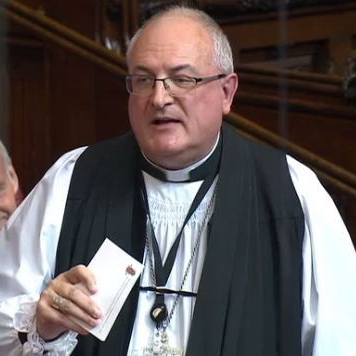
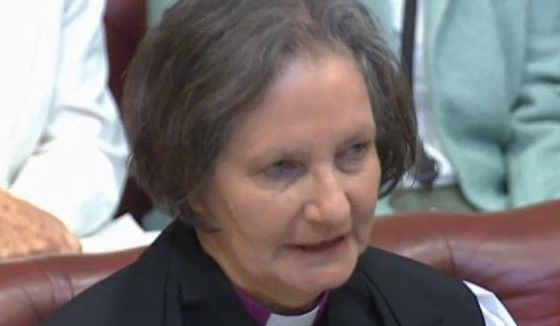
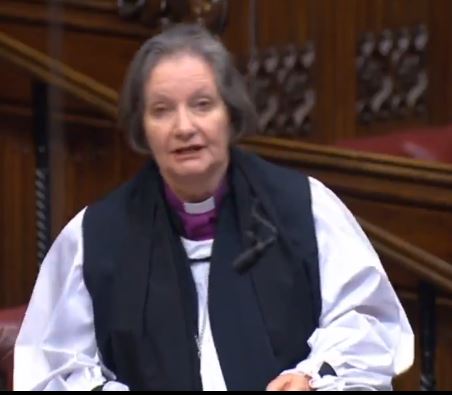
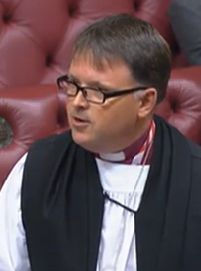
Bishop of Norwich speaks on impact of bank closures in rural areas and market towns

The Bishop of Norwich spoke in a debate on closure of high street banks and the need for a national network of banking hubs on 25th January 2024, raising the impact of bank closures on those in rural areas and market towns:

The Lord Bishop of Norwich: My Lords, I am grateful to the noble Baroness, Lady Tyler of Enfield, for this timely debate. I will speak particularly about rural areas and market towns.

The diocese I serve across Norfolk and Waveney is largely a rural one, but it is one where market towns play a key part in peoples’ lives. Historically places of transaction, they contribute to the warp and weft of community life, especially with their rural hinterland. It is no accident that, in Norfolk, they are fairly evenly spread out across the county, having developed so that livestock could be driven to them for sale and the bonds of extended familial friendship and trust strengthened.

From my internet searching, I estimate that we lost at least 12 bank branches in Norfolk last year. The market town of Wymondham saw the closure of NatWest, HSBC and Barclays within 12 months. The parish church’s treasurer now has a 26-mile round trip to bank the cash collection and cheques. Banks are vital for small rural businesses and charities that deal with cash. Yet, as we have heard, closures are accelerating, and this seems to be a pattern across the UK.

Continue reading “Bishop of Norwich speaks on impact of bank closures in rural areas and market towns”

Victims & Prisoners Bill: Bishop of Gloucester speaks in support of amendments providing support for children of modern slavery victims

On 24th January 2024, the Bishop of Gloucester spoke in support of amendments 7 and 11 to the Victims & Prisoners Bill, which would provide provision for support given to children of victims of modern slavery:

The Lord Bishop of Gloucester: My Lords, my right reverend friend the Bishop of Bristol, as has been said, regrets that she cannot be in the Chamber today but along with her, I support Amendments 7 and 11. The children of victims of modern slavery are currently underserved by support services, despite that lasting and intergenerational trauma which witnessing the crime of modern slavery can cause. We have already heard about the organisation Hestia. In 2021, it estimated that as many as 5,000 vulnerable children could be identified within the NRM as children of victims of modern slavery. I want to add that there is an urgent need to extend victims’ rights to this group, and I am glad to see these amendments.

Hansard

Victims & Prisoners Bill: Bishop of Manchester supports amendments on child criminal exploitation and access to victims’ services

On 24th January 2024, the House of Lords debated the Victims & Prisoners Bill in committee. The Bishop of Manchester spoke in the debate, in support of two amendments:

  • amendment 10, which would seek to provide a definition of “child criminal exploitation” in the text of the bill
  • amendment 15 in the Bishop of Manchester’s name, which would specify that responsibility for accessing services for victims does not lie with the potential service user

The Lord Bishop of Manchester: My Lords, as I said at Second Reading, this is a good Bill for victims. It contains many provisions that I strongly support. I hope and believe that we can make it an even better Bill by working across the House, which is the mood tonight, as it was then.

Continue reading “Victims & Prisoners Bill: Bishop of Manchester supports amendments on child criminal exploitation and access to victims’ services”

Digital Markets, Competition and Consumers Bill: Bishop of Manchester advocates for small businesses

The Bishop of Manchester spoke in a debate on the Digital Markets, Competition & Consumers Bill in the second day of the Committee stage on 24th January, stressing the need to create a proper balance between smaller and larger businesses:

The Lord Bishop of Manchester: My Lords, I shall be extremely brief. When we debate in Grand Committee, it always strikes me that we do so in the Moses Room —Moses, the great giver of the law. However, the biblical characters that I am more thinking of today would be David fighting Goliath, because it seems to be that a lot of the conversation around this group of amendments is about how we create a proper balance between the large platforms and small entrepreneurial providers. My mother was a small businesswoman; she ran two record shops in the Greater Manchester area. We could have been put out of business very easily if somebody had been able to delay some anti-competitive business action against us. We also have the judgment of Solomon here; he was quick in his judgment—there were no lengthy processes that took for ever and a day. I tend to the view that the Bill, as it entered the House of Commons, was probably at about the sweet spot, but let us get this right so that Davids have a chance amid the Goliaths. And yes, I apologise for not declaring that interest—I am called David.

Hansard

Bishop of Chichester introduces Church of England pensions and miscellaneous provisions legislation

On 23rd January 2024, the Bishop of Chichester spoke in support of two motions to direct that the Church of England (Miscellaneous Provisions) Measure and the Church of England Pensions (Application of Capital Funds) Measure be  presented for Royal Assent. The Bishop of Manchester also spoke in support of one motion.

Church of England (Miscellaneous Provisions) Measure

Motion to Direct

Moved by –

The Lord Bishop of Chichester: That this House do direct that, in accordance with the Church of England Assembly (Powers) Act 1919, the Church of England (Miscellaneous Provisions) Measure be presented to His Majesty for the Royal Assent.

My Lords, this is the latest in a series of miscellaneous provisions measures. It makes provision for a range of matters concerning the Church of England that do not merit separate, freestanding legislation. It includes provisions relating to the General Synod, ecclesiastical offices, ecclesiastical jurisdiction, Church property, elections to representative bodies, the functions of the Church Commissioners, appointments to the Church of England pensions board and the conduct of various types of meeting. I do not propose to take noble Lords through each of its 22 clauses in turn, but I thought I should draw attention to some of the more significant provisions.

Continue reading “Bishop of Chichester introduces Church of England pensions and miscellaneous provisions legislation”

Bishop of Gloucester questions decision to legislate over safety of Rwanda

The Bishop of Gloucester spoke in a debate on the government’s asylum agreement with Rwanda on 22nd January 2024, questioning the government’s decision to declare Rwanda a safe country would provide adequate protection to asylum seekers facing deportation:

The Lord Bishop of Gloucester: My Lords, I welcome the opportunity to speak today and thank the International Agreements Committee for its excellent report. I will just say that as Lord Bishops we take no position on this Bench based on tribal loyalty and we are not whipped. Instead, because of what our Christian faith teaches us about care for the stranger, we have spoken with one voice on these Benches.

I am focusing on the issues before us today; friends on this Bench will speak to wider points in the coming weeks, as the Bill is discussed. As has been said, this treaty is the central plank of the Government’s case that Rwanda is a safe country for asylum seekers. As others have commented, it is remarkable for the Executive to request that parliamentarians declare another nation state safe, and safe ad infinitum, on the basis that one drafted international agreement answers all the concerns of the Supreme Court. If Parliament proceeds to, in effect, substitute its judgment for that of the Supreme Court, where does that leave the constitutional principle of the separation of functions and what precedent is this setting?

Continue reading “Bishop of Gloucester questions decision to legislate over safety of Rwanda”

Bishop of Durham speaks on religious education in schools

The Bishop of Durham spoke in a debate on religious education in schools in Grand Committee on 18th January 2024, urging that RE be considered an essential part of the curriculum:

The Lord Bishop of Durham: My Lords, I declare my interests as in the register. Our modern society today is rich in diversity with varying cultures, religions and beliefs. Religious education gives young people an understanding of different world religions and beliefs, in a world where 70% of people affiliate themselves to a religion. It gives pupils an opportunity to explore their beliefs, enabling them to think critically and discuss belief systems in a non-offensive and non-discriminatory manner. However, RE is too often seen as inessential, with Ofsted stating, as was said earlier, that

“schools often consider RE as an afterthought”.

When current global conflicts have roots in religious histories, and with increases in faith hate crime in Britain, the provision of high-quality RE is crucial to creating a more respectful and tolerant society. Faith hate crime often comes from a lack of understanding, and it will not be eradicated when citizens lack knowledge of the beliefs of those alongside whom they live and work. I note the Government’s decision to omit RE from the English baccalaureate; will they reconsider this—it was disastrous—and include RE?

Continue reading “Bishop of Durham speaks on religious education in schools”

Bishop of Norwich calls for greater global investment and cooperation to tackle climate change

The Bishop of Norwich spoke in a debate on the impact of climate change on developing nations on 11th January 2024, focusing on the need for global investment and cooperation to support projects tackling climate change:

The Lord Bishop of Norwich: My Lords, I too express my appreciation to the noble Baroness, Lady Northover, for securing this debate and congratulate my right reverend friend the Bishop of Winchester on his informative and passionate maiden speech.

The UK rightly has a distinguished record in overseas development aid and I look forward to the urgent return to the Government’s manifesto commitment of 0.7% of GDP being spent on it. There also needs to be transparency in new funding announcements about whether the funding is new money or comes from salami-slicing existing programmes. The priorities for climate change aid must be focused on three areas: mitigation, resilience and emergency response. I will look briefly at each in turn.

Continue reading “Bishop of Norwich calls for greater global investment and cooperation to tackle climate change”

Bishop of Winchester makes maiden speech on the topic of climate change and its effects on developing nations

On 11th January 2024, The Bishop of Winchester made his maiden speech during a debate on the impact of climate change on developing nations, referencing the importance of both local and international approaches in tackling these issues, and linking to his previous work on freedom of religion and belief:

The Lord Bishop of Winchester: My Lords, I am conscious of the immense privilege that is mine to have a seat as of right in your Lordships’ House. I am very grateful for the welcome and help I have received from noble Lords and staff, both today and as I have been inducted into its ways.

The See of Winchester, which I serve, was founded in 660. In 838, at the Great Council of Kingston, King Ecgberht of Wessex entered into a compact with the Sees of Winchester and Canterbury, in return for their promise of support for his son Aethelwulf’s claim to the Throne. Aethelwulf was the father of Alfred the Great. That ancient compact was a key moment in the developing relationship between Church and state that has done so much to shape to the life of this country, as together we have sought the common good—and it is to that theme of the common good that I will return later.

I turn specifically to the matter of this debate. In looking at this issue of international development, I believe we must pay proper attention to two cardinal principles: internationalism and localism. It is vital that, as a country, we take an internationalist approach to international development. Global problems, including climate change, require global solutions, and nothing less will do. But, in all that, the local must not be lost. Effective development must always have purchase at the grass roots in specific contexts and communities, or it will be simply unsustainable.

Continue reading “Bishop of Winchester makes maiden speech on the topic of climate change and its effects on developing nations”

Bishop of Leicester calls for reconsideration of debt to help developing nations combat climate change

The Bishop of Leicester spoke in a debate on the impact of climate change on developing nations on 11th January 2024, highlighting the relationship between debt and dealing with climate change:

The Lord Bishop of Leicester: My Lords, I too am grateful to the noble Baroness, Lady Northover, for the opportunity to debate this hugely significant subject. I too am looking forward to the maiden speech by my right reverend friend the Bishop of Winchester, who has real expertise in this area.

When it comes to thinking about the impact of climate change on developing nations, the injustices at play are twofold. First is the fact that those nations that are being and will yet be most affected by climate change are those that have contributed least to the crisis. Secondly, much of the funds that fuelled our Industrial Revolution, wherein were sown the seeds of climate change, were generated by extracting and exploiting the resources of many of those regions, most devastatingly, of course, through the transatlantic chattel slave trade.

Our moral debt is as great as the climate emergency we face, so I was pleased to see that the Government’s international development White Paper, published in November, included “tackling climate change” in its title. I was also most encouraged to read the Government advocating for a move away from donor-recipient models of aid towards partnerships built on mutual respect, putting greater value on the voice, perspectives and needs of developing nations, as well as supporting local leadership. The paper hearteningly states:

“We will engage with humility and acknowledge our past”.

Continue reading “Bishop of Leicester calls for reconsideration of debt to help developing nations combat climate change”