
Bishop of Oxford asks Government about links between food security, poor nutrition and climate change

On 28th January 2020 the House of Lords debated a question from Lord Collins of Highbury, asking Government”what consideration they have given to formulating their pledge at the Tokyo Nutrition for Growth 2020 summit, and what they are doing to build commitments from other countries.” The Bishop of Oxford, Rt Revd Steven Croft, spoke in the debate:

The Lord Bishop of Oxford: My Lords, I, too, welcome this timely debate. I thank the noble Lord, Lord Collins, and welcome the opportunity offered by the Tokyo Nutrition for Growth Summit.

It is moving to note, as other noble Lords have mentioned, that the number of people suffering from hunger has been increasing since 2015, albeit slowly. We know that behind the statistics lie terrible and moving stories of human suffering, disease and death, especially across Asia and sub-Saharan Africa. It is sobering to ponder on the one hand the challenge of providing a sustainable diet and preventing the lifelong consequences of malnutrition and, on the other, the striking rise in obesity across the world and consequent health problems. Continue reading “Bishop of Oxford asks Government about links between food security, poor nutrition and climate change”

European Union (Withdrawal Agreement) Bill: Bishop of Leeds says manner of withdrawal “will say something powerful about who we think we are”

Leeds0518bOn 13th January 2020 the Bishop of Leeds, Rt Revd Nick Baines, spoke in the second reading debate in the House of Lords of the European Union (Withdrawal Agreement) Bill:
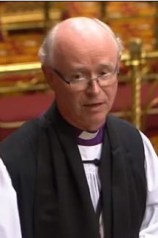
The Lord Bishop of Leeds: My Lords, I look forward to the maiden speech of the noble Lord, Lord Barwell, for whom I had great respect when we served together in Croydon some years ago.

I think it is important that old arguments are not rerun in this debate: wherever one stands in relation to the 2016 referendum and subsequent debates, we are now where we are. I suspect, however, that it remains important for certain matters of principle to be rearticulated even at this stage, as the record will need to be clear when the history comes to be written, not least regarding the wisdom of writing into law hard deadlines for an implementation period. Do we not have anything to learn from recent history?

Continue reading “European Union (Withdrawal Agreement) Bill: Bishop of Leeds says manner of withdrawal “will say something powerful about who we think we are””

Bishop of Portsmouth responds to Queen’s Speech – how to build ‘one-nation’

On 9th January 2020, the Bishop of Portsmouth, Rt Revd Christopher Foster, spoke in the Queen’s Speech debate, about unifying the nation by building on the expansion of the Living Wage and addressing welfare, child poverty, homelessness and help for the disabled: 

The Lord Bishop of Portsmouth: My Lords, it is stating the obvious to say that these are turbulent, uncertain times, perhaps the most turbulent in living memory, even when that memory belongs to Members of your Lordships’ House—a particular, special demographic. It is striking in the face of so much that is uncertain and unknown that the Government’s rhetoric is of clarity, confidence, and even dash. However, while the terrain might be new, much of the rhetoric is from an older school. What is novel is from whom it comes. Continue reading “Bishop of Portsmouth responds to Queen’s Speech – how to build ‘one-nation’”

Bishop of Gloucester responds to Queen’s Speech – the needs of children and vulnerable women

On 9th January 2020 the Bishop of Gloucester, Rt Revd Rachel Treweek, spoke in the Queen’s Speech debate, about children and vulnerable women:

The Lord Bishop of Gloucester: My Lords, I begin by congratulating the noble Baroness, Lady Blower, on her excellent maiden speech.

I shall focus on children and vulnerable women; I draw noble Lords’ attention to my entry on the register of interests. My headlines are that we need policy that supports and enables early intervention and effective partnerships. Experiences that we have at an early age shape who we are. The Children’s Society has been measuring children’s well-being for more than a decade, and during much of that time children’s well-being has been in decline. This is not simply about children; it is about how we shape the sort of communities we want to see. Continue reading “Bishop of Gloucester responds to Queen’s Speech – the needs of children and vulnerable women”

Bishop of Southwark responds to Queen’s Speech – serious youth violence

On 9th January 2020 the Rt Revd Christopher Chessun, Bishop of Southwark, spoke during the fourth day of debate in the House on the Queen’s Speech, about serious youth violence:

Lord Bishop of Southwark: My Lords, I wish to raise the issue of local services that are likely to have a positive impact on serious youth violence, in particular knife crime. I appreciate that the criminal justice system was key to yesterday’s debate on the gracious Speech, and indeed the right reverend Prelate the Bishop of Rochester touched briefly on knife crime in that context. However, I wish to concentrate not on policing per se, nor on the actions of the courts, prison or probation services, but on those of other local agencies. Continue reading “Bishop of Southwark responds to Queen’s Speech – serious youth violence”

Bishop of London responds to Queen’s Speech – health and social care

On 9th January 2020 the House of Lords debated the Queen’s Speech for the fourth day. The Bishop of London, Rt Revd Sarah Mullally, contributed:

The Lord Bishop of London: My Lords, I am grateful for the opportunity to speak during this debate on Her Majesty’s gracious Speech. I note my interests, which I have declared, and I will limit my comments purely to health and social care.

I welcome Her Majesty’s Government’s focus on the NHS: health, social care and the workforce. I also welcome the additional funding. However, we must not be misled into thinking that this is a funding bonanza; it will serve only to stabilise NHS services. Continue reading “Bishop of London responds to Queen’s Speech – health and social care”

Bishop of Rochester speaks on criminal justice, youth violence, child exploitation and probation reform in Queen’s Speech debate

17.10 RochesterOn 8th January 2020 the Bishop of Rochester, Rt Revd James Langstaff, spoke during the third day of debate on the Queen’s Speech, on the topic of criminal justice:
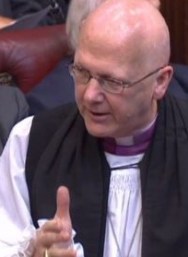
The Lord Bishop of Rochester: My Lords, I am grateful for the opportunity to contribute to this debate on the gracious Speech and look forward to hearing two maiden speeches from the noble Lords, Lord Parkinson of Whitley Bay and Lord Davies of Gower. I am sure we will listen with interest to their contributions and that their different experiences will come to be of value in your Lordships’ House.

My contribution focuses on criminal justice matters, not only because of my role as bishop to Her Majesty’s prisons but because these issues affect every community, including those in my diocese.

Continue reading “Bishop of Rochester speaks on criminal justice, youth violence, child exploitation and probation reform in Queen’s Speech debate”

Bishop of Durham raises global human rights, poverty, development and climate change in Queen’s Speech debate

On the 7th January the Bishop of Durham, the Rt Revd Paul Butler, spoke during the second day of debate on the Queen’s Speech, on the topics of child poverty, climate change sustainable development and immigration:

The Lord Bishop of Durham: My Lords, initially I want to note how little reference there is in the gracious Speech to the needs of children, except in the realm of education. There is nothing about children’s first 1,000 days, nor any firm commitment to tackle the iniquity of child poverty. How we treat children speaks volumes for where our priorities lie. Could the Minister please comment on this omission?

Continue reading “Bishop of Durham raises global human rights, poverty, development and climate change in Queen’s Speech debate”

Bishop of St Albans raises religious persecution in Queen’s Speech debate

St Albans 2On 7th January 2020 the Bishop of St Albans, Rt Revd Alan Smith, spoke during the second day of debate on the Queen’s Speech, on the topic of the integrated security, defence and foreign policy review:

The Lord Bishop of St Albans: My Lords, I want to make a few comments on the integrated security, defence and foreign policy review, which is a welcome development in the Government’s plans for the next five years.

I note that the Government will consider the,

“freedom of speech, human rights and the rule of law”

of foreign nations and how this interacts with our own interests. I hope that the Minister will agree with these Benches that any such review should also include religious persecution, drawing on the work and recent report of the Foreign Office, assisted by the Bishop of Truro, on the persecution of Christians.

Continue reading “Bishop of St Albans raises religious persecution in Queen’s Speech debate”

Bishop of Oxford responds to Queen’s Speech debate, warns of”environmental catastrophe”

On 7th January 2020 the Bishop of Oxford, Rt Revd Steven Croft, spoke during the second day of debate on the Queen’s Speech, on the topic of the environment and climate change:

The Lord Bishop of Oxford: My Lords, I rise to speak about the climate emergency and declare an interest as a member of the advisory board of the Environmental Change Institute in the University of Oxford. It is a privilege to share in this debate and particularly to welcome the maiden speech of the noble Baroness, Lady Ritchie of Downpatrick. Her commitment to her local community and depth of wisdom are very clear.

The Minister said in his opening address that climate change will test us all, and it will.

David Wallace-Wells’s book, The Uninhabitable Earth, should be required reading for every Member of this House as we move forward. Wallace-Wells begins his graphic description of the future of the earth with the unforgettable words:

“It is much, much worse than you think.”

Continue reading “Bishop of Oxford responds to Queen’s Speech debate, warns of”environmental catastrophe””