On 18th March 2020 the House of Lords debated the Budget Statement made the previous week by the Chancellor of the Exchequer. The Bishop of Rochester, Rt Revd James Langstaff, spoke in the debate:
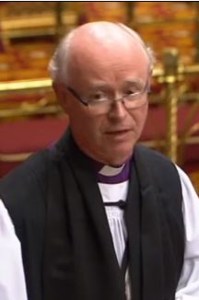 The Lord Bishop of Rochester: My Lords, as many have already observed, this Budget comes in extraordinarily unusual circumstances, and in relation to the issues around Covid-19, subsequent to the Budget announcement, the Chancellor has brought forward a number of measures which have been largely well received, and no doubt others will need to follow. While voluntary action in our communities will form much of the day-to-day response to those who are the most vulnerable and potentially isolated across our nation, the sustaining of public services and of businesses is vital for both our social and economic well-being; other speakers have already begun to address some of those issues.
Following the most reverend Primate the Archbishop of Canterbury is always a risky business, and other noble Lords have already spoken with considerable knowledge of these matters, so I shall focus my remarks on one or two specific issues and areas which were already matters of concern, and where that concern is perhaps greater because of the circumstances in which we now find ourselves.
On children and young people, I hugely welcome the long-overdue extension of higher-rate housing benefit for care leavers until the age of 25, thus giving stability in their accommodation beyond their 22nd birthday. This is something that the Church of England organisation the Children’s Society and other charities have campaigned for over some time, and it is most welcome. Also welcome is the £2.5 million for research on family hubs. However, what is not in the provisions of the Budget or subsequent provisions is sufficient funding to address the urgent need for every child to achieve a good start in life, and that is becoming more urgent in the light of the current circumstances. Continue reading “Bishop of Rochester responds to Chancellor’s Budget Statement”


 The Lord Bishop of Southwark:
  This week in Parliament the Archbishop of Canterbury spoke in response to Government statements on the coronavirus pandemic, the Budget and the Windrush Lessons Learned Review. He also asked about plans to build communities and affordable housing.
 The Archbishop of Canterbury: My Lords, the publication of this Statement is very welcome indeed. The heartfelt nature of the apology was notable.
 The Archbishop of Canterbury: My Lords, clearly the educational world is working extraordinarily hard—one welcomes that—in its determination to deal with an extraordinarily difficult situation very quickly and under huge pressure. If we follow the Imperial College analysis model that was recently published, we can see in certain circumstances the repeated waves of Covid-19 going on for 18 to 24 months. At what point will we begin to move towards a longer-term view of what needs to happen? Clearly, schools cannot be closed for two years. I wonder whether the Government have in their mind the planning for the eventuality of longer-term infectious prevalence in this country.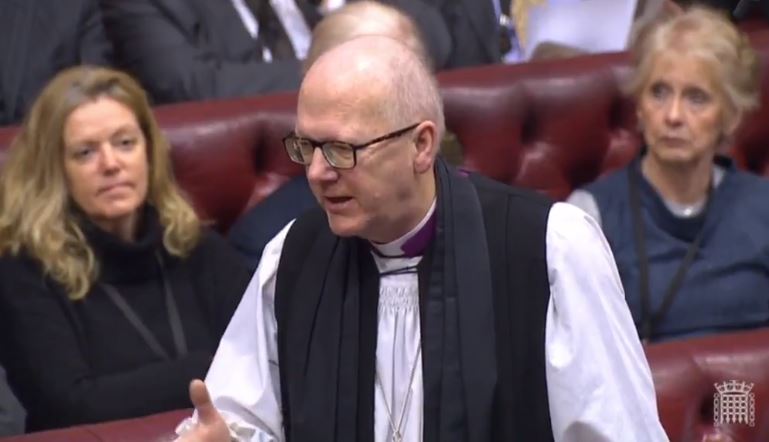
 On 19th March 2020 the Bishop of Winchester received a written answer to a question about further education college mergers:
 On 19th March 2020 the Bishop of St Albans received a written answer to two question to Government on rural connectivity:

You must be logged in to post a comment.