Bishop of Wakefield highlights Church’s role in preventing sexual violence in the DRC

Lord McConnell of Glenscorrodale asked Her Majesty’s Government what is their assessment of recent developments in the Democratic Republic of the Congo.

The Bishop of Wakefield asked a supplementary question:

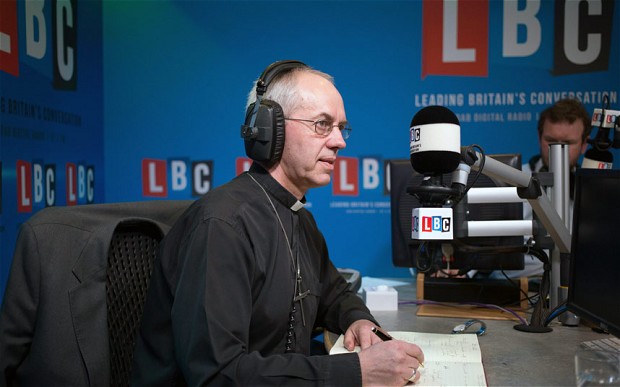
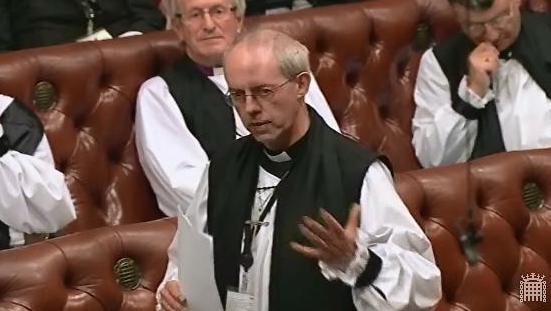
The Lord Bishop of Wakefield: My Lords, I am sure that the Minister will be aware that my colleague and friend the most reverend Primate the Archbishop of Canterbury is visiting the DRC today with the Minister for Africa. Could she inform the House of the work of Her Majesty’s Government, currently being promoted by them, in the protection of women in the DRC, particularly from gender-based violence?

Baroness Warsi: The Minister for Africa will have meetings with the most reverend Primate the Archbishop of Canterbury and the Archbishop of the DRC, particularly to support HEAL Africa, a project which aims to support women who have been subjected to sexual violence.

(via parliament.uk)

Vote – Transparency of Lobbying, Non-Party Campaigning and Trade Union Administration Bill

House of Lords Division Lobby

On 21st January 2014, four bishops took part in a vote on the Government’s Transparency of Lobbying, Non-Party Campaigning and Trade Union Administration Bill, during its Third Reading.

Continue reading “Vote – Transparency of Lobbying, Non-Party Campaigning and Trade Union Administration Bill”

Bishop of Birmingham supports faster implementation of payday lending regulation

On 9th December 2013, the Bishop of Birmingham spoke in favour of a number of amendments to the Financial Services (Banking Reform) Bill, during its Third Reading. The amendments related to new powers being given to the financial regulator to regulate the payday loan industry. There was also a division on one of the amendments debated – more information can be found here.

01.04.14 Bishop of BirminghamThe Lord Bishop of Birmingham: My Lords, I take a moment to thank the noble Lord, Lord Lawson, for his kind remarks about my friend the most reverend Primate’s speech last Thursday. I shall pass that on to him. He regrets that he is not in his place today. He is presiding over a whole number of bishops—it amounts to about the number of noble Lords in your Lordships’ House tonight—up in York.

Continue reading “Bishop of Birmingham supports faster implementation of payday lending regulation”

Archbishop of Canterbury leads debate on the work of the Parliamentary Commission on Banking Standards

On 5th December 2013, the Archbishop of Canterbury led a debate on the work of the Parliamentary Commission on Banking Standards, of which he was a member from 2012-2013. The Bishop of Birmingham also took part in the debate, and his remarks can be read here.

Archbishop of Canterbury

The Archbishop of Canterbury: My Lords, your Lordships are asked to take note of the work of the Parliamentary Commission on Banking Standards. I speak not only on my behalf but on that of some of the commissioners who, for various reasons, cannot be here. I should add that it is coincidental and owing to constraints of the diary that this debate falls so neatly between Report and the Third Reading next week of the Financial Services (Banking Reform) Bill. I am particularly looking forward to the maiden speech of the noble Lord, Lord Carrington of Fulham. I am sure his contribution will be significant given his vast experience in another place, especially on the Treasury Select Committee.

Continue reading “Archbishop of Canterbury leads debate on the work of the Parliamentary Commission on Banking Standards”

Bishop of Birmingham takes part in Archbishop’s debate on banking reform

“More competition can be seen in the regional banks that may be emerging. From my own interest in the Church Commissioners, I know that the proposed Williams & Glyn’s Bank, which is emerging from the 300 RBS branches, may have an opportunity to demonstrate how to be a good bank in the terms that we have already heard about, but at the same time that it will be freed from some of the responsibilities of the bigger banks and respond to people’s needs locally.”

On 5th December 2013, the Bishop of Birmingham took part in the Archbishop of Canterbury’s debate on the work of the Parliamentary Commission on Banking Standards. You can read the Archbishop’s opening and closing speeches here.

01.04.14 Bishop of Birmingham

The Lord Bishop of Birmingham: My Lords, I welcome warmly the noble Lord, Lord Carrington, to your Lordships’ House and congratulate him on a most succinct but wise and constructive maiden speech. His knowledge of finance and banking is exemplary. We have already heard from my friend the most reverend Primate of the noble Lord’s service in the other place, notably as chair of the Treasury Committee. He also brings a wealth of experience in banking. The particular bank mentioned, Gatehouse, of which he is deputy chairman, has this remarkable attention to Islamic finance. As someone who serves in Birmingham, that is of course well known and much appreciated.

Continue reading “Bishop of Birmingham takes part in Archbishop’s debate on banking reform”

VOTE – FINANCIAL SERVICES (BANKING REFORM) BILL

On 26th and 27th November 2013, the Archbishop of Canterbury, the Most Revd and Rt Hon. Justin Welby, the Bishop of Gloucester, the Rt Revd Michael Perham, and the Bishop of Birmingham, the Rt Revd David Urquhart, took part in divisions on the Government’s Financial Services (Banking Reform) Bill, during its Report Stage.

House of Lords Division Lobby

Labour Peer Lord Eatwell moved amendment 21, before clause 14, to insert the new clause Professional Standards. The Archbishop of Canterbury and the Bishop of Gloucester voted ‘content’. No bishop voted ‘not content’.

There were: Contents: 222 / Not Contents: 217 / Result: Government Defeat

(via Parliament.uk)

Continue reading “VOTE – FINANCIAL SERVICES (BANKING REFORM) BILL”

Archbishop of Canterbury takes part in Report Stage of Financial Services (Banking Reform) Bill

On 26th and 27th November 2013, the Archbishop of Canterbury, the Most Revd and Rt Hon Justin Welby, took part in both sittings of the Financial Services (Banking Reform) Bill’s Report Stage.  

Archbishop of CanterburyOn the first day of the Report Stage, he spoke about the need for the new ring-fencing structures to be supported by a ‘second reserve power’ which would give the regulator the power to fully separate all banks in the industry if one or more banks were gaming the new rules. He led a group of amendments on behalf of the Parliamentary Commission on Banking Standards, which would institute a rigorous licensing regime for significant bank employees who are not senior management. He also spoke about the need for specific measures to be developed to ensure that banks and their employees complied with anti-money laundering laws.

The Archbishop of Canterbury spoke twice during the second and final day of Report Stage. He spoke in support of Amendment 164, tabled by Lord Phillips of Sudbury, which would require a review to be undertaken into the current exemptions some banks and similar institutions enjoy from the Gaming Acts, on transactions which could be understood as gambling. He suggested that a review should examine what impact he current situation has on the culture in these institutions. He also led the debate on the Parliamentary Commission on Banking Standards’ amendment on leverage ratios. He highlighted the important role that the leverage ratio plays in the ‘tool-kit’ available to the Bank of England, and warmly welcomed the Government’s announcement that the Bank of England would undertake a review into its powers to set the leverage ratio and make recommendations on what further powers it may need.

Continue reading “Archbishop of Canterbury takes part in Report Stage of Financial Services (Banking Reform) Bill”

Financial Services (Banking Reform) Bill – Consideration of Legislative Timetable

On 6th November 2013, the Chief Whip in the House of Lords, Baroness Anelay of St Johns, responded to concerns regarding the timetabling of the Financial Services (Banking Reform) Bill by a number of Peers. The Bishop of Norwich, the Rt Revd Graham James, raised some concerns, speaking on behalf of the Archbishop of Canterbury.

Continue reading “Financial Services (Banking Reform) Bill – Consideration of Legislative Timetable”

Bishop of Birmingham supports amendment to Banking Reform Bill

“In the wake of the economic debacles following 2008, one of the greatest areas of concern among the public was the apparent lack of change in the financial fortunes of those whom they viewed as being most responsible for the banking crisis.”

On 23rd October 2013, the Bishop of Birmingham, the Rt Revd David Urquhart, spoke during the Committee Stage of the Financial Services (Banking Reform) Bill. He spoke in support of an amendment tabled by Lord Turnbull, to require that banks and other financial institutions abide by a ‘remuneration code’, implemented and enforced by the financial regulator. The amendment, based on a recommendation by the Parliamentary Commission on Banking Standards, was not pressed to a vote during Committee Stage.

01.04.14 Bishop of BirminghamThe Lord Bishop of Birmingham: My Lords, I rise to speak on behalf of the most reverend Primate the Archbishop of Canterbury. He regrets very much that he cannot be in his seat today, but it is seldom that one has the opportunity to offer Christian baptism to a young couple, particularly when their child is a future heir to the throne of this country. None the less, I know that he, like me, would want to echo the support for these amendments, which have been spoken to by the noble Lords, Lord Turnbull and Lord Eatwell. In a sense, I now regret that I am here doing my duty, because I could not have put it better myself.

In the wake of the economic debacles following 2008, one of the greatest areas of concern among the public was the apparent lack of change in the financial fortunes of those whom they viewed as being most responsible for the banking crisis. As we have heard, the salaries of senior bankers seem to remain high and bonus levels have quickly regained their old levels, while for many ordinary people and ordinary businesses across the country, it has been a matter of tightening the belt and looking very seriously at difficult household and commercial budget decisions. The submission of the Church of England’s Mission and Public Affairs Council to the banking commission said of this disparity between what I am going to talk about as two cultures that it,

“has gravely harmed the public perception of banking”. Continue reading “Bishop of Birmingham supports amendment to Banking Reform Bill”

Archbishop of Canterbury backs calls for review into gambling in the financial sector

On 15th October 2013, the Archbishop of Canterbury, the Most Revd and Rt Hon Justin Welby, spoke during the Committee Stage of the Financial Services (Banking Reform) Bill. He spoke in support of an amendment tabled by Liberal Democrat Peer Lord Phillips of Sudbury, which sought to require a review to be undertaken into the current exemptions some banks and similar institutions enjoy from the Gaming Acts, on transactions which could be understood as gambling. Following the debate on the amendment, it was withdrawn.

Archbishop of CanterburyThe Archbishop of Canterbury: My Lords, I am slightly surprised that the Minister should be resistant to what seems to me a very reasonable amendment. One of the dangers that we have faced in the markets over many years is that of parallel markets. The derivatives markets are, as we know, opaque, as has already been remarked on, and we examined them in some detail in the banking standards commission. The computer-driven markets are also very opaque. We examined those markets and remarked that they would constitute the next great crash. When you have these gambling markets on the side that no one quite understands or knows who is participating in them, and which often take place offshore, it seems to me that at the very least there are grounds to hold an inquiry into the effect they are having on market prices through their impact on the shadow market—we should also examine the psychology of the dealers—and on those involved directly in the more regulated market. Continue reading “Archbishop of Canterbury backs calls for review into gambling in the financial sector”