
The Bishop of Gloucester took part in a debate on building an inclusive society in a post-pandemic world on 14th April 2021, speaking on the topics of children, faith communities, and the marginalised:
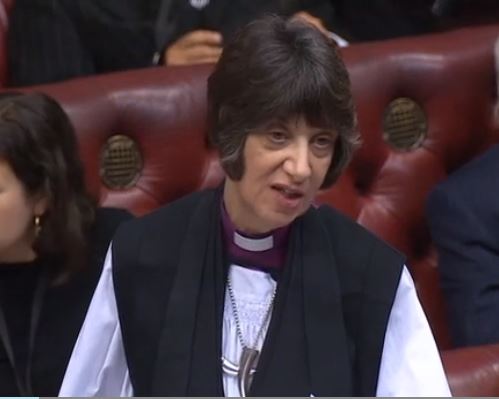
The Lord Bishop of Gloucester: I am grateful to the noble Baroness, Lady Lister, for moving this Motion. I want briefly to touch on three areas: children and young people; churches and faith communities; and those living in the shadows.
First, I turn to children and young people. Last month, I hosted an online youth forum in the diocese of Gloucester, bringing together more than 100 people so that adults in different spheres of influence, including our MPs, had the opportunity to listen to young people. Prior to that event, I spent many hours listening to young people speak about the impact of Covid-19 on their lives and I will share a few quotes. “Lockdown’s been so isolating.” “I feel like there should be more knowledge about mental health, not just depression and anxiety, and we should be taught how to deal with them.” “There’s been no direction. We don’t know what’s going to happen next. It’s hard for us to try and adapt to all these different situations.” “We haven’t had the chance to say how we feel about things.” “I really hope that sometimes we can be taken more seriously, and that our views can be put across.” “I just want people with influence to understand that there’s a wider range of issues than just the small subsection that they look at.”
Continue reading “Bishop of Gloucester speaks in debate on building an inclusive society”
 On 30th December the Bishop of Coventry received written answers to three questions on abortion and the two-child benefit limit:
 The Lord Bishop of Oxford [V] : My Lords, I thank the Minister for her answer. What will the Government do if other platforms do not follow the Netflix example? According to the BBFC, over 90% of parents said that age-related guidance was helpful, and there is no doubt that voluntary action may be more forthcoming if platforms are very clear that the UK Government expect content consumed here in the UK to be properly signposted with BBFC symbols and content advice. How else do the Government plan to ensure that only age-appropriate content is accessible to young and vulnerable viewers?
 The Lord Bishop of Worcester [V]: My Lords, I speak today on behalf of the right reverend Prelate the Bishop of Newcastle, who has been delayed travelling to London. Like her, I am very aware of the relationship between child poverty and a lack of social mobility, but she has a special interest as independent chair of the North of Tyne Inclusive Economy Board. Child poverty is central to the Government’s levelling-up agenda. Since 35% of children in the north-east of England live in relative poverty, would the Minister tell us if Her Majesty’s Government will work with the Social Mobility Commission to develop a national child poverty strategy in response to the Covid-19 pandemic?
 The Lord Bishop of Carlisle: My Lords, I speak in support of Amendment 43, in the names of my right reverend friend the Bishop of Durham, the noble Lord, Lord Young, and the noble Baronesses, Lady Chakrabarti and Lady Bull, and Amendment 60, in the names of the noble Baronesses, Lady Young and Lady Hamwee, and the noble Lord, Lord Kennedy of Southwark. As we have heard, both concern the treatment of children.
 The Lord Bishop of Carlisle: My Lords, does the Minister agree that some children with learning disabilities who want to access trust funds might have life-limiting conditions? There might not be much time available for legal processes to be gone through. Can she assure the House that, if such situations have not already been considered, they will be given the attention that they deserve?

You must be logged in to post a comment.