
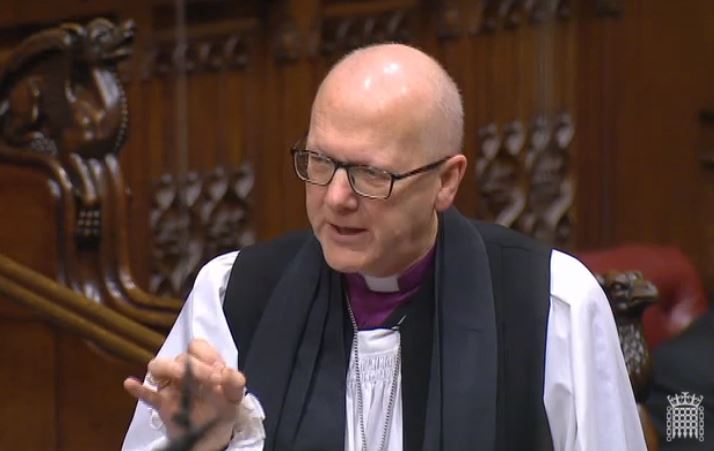
On 27th June 2019 the House of Lords debated a motion from Lord Paddick, “That this House takes note of the impact of government policy on knife crime”. The Bishop of St Albans, Rt Revd Alan Smith, spoke in the debate:
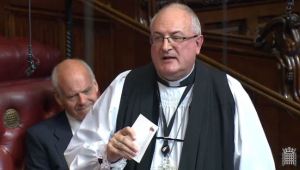
 The Lord Bishop of St Albans: My Lords, I too am grateful to the noble Lord, Lord Paddick, for obtaining this debate and for his excellent analysis of some of the causes and, indeed, the work that has been done on how we might address them, which is a holistic approach. I am also delighted that a number of experts in policing are speaking in this debate. I come to this with little knowledge of that, but I have knowledge through the 136 schools in my diocese—I have been to two this week—and in many of the urban areas across Bedfordshire and Hertfordshire, which seek to bring together groups of young people to reflect on how this can be addressed.
This debate looks at the impact of government policies on serious youth violence. As the causes are many and varied, we need to look at a wide range of different issues. We are all aware that access to lethal weapons has escalated and intensified conflict. Demonstrably, when the year to March 2018 represented the highest number of knife homicides in England and Wales since 1946, it is all too clear to us that it is too easy to obtain weapons, notwithstanding the Offensive Weapons Act 2019. Indeed, from previous problems, for example acid attacks, we are aware that simply removing one way of attacking other people does not necessarily immediately solve a problem. I am therefore delighted that government action in reducing weapon accessibility has had some success, with Operation Sceptre taking some 10,000 knives off the streets. Yet piecemeal approaches will never be enough.
 The Lord Bishop of Chester: My Lords, it is a privilege and a challenge to follow such a brilliant speech from someone who knows his way around the subject. If you want to find good things to tax, I always say that you should start with sin: find a new sin and tax it. I rather agree that HS2 is a sin, not for adding capacity, which I am all in favour of, but in doing so in such an unnecessarily expensive way. For me, trains go quite fast enough already and it could have been done far more cheaply without factoring in the speeds in a small country. As I follow the noble Lord’s speech, I think of St Paul, who once began by saying, “I speak as a fool”. I do so too, a little, after that wonderful description of the financial landscape.
 On 6th February 2019 the House of Lords considered the Government’s Offensive Weapons Bill in its third day of Committee. The Bishop of Newcastle, Rt Revd Chrisine Hardman spoke against Government amendments to create new Knife Crime Prevention Orders. The amendments were withdrawn following the debate, but the Minister indicated they were likely to be returned to again at a later stage:
 The Lord Bishop of Chichester: My Lords, I am grateful for the clarity with which the noble Lord, Lord Hunt, has spoken and am glad to follow him in this debate. I can speak today with direct experience of the work of IICSA and its handling of evidence. In March this year, the inquiry held public hearings over 14 days in its case study of the Chichester diocese, in which I gave written and oral evidence. As part of that case study, the inquiry has also heard evidence from survivors of sexual abuse. I begin today by asking the House to keep in mind the courage, and personal cost, with which survivors have been willing to share their testimony.
 On 5th November 2018, the Bishop of St Albans, the Rt Revd Dr Alan Smith, tabled a Private Notice Question ‘To ask Her Majesty’s Government, in the light of four fatal stabbings in London in the last week, what action is being taken to address the dramatic rise in knife crime in that city and in the rest of the United Kingdom.’ The exchanges and supplementary questions from other members can be found below:
  The Lord Bishop of Ely: My Lords, the Ministry of Justice has produced clear evidence that women’s centres are effective at reducing reoffending, provide joined-up community services to support physical and mental health needs and give more opportunities to women to have access to their children. What assessment does the Minister make of the need for increased funding to sustain and open more women’s centres?
 The Church of England in Parliament
You must be logged in to post a comment.