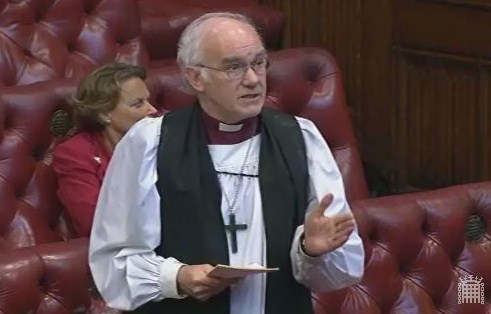
Bishop of Durham gives maiden speech in House of Lords

“Young people…have been told that their value and contribution to the world is in work and their economic contribution. They have been told a lie…We have to help our young people to understand their true value as human beings first and foremost—but yes, we have to help them to find good, meaningful work” – Bishop of Durham, 10/6/14
14.06.10 Bishop of Durham 4

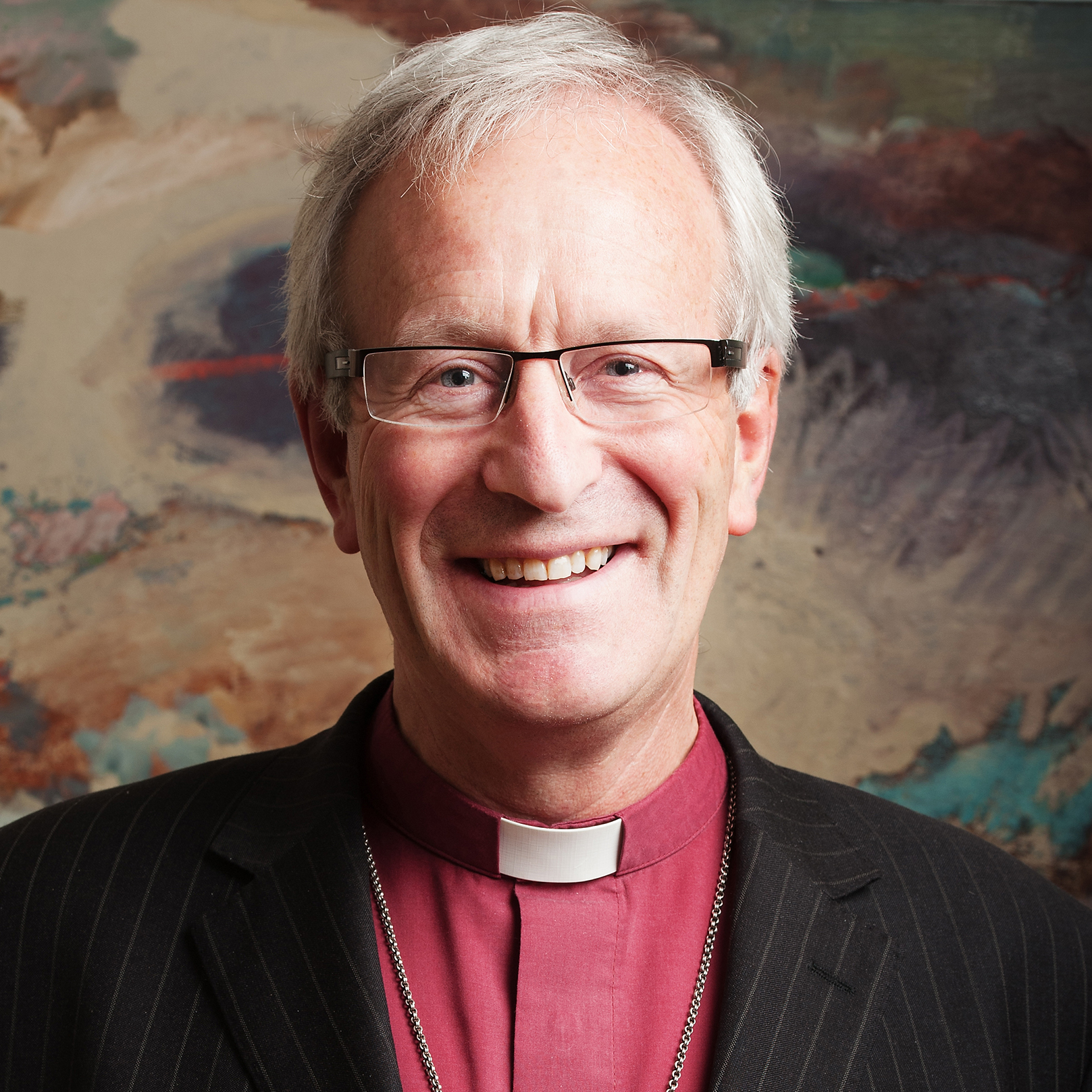
On 10th June 2014 the Bishop of Durham, Rt Rev Paul Butler, gave his maiden speech to the House of Lords, during the debate on the Queen’s Speech. The Bishop spoke about the attributes and needs of the Durham diocese, his experience of the global church, and his concern for young people’s social and economic welfare. He voiced his support for the Living Wage and plans within the Queen’s Speech for laws to tackle the emotional abuse of children.

This was the seventh contribution to the debate on the Queen’s Speech from the Bishops’ Benches. You can also watch a video of the Bishop delivering the speech on parliamentlive.tv


The Lord Bishop of Durham (Maiden Speech): My Lords, I begin by thanking your Lordships for the way in which I have been welcomed and supported as I have entered this noble House. That support has been full of wisdom, including guiding this Bishop as to how to kneel correctly during Prayers, for which I was extremely grateful. Continue reading “Bishop of Durham gives maiden speech in House of Lords”
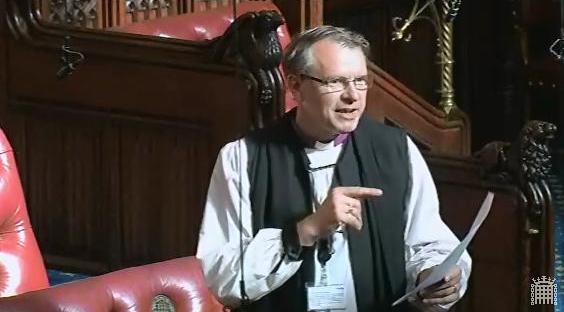
Bishop of St Albans receives answers to written questions on benefits, electricity and housing

On 12th May 2014, the Rt Revd Alan Smith, Bishop of St Albans, received answers to three written questions on benefits, electricity and housing.

Benefits

14.03 Bishop of St AlbansThe Lord Bishop of St Albans: To ask Her Majesty’s Government what assessment they have made of the financial impact on people on low incomes of uprating most cash benefits and tax credits by one per cent from April 2013 rather than in line with inflation.

The Parliamentary Under-Secretary of State, Department for Work and Pensions (Lord Freud): For 2013/14, the main rates of working-age benefits, statutory payments and tax credits were up-rated by one per cent in the Social Security Benefits Up-rating Order 2013. The Welfare Benefits Up-rating Act 2013 provided for the one per cent increase to apply for 2014/15 and 2015/16. Both of these were accompanied by Impact Assessments.

As part of his ongoing public sector equality duty under the Equality Act 2010 to monitor impacts on “protected groups”, the Secretary of State continues to monitor the impacts of the Welfare Benefits Up-rating Act 2013 in light of any changes to the underlying rate of inflation. The underlying rate of inflation for increases in 2014/15 is similar to that forecast by the Office for Budget Responsibility and used in the Impact Assessment. It is therefore likely that the impacts on affected households will be broadly similar to those detailed in the Impact Assessment.

(via Parliament.uk)

Continue reading “Bishop of St Albans receives answers to written questions on benefits, electricity and housing”

Apprenticeships – Written Questions

On 6th May 2014, the Rt Revd Alan Smith, Bishop of St Albans, recieved answers to two written questions on the subject of apprenticeships.

14.03 Bishop of St AlbansThe Lord Bishop of St Albans: To ask Her Majesty’s Government what percentage of apprentices enter into employment with the company to which they were apprenticed after their apprenticeship scheme has finished.

Lord Ahmad of Wimbledon (Con): We publish information on learning outcomes on the Further Education Choices website to help better inform learner choices. This website presents information on learner outcomes with any employer as well as other destinations:

http://fechoices.skillsfundingagency.bis.gov.uk

Continue reading “Apprenticeships – Written Questions”

Living Wage Call by the Bishop of Leicester

In the House of Lords on 1st April 2014 Lord Young of Norwood Green asked Her Majesty’s Government ‘what plans they have to mark the 15-year anniversary of the minimum wage, which took effect on 1 April 1999.’ The Bishop of Leicester asked a supplementary question: 

14.04.01 Bishop of Leicester

The Lord Bishop of Leicester: My Lords, in view of what the Minister has said about there being much work to do on the living wage, does he agree that a good way to mark this anniversary would be to commission an independent inquiry into the actual effects of raising the minimum wage to the living wage for everyone? Continue reading “Living Wage Call by the Bishop of Leicester”

Shrinking the economic gap between London and the regions: Budget speech by Bishop of Sheffield

“If we do nothing, we will see the gap between London and the regions continue to widen to the detriment of the whole country. I urge the Government and this House to address this problem with imagination, courage and vigour” – Bishop of Sheffield

On 27th March Peers debated the Chancellor’s 2014 Budget statement. The Bishop of Sheffield spoke of the need to rebalance the economy so that the proceeds of renewed economic growth could be shared across the regions. He suggested this could be the task of a cross-party parliamentary commission.

14.03.27 Bishop of SheffieldThe Lord Bishop of Sheffield: My Lords, the prophet Jeremiah wrote a short but remarkable letter to his contemporaries long ago who had been sent into exile in Babylon. The letter has shaped Jewish and Christian thought on how communities of faith should engage with the wider society down all the generations since. The prophet’s advice is to,

“seek the welfare of the city where I have sent you … for in its welfare you will find your welfare”.

Continue reading “Shrinking the economic gap between London and the regions: Budget speech by Bishop of Sheffield”

Freedom and Responsibility: Budget speech by the Bishop of Chester

On 27th March Peers debated the Chancellor’s 2014 Budget statement. The Bishop of Chester, Rt Rev Peter Forster, cautioned that if society were to experience renewed growth and prosperity, it should guard against recreating the problems of the past 30 years. He argued for an emphasis on strengthened social institutions, including families, continued commitment to overseas aid, and improved financial education.

14.03 Bishop of ChesterThe Lord Bishop of Chester:  My Lords, the reason that the Bishops sit on the government side of the Chamber, I am told, is the recognition that the task of government is so difficult that the Government need all the help available to them. Managing the economy in recent years has been an enormously difficult task and we can only express relief and, indeed, gratitude that things seem to be moving on to a more normal plane despite all the challenges ahead, about which the Chancellor himself is fairly candid. Continue reading “Freedom and Responsibility: Budget speech by the Bishop of Chester”

Bishop of Birmingham Responds to the Budget

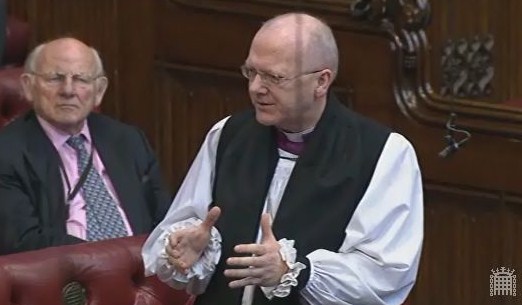
Responding today to the Chancellor’s 2014 Budget statement, the Bishop of Birmingham, Rt Rev David Urquhart[1] said: david-urquhart

“There is much to welcome in today’s Budget announcement, not least the news that economic growth is strengthening, the long awaited transferable tax allowance for married couples, and the new funds to help restore the fabric of some our nation’s great cathedrals.

The increasingly confident economic outlook is good news. The crucial challenge will be to ensure that the stewardship of the economy takes into account the need for those at the lower end of the income scale or at the margins of society to share fully in the proceeds of growth.

The reaffirmation by the Chancellor of our country’s commitment to spend 0.7% of our national income on overseas development assistance is an important demonstration of our national commitment to those in the greatest need. Continue reading “Bishop of Birmingham Responds to the Budget”

The Bishop of St Albans calls for greater support for businesses taking on apprentices

Baroness Stedman-Scott asked Her Majesty’s Government what steps they are taking to equip young people with the skills necessary to enter the job market.

The Bishop of St Albans asked a supplementary question:

The Lord Bishop of St Albans: My Lords, there are four times as many 18 to 24 year-olds looking for work at the moment as there are in the 16 to 17 age group. Yet the Government’s policy on apprenticeships for 19 to 24 year-olds is to ask employers to pay half the costs of the learning framework. Many businesses, especially SMEs, will pause before taking on an apprentice because of this. Does the Minister agree that if this requirement were to be removed, it would hugely encourage many more young people to get into apprenticeships as well as giving them much more of a chance to succeed?

Lord Ahmad of Wimbledon: The right reverend Prelate makes an important point, but I am sure many noble Lords are aware that the Government do support local businesses. Indeed, they have made additional funding available to small businesses that are looking to take on both trainees and apprentices.

On the age group that the right reverend Prelate mentioned, particularly 19 to 24 year-olds, in October 2013 the Government announced funding of an additional £20 million to support the expansion of traineeships, which are helping even more young people to get the skills and experience they need to get into full-time work.

(via parliament.uk)

Bishop of Wakefield raises concerns about impact of lack of free parking on local businesses

Baroness Williams of Trafford asked Her Majesty’s Government what assessment they have made of town-centre parking policies and their impact on local businesses.

The Bishop of Wakefield asked a supplementary question:

The Lord Bishop of Wakefield: My Lords, I want to focus particularly on the impact on small towns, which may not necessarily have trains and buses bringing people into them. Where there are not just large-scale out-of-town developments but also small-scale shopping centres, where it is easy to park for nothing, the impact on the high street is significant. In Mirfield, in the diocese from which I come, free parking has had a very good impact. In Berwick-upon-Tweed, another town I know very well, there is no free parking and that is seriously affecting local businesses. Can we be assured that Her Majesty’s Government will encourage local authorities to look at ways of finding more parking spaces in small towns?

Baroness Stowell of Beeston: The right reverend Prelate is right to raise the issue of more free parking. In a recent report published by Deloitte, more free parking was the single biggest issue raised by people who responded. In examining some options, we are trying to ensure that local people have a greater say in the parking arrangements of their local areas—and, clearly, access to free parking should be one of those things.

(via parliament.uk)

The Bishop of Worcester speaks on arts and culture in the ‘current financial climate’

My Lords, I am grateful to the noble Lord, Lord Mawson, for securing this debate and I pay tribute to the wonderful work that he has done in this area over many years, as I do to the noble Baroness, Lady Kidron, who has similarly done wonderful work. I claim no particular expertise, although I am passionate about the arts—perhaps that is something to do with the fact that it is sometimes said that many clergy are failed actors. Continue reading “The Bishop of Worcester speaks on arts and culture in the ‘current financial climate’”