Bishop of Norwich speaks on educational selection and grammar schools

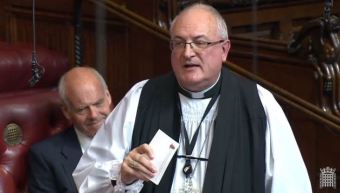
norwich121016bOn 13th October 2016 Baroness Andrews led a debate in the House of Lords “that this House takes note of the Government’s proposals for the extension of grammar schools and selection in education”. The Bishop of Norwich, the Rt Revd Graham James spoke in the debate:

The Lord Bishop of Norwich: My Lords, I am grateful to the noble Baroness, Lady Andrews, for securing this debate. The right reverend Prelate the Bishop of Ely, our lead bishop on education, cannot be in his place today, but I am glad to contribute from these Benches and to hear an excellent maiden speech from the noble Baroness, Lady Vere.

Like many others in your Lordships’ House, I attended a grammar school. I was also the first in my family to receive a university education. At Northampton Grammar School for Boys, as it then was, you imbibed an ethos and culture which simply assumed you would seek university entrance. My grammar school was hierarchical, full of petty rules and almost entirely male—the perfect preparation for a career in the Church of England. Continue reading “Bishop of Norwich speaks on educational selection and grammar schools”

Church Commissioner Questions – October 2016

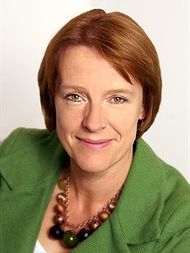
On 13th October 2016 the Second Church Estates Commissioner, Rt Hon Dame Caroline Spelman MP, answered questions from MPs on school admissions, ecumenical relations, community cohesion, refugees, LGBT pastoral care, Scrooby parish, same sex marriage and cathedral repairs.

Caroline Spelman 1Church Commissioners Continue reading “Church Commissioner Questions – October 2016”

Bishop of St Albans speaks in debate on school admissions

On 8th September 2016, Lord Lucas led a short debate on the question to Her Majesty’s Government: “what plans they have to support parents in navigating schools’ admissions arrangements”. The Rt Revd Dr Alan Smith, Bishop of St Albans, contributed to the debate. 

StAlbans171115The Lord Bishop of St Albans: My Lords, I am also grateful to the noble Lord, Lord Lucas, for bringing this Question to the House for debate. The right reverend Prelate the Bishop of Ely normally takes the lead on these matters but he is unable to be here today, so I want to make just a few comments. The subject of admissions is a complex one. As a child’s education is so vital and important, not surprisingly it often leads to impassioned responses. That can be true of the subject of admission to church schools, on which I know that several Members of this House have expressed opinions in the past. Before I turn directly to the topic of faith-based admissions, which your Lordships will not be surprised I wish to address, I would like briefly to set out some points by way of context. Continue reading “Bishop of St Albans speaks in debate on school admissions”

Bishop of Ely asks Government about future of university research after UK withdrawal from EU

Ely 2On 7th July 2016 Baroness Sharp of Guildford asked Her Majesty’s Government “what assessment they have made of the impact of the outcome of the referendum on the United Kingdom’s membership of the European Union on the short-term and long-term participation of UK universities in Horizon 2020 research collaborations and the Erasmus Programme”. The Bishop of Ely, Rt Revd Stephen Conway, asked a follow up question:

The Lord Bishop of Ely: My Lords, I declare an interest as a visitor to a number of colleges in Cambridge. In my conversations with the vice-chancellors of both Cambridge University and Anglia Ruskin University, which is in Cambridge, not only were they very concerned that there was a risk of losing £500 million of research funding for Cambridge and for the Russell group universities but—rather than the money—they were much more concerned about soft diplomacy and the free movement of scholars, which may be affected in the future. Continue reading “Bishop of Ely asks Government about future of university research after UK withdrawal from EU”

Bishop of Ely on the challenges for the UK following the EU referendum

On 5th July 2016 the House of Lords debated a motion to take note of the result of the referendum on the UK’s membership of the European Union. The Bishop of Ely, Rt Revd Stephen Conway, spoke in the debate, focusing on leadership, common values, education and the rural workforce.  

Ely 2The Lord Bishop of Ely: My Lords, I cannot match that passion, but I join other noble Lords in saying how much I appreciated the speech earlier of our boss—I mean of my friend, the most reverend Primate the Archbishop of Canterbury. He and I have both worked in the north-east and been welcomed by the people of that area, many of whom voted to leave, just as people in fenland in my current diocese and people in east Kent, beloved of the most reverend Primate, did. These people were not, it seems to me, voting against the European Union but were making a great cry—a lament—about not having been heard for several generations by us, the political class. This was their opportunity to make us listen, after feeling excluded for so long. Continue reading “Bishop of Ely on the challenges for the UK following the EU referendum”

Bishop of Chelmsford calls for strengthening of religious education to combat hatred and xenophobia

Chelmsford 251115On 30th June 2016  Lord Taverne asked Her Majesty’s Government “in what way the guidance produced by Dr Satvinder Juss on the implications of the High Court’s ruling in R (Fox) v Secretary of State for Education is “inaccurate” as they have stated.” The Bishop of Chelmsford, Rt Revd Stephen Cottrell, asked a follow up question.

The Lord Bishop of Chelmsford: My Lords, I address the House at this point in my capacity as a lapsed atheist. I make it clear that I welcome the place of non-religious world views in religious education; they are very important. However, will the Minister further agree that one of the best ways in which people can counter the race hatred, xenophobia and misunderstandings that we see in our society at the moment is by strengthening religious education in schools? Continue reading “Bishop of Chelmsford calls for strengthening of religious education to combat hatred and xenophobia”

Bishop of Chelmsford condemns hate crime, calls for better religious literacy

On 29th June 2016 Lord Ahmed repeated to the House of Lords a Government statement made in the House of Commons about hate crime. The Bishop of Chelmsford, Rt Revd Stephen Cottrell, asked a follow up question about religious literacy and education.Chelmsford 251115

The Lord Bishop of Chelmsford: My Lords, perhaps I may ask the Minister two specific questions about religious literacy and religious education. First, I welcome the Statement and the responses from the other Front Benches, and of course to express my own great dismay at the incidents that we have experienced in recent days. As I said in the House on Monday, the diocese where I serve includes some of the most multicultural parts of this country. I have heard many disturbing stories, and even more of them here today.

My first question relates to religious education. We have discovered in recent days something that is already there within us and that has been stirred up and legitimised by some of the debate, yet religious education has less of a place in the national curriculum than it used to. I wonder whether this is another opportunity for the Government to look again at the place of religious education in schools.

My second question is about religious literacy. I serve on this House’s Select Committee on Communications. We have recently completed a report on the renewal of the BBC charter. Religious broadcasting has almost disappeared from public service broadcasting, and the BBC no longer has a commissioning editor for religious broadcasting. Surely this is a time when we need to do more about this. It is a very practical matter that the Government could address. Continue reading “Bishop of Chelmsford condemns hate crime, calls for better religious literacy”

Bishop of Southwark: special educational needs children “not a burden but a gift”

On 26th May 2016 Lord Addington led a debate in the House of Lords “That this House takes note of the case for improved individual school capacity to deal with commonly occurring special educational needs and disabilities, in the light of the increasing number of academies and free schools.” The Bishop of Southwark, Rt Revd Christopher Chessun, took part: 

SouthwarkThe Lord Bishop of Southwark: My Lords, I am also very grateful to the noble Lord, Lord Addington, for securing this debate. Our schools prepare young people for our communities and are committed to seeing that all children are valued and respected, which serves to build a society where all know the fullness of life. Last week in this House, the right reverend Prelate the Bishop of Ely reminded us:

“Life in all its fullness means being exacting, rigorous, ambitious and having appetite for all that excellence demands”.—[Official Report, 19/6/16; col. 63.]

He added in another speech that,

“we cannot allow our commitment to academic rigour blind us to the fact that we are teaching people, not subject matter”.

This is core to the Christian idea of education as a matter of mutual flourishing, of which academic achievement is only a part, albeit an important part. Continue reading “Bishop of Southwark: special educational needs children “not a burden but a gift””

Queen’s Speech: Bishop of Newcastle gives maiden speech

On 25th May 2016 the House of Lords held its fifth day of debate the Queen’s Speech. During the debate the Bishop of Newcastle, Rt Revd Christine Hardman, gave her maiden speech, becoming the second female bishop to speak in the House of Lords. As well as introducing herself to the House she addressed the Government’s life chances strategy, and regional growth in the North. Her speech is below in full, alongside responses from Peers.Newcastle 5

The Lord Bishop of Newcastle: My Lords, the theological understanding of grace is of the love and mercy given to us by God because God desires us to have it, not because of anything we have done to deserve it. In these early days in your Lordships’ House, it is grace that I have experienced—wonderful kindness and a warmth of welcome from your Lordships, the staff and all who work in this place. It has been entirely undeserved but a truly heart-warming experience. It will be no surprise to your Lordships that one of the loveliest and warmest welcomes came from the late Lord Walton—a fine and godly man, and a distinguished son of the north-east.

Queen’s Speech 2016: Bishop of Ely responds on academies, RE, universities and skills

Research done already on the implications of what has been said by Ministers is that academisation will proceed very fully. The think tank CentreForum suggests that only about 3,000 free-standing schools might be left that are not academised in the future. I am concerned that we do not end up with thousands of outstanding schools going it alone. We need to ensure that all strong schools, in MATs or otherwise, support schools that are struggling. There is no way of flourishing that does not take in support for others.

Continue reading “Queen’s Speech 2016: Bishop of Ely responds on academies, RE, universities and skills”