Bishop of Ely highlights role of church schools in fostering shared values

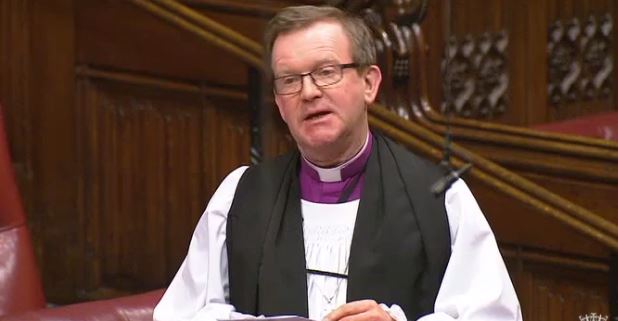
On the 2nd December 2016 the Bishop of Ely, the Rt Revd Stephen Conway spoke in a debate led by the Archbishop of Canterbury on shared values and their implications for public policy making. The Bishop of Ely spoke about the importance of character education in developing values and the role played by church schools in fostering good links between children of all faiths and none.

ElyThe Lord Bishop of Ely: My Lords, I thank my friend the most reverend Primate for securing this timely and essential debate. I applaud the noble Lord, Lord McInnes, on his excellent speech, not least on drawing together our concern for values with opportunity for our children and young people. When we talk about British values, we should be aiming not at the lowest common denominator but, as the noble Baroness, Lady Warsi, said, at the highest ideals that we want to promote for and with our children.

Character education is all set to be the foundation for the kind of person we want each child to become: a member of society who not only understands the world, but cares about it, is equipped to continue in the good and recognise and challenge the bad and is courageous enough to bridge divides and extend the hand of friendship. The Church of England vision for education actively seeks to provide an education that fosters this. Character education is about educating children not only to become efficient economic units, but to flourish in all areas of their lives, and enjoy life in all its fullness, as Jesus says in the Gospel of John. Fundamental to this is the nurturing of virtues as the intrinsic building blocks of a rounded human life with concrete outcomes in behaviour and service. St Paul takes the life of virtue beyond what had previously been categorised when he wrote in the Letter to the Galatians about the “fruits of the spirit”: love, joy, peace, forbearance, kindness, goodness, faithfulness, gentleness and self-control.

Archbishop of Canterbury leads Lords debate on shared values

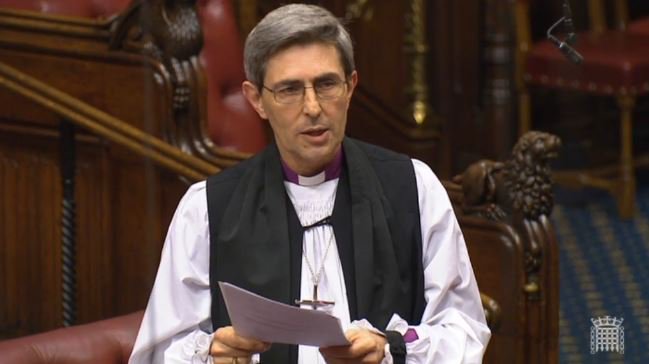
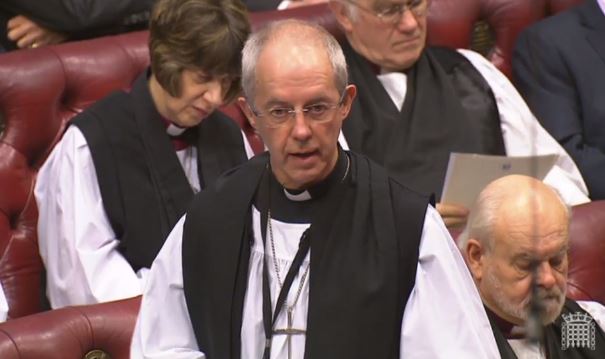
On 2 December 2016 the Archbishop of Canterbury, the Most Revd and Rt Hon Justin Welby, led a debate in the House of Lords “That this House takes note of the shared values underpinning our national life and their role in shaping public policy priorities.” His opening and closing speeches are below. The Bishops of Ely and Gloucester also spoke in the debate.

abcvalues5

The Archbishop of Canterbury: My Lords, I am most grateful to the usual channels for making this debate possible. I should also like to thank noble Lords who have made the time and taken the trouble to attend today in considerable numbers, the Minister, the noble Lord, Lord Bourne, and those who look after us so well in this House.

In case noble Lords are wondering what the Motion is [laughter]…I decided to change it at the last minute…It reads:

“The Lord Archbishop of Canterbury to move that this House takes note of the shared values underpinning our national life and their role in shaping public policy priorities”.

It will be an especial pleasure to hear maiden speeches from the noble Baroness, Lady Bertin, and the noble Lord, Lord McInnes of Kilwinning. The noble Baroness brings her knowledge of communications, issues of disability among children and education. The noble Lord will enable us to have a wider view of issues in Scotland.

The UK, especially perhaps England, is a pragmatic country with a bias towards the empirical over the theoretical. Not for us the cries of “liberty, equality and fraternity”, to be followed by years of bloodshed to ensure true fraternity was established. Rather, ours is an untidiness of cumulative reforms and changes, worked out in practice through the highways and byways of our constitution. We relish the irony of a constitution that works in practice but never could in theory.

Great times of change in mood and culture demand from us a reimagining of what we are about as a nation. As we move into a post-Brexit world, alongside the other events that buffet and deflect us, unless we ground ourselves in a clear course and widely accepted practices, loyalties and values—what I will call values in this speech—we will just go with the wind. Continue reading “Archbishop of Canterbury leads Lords debate on shared values”

Bishop of Winchester asks Government about importance of friendship and self-image within teaching of sex and relationship education

winchester171116On 24th November 2016 Baroness Donaghy asked Her Majesty’s Government “whether they plan to make sex and relationship education part of the national curriculum.” The Bishop of Winchester, Rt Revd Tim Dakin, asked a follow up question:

The Lord Bishop of Winchester: My Lords, does the Minister agree that it is important for such education to be about not just sex and sexuality but sex and relationships? Should such education therefore include wholesome friendships and relationships between the sexes, the importance—as already discussed—of guarding against abuse, and the vital need for young people to have a healthy self-identity? On the last point, I commend the right reverend Prelate the Bishop of Gloucester on her work with children on body image. What steps will the Government take to incorporate such broader issues and concerns into any sex and relationships curriculum? Continue reading “Bishop of Winchester asks Government about importance of friendship and self-image within teaching of sex and relationship education”

Bishop of Carlisle asks Government about the impact of work pressures on teachers’ mental health

14.06.09 Bishop of CarlisleOn 16th November 2016, Baroness Tyler of Enfield asked Her Majesty’s Government “what is their response to the Report of the Values-Based Child and Adolescent Mental Health System Commission, What Really Matters in Children and Young People’s Mental Health, published on 7 November.” The Bishop of Carlisle, Rt Revd James Newcome, asked a follow up question:
The Lord Bishop of Carlisle: My Lords, the commission highlighted the importance of valuing the workforce, but a 2014 survey of teachers and lecturers indicated that about 55% of them reckoned that their work was seriously damaging their own mental health. Have Her Majesty’s Government any plans to address that particular issue so that the mental health of teachers can be improved and so they are better equipped to help and improve the mental health of their pupils? Continue reading “Bishop of Carlisle asks Government about the impact of work pressures on teachers’ mental health”

Caroline Spelman MP highlights the role of church schools in promoting excellence and social integration

On 8th November 2016 the House of Commons debated a motion from Labour’s Lisa Nandy MP “That this House notes recent proposals by the Government to expand the role of grammar and faith schools; and calls on the Government to conduct a full assessment of the evidence relating to the effect of grammar schools and faith schools on children’s learning.” The Second Church Estates Commissioner, Rt Hon Dame Caroline Spelman MP, spoke in the debate about the important role of Church of England schools:

Caroline SpelmanThe Second Church Estates Commissioner (Dame Caroline Spelman): I rise to speak on behalf of the Church of England in this important Back-Bench debate. The Church has a long and successful history of educating children in our country. It provided education before the state did. In fact, it is still the largest provider of education besides the state. It has 4,700 schools, most of which are primaries, with 200 secondary schools. Some 84% of its primary and 74% of its secondary schools are good or outstanding.

Many of the remaining schools are in remote rural locations, although I should point out that there are some excellent rural schools. The challenge of trying to sustain a class for each year group in a remote rural area and the difficulty in attracting teachers there make it hard to achieve higher standards in those schools. The Church is committed to raising standards, and with the help of digital means and remote learning methods, it is possible to bring the best teaching to such schools. The Church has fought to sustain these schools for the sake of social cohesion, where other institutions might by now have given up. I am sure that hon. Members with rural constituencies will immediately identify with the importance of the village school, which, with the parish church, may be the only institutional hub for such communities. That underlines the importance of keeping them sustainable.

I want to scotch the myth that Church schools are forces for segregation. That could not be further from the truth. Continue reading “Caroline Spelman MP highlights the role of church schools in promoting excellence and social integration”

Bishop of Portsmouth highlights uncertainties for Higher Education of EU withdrawal

My background covers different sorts of universities: Hertfordshire and Portsmouth, Oxford and Cambridge, and Durham and Manchester. I studied in three, taught economics in two, was a chaplain in another and have been a governor in two. I draw your Lordships’ attention to my entries in the register of interests.

In such very varied universities, the present excruciating uncertainty following the Brexit vote is having a significant impact in a range of areas.

Continue reading “Bishop of Portsmouth highlights uncertainties for Higher Education of EU withdrawal”

Bishop of Ely asks Government about educational support for disabled young people

Ely 2On 31st October 2016, the Bishop of Ely, the Rt Rev Stephen Conway, received a written answer from Lord Nash (Department for Education), to a question about educational support and careers advice provided to disabled young people.


Lord Bishop of Ely: To ask Her Majesty’s Government what plans they have to ensure that schools, further education colleges and universities are able to provide specialist careers advice and support for disabled young people. Continue reading “Bishop of Ely asks Government about educational support for disabled young people”

Bishop of Portsmouth asks Government to look at impact on schools of increasing business rates on small solar panels

portsmouth241016On 27th October 2016 Baroness Featherstone asked Her Majesty’s Government “whether they will reverse their decision to end the business rate exemption for small solar panels from April 2017”. Baroness Featherstone said “I urge the Government to look at the impact on schools and parish councils, which will be devastating”. The Bishop of Portsmouth, Rt Revd Christopher Foster, asked a follow up question: 

The Lord Bishop of Portsmouth: My Lords, may I press the Minister a little further on the impact—perhaps, I am hoping, the unintended impact—of this decision on some small schools? Is it really intended that small schools should pay business rates, often after significant community fundraising to install solar panels to increase awareness among children and young people of climate-change issues? Continue reading “Bishop of Portsmouth asks Government to look at impact on schools of increasing business rates on small solar panels”

Bishop of Norwich speaks on educational selection and grammar schools

norwich121016bOn 13th October 2016 Baroness Andrews led a debate in the House of Lords “that this House takes note of the Government’s proposals for the extension of grammar schools and selection in education”. The Bishop of Norwich, the Rt Revd Graham James spoke in the debate:

The Lord Bishop of Norwich: My Lords, I am grateful to the noble Baroness, Lady Andrews, for securing this debate. The right reverend Prelate the Bishop of Ely, our lead bishop on education, cannot be in his place today, but I am glad to contribute from these Benches and to hear an excellent maiden speech from the noble Baroness, Lady Vere.

Like many others in your Lordships’ House, I attended a grammar school. I was also the first in my family to receive a university education. At Northampton Grammar School for Boys, as it then was, you imbibed an ethos and culture which simply assumed you would seek university entrance. My grammar school was hierarchical, full of petty rules and almost entirely male—the perfect preparation for a career in the Church of England. Continue reading “Bishop of Norwich speaks on educational selection and grammar schools”

Church Commissioner Questions – October 2016

On 13th October 2016 the Second Church Estates Commissioner, Rt Hon Dame Caroline Spelman MP, answered questions from MPs on school admissions, ecumenical relations, community cohesion, refugees, LGBT pastoral care, Scrooby parish, same sex marriage and cathedral repairs.

Caroline Spelman 1Church Commissioners Continue reading “Church Commissioner Questions – October 2016”