Israel: Bishop of Coventry asks Government about attacks on church property and the funding of Christian schools

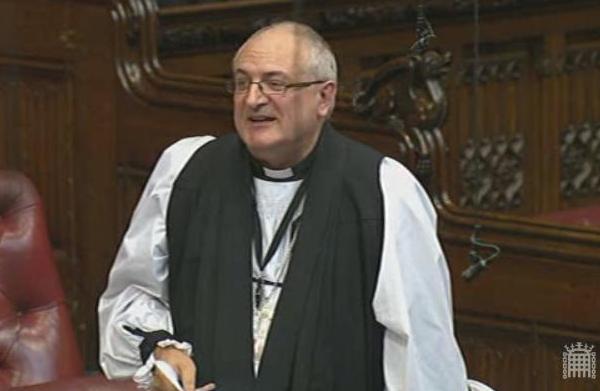
Bp Coventry May 2015On 24th September 2015 the Bishop of Coventry, Rt Revd Christopher Cocksworth, received written answers to questions of Government on attacks on church property in Israel and the funding of Christian schools.
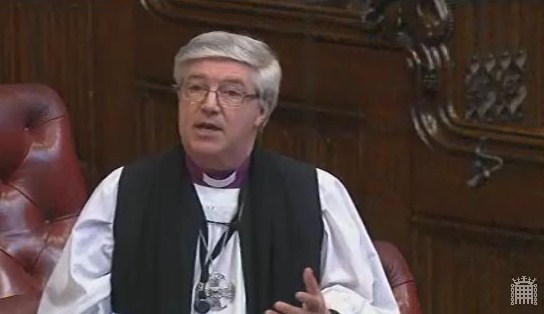
The Lord Bishop of Coventry:

To ask Her Majesty’s Government what is their current assessment of the number of “price tag” attacks on church property in Israel.


Baroness Anelay of St Johns: We condemn all extremist violence, including those attacks against religious buildings. Whilst most ‘price tag’ attacks have taken place in the Occupied Palestinian Territories, we are aware that on 18 June the Benedictine Church of the Multiplication at Tabgha, on the Sea of Galilee, was set on fire and vandalised with graffiti. Officials from our Embassy in Tel Aviv raised this at the time with the Israeli Foreign Ministry and National Security Council. Continue reading “Israel: Bishop of Coventry asks Government about attacks on church property and the funding of Christian schools”

Bishop of Peterborough asks Government about the role of arts and humanities in education

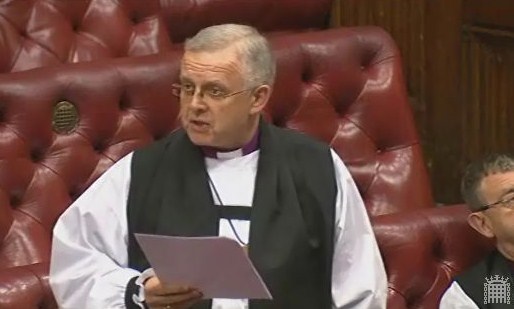
14.02 PeterboroughOn the 22nd July 2015 Lord Aberdare asked the Government ‘how they plan to ensure that the United Kingdom retains its global position in the creative sector in the light of plans announced in June to require all state secondary school pupils to study five English Baccalaureate core subject areas, which exclude any music, arts or culture element’. The Bishop of Peterborough, the Rt Revd Donald Allister asked a supplementary question.

The Lord Bishop of Peterborough: My Lords, does the Minister agree that education is about not just national productivity but the whole of human flourishing? The arts, music and cultural subjects in general are essential to that.

Continue reading “Bishop of Peterborough asks Government about the role of arts and humanities in education”

Bishop of Birmingham responds to the Budget

“The test of the success of this and future Budgets for a country living within its means will be the growing number of households that are equipped and completely free to earn the means to live.” Bishop of Birmingham 21/07/15

01.04.14 Bishop of BirminghamOn the 21st July 2015 the Bishop of Birmingham, the Rt Revd David Urquhart, responded to the  Budget Statement, during a debate in the House of Lords. The Bishop called for an inclusive capitalism and questioned Lord O’Neill the Commercial Secretary for the Treasury about the impact of the changes to working age benefits. The Bishop also spoke about the need to improve productivity via energising the local economy alongside investing in infrastructure, skills, training and apprenticeships.

Continue reading “Bishop of Birmingham responds to the Budget”

Education and Adoption Bill – Speech by Caroline Spelman

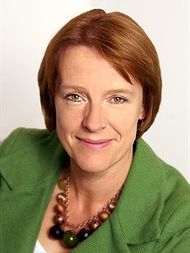
Caroline SpelmanOn the 22nd June 2015 the Second Church Estates Commissioner, Rt Hon Caroline Spelman MP, spoke during the second reading debate of the Government’s Education and Adoption Bill. Emphasising the role of the Church of England in education, and welcoming the move towards more multi-academy trusts, Mrs Spelman sought assurances that the proposed new Government powers of intervention would not limit the Church’s ability to control its existing schools and promote new ones. Her speech is in full, below:

Continue reading “Education and Adoption Bill – Speech by Caroline Spelman”

Bishop of Norwich draws attention to social impacts of education and media

On 3rd June 2015, during the debate on the Queen’s Speech, the Bishop of Norwich, the Rt Revd Graham James, spoke on the social and cultural aspects of education, as well as those of broadcast media. The text of his speech is below and can be watched online here:

14.06.12 Bishop of Norwich

The Lord Bishop of Norwich: My Lords, the gracious Speech said that the Government intend,

“to improve schools … and create more academies”.

I declare an interest as one of the sponsors of the first academy in Norfolk, the Open Academy, set up under the last Labour Government. It is now part of a thriving diocesan academies trust committed to school improvement. So I support the Government’s overall aim to improve schools, but there are areas where the direction of travel needs a few extra signposts. Continue reading “Bishop of Norwich draws attention to social impacts of education and media”

Church Commissioner Questions – Bishops’ Letter, Church Buildings, Living Wage, Ethical Investments, St George’s Jerusalem

Tony Baldry MPOn the 11th March 2015 during the final House of Commons session of this Parliament for questions to the Church Commissioners, MPs asked the Second Church Estates Commissioner, the Rt Hon Canon Sir Tony Baldry MP, about the House of Bishops’ Pastoral Letter, St George’s Jerusalem, the rural church, faith leaders and citizenship values, church buildings, the living wage, Lichfield Cathedral and ethical investment.

This was the final Church Commissioner questions session for Sir Tony Baldry MP, who retires at the end of this Parliament. Tributes to his work were paid by MPs and by the Speaker.

A full transcript can be found below.

Continue reading “Church Commissioner Questions – Bishops’ Letter, Church Buildings, Living Wage, Ethical Investments, St George’s Jerusalem”

The Bishop of Norwich calls for protection of academy funding

On 3rd March 2015, Baroness Jones of Whitchurch asked Her Majesty’s Government what advice they have issued to individual academy schools regarding the £2.5 billion held in their reserves. The Bishop of Norwich, the Rt Revd Graham James, asked a supplementary question:

14.06.12 Bishop of NorwichThe Lord Bishop of Norwich: My Lords, some academies and other schools have secured private funding which they ring-fence to finance a chaplain, international links or some other good purpose. For the avoidance of doubt, will the Minister give an assurance that such funds are not to be treated as free reserves? Further, will he encourage academies to secure such funding?

Lord Nash (Parliamentary Under Secretary of State for Schools): I entirely agree with the right reverend Prelate and I pay tribute to his very good work in the school system in Norfolk. We should welcome such funds into the school system. We should welcome people who bring these funds and give their time freely. It is a development that we should seek to encourage.

(Via Parliament.uk)

Bishop of St Albans – Libraries (Written Answer)

On 26th February 2015, the Bishop of St Albans, the Rt Revd Alan Smith, received an answer to a written question on library closures in the UK.

Bishop of St AlbansThe Lord Bishop of St Albans: To ask Her Majesty’s Government what assessment they have made of the impact of library closures on educational standards across the United Kingdom.[HL5085]

Baroness Jolly (Government Whip): The DCMS has not made any assessment of the impact of library closures on educational standards across the United Kingdom. Every Library Authority has a duty to provide a comprehensive and efficient library service.

(via Parliament.uk)

Bishop of Ely takes part in debate on education reform

On 29th January 2015, the Bishop of Ely, the Rt Revd Stephen Conway, took part in Baroness Perry of Southwark’s take note debate in the House of Lords on the progress of the Government’s school reforms. The Bishop, who recently took over the role of Chair of the Church of England’s National Society, focused his speech on the success of reforms in Church schools – including through the transition of many secondary schools into academies and the development of imaginative and collaborative ways to protect rural schools. He noted the Church’s focus on the development of free schools in areas of deprivation, the importance of high-quality training and recruitment of teachers, the importance of character education alongside other parts of the curriculum, and the hope that a holistic approach could be taken to education, to ensure that the next generation are best prepared for the future.

14.10.16 Bishop of Ely 1The Lord Bishop of Ely: I am very grateful to the noble Baroness for securing this timely debate, not least as I have just taken over as chair of the Church of England’s National Society, which is responsible for our schools. We talk about urgency and the long term, and our picture goes back until at least 1811, with the foundation of the National Society. We have planted thousands of schools, determined that every child in the country should have access to a decent education regardless of their capacity to pay for it. The church continues to want to be involved in the reform and improvement of education across the board, not just in church schools but across primary schools, community schools, secondary schools and the university sector. Continue reading “Bishop of Ely takes part in debate on education reform”

Education Minister praises Church school record on inclusion and community cohesion

On 28th January, Baroness Massey of Darwen asked Her Majesty’s Government what are the conditions which must be met before a new state-funded faith school or free school is allowed to be established; who sets and agrees the conditions; and how the conditions must guarantee a broad and balanced curriculum for pupils. The Bishop of Leicester, the Rt Revd Tim Stevens, asked a supplementary question:

14.04.01 Bishop of LeicesterThe Lord Bishop of Leicester: My Lords, does the Minister agree that “faith school” covers a variety of different kinds of institution? Church of England schools are not faith schools in the narrow sense of providing an education for people of just one faith. In places such as Leicester they provide a rounded education for the whole community, including many of other faiths who value highly what they have to offer.

Lord Nash: I agree entirely with the right reverend Prelate. Many church schools are highly inclusive. A study by the University of York undertaken in 2009 praised the record of church schools on community cohesion.

(via Parliament.uk)