Bishop of Gloucester asks about efforts to combat use of AI as a tool of harassment

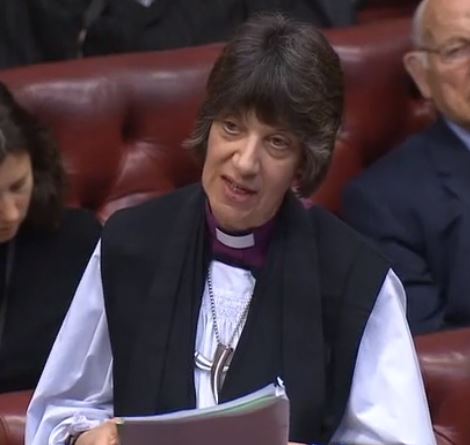
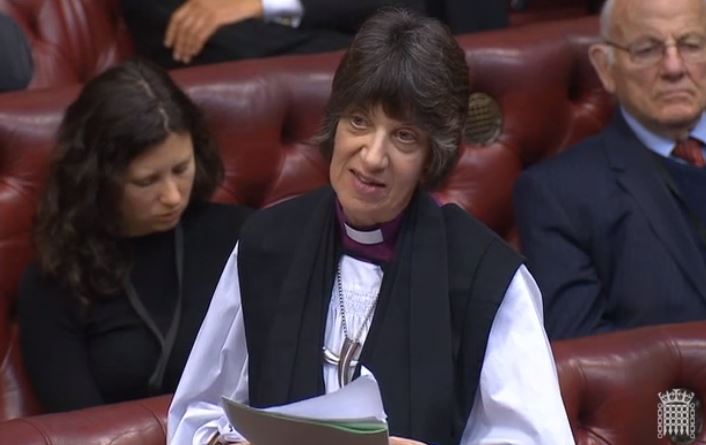
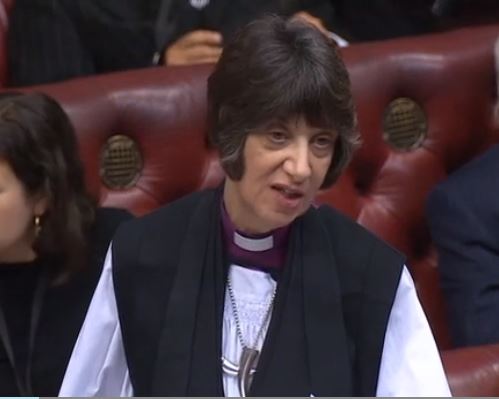
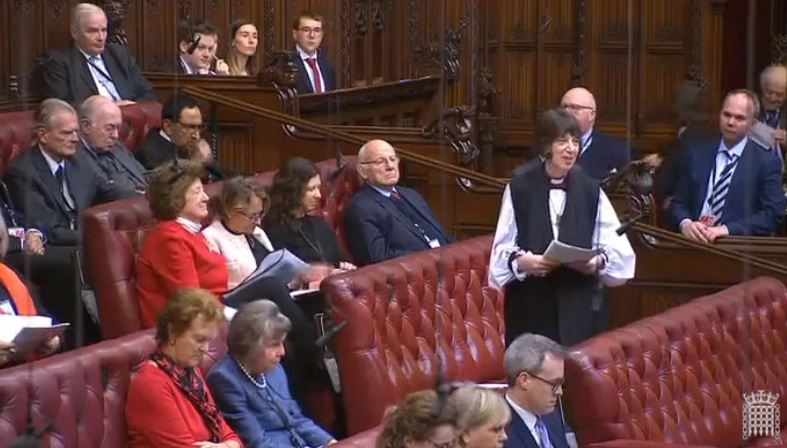
The Bishop of Gloucester asked a question on responsible use of AI and combatting its use in harassment of women and girls online on 12th January 2026:

The Lord Bishop of Gloucester: My Lords, following on from that question, I am very grateful for the action being taken by Ofcom to investigate X and the Grok AI chatbot, but what are the Government doing to create a robust framework so that AI will be used responsibly in this whole landscape of sexual harassment experienced by women and girls?

Continue reading “Bishop of Gloucester asks about efforts to combat use of AI as a tool of harassment”

Votes: Sentencing Bill

On 6th January 2026, the House of Lords debated the Sentencing Bill. Votes were held on amendments to the Bill, in which Bishops took part:

Division 2:

The Bishop of Chester and the Bishop of Gloucester took part in a vote on an amendment tabled by Lord Keen of Elie:

Lord Keen of Elie moved amendment 25, in clause 1, page 3, line 10, at end to insert—
“(i) the offender has been convicted of a sexual offence, within the meaning of section 3 of the Sexual Offences Act 2003, or
(j) the offender has been convicted of an offence which constitutes domestic abuse within the meaning of section 1 of the Domestic Abuse Act 2021.”

The amendment was disagreed. Content: 180 / Not Content: 219

The Bishop of Chester and the Bishop of Gloucester voted Not Content.

Hansard

Continue reading “Votes: Sentencing Bill”

Sentencing Bill: Bishop of Gloucester tables amendment defining the purpose of imprisonment

During a debate on the Sentencing Bill on 6th January 2025, the Bishop of Gloucester tabled her amendment to the bill, inserting a new clause which “would define the purposes of imprisonment in law and require the courts and the Secretary of State to have regard to the purposes of imprisonment:

The Lord Bishop of Gloucester: After Clause 4, insert the following new Clause—

“Purposes of imprisonment(1) Where a court is imposing sentence the court must have regard to the purposes of imprisonment.(2) The Secretary of State must have regard to the purposes of imprisonment when exercising the Secretary of State’s duties under this Act. 

(3) For the purposes of subsections (1) and (2) the purposes of imprisonment are—(a) the incapacitation of prisoners in order to restrict their ability to re-offend in the community,(b) the rehabilitation of prisoners under safe and decent conditions to reduce re-offending,(c) the deterrence of prisoners and others from committing further offences, and(d) the just punishment of prisoners, including provision to achieve justice for the victims of crime.”Member’s explanatory statement

This new clause would define the purposes of imprisonment in law and require the courts and the Secretary of State to have regard to the purposes of imprisonment.

My Lords, I am bringing back this amendment on Report as I do not think it was adequately addressed in Committee. Amendment 52, in my name and that of the noble Lord, Lord Moylan, would define in law the purposes of imprisonment and require the courts and the Secretary of State to have regard to the purposes of imprisonment.

Continue reading “Sentencing Bill: Bishop of Gloucester tables amendment defining the purpose of imprisonment”

Bishop of Gloucester asks about UK response to Israeli settlements

The Bishop of Gloucester received the following written answer on 5th January 2026:

The Lord Bishop of Gloucester asked His Majesty’s Government:

  • what assessment they have made of the impact of the construction of the Shdema settlement near Bethlehem on Palestinian livelihoods and the prospects for a two-state solution.
  • what discussions they have had with the government of Israel regarding the construction of the Shdema settlement near Bethlehem.
  • what plans they have to introduce asset freezes and travel bans on individuals and entities directly involved in planning or implementing the construction of the Shdema settlement near Bethlehem.
Continue reading “Bishop of Gloucester asks about UK response to Israeli settlements”

Terminally Ill Adults (End of Life) Bill: Bishop of Gloucester supports amendments on prisons and prisoners

The Bishop of Gloucester spoke in support of amendments to the Terminally Ill Adults (End of Life) Bill focusing on healthcare for those in prison and safeguarding of prisoners under the bill on 12th December 2025:

The Lord Bishop of Gloucester: My Lords, I will speak to these amendments because I want to make a new point. A very vulnerable population that we must continue to remember is the prison population. Although we will deal with the prison population more fully in the group coming up, we must remember that this Bill currently does not exclude prisoners from being eligible. That means we must consider how each issue is likely to play out in a prison setting.

As we have heard extensively, these amendments deal with two main issues: first, access to primary care; and, secondly, how well that primary care physician knows the details of your medical history. The first is very closely related to inequalities and making sure that those who have worse access to care are not more likely to choose assisted dying. The prison population are therefore a key group that must be considered, since their health and access to healthcare are worse than that of the general population. That is evidenced by the recently published report by the Chief Medical Officer.

Continue reading “Terminally Ill Adults (End of Life) Bill: Bishop of Gloucester supports amendments on prisons and prisoners”

Sentencing Bill: Bishop of Gloucester supports amendments on greater independence

The Bishop of Gloucester spoke at a committee debate on the Sentencing Bill, advocating for greater independence in sentencing:

The Lord Bishop of Norwich: My Lords, I will make a few brief comments; I am aware of time, and there is a lot to get through. I wholeheartedly agree with the remarks made by the noble Lord, Lord Marks, and I thank him for his kind comments.

When it comes to sentencing, I have believed for many years that we need more independence and not less. My own submission to David Gauke’s sentencing review focused on this, and, as has been said, followed the Justice Committee’s recommendations—I ought to underline that—in its own inquiry on public opinion and the understanding of sentencing.

Continue reading “Sentencing Bill: Bishop of Gloucester supports amendments on greater independence”

Sentencing Bill: Bishop of Leeds tables amendment on purpose of imprisonment

On 26th November 2025, the Bishop of Leeds spoke to the Bishop of Gloucester’s amendment to the Sentencing Bill, which would seek to give a statutory definition to the purpose of imprisonment:

The Lord Bishop of Leeds: My Lords, I shall speak to Amendment 45A in the place of the right reverend Prelate the Bishop of Gloucester, who, regrettably, is not able to be here today. It seems that in wider society there is a greater push for harsher punishment and longer sentences, and there is a tension with what the purpose of such punishment is. This amendment is designed to provide some elucidation on that. It would define in law the purposes of imprisonment and require the courts and the Secretary of State to have regard to the purposes of imprisonment.

Continue reading “Sentencing Bill: Bishop of Leeds tables amendment on purpose of imprisonment”

Bishop of Gloucester asks about visa applications from Palestinians and Jordanians to the UK

The Bishop of Gloucester received the following written answer on 18th September 2025:

The Lord Bishop of Gloucester asked His Majesty’s Government:

  • how many visa applications they (1) received from, and (2) approved for, Palestinians from the Israeli Occupied Palestinian Territories in (a) 2023, (b) 2024, and (c) 2025; and what percentage of these were from and for Palestinian Christians.
  • how many visa applications they (1) received from, and (2) approved for, Jordanian nationals in (a) 2023, (b) 2024, and (c) 2025; and what percentage of these were from and for Jordanian Christians.
Continue reading “Bishop of Gloucester asks about visa applications from Palestinians and Jordanians to the UK”

Bishop of Gloucester asks about trade with businesses based in settlements in the Occupied Palestinian Territories

The Bishop of Gloucester received the following written answer on 16th July 2025:

The Lord Bishop of Gloucester asked His Majesty’s Government what diplomatic support and business assistance they provide to UK-registered companies that trade in goods and services that facilitate and profit from the construction and growth of settlements in the Occupied Palestinian Territories.

Continue reading “Bishop of Gloucester asks about trade with businesses based in settlements in the Occupied Palestinian Territories”

Bishop of Gloucester asks about conflict in Gaza and two-state solution

The Bishop of Gloucester received the following written answers on 15th July 2025:

The Lord Bishop of Gloucester asked His Majesty’s Government:

  • what assessment they have made of the attacks by Israel on the Al Ahli Hospital on 13 April and 5 June.
  • what assessment they have made of whether Palestinian armed groups are using hospitals and medical centres to shelter from attack.
  • whether they will advocate for an independent and thorough investigation of all Israeli attacks on hospitals, healthcare infrastructure and medical personnel in Gaza, and the alleged misuse of those facilities.
Continue reading “Bishop of Gloucester asks about conflict in Gaza and two-state solution”