“States need to feel comfortable and confident enough in their own skins, as one might put it, to uphold their core values for all citizens regardless of religious or non-religious background. Even in our own nation, it can sometimes appear to be a fragile commodity but we have the comfort of two centuries’ experience of relative tolerance. If freedom of religion is in many ways the fundamental right upon which all other rights turn, it is important for our and other Governments to remain actively engaged over the long term, pressing for the rights of all religious minority communities.”
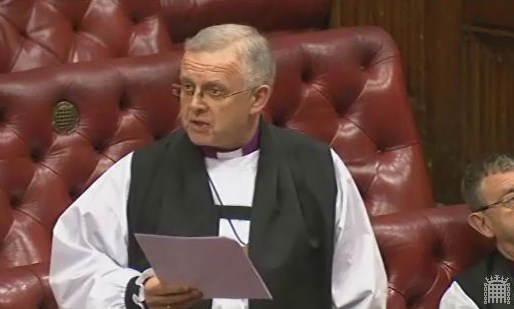
On 29th October 2013, the Bishop of Wakefield, the Rt Revd Stephen Platten, led a debate in the House of Lords to ask Her Majesty’s Government what is their assessment of the situation of religious minorities in the Middle East and North Africa after the events of the Arab Spring. He noted that the Arab Spring and resulting events were about issues of identity, political organisation and rights, all of which impact on the place of religious minorities. He urged wisdom and patience from the international community and urged for governments based on consent to be established throughout the region. He noted in particular the persecution of Christians in the region, including many groups historically amongst the earliest Christian communities. He commended the work of the Government in prioritising the freedom of religion but called for there to be consideration around the appointment of an Ambassador-at-Large for Religious Freedom.
 The Lord Bishop of Wakefield: My Lords, I am very grateful for this opportunity to speak about the situation of religious minorities in the Middle East and north Africa since the Arab spring. The debate will, I hope, provide the opportunity to take a more detached view on developments over the past few years and to look at the underlying dynamics affecting religious minorities in the region.
Events in the Middle East since the start of the Arab spring have been a challenge not only to those living in the region but to all of us. Many, myself included, have viewed the series of uprisings which started in Tunisia through the lense of our experience of the Cold War. We wrongly assumed then that the fall of the Berlin Wall would usher in an era of tolerance and political pluralism throughout Europe. The reality was very different. Released from the uniformity of authoritarian rule, the former states of the USSR struggled with weak Governments to meet the diverse and competing aspirations of all their people. Often, as in the case of Balkans, those struggles turned horribly violent, with religion politicised as a marker of identity. Of course, the lessons of our own European history are seminal when trying to understand the transformations shaping the Middle East today. Revolutions are never simple and straightforward affairs. The Reign of Terror and the Vendée in France at the end of the 18th century were perhaps the beginning in our own modern era. Continue reading “Bishop of Wakefield leads debate on religious freedom in the Middle East and North Africa”

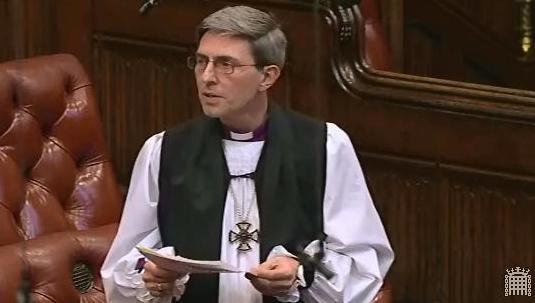 The Lord Bishop of Winchester: My Lords, even if the current operations to clear Daesh prove successful, the ancient religious and ethnic minority communities in Iraq have an uncertain future. Does the Minister agree with the statement recently submitted by the Holy See to the United Nations Human Rights Council? It said that a future without these communities in Iraq and the Middle East risks,
 On 23 July 2014 Lord Alton of Liverpool tabled a debate to ask Her Majesty’s Government ‘what was their response to the work of the United Nations Commission of Inquiry on Human Rights in the Democratic People’s Republic of Korea’.

 The Church of England in Parliament
You must be logged in to post a comment.