
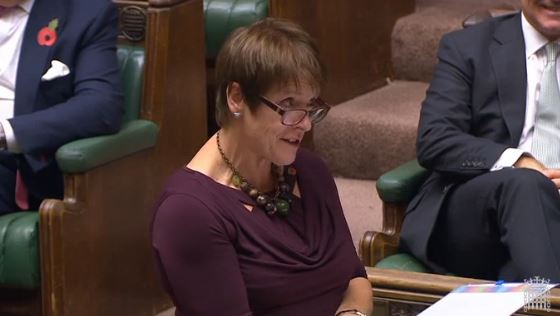
On 31st October 2019 Rt Hon Dame Caroline Spelman answered questions from MPs for the last time as Second Church Estates Commissioner. Tributes were paid to her, and questions were answered on climate change, archbishops, reconciliation, telecommunications, thefts, women in prison, marriage, and digital evangelism. This was also the same day that the Speaker and his Chaplain were due to retire. A full transcript follows:
Church Commissioners
The right hon. Member for Meriden, representing the Church Commissioners, was asked—
Climate Change: Investment in Companies
Michael Tomlinson (Mid Dorset and North Poole) (Con): What progress the Church of England has made on holding the companies in which it invests to account on climate change. [900272]
The Second Church Estates Commissioner (Dame Caroline Spelman): Since this is my last set of oral questions, I would like to record my heartfelt thanks to my small team of staff, and especially my constituency secretary, who has faithfully served me for 20 out of 22 years. We often forget that our staff are on the frontline of much of the abuse that we receive, and I want to record my admiration for their fortitude. I also thank the amazing staff I have had to support me in this role, particularly Simon Stanley at Church House.
In tribute, Mr Speaker, I thank you for your kindness and courtesy—unfailingly so, and especially at times of personal duress. I single out your inspired choice of Speaker’s Chaplain, who has enriched the spiritual life of this place—but more of that later.
The Church of England Pensions Board has tabled a shareholder resolution ahead of the annual general meeting of BHP Billiton, the world’s largest mining company, on 7 November this month. It asks BHP to suspend its membership of trade associations that are not lobbying in line with the climate change agreement. This is just the latest example of the Church Commissioners using their shareholder position to change company policy in line with the climate change agreement.
 On 29th October 2019 Lord Lee of Trafford asked the Government “what plans they have to replace Victorian-era prisons with more modern facilities.” The Bishop of Winchester, Rt Revd Tim Dakin, asked a follow up question:
 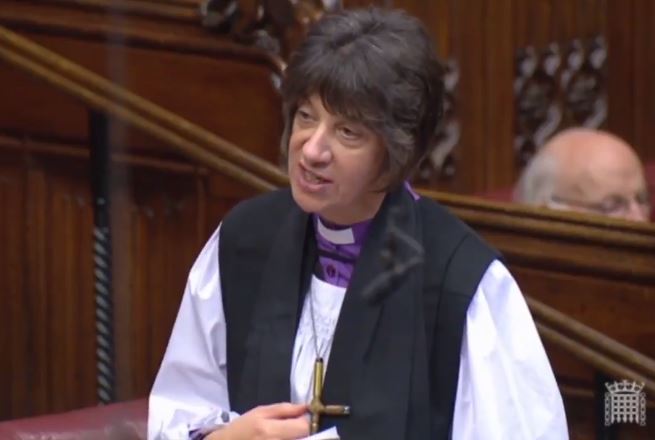 The Lord Bishop of Gloucester: My Lords, I, too, am grateful to the noble Lord, Lord Rambsotham, for bring forward this debate and I am glad to be speaking in it.
 On 25th September 2019 the House of Lords took note of the Government’s Spending Round 2019. The Bishop of Durham, Rt Revd Paul Butler, contributed to the debate:
 On 25th July 2019 the House of Lords debated a motion from Lord Farmer (Con) that the House “takes note of the needs of women in the criminal justice system”. The Bishop of Rochester contributed to the debate:
 On 16th July 2019 the Home Office Minister Baroness Williams of Trafford repeated a Government statement about domestic abuse. The Bishop of Newcastle, Rt Revd Christine Hardman, asked a follow-up question:
 The Lord Bishop of Southwark: My Lords, given the recent publication by the Ministry of Justice of figures showing a record level of the incidence of self-harm by prisoners, a record level of prisoner-on-prisoner assaults and a 29% rise in assaults on prison staff, will the Minister acknowledge that we need not only a major reduction in the size of the prison population but increases per capita in resources on a scale not yet contemplated by Her Majesty’s Government? This would give rehabilitation the priority that many now see as an absolute imperative.
  On 6th February 2019 the House of Lords considered the Government’s Offensive Weapons Bill in its third day of Committee. The Bishop of Newcastle, Rt Revd Chrisine Hardman spoke against Government amendments to create new Knife Crime Prevention Orders. The amendments were withdrawn following the debate, but the Minister indicated they were likely to be returned to again at a later stage:
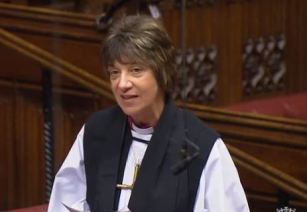 On the 30th October 2018 the Rt Revd Rachel Treweek, Bishop of Gloucester asked a question she had tabled, on Government action to increase support given to children with a parent in prison. The exchange, including the follow-up questions of other Members, is reproduced below:
 The Church of England in Parliament
You must be logged in to post a comment.