Asked by The Lord Bishop of Southwark: To ask Her Majesty’s Government what assessment they have made of the statement by the Patriarchs and Heads of Churches of Jerusalem on 11 May that the violence in Jerusalem “violates the sanctity of the people of Jerusalem and of Jerusalem as the City of Peace”; and what plans they have to call on relevant parties (1) to halt further violence, and (2) to ensure the safety of worshippers. [HL192]
The Bishop of Southwark: To ask Her Majesty’s Government, further to the conviction of Sefer (Aho) Bileçen of the Mor Yahqup d-Qarne Monastery on terrorism charges in April, what assessment they have made of the government of Turkey’s policies towards freedom of (1) religion, and (2) cultural expression.
The Bishop of Southwark: To ask Her Majesty’s Government what assessment they have made of the statement by Patriarch Abuna Mathias in April (1) that the government of Ethiopia and its allies are committing genocide in Tigray, and (2) that rape is being used as a weapon of war in that region.
On 20th May 2021 the Bishop of Southwark asked a question in the Lords about the Israeli-Palestinian conflict.
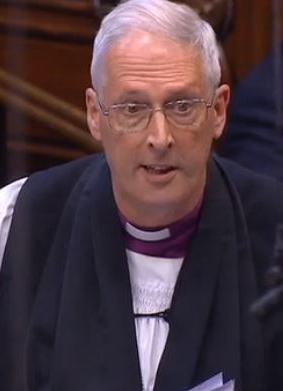
The Lord Bishop of Southwark: Some of your Lordships may be aware that I returned from Jerusalem yesterday evening, where I attended the very joyful installation of the new Anglican archbishop there. From an earlier answer given by the Minister, I take it he agrees that, until the underlying causes that gave rise to the clashes on Temple Mount, in the Al-Aqsa Mosque and in the Sheikh Jarrah neighbourhood where I was staying, and the conflict between Hamas and Israel, are addressed, Israelis and Palestinians will not enjoy security, experience justice or build a relationship of mutual respect and regard? Does the Minister agree that, for violence to permanently end, Israel’s occupation must also end?
The Bishop of Southwark spoke in a debate on cuts to overseas development aid on 28th April 2021, pointing out the conflicts between this and the UK’s professed desire to expand engagement overseas:
The Lord Bishop of Southwark: My Lords, like other speakers, I share the ambition of the noble Lord, Lord Alton, to see these cuts reversed. I want to tease out from Her Majesty’s Government what is the scope of their ambition. In his foreword to the review, the Prime Minister writes of our deepening engagement in trade, security and mutual values in the Indo-Pacific. The noble Lord, Lord Hastings of Scarisbrick, spoke of the UK carrier fleet, including HMS “Queen Elizabeth”, which will be heading to the Indo-Pacific next month. I note that it will include Dutch and US vessels, emphasising precisely the sort of partnerships that the Government espouse. However, as a frequent visitor to Zimbabwe and the Middle East, I would like to hear from the Minister, in the light of the unprecedented cuts in aid, how Britain will make a positive impact in these areas as well increasing our economic and security presence east of Suez. How do we project ourselves with greater effect around the globe if we cut aid, have a historically numerically small military force, have a reduced diplomatic presence, and operate one of the most expensive immigration and nationality systems in the world?
On 27th April 2021, the House of Lords debated Commons reasons and amendments to the Fire Safety Bill. Votes were held on further amendments to the bill, in which Bishops took part:
The Bishop of Southwark asked a question on the government’s decision to cut amounts of overseas development aid on 27th April 2021:
The Lord Bishop of Southwark: The Minister will be aware that we are already in the financial year in which the reductions in budget are meant to take place. I note from an answer to an earlier question his commitment and desire to inform the House as soon as possible of the nature of the cuts in funding and how they will affect various development and aid projects. Does he agree that to implement a 25% reduction in the annual budget if one is, for example, three months into the financial year would amount to reducing by a third the funds remaining? This causes greater dislocation to whichever activity is supported than implementing planned funding before the financial year commences.
The Bishop of Southwark received the following written answers on 26th April 2021:
The Lord Bishop of Southwark asked Her Majesty’s Government what is their assessment of freedom of religion or belief in Egypt.
Lord Ahmad of Wimbledon (Con, FCDO): The UK welcomes the positive steps taken by the Government of Egypt in recent years, including President Sisi’s public commitment to upholding the rights of minorities and freedom of worship, as well as the protections for freedom of religion enshrined in the Egyptian constitution. We were also encouraged by the opening of the Middle East’s largest cathedral in Egypt in 2019.
On 20th April 2021, the House of Lords debated Commons Reasons and Amendments to the Fire Safety Bill. Votes were held on further amendments to the bill, in which Bishops took part:
The Bishop of Southwark received the following written answers on 22nd March 2021:
The Lord Bishop of Southwark asked Her Majesty’s Government what assessment they have made of (1) the human rights situation in the Philippines, and (2) the impact of the Anti-Terrorism Act of 2020 (Republic Act No. 11479) on human rights in the Philippines.


 The Church of England in Parliament
You must be logged in to post a comment.