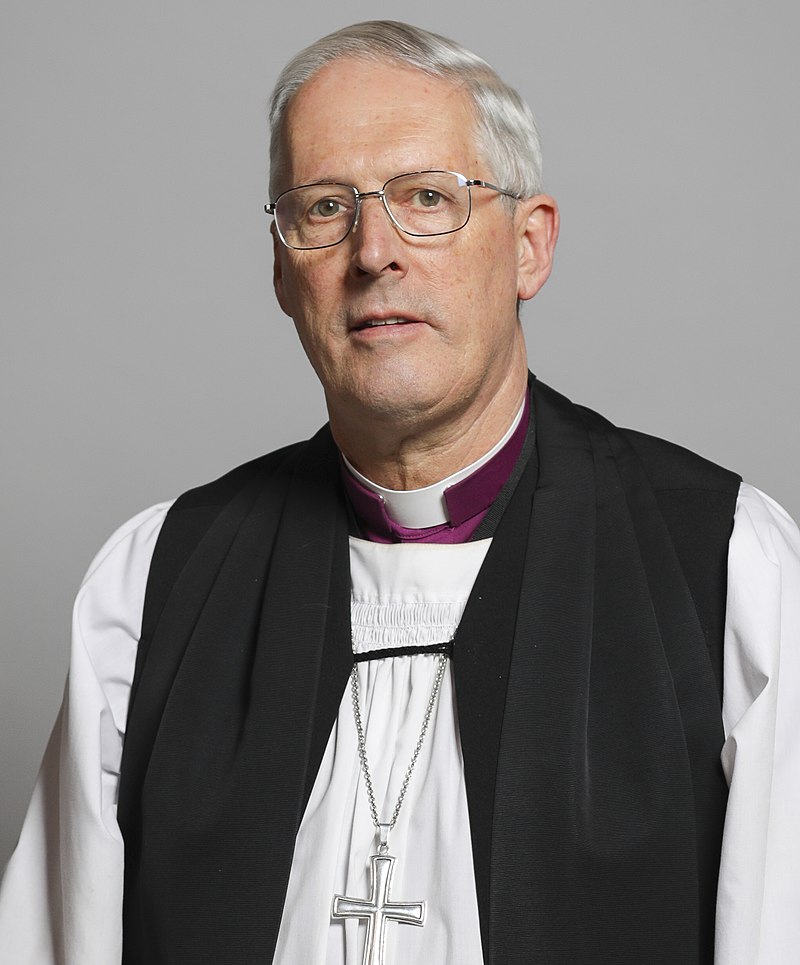
The Bishop of Southwark received the following written answer on 30th April 2024:
The Lord Bishop of Southwark asked His Majesty’s Government what assessment they have made of shortages in the supply of prescription drugs.
Lord Markham (Con, DHSC): There are approximately 14,000 medicines licensed for supply in the United Kingdom, and the overwhelming majority are in good supply.
The Bishop of Southwark received the following written answer on 24th April 2024:
The Lord Bishop of Southwark asked His Majesty’s Government what progress they have made in allocating the Market Sustainability and Improvement Fund 2023 to 2024 for adult social care; and what are their plans for allocation in the financial year 2024–25.
The Bishop of Southwark received the following written answers on 15th April 2024:
The Lord Bishop of Southwark asked what steps they are taking to ensure that weapons manufactured in the UK and sold under export licences are not being used to commit or facilitate violations of international human law in Gaza and in contravention of the Arms Trade Treaty ratified by the UK on 2 April 2014.
The Bishop of Southwark received the following written answers on 15th April 2024:
The Lord Bishop of Southwark asked His Majesty’s Government what steps they have taken, together with allies, to persuade those holding Israeli citizens hostage in Gaza to release them without delay.
Lord Ahmad of Wimbledon (Con, Foreign Office): The UK Government has been working with partners across the region to secure the release of hostages. The Foreign Secretary met with hostage families on 18 March, reaffirming the UK’s commitment to see the release of all hostages.
The Bishop of Southwark received the following written answer on 15th April 2024:
The Lord Bishop of Southwark asked His Majesty’s Government what progress has been made in correcting the errors in the Person Centric Data Platform and Atlas system, which have led to the merging of different immigration records.
The Bishop of Southwark received the following written answer on 15th April 2024:
The Lord Bishop of Southwark asked His Majesty’s Government what assessment they have made of figures released by the Office for National Statistics on 20 March showing an average increase in monthly rent paid by tenants in the UK of 9 per cent in the year ending in February, including an increase to 10.6 per cent in London to an average monthly rent of £2,035.
The Bishop of Southwark gave a speech during a debate to mark international women’s day on 8th March 2024, paying tribute to the women of the Bishops Benches and raising the impact of poverty on women in the UK and overseas:
The Lord Bishop of Southwark: My Lords, I thank the noble Baroness, Lady Barran, for securing this important debate on International Women’s Day. I look forward to the maiden speech of the noble Baroness, Lady Casey of Blackstock.
It is my belief that the kingdom of God is a place of radical inclusion in which all are welcome and all shall flourish. I speak as the duty bishop today, but I am mindful of the determined advocates on this Bench, which include the right reverend Prelate the Bishop of Gloucester, who is attending the 68th session of the Commission on the Status of Women at the United Nations headquarters in New York.
On 6th March 2024, the House of Lords debated the Safety of Rwanda (Asylum and Immigration) Bill in the final day of the report stage. Votes were held on amendments to the bill, in which bishops took part:
On 20th February 2024, the Bishop of Southwark made a speech during the second reading of the Economic Activity of Public Bodies (Overseas Matters) Bill, raising the potential issue of religious education foundations being affected inadvertently by the bill, and expressing concern about the far-reaching implications of the bill:
The Lord Bishop of Southwark: My Lords, I expect that the name of Field-Marshal Julius Jakob Freiherr von Haynau does not elicit the sort of interest that once it did in your Lordships’ House. He was, none the less, a staple of O-level history when that subject would have elicited the admiration of the Secretary of State for Levelling Up. Field Marshall von Haynau was an effective but severe Habsburg military commander during the revolutionary years of 1848 and 1849. His imperial standing, however, did not prevent him being chased down Borough High Street in my diocese in 1850—where my diocesan headquarters now is, very near the cathedral—by two draymen from the nearby brewery of Barclay Perkins to remonstrate with him about his military conduct in Italy and Hungary.
I mention this once-famous incident to illustrate that there have always been strong currents of feelings about issues, including those abroad. Some of these fall into what one might call the dissenting tradition. As a Church of England Bishop, I recognise that I am an heir to a different tradition, but surely our history has taught us that consensus has been built up around what is obviously true and lived out with integrity, rather than by suppression.
During a debate on the Safety of Rwanda (Asylum and Immigration) Bill on 12th February 2024, the Bishop of Southwark spoke in favour of a group of amendments centred around ensuring that Rwanda not be considered safe until the full implementation of the UK-Rwanda treaty, querying when a new Rwandan Asylum bill required by the treaty would be published and made operational:
The Lord Bishop of Southwark: My Lords, I will speak in favour of this group, particularly Amendments 6, 14 and 20, but I wish to avoid the circularity, as the noble Baroness, Lady Chakrabarti, was saying, that has been inevitable on something so interconnected.
The Home Secretary has said that
“we will not operationalise this scheme until we are confident that the measures underpinning the treaty have been put in place; otherwise, the treaty is not credible”.
You must be logged in to post a comment.