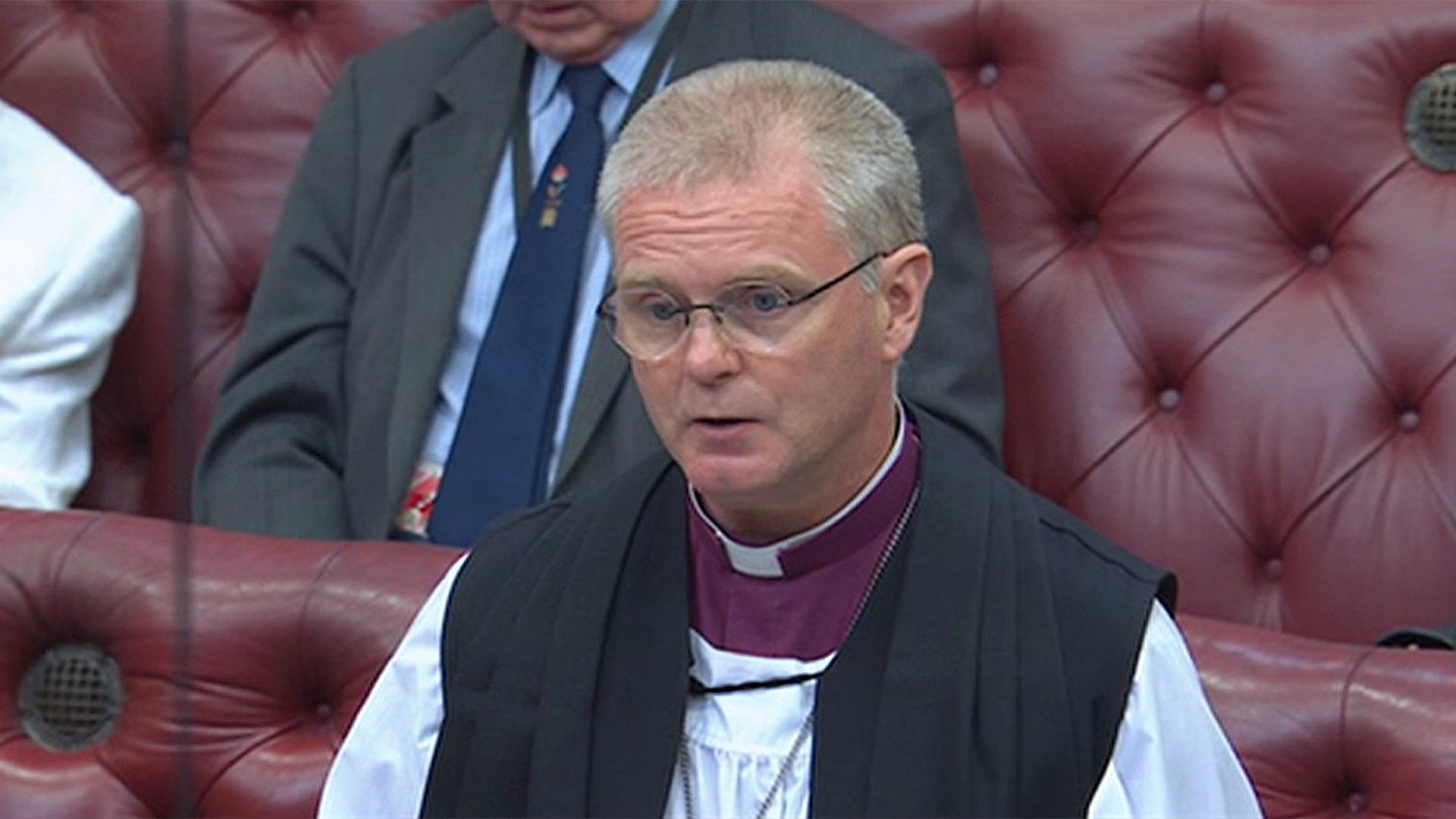
Terminally Ill Adults (End of Life) Bill: Bishop of Chester raises duty of care towards families

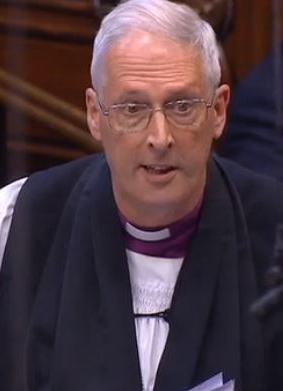
The Bishop of Chester spoke during a debate on the Terminally Ill Adults (End of Life) Bill on 16th January 2026, noting the responsibility of care towards families of the deceased affected by the bill:

The Lord Bishop of Chester: My Lords, this is an important and moving debate. It is an honour to speak in it and to follow some of the previous contributions. These amendments highlight the fact that eligibility is not the same as motivation. I agree with almost everything that has been said before me; I will not delay the Committee by repeating those points.

There are two things that I want to bring to your Lordships’ attention. First, I remind noble Lords of points made by my right reverend friend the Bishop of Gloucester. The Bill, if passed, will apply to those in our prison system, for whom there will be very particular motivations, which we need to make sure can be fairly applied to them.

Continue reading “Terminally Ill Adults (End of Life) Bill: Bishop of Chester raises duty of care towards families”

Bishop of Gloucester asks about potential increase in arrival of Iranian refugees in the UK

The Bishop of Gloucester asked a question on government preparation for a potential increase in Iranian refugees arriving in the UK on 15th January 2026, following a government statement on the violence against protestors in Iran:

The Lord Bishop of Gloucester: My Lords, as I said earlier this week, Iranian Christians across our churches are deeply distressed at not being able to have contact with their loved ones in Iran. I suspect that, in the coming months, we are going to see more Iranians arriving on our beaches. What are His Majesty’s Government doing to prepare for this and to be forward-thinking in the stance that will be adopted regarding welcome and hospitality?

Continue reading “Bishop of Gloucester asks about potential increase in arrival of Iranian refugees in the UK”

Church Commissioners Questions: Persecuted Christians, Listed Places of Worship Grant Scheme, Christians in the Occupied Palestinian Territories, End-of-life Ministry, Safeguarding

On 15th January 2026, the Second Church Estates Commissioner, Marsha De Cordova MP, gave the following answers to questions from MPs in the House of Commons:

Persecuted Christians Abroad

Matt Turmaine MP (Lab, Watford) asked: 1. What steps the Church of England is taking to help support persecuted Christians in other countries. (907298)

Andrew Rosindell MP (Con, Romford) asked: 3. What steps the Church of England is taking to help tackle the persecution of Christians in other countries.

Continue reading “Church Commissioners Questions: Persecuted Christians, Listed Places of Worship Grant Scheme, Christians in the Occupied Palestinian Territories, End-of-life Ministry, Safeguarding”

Bishop of Gloucester asks about role of Ofcom in regulating online deepfakes

The Bishop of Gloucester asked a question on the effectiveness of Ofcom during a discussion on the proliferation of non-consensual sexual deepfakes of women on X/Twitter on 14th January 2026:

The Lord Bishop of Gloucester: My Lords, I welcome moves by the Government on this issue. I came off X last September and there is wider debate to be had about that site. Given that we know that the use of AI tools to harm women will only accelerate—recent research has found thousands of nudification apps available—I repeat my question from earlier this week: what more will the Government do to create a robust framework so that AI will be used responsibly in the whole landscape of misogyny and abuse?

Continue reading “Bishop of Gloucester asks about role of Ofcom in regulating online deepfakes”

Children’s Wellbeing and Schools Bill: Bishop of Gloucester supports amendment to prohibit physical punishment of children

The Bishop of Gloucester spoke in support of an amendment to the Children’s Wellbeing and Schools Bill aimed at prohibiting the physical punishment of children on 14th January 2026:

The Lord Bishop of Gloucester: My Lords, I support Amendment 97. The abolition of the physical punishment of children is something that many of us on these Benches have long endorsed. My right reverend friends the Bishop of Manchester and the Bishop of Derby in particular wanted to reiterate that support alongside mine.

The amendment is eminently sensible, as we have just heard. I was pleased to read in the report from Wales that the introduction of the role of the out-of-court parenting support worker has significantly facilitated the implementation of this Act, as we have heard. My concern when we talk about legislation with penalties is always the unintended consequences, in this case for parents and wider families—we do not need any more children being impacted by parental imprisonment—but it is music to my ears that these parenting support workers in Wales have been instrumental in engaging with families, offering guidance on positive parenting strategies and providing early preventive support to resolve those issues, as we have heard, before they escalate to criminal proceedings. In short, I always support evidence-based policy-making, and this seems like a sensible step in the right direction on this issue. I support Amendment 97.

Hansard

Bishop of Gloucester asks abut investment in early years education

The Bishop of Gloucester tabled a question on investment in early years education on 14th January 2026:

The Lord Bishop of Gloucester: To ask His Majesty’s Government what assessment they have made of the impact of investment in early years education on children’s long-term outcomes, including attainment, employability, and wellbeing.

Continue reading “Bishop of Gloucester asks abut investment in early years education”

Bishop of Gloucester calls for return to commitments to Official Development Assistants

The Bishop of Gloucester spoke in a debate on planned reductions to Official Development Assistance on 13th February, calling on the government to publish a plan for a return to previous ODA commitments and highlighting the current situation and need for international aid in Gaza:

The Lord Bishop of Gloucester: My Lords, we on this Bench continue to lament the reduction in ODA. I call on the Government, as others have, to publish a clear road map for returning to previous commitments on international development, which affects so many people, particularly, as has already been said, women and girls.

In the short time I have, I will focus on Gaza. It is welcome that forecast humanitarian spend in Gaza is currently protected from cuts in ODA, but I am sure that noble Lords are aware that international NGOs face ongoing restrictions on aid and considerable obstacles to working in Gaza. I simply want to add my voice to those, including His Majesty’s Government, who are concerned that many established international NGO partners are at risk of being deregistered because of the Government of Israel’s restrictive new requirements. Given that the majority of the population in Gaza face high levels of acute food insecurity, will the Minister say what more can be done to encourage the Government of Israel to give international NGOs the access to the region that they need?

Hansard

Crime and Policing Bill: Bishop of Manchester speaks to amendments on policing of public gatherings

The Bishop of Manchester spoke to two groups of amendments on regulation of public gatherings during a debate on the Crime and Policing Bill on 13th January 2026, pointing out the possible unintended impact of religious processions and events:

The Lord Bishop of Manchester: My Lords, the more I listen to the debate this afternoon, the more worried I am getting. It seems to me that, over recent years, we have successively tightened up regulations around protests, including quite peaceful protests, making it harder and harder for people to express publicly their deep concerns around a whole range of issues. I am not sure that we need more clarity; that is for judges and juries to determine on the details of a particular case. The whole principle of the jury system is that we are judged by our peers and that, if we have undertaken some activity which has brought us before the courts, it is for other people like us to determine on the particular instances. They can take into account the culture and context, in a way that is impossible to do by way of legislation. I am quite wary about over- specifying here. Sometimes clarity is not necessarily the best thing to achieve.

Continue reading “Crime and Policing Bill: Bishop of Manchester speaks to amendments on policing of public gatherings”

Bishop of Southwark asks about humanitarian aid to Gaza

The Bishop of Southwark received the following written answer on 13th January 2026:

The Bishop of Southwark asked His Majesty’s Government:

  • what assessment they have made of the impact of recent registration measures by the government of Israel on the ability of international nongovernmental organisations to deliver humanitarian assistance in Gaza.
  • what assessment they have made of the humanitarian situation in Gaza; and what representations they have made to the government of Israel to lift the restrictions on international humanitarian assistance in that territory.
Continue reading “Bishop of Southwark asks about humanitarian aid to Gaza”

Votes: Diego Garcia Military Base and British Indian Ocean Territory Bill

On 12th January, the House of Lords debated the third reading of the Diego Garcia Military Base and British Indian Ocean Territory Bill. A vote was held on a regret motion associated with the bill, in which a Bishop took part:

Continue reading “Votes: Diego Garcia Military Base and British Indian Ocean Territory Bill”