On 24th March 2026, the House of Lords debated the English Devolution and Community Empowerment Bill. Votes were held on amendments to the bill, in which a Bishop took part:

On 24th March 2026, the House of Lords debated the English Devolution and Community Empowerment Bill. Votes were held on amendments to the bill, in which a Bishop took part:
The Bishop of Chelmsford received the following written answers on 24th March 2026:
The Lord Bishop of Chelmsford asked His Majesty’s Government when they expect to publish the National Centre for Social Research evaluation of the pilot move on period for newly recognised refugees to leave asylum accommodation.
Continue reading “Bishop of Chelmsford asks about changes to refugee status and housing”
The Bishop of Oxford asked a question on high energy costs in response to a government statement on the UK steel industry on 23rd March 2026:
The Lord Bishop of Oxford: My Lords, for seven years I was privileged to be the Bishop of Sheffield, and I am familiar with the complex ecology of south Yorkshire, articulated by the noble Lord, Lord Fox. For those seven years, each year I was the guest of the Cutlers Company, who would invite a Minister, always from London and normally the Chancellor. In those years it was the coalition and Conservative Governments. The script followed by the speakers from the Cutlers Company, who did not mince their words, was always the same. It was about the neglect of the manufacturing industry by government and, in particular, high energy costs. This seems to me to be the key to the next chapter in this strategy.
Continue reading “Bishop of Oxford asks about UK Steel Industry”
The Bishop of Norwich received the following written answer on 23rd March 2026:
The Lord Bishop of Norwich asked His Majesty’s Government:
On 23rd March 2026, the House of Lords debated amendments to the Pension Schemes Bill, and a Bishop took part in votes on these amendments:
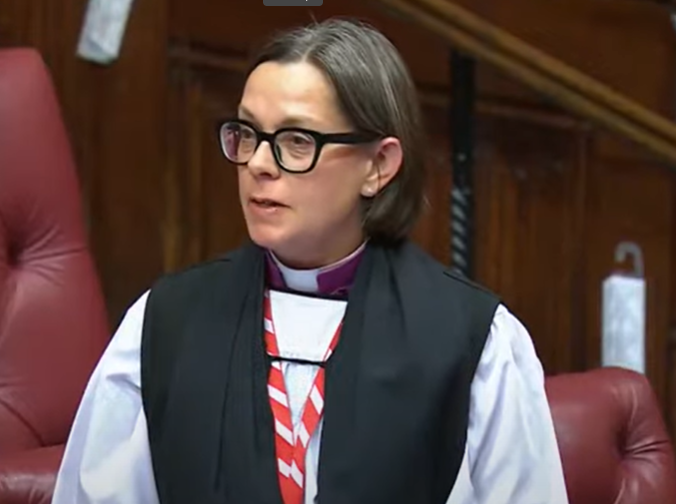
During a debate on the Terminally Ill Adults (End of Life) Bill on 20th March 2026, the Bishop of Newcastle spoke in support of amendments to the bill aimed at providing protection to those vulnerable to coercion:
The Lord Bishop of Newcastle: My Lords, I am grateful to my right reverend friend the Bishop of Southwark for preparing the way for some of the comments that I wish to make briefly now. Broadly, this group seeks to address issues around communication, language barriers and interpreters and I support the amendments laid before your Lordships’ House in that regard.
Continue reading “Terminally Ill Adults (End of Life) Bill: Bishop of Newcastle speaks on issue of coercion”
On 20th March 2026, during a debate on the Terminally Ill Adults (End of Life) Bill, the Bishop of Southwark spoke in support of amendments to the bill focused on providing protection for those with speech, language, and communication difficulties:
The Lord Bishop of Southwark: My Lords, I support the amendments in this group, particularly Amendment 171 in the names of the noble Baronesses, Lady Nicholson of Winterbourne and Lady O’Loan.
Clause 5, as we have heard, introduces a key element in the infrastructure of assisted dying in this Bill by providing what is intended to be a safe, but not mandatory, introduction to the subject of death with the assistance of another human being. For proponents of the Bill, the advantages of such an introduction are obvious. In their minds, it will remove a good deal of unnecessary distress on the part of those who wish to proceed with such an option and on the part of those who do not. However, as we have heard from those of us who have long experience of pastoral encounters, the experience is likely to be rife with pitfalls.
Continue reading “Terminally Ill Adults (End of Life) Bill: Bishop of Southwark supports amendments on protection of those with communication difficulties”On 20th March 2026, the Second Church Estates Commissioner, Marsha De Cordova MP, gave the following written answers to questions from MPs:

Church of England: Ground Rent and Leasehold
Sir James Cleverly MP (Con, Braintree): To ask the hon. Member for Battersea, representing the Church Commissioners, whether the Church of England had made representations to the Secretary of State for Housing, Communities and Local Government on (a) restrictions on ground rents and (b) leasehold reform in the last year.
Continue reading “Church Commissioners Written Questions: Ground Rent and Leasehold, Council Tax”On 19th March 2026, the House of Lords debated the Pension Schemes Bill. Votes were held on amendments to the bill, in which Bishops took part:
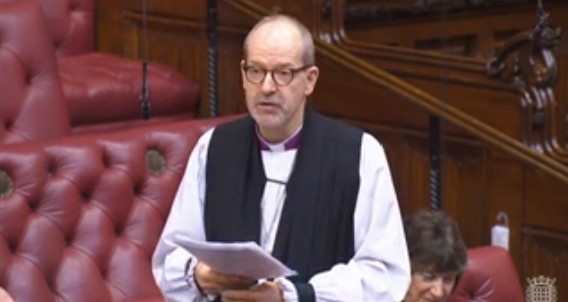
On 19th March 2026, the Bishop of Hereford spoke in support of an amendment to the Pension Schemes Bill tabled by Baroness Noakes on allowing Master Trusts which deliver good investment performance to be excluded from the scale requirements of the bill, raising the example of faith-based funds:
The Lord Bishop of Hereford: My Lords, I speak in favour of Amendment 55, in the name of the noble Baroness, Lady Noakes. There is a questionable theory of change in the Bill—that bigger pension schemes are necessarily better, suggesting the minimum scale of £25 billion. While scale certainly creates advantages, Australian experience suggests that funds can be run at less than this size and still provide value and good outcomes for members. However, concentrating the market into a few megafunds introduces a new system of risk, of schemes that become too big to fail and so are effectively the state’s problem.
Continue reading “Pension Schemes Bill: Bishop of Hereford supports amendments on trust management” The Church of England in Parliament
You must be logged in to post a comment.