
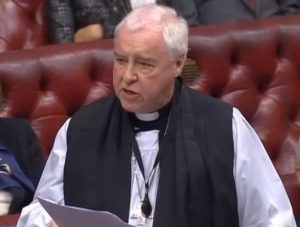
 On 4th February 2019 Baroness Wheeler asked the Government “how they will ensure that there are sufficient nurses, doctors and community specialist care staff to deliver the National Health Service long-term plan, published on 7 January 2019.” The Bishop of Lincoln, Rt Revd Christopher Lowson, asked a follow-up question:
The Lord Bishop of Lincoln: Is the Minister aware that we have recently opened a new medical school in the University of Lincoln? We hope that this will assist the recruitment and retention of more doctors. However, what are the Government doing to mitigate the increased cost of specialist community nursing provision in remote and sparsely populated rural areas? Continue reading “Bishop of Lincoln asks Government about nursing provision in remote rural areas”
 This week in the House of Lords bishops spoke about social housing, the NHS long-term plan, mental health care for children and young people, and on amendments to the Civil Partnerships, Marriages and Deaths (Registration etc.) Bill. They voted on a Motion about the Government’s EU Withdrawal Agreement and asked questions about gambling, teacher recruitment, nurses, the female offender strategy, and fly-tipping.
 The Bishop of Chelmsford spoke during debate on two amendments to the Bill. The first, briefly, on an amendment from the Bill’s sponsor Lady Hodgson, to enable the conversion of civil partnerships to marriage, and vice-versa, through the introduction of Regulations that could amend primary legislation, including Church of England Measures. The amendment was passed after debate.
  The Lord Bishop of Carlisle: My Lords, this NHS long-term plan is very welcome, and from these Benches I commend all those who contributed to it. It is a comprehensive plan—not easy when health is such a wide-ranging topic. It is also realistic about the many challenges we still face. When it comes to issues such as smoking, alcohol dependence and air pollution, I applaud the strong emphasis on public health and prevention, along with the necessary reminder that responsibility for our own health does not belong solely to other people.
 The Lord Bishop of Chelmsford: As Bishop of Chelmsford, I am also proud to be the Bishop of Becontree, Harlow and Basildon, three of the nation’s boldest attempts by policymakers in the last century to address the housing needs of London and the south-east. When Becontree was built in the 1920s, it was Europe’s largest public housing development.
  The Lord Bishop of St Albans: To ask Her Majesty’s Government what assessment they have made of the impact caused by fly-tipping on areas of outstanding natural beauty, following reports that the Woodland Trust has spent over £1 million on cleaning up fly-tipping over the past five years.
 On 30th January 2019 the House of Lords debated a question from Baroness Tyler of Enfield, “To ask Her Majesty’s Government what assessment they have made of the recent concerns expressed by general practitioners that children and young people with mental health problems are unable to access National Health Service treatments; and what steps they will take to address them.” The Bishop of Carlisle, Rt Revd James Newcome, spoke in the debate:
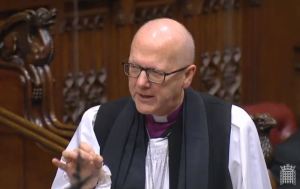 On 29th and 30th January the Bishop of St Albans, Rt Revd Alan Smith, received four written answers to questions on the NHS and gambling related harm and rehabilitation:
 On the 29th January 2019, Rt Revd Stephen Conway, Bishop of Ely responded to a Government Statement on teacher recruitment.

You must be logged in to post a comment.