On 15th March 2021, the House of Lords debated the Domestic Abuse Bill in report. Votes were held on amendments to the bill, in which Bishops took part:

Legislation before Parliament
On 15th March 2021, the House of Lords debated the Domestic Abuse Bill in report. Votes were held on amendments to the bill, in which Bishops took part:
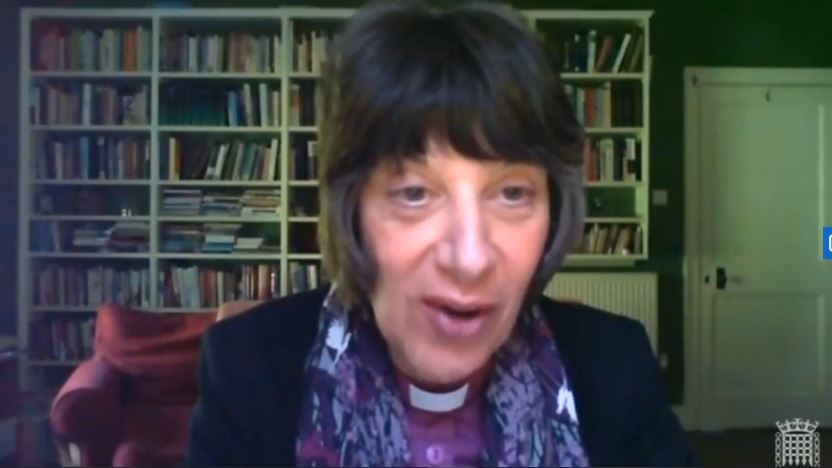
The Bishop of Gloucester spoke during a debate on amendments to the Domestic Abuse Bill on 10th March 2021, supporting an amendment on community services, and further amendments seeking to clarify the statutory defences for victims of domestic abuse who commit an offence:
The Lord Bishop of Gloucester [V]: My Lords, my friend the right reverend Prelate the Bishop of Derby, who regrets that she cannot be here today, was pleased to support the noble Lord, Lord Polak, when his amendment on specialist and community-based services was discussed in Committee. We really warmly welcome the government amendments, which represent significant improvements on the Bill. All that being said, I am glad that the noble Lord, Lord Rosser, introduced Amendment 85 so that we might just press a little further. I do not want to repeat what other noble Lords have said, so I will make just a few brief comments.
We have heard repeatedly in debates in this House of the value of specialist and community-based services which allow survivors to remain in their homes and retain their community, their faith links and their workplaces and to keep children in their schools. Finding a long-term solution, as others have said, to supporting these services is essential. With colleagues on the Bishops’ Bench, I look forward to engaging with the victims’ law consultation and to reviewing the promised Clause 8 report from the domestic abuse commissioner to Parliament on the provision of, and need for, community-based support services.
Continue reading “Domestic Abuse Bill: Bishop of Gloucester supports amendments on community services and self defence law in cases of domestic abuse”On 10th March 2021, the House of Lords debated the Domestic Abuse Bill in Report. Votes were held on amendments to the bill, in which Bishops took part:

On 21st March 2021, the House of Lords debated amendments to the Overseas Operations (Service Personnel and Veterans) Bill. The Bishop of Leeds spoke in support of amendment 14, which would provide that the presumption against prosecution in the bill does not apply to war crimes, crimes against humanity, genocide or torture:
The Lord Bishop of Leeds: My Lords, I understand the stated rationale for this Bill and I state at the outset that I have enormous respect for the noble Baroness the Minister, but I am struggling. I am not a lawyer, but I would like to focus on a couple of specific questions. I understand the difficulty with vexatious and untimely litigation, which is a curse, but legitimate litigation, however inconvenient, is surely the blessing of a free and civilised society that honours international law and a rules-based system in more than words.
The basic reason why I speak in support of Amendment 14 is that I fear the law of predictable or conscious consequences more than the law of unintended consequences. I ask the Minister to explain clearly this anomaly, which I cannot get my head around: this Bill, as currently drafted, will make it possible for an incident of torture or murder not to be prosecuted while a sexual offence committed in the same incident would be subject to prosecution. That suggests to me either that the reference to sexual offences is arbitrary or that torture and crimes against humanity and so on should also be admitted in the same category.
Continue reading “Overseas Operations (Service Personnel and Veterans) Bill: Bishop of Leeds raises concerns on prosecution limits”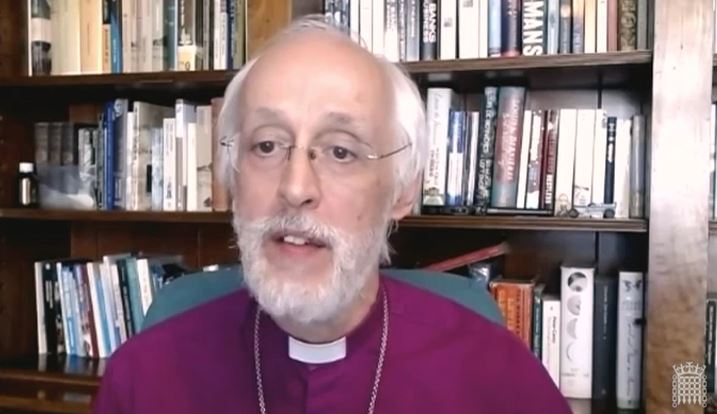
Five bishops took part in a vote on an amendment from Baronesss Campbell of Surbiton on including carers or those with “personally connected lives” in the scope of the Bill to prevent abuse by a care giver. Continue reading “Votes: Domestic Abuse Bill”

The Bishop of St Albans tabled his amendment 136 to the Financial Services Bill in Grand Committee on 3rd March 2021, and spoke in support of a further amendment on debt financing:
The Lord Bishop of St Albans [V]: My Lords, I shall speak to Amendment 136, which is in my name. I tabled the amendment because of concerns about the lower levels of responsibility placed on appointed representatives and the increased risk of poor financial advice that this poses.
The objective of the senior managers and certification regime to influence an individual’s behaviour by making them personally accountable to the regulator is one that I agree with and it was the correct response to the culture that had arisen in the City of London prior to the financial crash in 2008. I know that some Members of this House have criticised the application of the senior managers and certification regime, or lack of it, by the FCA, and I agree that it is worrying. However, I do not want to comment on the effectiveness of the SMCR but to remedy an anomaly that exists within the current framework.
The SMCR currently applies to directly regulated financial advisers, yet it does not extend to those who are appointed representatives. This anomaly means that, while a directly regulated adviser carries a personal responsibility for the quality of the advice they provide to their customer, no such responsibility is incumbent upon the adviser who is an appointed representative. This is despite the reality that a customer seeking financial advice is unlikely to know the difference between the two types of adviser and the possible effects that this might have on the quality of the advice they receive.
Continue reading “Financial Services Bill: Bishop of St Albans tables amendment on regulation of financial advice”On 23rd February 2021, the House of Lords debated Commons Reasons and Amendments to the Trade Bill. A vote was held on an amendment to the bill, in which Bishops took part.
On 10th February 2021, the Bishop of Gloucester spoke in support of an amendment to the Domestic Abuse Bill tabled by Baroness Lister which would require the statutory guidance in the bill to take into account the government’s Violence Against Women and Girls strategy:
The Lord Bishop of Gloucester: My Lords, I metaphorically rise to speak to Amendment 185. I am very grateful to the noble Baroness, Lady Lister, for outlining the issues so clearly. It is a real honour to follow the noble Baroness, Lady Hodgson, and I am delighted to have added my name to Amendment 185. I do not want to repeat what they have eloquently said already, all of which I agree with.
The UK is party to international treaties and conventions that make it clear that we must deliver a co-ordinated response and integrated measures to end violence against women and girls. Amendment 185, as we have heard, simply seeks to ensure good join-up: the statutory guidance issued alongside the Bill must be linked to any violence against women and girls framework.
Continue reading “Domestic Abuse Bill: Bishop of Gloucester supports amendment on statutory guidance on domestic abuse”On 9th February 2021, the House of Lords debated the Counter-Terrorism and Sentencing Bill in committee. The Bishop of Manchester spoke in support of amendments on standards of proof and suspicion of guilt, raising issues of bias and risks of alienation:
The Lord Bishop of Manchester [V]: My Lords, I draw the Committee’s attention to my interest in criminal justice matters, specifically as chair of the Greater Manchester Police independent ethics committee, as set out in the register.
I am grateful to the noble and learned Lord, Lord Falconer, for tabling Amendment 28. I also note with interest Amendment 27 in the name of the noble Lord, Lord Anderson. His arguments are powerful, not least in distinguishing clearly between belief and a mere suspicion, a distinction which for me as a bishop lies at the heart of my day job.
As I indicated to your Lordships’ House in my maiden speech at Second Reading, this is a Bill that I welcome and support. My city of Manchester has all too recently suffered a terrorist attack that killed 22 innocent people and maimed and traumatised hundreds more. We remain deeply grateful for the support we received from members of this House, government Ministers and many others at that time and since.
Continue reading “Counter-Terrorism and Sentencing Bill: Bishop of Manchester supports amendments on evidentiary standards” The Church of England in Parliament
You must be logged in to post a comment.