Archbishop asks Government about help to build peace in South Sudan

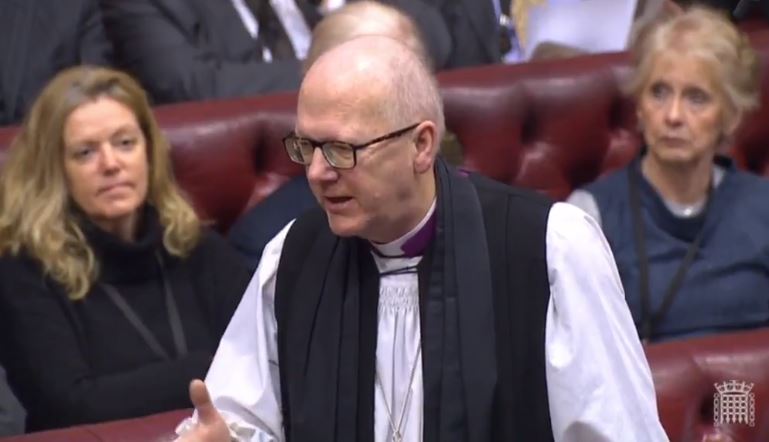
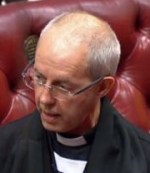
On 29th January 2020 the Earl of Sandwich asked Her Majesty’s Government “what priority they give to Sudan and South Sudan among their foreign policy objectives.” The Archbishop of Canterbury, Most Revd and Rt Hon Justin Welby, asked a follow up question:

The Archbishop of Canterbury: My Lords, the Minister will be aware of the meeting in the Vatican last April of religious and political leaders from South Sudan, including the President and leading rebel and opposition groups; and of the Pope’s announcement when we met last November that he intended to make a joint visit himself, with me and a former Moderator of the Church of Scotland, at the end of March if the transitional Government had been established by that time in Juba. The period for establishing that Government runs out towards the end of February. May we have assurance that with the whole thing in the balance—and given what we heard from the noble Baroness, Lady Cox—Her Majesty’s Government will apply carrot and stick vigorously, and give full attention over the next four weeks to enabling this new Government to happen solidly in Juba, including the presence of leading rebel members such as Riek Machar, to get a framework for peace? Continue reading “Archbishop asks Government about help to build peace in South Sudan”

Bishop of London asks Government about social prescribing, immigration detention

On 29th January 2020 the Bishop of London received two written answers, to questions on social prescribing, and immigration detention:

The Lord Bishop of London: HL516 To ask Her Majesty’s Government what steps they are taking to ensure that those placed in detention centres are not held indefinitely; and what plans, if any, they have to restrict detention in immigration centres to 28 days.
 

Continue reading “Bishop of London asks Government about social prescribing, immigration detention”

Bishop of Gloucester and Archbishop of York ask Government about support for looked after and adopted children

On 28th January 2020 the Bishop of Gloucester, Rt Revd Rachel Treweek, asked a question she had tabled to Government, on support for looked after and adopted children. She and the Archbishop of York, Most Revd and Rt Hon John Sentamu, asked follow-up questions and the transcript is below:

Looked-after and Adopted Children
Question

The Lord Bishop of Gloucester: To ask Her Majesty’s Government what plans they have to review support for children looked after by local authorities and those children who are adopted.

The Parliamentary Under-Secretary of State, Department for Education (Lord Agnew of Oulton) (Con): My Lords, we are committed to undertake a review of the care system. We are already implementing substantial reforms to improve outcomes for this most vulnerable group of children and young people. Alongside the reforms, we are providing councils with an additional £1 billion for adult and children’s social care in every year of this ​Parliament. The review will allow us to go further in ensuring that children and young people have the support that they need. Continue reading “Bishop of Gloucester and Archbishop of York ask Government about support for looked after and adopted children”

Bishop of St Albans asks Government about food security and self-sufficiency

On 27th January the Bishop of St Albans , Rt Revd Alan Smith, asked a question he had tabled to Government on food production and self-sufficiency. The exchanges are below, including from Peers asking their own follow-up questions:


Agriculture Bill: Food Production

The Lord Bishop of St Albans

To ask Her Majesty’s Government whether food production is included in the definition of “public good” contained in the Agriculture Bill.

The Parliamentary Under-Secretary of State, Department for Environment, Food and Rural Affairs (Lord Gardiner of Kimble) (Con): My Lords, I declare my farming interests, as set out in the register. The Agriculture Bill includes powers to give financial assistance to farmers based on public money for public goods. These are goods and services not provided by the market. Clause 1(4) states:

“In framing any financial assistance scheme, the Secretary of State must have regard to the need to encourage the production of food by producers in England and its production by them in an environmentally sustainable way.”

The Lord Bishop of St Albans: My Lords, I thank the Minister for his reply. A prime duty of government is to ensure that there is enough food to feed the population. Yet one has only to think about the impact of things such as coronavirus, and the immediate ban on the movement of live animals, to show how vulnerable we are, not least when this country is only 60% self-sufficient in food. Will the Minister assure the House that the Agriculture Bill will maximise the level of food production and food security for the country’s future? Continue reading “Bishop of St Albans asks Government about food security and self-sufficiency”

Bishop of Winchester asks about Apprenticeship Levy, further education and post-18 education funding review

On 24th and 27th January the Bishop of Winchester, Rt Revd Tim Dakin, received written answers to three questions, on the apprenticeship levy, further education teaching hours and post-18 education funding:
The Lord Bishop of Winchester: HL371 To ask Her Majesty’s Government what plans they have, if any, to extend the 24-month period during which levy-paying training providers can spend Apprenticeship Levy funds.
Lord Agnew of Oulton: The apprenticeship levy is paid by all UK employers with a pay bill in excess of £3 million. Levy-paying employers in England use an award-winning apprenticeship service to manage their funds, make payments to training providers, and transfer funds to other organisations.

Funds available to employers expire on a rolling, month-by-month basis after 24 months, where they have not been spent. We anticipated that levy-payers would use various amounts available to them, with only some spending all funds available to them. Individual levy-paying employers have full control over when and where apprenticeship funds are spent to meet their current and future skills needs, including by using transfers to support the sustainable development of skills in their supply chain or local area. Where employers are not spending funds available to them and the availability expires, the budget is used to support apprenticeships taken forward by other large and small employers.

Continue reading “Bishop of Winchester asks about Apprenticeship Levy, further education and post-18 education funding review”

Bishop of Salisbury asks questions on plastic waste trade and recycling

On 22nd January 2020 the Bishop of Salisbury, Rt Revd Nicholas Holtam, received answers to two written questions on plastic waste:
The Lord Bishop of Salisbury:
(i) HL226 To ask Her Majesty’s Government what assessment they have made of the illegal shipment of plastic waste from the UK to Malaysia, following the decision by the government of China to ban any international plastic waste being processed within mainland China.
(ii) HL227 To ask Her Majesty’s Government what progress they have made towards reducing the production of unnecessary plastic and encouraging the development of alternatives to plastic.

Continue reading “Bishop of Salisbury asks questions on plastic waste trade and recycling”

Bishop of St Albans asks Government about scale of fly-tipping, and powers to prevent

On 21st January 2020 the Bishop of St Albans, Rt Revd Alan Smith, received a written answer to a question on fly-tipping:
The Lord Bishop of St Albans: HL164 To ask Her Majesty’s Government what assessment they have made of the prevalence of fly-tipping in England; whether it has increased over the last five years; and whether local authorities have sufficient powers to prevent fly-tipping.

Continue reading “Bishop of St Albans asks Government about scale of fly-tipping, and powers to prevent”

Bishop of Chelmsford asks Government not to relocate House of Lords to York

In the House of Lords on Monday 20th January 2020, Lord Foulkes asked a Private Notice Question, “to ask Her Majesty’s Government what consideration is being given to relocating the House of Lords out of London”, following media reports that the Government was considering relocation of the House to York. The Bishop of Chelmsford (and Archbishop of York designate) Rt Revd Stephen Cottrell, followed up –

Continue reading “Bishop of Chelmsford asks Government not to relocate House of Lords to York”

Bishop of Worcester asks about independent guardians and advocates for victims of modern slavery

On 16th January 2020  Baroness Doocey asked Her Majesty’s Government “what is the Home Office’s policy on the processing of an asylum claim when an applicant says they have been the victim of child trafficking?” The Bishop of Worcester, Rt Revd John Inge, asked a follow-up question:

The Lord Bishop of Worcester: Will the Minister update the House on any progress that is being made on the provision of independent guardians and advocates for victims of modern slavery? Continue reading “Bishop of Worcester asks about independent guardians and advocates for victims of modern slavery”

Bishop of London asks about funding for nurses and midwives’ professional development

On the 15th January 2020 Baroness Watkins of Tavistock asked Her Majesty’s Government “how they intend to ensure safe staffing in social care and the National Health Service in this Parliament.” The Bishop of London, Rt Revd Sarah Mullally, asked a follow-up question.

The Lord Bishop of London: My Lords, I am sure the Minister knows that safety is about not just numbers but the continuing development and supervision of nurses and midwives. Can she comment on what the Government are doing to ensure that both nurses and midwives are funded properly for clinical supervision and professional development?

Continue reading “Bishop of London asks about funding for nurses and midwives’ professional development”