Crime and Policing Bill: Bishop of Norwich supports amendment on protecting war memorials

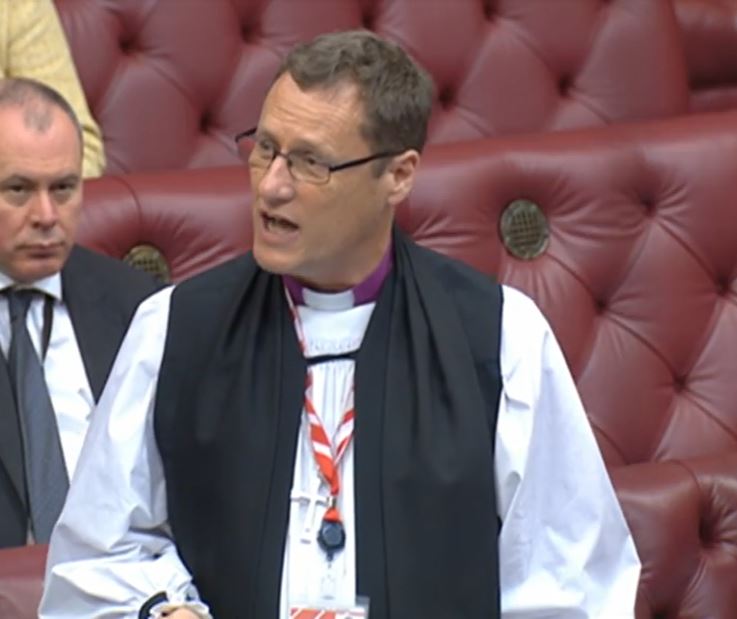
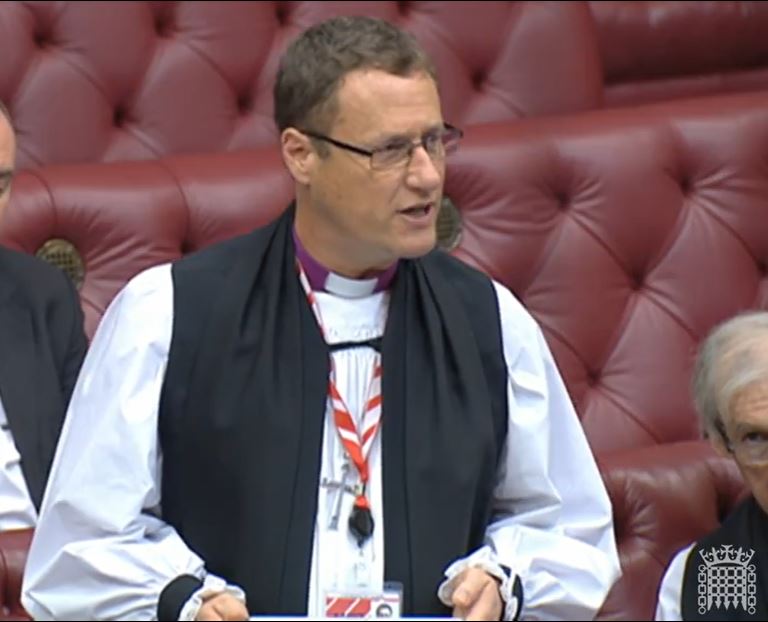
During a debate on the Crime and Policing Bill on 9th March 2026, the Bishop of Norwich spoke in support of an amendment aimed at broadening the protections provided to war memorials under the provisions of the bill:

The Lord Bishop of Norwich: My Lords, I support Amendment 370 in the names of the noble Lords, Lord Parkinson of Whitley Bay and Lord Blencathra. Across this nation, war memorials, often raised by public subscription of pennies here and tuppences there, stand to hold memories of those who gave their lives—sons and daughters, brothers and sisters, cousins and parents. They are carved in stone, metal, wood or marble. The Whipsnade Tree Cathedral in Bedfordshire is a living memorial planted by Edmond Blyth, a World War I veteran, to commemorate his friends who were lost. They are physical embodiments of sacrifice, courage and collective memory, often within the curtilage of parish churches, each name both precious to someone and precious in the sight of God—ordinary people called to do the most extraordinary things in very challenging times. When they are damaged, it is a hit in the stomach for the whole of that community. It damages how we build our life together.

Continue reading “Crime and Policing Bill: Bishop of Norwich supports amendment on protecting war memorials”

Bishop of Derby speaks in debate taking note of International Women’s Day

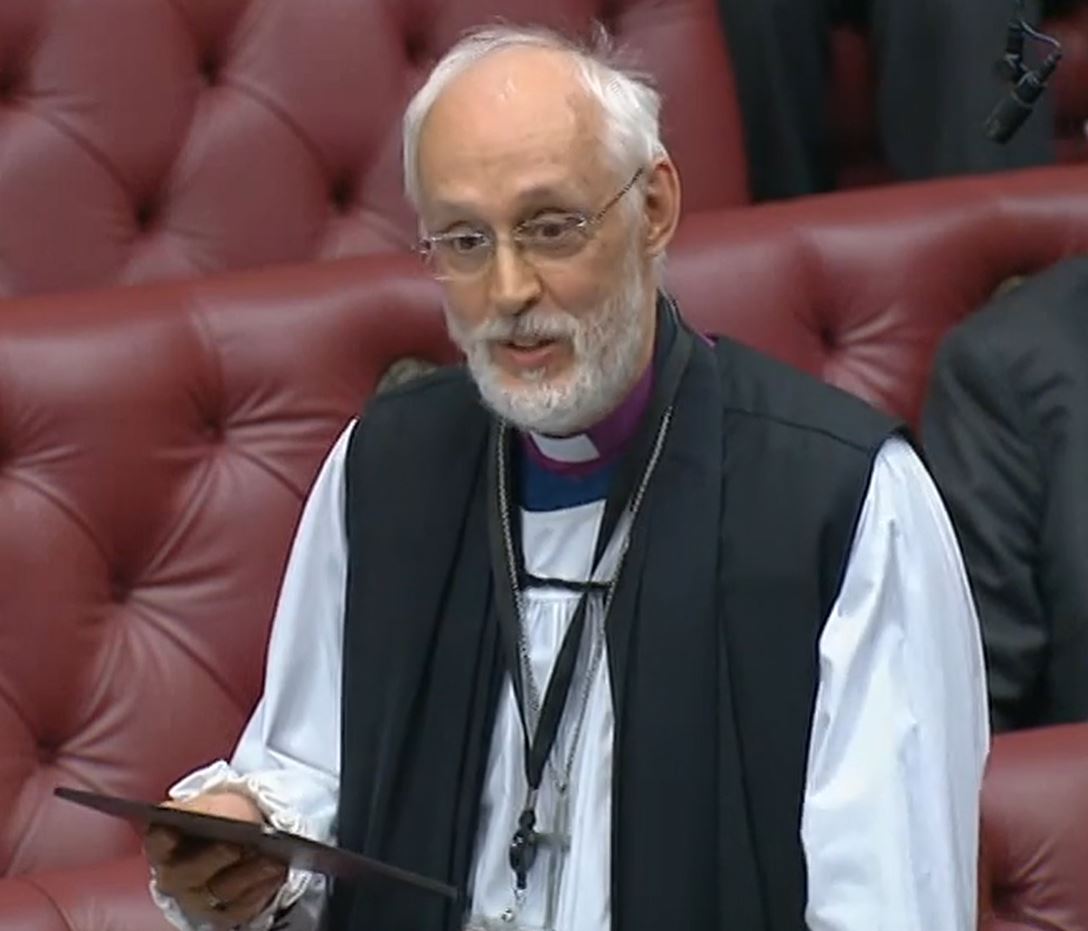
The Bishop of Derby spoke during a debate taking note of International Women’s Day on 6th March 2026:

The Lord Bishop of Derby: My Lords, it is an honour to speak today, and I particularly look forward to hearing so many maiden speeches. I have been reflecting on the theme of this year’s International Women’s Day, “Give to gain”. A seat in your Lordships’ House is a powerful platform, but whatever voice or influence we may have, it is not for ourselves; it is to be used to secure gains for others.

Noble Lords will be aware that these Benches have made some progress in recent years toward gender parity. There are currently eight women on our Benches, soon to be nine—the highest number to date—and two former Lords spiritual. As the Church of England’s first female Bishop, I know that opening a door is both a powerful and a humbling act, particularly as we rejoice in the appointment and forthcoming installation of my noble friend, the most reverend Primate, our first female Archbishop of Canterbury.

Continue reading “Bishop of Derby speaks in debate taking note of International Women’s Day”

Bishop of Gloucester speaks in debate on prison conditions

The Bishop of Gloucester took part in a debate on the Better Prisons: Less Crime Justice and Home Affairs Committee Report on 12th February 2026, advocating for reform of the conditions and culture inside prisons:

The Lord Bishop of Gloucester: My Lords, as Anglican Bishop for prisons, I wholeheartedly welcome this debate and this excellent report. It is also a privilege to follow two excellent maiden speeches.

I submitted evidence to the committee, and I will continue to bang the drum for reform. Better prisons will play a vital role, but they are not the end point or the complete answer to reducing reoffending. I agree with the reframing of this from rehabilitation, as rehabilitation implies that people were once at an acceptable place in life to which they can be rehabilitated, whereas for the majority of people in prison, this was never true in the first place.

Continue reading “Bishop of Gloucester speaks in debate on prison conditions”

Terminally Ill Adults (End of Life) Bill: Bishop of Newcastle speaks to amendment on protection for those with learning disabilities

The Bishop of Newcastle spoke in support of an amendment aimed at providing additional protection for those with learning disabilities during a committee debate on the Terminally Ill Adults (End of Life) Bill on 6th February 2026:

The Lord Bishop of Newcastle: My Lords, I will speak to Amendment 108, to which the right reverend Prelate the Bishop of Lincoln has added his name. He regrets that he cannot be in his place today, as he is interested in this amendment as lead bishop for the L’Arche community in the UK. With the Church of England, L’Arche strives to provide a positive and inclusive residential community in which adults with and without learning disabilities can live and grow together.

Continue reading “Terminally Ill Adults (End of Life) Bill: Bishop of Newcastle speaks to amendment on protection for those with learning disabilities”

Bishop of Manchester expresses concern at legislative overreach during debate on public order measures

On 4th February 2026, the Bishop of Manchester spoke during a debate on a motion to approve the Public Order Act 2023 (Interference With Use or Operation of Key National Infrastructure) Regulations 2025 (adding the life sciences sector to the list of key national infrastructure), and an associated fatal motion in the name of Baroness Bennet of Manor Castle, expressing his concern at potential legislative overreach:

The Lord Bishop of Manchester: My Lords, it is always a pleasure to follow my noble and right reverend friend. I will be brief. It has been very clear to me in this debate that we need the life sciences in this country, and we probably conduct them in a better manner than many other parts of the world do, and that is a good reason for maintaining them here.

Continue reading “Bishop of Manchester expresses concern at legislative overreach during debate on public order measures”

Bishop of Manchester pays tribute to Lord Wallace of Tankerness

On 3rd February 2026, the Bishop of Manchester joined in tributes paid in the House of Lords to Lord Wallace of Tankerness, who had recently passed away:

The Lord Bishop of Manchester: My Lords, from these Benches, I associate my comments and condolences with those who have previously spoken. Lord Wallace was kind, welcoming and generous to new Bishops joining this House. Both he and his wife Rosie are extraordinary people. He in particular made a significant impact on shaping the very culture and society in Scotland we see today across the whole trinity—if I may use a word dear to him—of law, politics and church. His two main belief systems were indeed the Church and politics. They supported each other, and although, as we have heard, he never served as a minister in the religious sense, he was ordained: he was an elder, and many across Orkney and beyond have reported how pertinent and encouraging his sermons and hominies were.

Continue reading “Bishop of Manchester pays tribute to Lord Wallace of Tankerness”

Crime and Policing Bill: Bishop of Lincoln speaks to amendments on decriminalisation of abortion

On 2nd February 2026, the Bishop of Lincoln spoke in a debate on amendments relating to the decriminalisation of abortion in the Crime and Policing Bill, highlighting the importance of supporting women and the need for a change in the way police investigations of terminations of pregnancies are carried out, while reiterating opposition to full decriminalisation on the grounds of the sanctity of life:

The Lord Bishop of Lincoln: My Lords, I am one of those old men. I am also a single man, so I have no children of my own, but I am regularly in contact with very young families through baptism. Only last Thursday, I was in hospital in an acute cardiac unit for babies, anointing a two week-old baby who had just had open-heart surgery. So I know quite a lot about babies through a very long ministry. I also offer my thanks to the noble Lord, Lord Winston, for a television series that he oversaw about seeing a pregnancy from conception to delivery some years ago. That series reinforced my conviction about the sanctity of life.

Continue reading “Crime and Policing Bill: Bishop of Lincoln speaks to amendments on decriminalisation of abortion”

Bishop of Manchester joins in tributes to retiring Lord Speaker

The Bishop of Manchester took part in tributes to the retiring Lord Speaker, Lord McFall of Alcluith, on 2nd February 2026:

The Lord Bishop of Manchester: My Lords, I add the thanks of our Benches to our former Lord Speaker. We are enormously grateful for the warmth of his welcome to us, which began from the moment we were introduced to the House, and continued each day, as he introduced the duty Bishop leading Prayers. We also warmly welcome the noble Lord, Lord Forsyth, whose enormous gifts have already been attested, and with whom we look forward to working for the effective work and maintenance of the rights and privileges of your Lordships’ House.

Continue reading “Bishop of Manchester joins in tributes to retiring Lord Speaker”

Terminally Ill Adults (End of Life) Bill: Bishop of Hereford highlights importance of nuanced understanding of artificial intelligence

The Bishop of Hereford spoke during a committee debate on the Terminally Ill Adults (End of Life) Bill on 30th January 2026, pointing out a distinction between AI tools and artificial intelligence generally in regards to an amendment proposed by Baroness Coffey, which would stipulate that “(4) Artificial intelligence must not be used to carry out any functions in any section or schedule of this Act.”

The Lord Bishop of Hereford: I thank the noble Baroness, Lady Coffey, for raising a very important issue in this amendment. However, I am concerned that, as it stands, as the noble Baroness said, this amendment is too blunt an instrument. It is important that we distinguish between AI tools and the more dangerous artificial general intelligence, or superintelligence. The use of AI in medical diagnostics in patient care is already commonplace. AI tools are currently used to read scans and X-rays and will frequently perform as well as, if not better than, clinicians. To exclude the use of AI altogether might deprive patients who are considering assisted dying of valuable diagnostic assistance and care at a very vulnerable time.

Continue reading “Terminally Ill Adults (End of Life) Bill: Bishop of Hereford highlights importance of nuanced understanding of artificial intelligence”

Terminally Ill Adults (End of Life) Bill: Bishop of Newcastle points out lack of safeguards in online processes

The Bishop of Newcastle spoke during the committee debate on the Terminally Ill Adults (End of Life) Bill on 30th January 2026, highlighting the lack of adequate safeguards in any online-only process for facilitating assisted dying:

The Lord Bishop of Newcastle: My Lords, taken together, the amendments in this group highlight the importance of contact with people at the hardest time in their lives—a time when we must be most vulnerable, clinically and personally. This must not be a process in which anyone is made to feel rushed or that can be completed entirely online.

Continue reading “Terminally Ill Adults (End of Life) Bill: Bishop of Newcastle points out lack of safeguards in online processes”