MPs Celebrate Contribution of Women to the Ordained Ministry of the Church of England

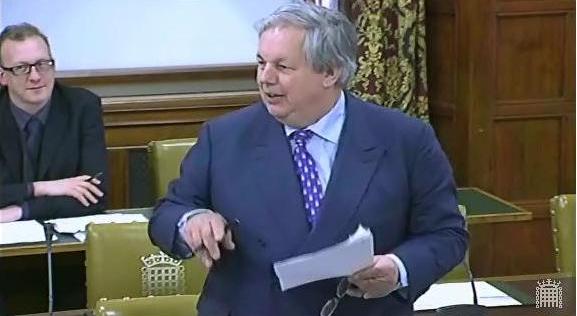
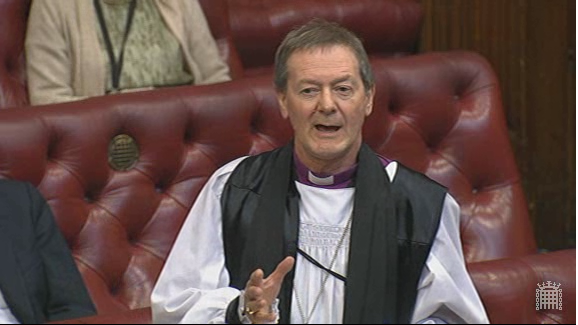
In Westminster Hall on Thursday 20th March 2014, Rt Hon Caroline Spelman MP led a short debate on the role and contribution of women to the ordained ministry of the Church of England. 14.03.20 WH debate 4The debate celebrated the 20th anniversary of the ordination of the first women as priests in the CofE and looked ahead, both to the ongoing process to legislate for female bishops, as well as enabling them to sit in the House of Lords without delay. Sir Tony Baldry MP responded in his capacity as Second Church Estates Commissioner, and contributions were made by Rt Hon Ben Bradshaw MP, Sir Peter Bottomley MP and Helen Goodman MP. The Equalities Minister Helen Grant MP was also present to hear the speeches.

A full transcript is reproduced here and a recording of the debate can also be watched on the UK Parliament website here. Continue reading “MPs Celebrate Contribution of Women to the Ordained Ministry of the Church of England”

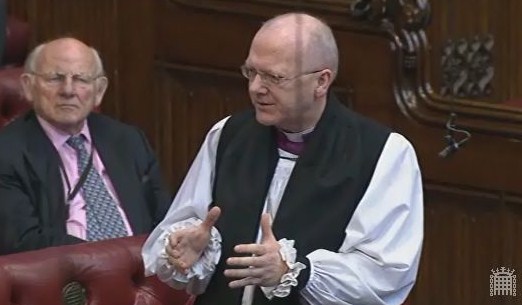
Ukraine Crisis – the Religious Dimension. Speech by Bishop of St Albans

Even if this crisis has cast a Cold War shadow over Europe, it is important that we remain in dialogue with the Russian Orthodox Church. That is not always an easy task” – Bishop of St Albans.

On March 18th Foreign Office Minister Baroness Warsi moved ‘that this House takes note of the situation in Ukraine.’ The Bishop of St Albans, Rt Rev Alan Smith, spoke of the religious dimension to the crisis in Crimea between Russia and Ukraine:

14.03 Bishop of St AlbansThe Lord Bishop of St Albans:

My Lords, I am grateful to the noble Baroness for this debate and for her helpful setting out of the situation. We have heard some fascinating background regarding the very complex history behind the situation. My comments will focus on the religious dimension, which has not been drawn out very fully so far.

Continue reading “Ukraine Crisis – the Religious Dimension. Speech by Bishop of St Albans”

Bishop of Winchester on teacher training, education and social mobility

“I question whether the Government’s policies for improving the quality of teaching have been fully effective and will enable social mobility. I am particularly concerned about the School Direct programme. In fact, I suggest there is an urgent case for rethinking arrangements around initial teacher training before a crisis develops.” – Bishop of Winchester

The Bishop of Winchester gave a speech in a House of Lords debate on 13th March 2014, tabled by the Education Minister Lord Nash.

The debate title was: ‘that this House takes note of the role of primary and secondary education in improving social mobility.’

The Lord Bishop of Winchester:13.05 Bishop of Winchester

My Lords, I, too, am grateful to the noble Lord, Lord Nash, for the opportunity of this debate. I shall focus on the impact made by initial teacher training on social mobility. Continue reading “Bishop of Winchester on teacher training, education and social mobility”

Bishop of Newcastle on role of education in improving social mobility in the north-east

“…she went away to university but then, crucially, returned to give back to the wider community the benefits of the education that she had received. We need more people like her—people not using their education to escape from the area, but realising that with well trained minds and warm hearts they have much to give for the common good..” – Bishop of Newcastle

The Bishop of Newcastle gave a speech in a House of Lords debate on 13th March 2014, tabled by the Education Minister Lord Nash.

 The debate title was: ‘that this House takes note of the role of primary and secondary education in improving social mobility.’

The Lord Bishop of Newcastle:

14.03 Bishop of NewcastleMy Lords, I, too, welcome this debate about the role of primary and secondary education in improving social mobility, and I want to speak from my experience as a bishop in the north-east of England for the past 16 years.

Continue reading “Bishop of Newcastle on role of education in improving social mobility in the north-east”

Women in the Church: Bishop of Chester’s speech in Lords debate on International Women’s Day

The Bishop of Chester spoke during the International Women’s Day debate on the contribution of women in the economic life of the United Kingdom and worldwide. He updated the House on the progress being made by the Church of England to allow the consecration of women as bishops, and used the example of this process to examine the challenges faced by many women in the economy to be accepted in their own right. He also spoke of the role of women in the wider life of the church.

14.03 Bishop of ChesterThe Lord Bishop of Chester: My Lords, the noble Baroness could well have said, “Bishops’ Benches: 26 men, no women”, but I am glad that she did not, although I am sure that others will. I rise with an appropriate hesitancy as the first male speaker in a debate in which only 22% of the speakers will be men. The majority of those listening are also women, which is a pity. However, I look forward to the speech of the noble Lord, Lord Palumbo, whom I can only describe as a fellow Daniel in the lion’s den on this occasion.

Indeed, those who inhabit these Benches might be seen as somewhat handicapped in advocating the fuller involvement of women in the wider life of our society. As we are regularly reminded, ours are the only Benches from which women are currently excluded. I hope that I can say something today about that and about the wider significance of the struggles of the church over the full involvement of women in its life. Continue reading “Women in the Church: Bishop of Chester’s speech in Lords debate on International Women’s Day”

Assisted Suicide Debate – Bishop of Bristol Warns Against Change in the Law

The Bishop of Bristol, the Rt Revd Mike Hill spoke during Baroness Jay’s question for short debate assessing the Director of Public Prosecutions Guidelines for prosecution for assisted suicide. The Bishop highlighted number of cases which have been inspected by the DPP and the need to prevent the original intention of legislation gradually slipping into a very different definition and drew attention to the case of Belgium where the law to allow assisted suicide has been recently extended to include terminally ill children. Lord Faulks responded to the debate for the Government and made no new legislativee commitments.

Baroness Jay of Paddington: To ask Her Majesty’s Government whether they continue to be satisfied with the Director of Public Prosecutions’ Guidelines on prosecution for assisted suicide.

14.03 Bishop of BristolThe Lord Bishop of Bristol: My Lords, I add my own voice of gratitude to the noble Baroness, Lady Jay, for introducing the debate tonight. The DPP’s guidelines rightly give a central place to compassion in this vexed area. After more than 150 cases have been actively inspected by the DPP, it should now be clear to all that where a suffering patient wishes freely and without coercion to end their life, their family or friends who, motivated wholly by compassion, assist him or her to do so will not be prosecuted. There are many reasons for not moving beyond that legal position as some other countries have, but I shall refer to just one. Continue reading “Assisted Suicide Debate – Bishop of Bristol Warns Against Change in the Law”

Bishop of Chester Pays Tribute to Reading Clerk

The House of Lords marked the retirement of its Reading Clerk with tributes paid by each of the benches. The Bishop of Chester spoke on behalf of the Lords Spiritual.

Moved by The Lord Speaker: That this House do approve the appointment by the Lord Speaker, pursuant to the Clerk of the Parliaments Act 1824, of Mr Simon Peter Burton to be Reading Clerk on the retirement of Mr Rhodri Havard Walters.

The Lord Bishop of Chester:

My Lords, I want to associate these Benches with all the remarks made so far. I think that Rhodri Walters introduced more than 200 Members into the House, including the rare distinction of introducing the Archbishop of Canterbury twice—first as Bishop of Durham and then as Archbishop of Canterbury. He may have been able to deal with the Letters Patent in his sleep, except that when a Bishop comes along he is liable to trip up the Reading Clerk as it is a different form of words.

Perfectionist that Rhodri was, three or four weeks ago, when the first of the current flood of new Bishops arrived, he said to me, with a fallen face, “I don’t think I have got it quite right”. I do not think that anyone else had noticed anything other than perfection because he was a perfectionist—a perfectionist in the parliamentary choir and in every aspect of his life. There was always a particular resonance between the Bishops and Rhodri because he is used to looking after bishops as he is a church warden of one of the parishes here in London. As a good church warden, he forgave us our sins when we did not do exactly as we were told.

(via Parliament.uk)

Bishop of St Albans On Relations With Sikh Community

The Bishop of St Albans spoke during Lord Singh of Wimbledon’s debate on relations with the Sikh community following the publication of government documents regarding British involvement in planning the attack on the Golden Temple.

He focussed his remarks on the positive role that the Sikh community has played and continues to play in British society. He welcomed the lack of violent or radical response from the community in light of the publication of the documents, but warned of the danger that it could happen. He called for a wider inquiry into the broader relations between the UK and Indian governments at the time.

The Lord Bishop of St Albans: My Lords, the noble Lord, Lord Singh, has spoken eloquently of the terrible events that took place 30 years ago.

For some seven years in the 1990s, I was privileged to live in Walsall in the West Midlands, in a very multicultural area where I was then working and ministering. I not only counted among my friends a Sikh family living next door to me, but I also paid many visits to the local Guru Nanak temple and received wonderful hospitality there. Even then, some 10 years after the events of Operation Blue Star, Operation Sundown and Operation Woodrose, I was aware of how large these tragedies loomed not just in the imaginations but in the families of my neighbours. Continue reading “Bishop of St Albans On Relations With Sikh Community”

Bishop of Lichfield calls for greater support of vulnerable young people in preventing suicide

The Bishop of Lichfield spoke during Lord Eames’ debate on reducing the levels of suicide among young people in the United Kingdom. He focused his remarks on the relationship between low levels of self-worth amongst young people as a factor that contributes to suicidal thoughts. He also raised particular concerns about the risks of bullying or coercion that young people with disabilities face, specifically as debates about assisted suicide become more widespread, and the need to support children who are refugees or asylum seekers and particularly vulnerable due to a lack of adequate mental health care.

The Lord Bishop of Lichfield: My Lords, I, too, thank the noble and right reverend Lord, Lord Eames, for initiating this debate.

The Association for Young People’s Health recently published its key data on adolescence. At present, the statistics show that the levels of self-harm are relatively stable, although for such a sensitive topic there is likely to be low reporting. It is clear that girls are at least three times more likely to self-harm than boys; on the other hand, suicide is much more prevalent among young males, particularly those aged between 20 and 24. This coincides with the evidence from ChildLine. Numbers have fallen fractionally in more recent years but the report questions whether this will continue.

How this correlates with child well-being needs careful consideration. We all remember the United Nations report about the unhappiness of children in this country. ChildLine reports that the number of children contacting it about suicidal feelings has risen for the third year running, including a rise of 33% in the last year. Overall, child well-being in the UK, according to the United Nations, has improved from 21st out of 21 to 16th out of 29 countries. Economic reasons have been stated and there is much correlation with the commentary from the Association for Young People’s Health. Continue reading “Bishop of Lichfield calls for greater support of vulnerable young people in preventing suicide”

The Bishop of St Albans takes part in debate on the Charity Commission

During a debate on the effectiveness of the Charity Commission, the Bishop of St Albans welcomed the Government’s decision to extend exempted charity status to churches and similar charities by a further seven years but raised concerns about the capacity to register exempted organisations when they reach the registration threshold. He called on the Government to ensure that funding was maintained to ensure the Charity Commission could provide high-quality advice and support to charities and sought a specific assurance from the Minister that the Transparency of Lobbying Act would not affect a church’s ability to host hustings and similar events.

The Lord Bishop of St Albans: My Lords, I will not reiterate what has already been said about the levels of underfunding of the Charity Commission. There is great concern that the vital work that is going on needs proper support if we are going to develop this very important sector in our country. A number of noble Lords have spoken about the need for proper resourcing.

I want to comment briefly on the group of charities that are described by the Charity Commission as excepted charities. These include not just churches and chapels but charities that provide premises for some types of schools and Scout and Guide groups, and charitable service funds of the Armed Forces. It is very significant and helpful that Her Majesty’s Government have decided to extend exception from registration for a further seven years beyond 31 March 2014. It is unclear whether there are any plans afoot for an orderly transition to registration in the lead-up to 2021. Of course, to some extent inflation will reduce the number of excepted organisations and other charities as they reach that £100,000 registration threshold, but unless some queuing system is agreed in advance, at the end of the seven-year extension there is a real possibility of a logjam. Continue reading “The Bishop of St Albans takes part in debate on the Charity Commission”