Higher Education: a public good for the common good – speech by Bishop of Winchester

There is need for public investment in universities, otherwise what is currently a public good will again become a private good, affordable to a few.” – Bishop of Winchester, 9/4/14 

Bishop of Winchester

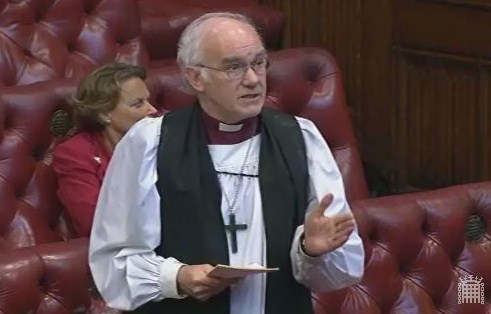
On 9th April 2014 the House of Lords debated a Government motion to take note of Higher Education in the UK. The Bishop of Winchester, lead bishop for HE, spoke about the work of the Church of England in the field through its Cathedrals Group of universities, as well as the ethos and purpose of Higher Education. Continue reading “Higher Education: a public good for the common good – speech by Bishop of Winchester”

Peacekeeping, Reservists, Chaplaincy and the Armed Forces Covenant: Bishop of St Albans

 “I hope that as these covenants are rolled out, we can think about how we can draw in the voluntary sector to offer real and significant support to those who put themselves on the line in the defence of our country.” – Bishop of St Albans, 7/4/14

14.03 Bishop of St Albans

On 7th April 2014 Lord Dannatt tabled a question for short debate, ‘to ask Her Majesty’s Government what is their assessment of whether they have sufficient manpower and the right balance of regular and reserve forces within the Armed Forces in order to meet the United Kingdom’s current national and international responsibilities and requirements’. The Bishop of St Albans, Rt Rev Alan Smith, spoke: Continue reading “Peacekeeping, Reservists, Chaplaincy and the Armed Forces Covenant: Bishop of St Albans”

Abortion on grounds of gender or disability: Bishop of Leicester raises concerns

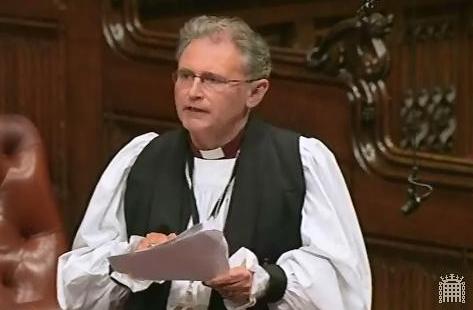
On 3rd April 2014 the Bishop of Leicester, Rt Rev Tim Stevens, spoke during a short debate in the Lords on abortion, tabled by Baroness Knight of Collingtree. The debate title was: “To ask Her Majesty’s Government what steps they intend to take to investigate reported law breaking by those carrying out terminations of pregnancies.” The Bishop said:

The Lord Bishop of Leicester: My Lords, whatever our differing positions on the ethics of abortion, it must be a matter of widespread concern if there is the appearance of a long-standing gap between the spirit of the Abortion Act and the interpretation of the law. This is a matter of particular interest to many in the churches because of a theological commitment to the sanctity of human life, including potential human life.

14.04.01 Bishop of Leicester Continue reading “Abortion on grounds of gender or disability: Bishop of Leicester raises concerns”

Bishop of St Albans speech marking International Roma Day

On 2nd April 2014 Baroness Whitaker tabled a question for short debate: ‘ to ask Her Majesty’s Government what plans they have to mark International Roma Day.’

The Bishop of St Albans gave a speech highlighting the work being undertaken in Luton in support of the Roma community in the diocese of St Albans, He also focused on the need to improve educational opportunities for Roma children.

14.03 Bishop of St Albans

The Lord Bishop of St Albans: My Lords, I thank the noble Baroness, Lady Whitaker, for securing this debate, Continue reading “Bishop of St Albans speech marking International Roma Day”

Cathedrals and the Future of English Heritage – Commons debate

The number of visitors to cathedrals, not counting other churches, is some 11 million people a year, which is equivalent to current visitor levels to English Heritage properties – Rt Hon Sir Tony Baldry MP, 2/4/14

On 2nd April 2014 Rt Hon Sir Tony Baldry MP, Second Church Estates Commissioner, spoke in a House of Commons debate about the future of English Heritage.

Sir Tony raised the importance of ecclesiastical buildings to the cultural heritage of the nation and asked for assurances that altering the status of English Heritage would not change the valuable work done by their conservation specialists, so weakening the progress of research and support available to those who operate listed and heritage buildings.

Future of English Heritage

14.01 CCQ Baldry

Sir Tony Baldry (Banbury) (Con): The whole House owes a debt to the hon. Member for Darlington (Jenny Chapman) for securing the debate. I declare an interest as a member of English Heritage. The image on this year’s membership card is a statue of King Richard III, whose mortal remains were recently discovered in a car park in Leicester—an outstanding feat of English archaeology. We now await the decision of the courts as to which of our noble cathedrals those mortal remains will be buried in. Continue reading “Cathedrals and the Future of English Heritage – Commons debate”

Prisons and the problem of indeterminate sentences – speech by Bishop of Lichfield

“I spent some time recently with an intelligent and engaging Somali prisoner …This man was given an 18-month tariff, but last Christmas was his ninth in prison. What an injustice, and what a huge expense.” – Bishop of Lichfield

On 27th March 2014 the Bishop of Lichfield took part in a debate tabled by Lord Wigley, ‘to ask Her Majesty’s Government what steps they are taking to address the position of individuals serving indeterminate sentences on public protection grounds who have already passed their tariff’.

The Lord Bishop of Lichfield: My Lords, I am most grateful to the noble Lord, Lord Wigley, for his initiative and to the noble Lord, Lord Dholakia, and the noble and learned Lord, Lord Phillips, for their very helpful introductions.14.03.27 Bishop of Lichfield

As a general principle, it is accepted in this country that people should be sent to prison because they have been convicted of an offence rather than because of the risk that they will offend. Indeterminate tariffs are even now available for the most serious offences, in the form of life sentences, and extended sentences now provide a way to manage and contain risk in relation to those convicted of serious violent and sexual offences which do not call for a life sentence. Continue reading “Prisons and the problem of indeterminate sentences – speech by Bishop of Lichfield”

Shrinking the economic gap between London and the regions: Budget speech by Bishop of Sheffield

“If we do nothing, we will see the gap between London and the regions continue to widen to the detriment of the whole country. I urge the Government and this House to address this problem with imagination, courage and vigour” – Bishop of Sheffield

On 27th March Peers debated the Chancellor’s 2014 Budget statement. The Bishop of Sheffield spoke of the need to rebalance the economy so that the proceeds of renewed economic growth could be shared across the regions. He suggested this could be the task of a cross-party parliamentary commission.

14.03.27 Bishop of SheffieldThe Lord Bishop of Sheffield: My Lords, the prophet Jeremiah wrote a short but remarkable letter to his contemporaries long ago who had been sent into exile in Babylon. The letter has shaped Jewish and Christian thought on how communities of faith should engage with the wider society down all the generations since. The prophet’s advice is to,

“seek the welfare of the city where I have sent you … for in its welfare you will find your welfare”.

Continue reading “Shrinking the economic gap between London and the regions: Budget speech by Bishop of Sheffield”

Freedom and Responsibility: Budget speech by the Bishop of Chester

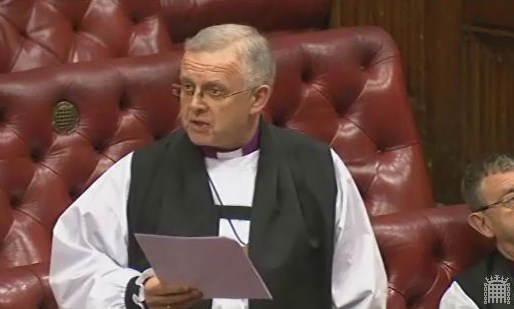
On 27th March Peers debated the Chancellor’s 2014 Budget statement. The Bishop of Chester, Rt Rev Peter Forster, cautioned that if society were to experience renewed growth and prosperity, it should guard against recreating the problems of the past 30 years. He argued for an emphasis on strengthened social institutions, including families, continued commitment to overseas aid, and improved financial education.

14.03 Bishop of ChesterThe Lord Bishop of Chester:  My Lords, the reason that the Bishops sit on the government side of the Chamber, I am told, is the recognition that the task of government is so difficult that the Government need all the help available to them. Managing the economy in recent years has been an enormously difficult task and we can only express relief and, indeed, gratitude that things seem to be moving on to a more normal plane despite all the challenges ahead, about which the Chancellor himself is fairly candid. Continue reading “Freedom and Responsibility: Budget speech by the Bishop of Chester”

“Problematic” UK visa and immigration system affecting international work of churches – speech by Bishop of Chester

when we try to get the visa and immigration authorities to tell us what we have to do as a diocese and what the conditions are, we find that letters get lost. My colleague who deals with this is in despair. We write letters but nothing comes back. Time is ticking away and the training curacy of the chap I am talking about is coming to an end.” – Bishop of Chester

Lord Steel of Aikwood tabled a question for short debate: ‘to ask Her Majesty’s Government what is their assessment of the operation and accountability of UK Visas and Immigration. The Bishop of Chester raised some examples of failures in the system.

The Lord Bishop of Chester:

14.03 Bishop of ChesterMy Lords, I associate myself very closely with all that has been said, although the second half of the contribution from the noble Lord, Lord Phillips, focused a bit too much on mammon for my level of expertise. However, I take him as an authority on that aspect. The introduction the noble Lord, Lord Steel, gave, was powerful and shocking in equal measure, and made the case on its own. I can say to the noble Baroness, Lady Neville-Jones, that I am aware of the Hereford situation; indeed, clergy are among those who are able to come under the scheme she mentioned.

Continue reading ““Problematic” UK visa and immigration system affecting international work of churches – speech by Bishop of Chester”

The role of the church and education in promoting creative skills – speech by Bishop of St Albans

“Britain has a wonderful tradition of musical performance and singing. We play a little part in that with our heritage of music in our cathedrals, collegiate institutions and some parish churches. It is there that many of these young people discover not only that they have a voice but how to train it.” – Bishop of St Albans

In the House of Lords on 20th March 2014 Baroness Andrews tabled a question for short debate: “To ask Her Majesty’s Government what proposals they have to promote the role of the creative skills sector in the United Kingdom economy.”14.03 Bishop of St Albans

The Bishop of St Albans spoke of the role of education in fostering creative skills and the ongoing place of churches and cathedrals in encouraging music, arts and craft. Continue reading “The role of the church and education in promoting creative skills – speech by Bishop of St Albans”