Levelling Up & Regeneration Bill: Bishop of Exeter supports amendments prioritising emergency services in infrastructure planning

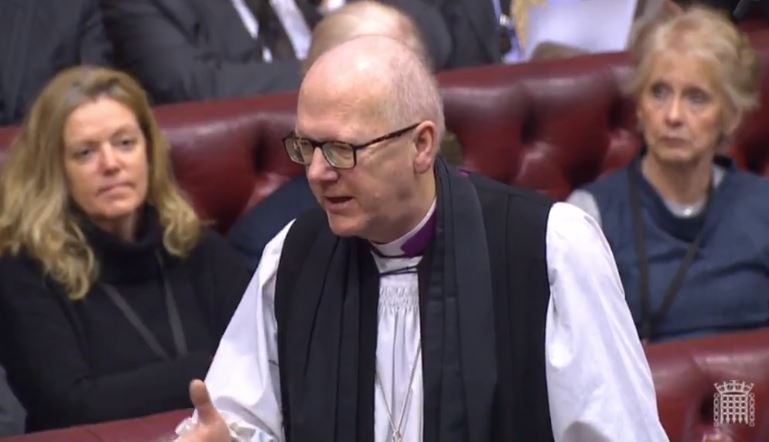
On 3rd May 2023, the House of Lords debated the Levelling Up & Regeneration Bill in committee. The Bishop of Exeter spoke in support of amendments to the bill tabled by Lord Greenhalgh, seeking to ensure that emergency services are considered during planning and reform:

The Lord Bishop of Exeter: My Lords, I rise in support Amendments 324, 329, 342, 346, 347, 351, 352 and 360 in the name of the noble Lord, Lord Greenhalgh, and to which I have added my name. They concern planning reform and the emergency services.

A robust and effective planning process is essential for the flourishing of our communities. A key aspect of this is to ensure the adequate provision of emergency services. I welcome the fact that the Bill has included emergency services in the definition of infrastructure under Schedule 11, but, historically, this has not always been the case. It remains the fact that local authorities are not obliged to take into account the views and concerns of the emergency services.

Continue reading “Levelling Up & Regeneration Bill: Bishop of Exeter supports amendments prioritising emergency services in infrastructure planning”
Bishop of Durham asks about support for building societies

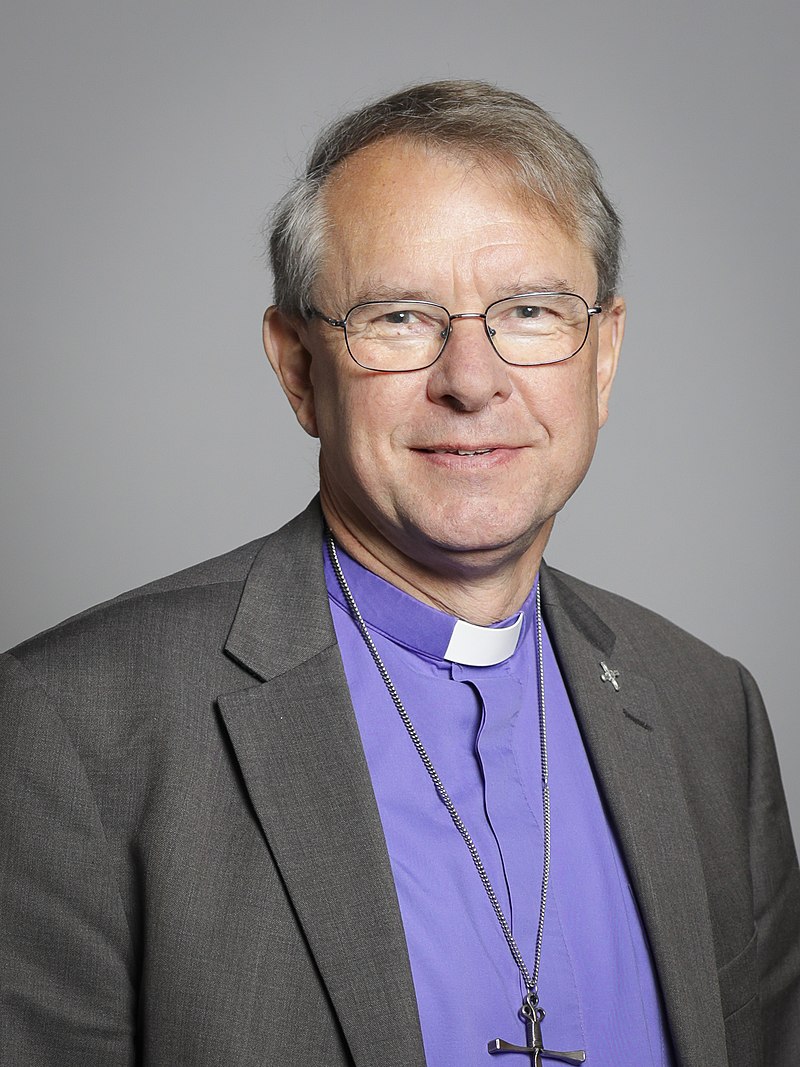
The Bishop of Durham asked a question on support for local building societies on 27th April 2023, during a debate on bank closures:

The Lord Bishop of Durham: In my local town of Bishop Auckland, Newcastle Building Society and Darlington Building Society have moved on to the high street as banks have moved off it. Will the Minister commend building societies for their commitment to local communities and to making things accessible to them, and will she encourage further work on that?

Baroness Penn (Con, Treasury): I absolutely commend building societies and all businesses that have a commitment to local communities and are thinking about how they can make their services as accessible as possible. There are many different routes to ensuring accessibility. We should focus on the outcome for the customer and embrace the different routes that this can be delivered by.

Hansard

Bishop of Leicester speaks in debate on the need to provide more supported housing

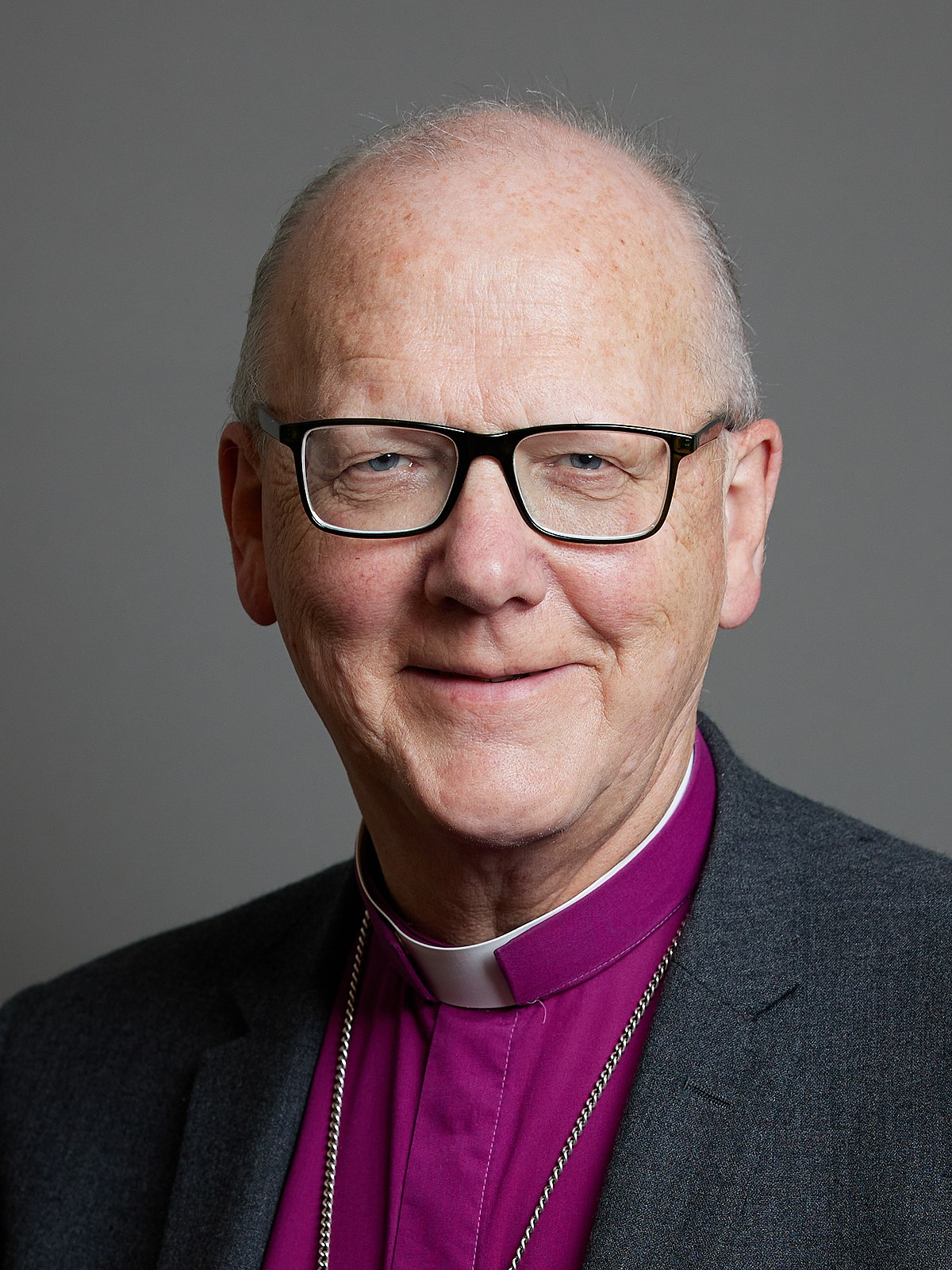
On 30th March 2023, the House of Lords debated the need for more supported housing resources. The Bishop of Leicester spoke in the debate, highlighting the benefits of supported housing in reducing homelessness and referencing the work of local services in Leicester diocese:

The Lord Bishop of Leicester: My Lords, I am grateful to the noble Baroness for securing this debate and bringing to the Committee’s attention the excellent report by Imogen Blood and the University of York for the National Housing Federation.

I would like to use this opportunity to highlight in particular the work of one organisation in Leicester, with which I have had the privilege of working. I will highlight some of the points made in the aforementioned report and also in Homeful, a report by Professor Jo Richardson of De Montfort University in Leicester.

For several years, One Roof Leicester operated a night shelter, providing emergency accommodation for those who would otherwise be sleeping rough. Indeed, it was credited as running the first interfaith night shelter in the UK; for three months, it rotated between multiple places of worship. It then began to offer supported housing for people experiencing homelessness, and the outcomes have been so positive that it has now moved over fully to that model.

Continue reading “Bishop of Leicester speaks in debate on the need to provide more supported housing”

Bishop of Leicester asks about impact of household support schemes

The Bishop of Leicester received the following written answer on 9th March 2023:

The Lord Bishop of Leicester asked His Majesty’s Government whether they are evaluating the impacts of the various household support schemes delivered by county councils and unitary authorities.

Viscount Younger of Leckie (Con): Local Authorities have the local ties and knowledge, making them best placed to identify and help those most in need. County Councils are expected to work together with District Councils to provide support and to ensure the funding meets its objectives by identifying those most in need.

Authorities provide management information to DWP which has been used for all the various household support schemes to evaluate how successful The Fund has been in providing support to households.

Continue reading “Bishop of Leicester asks about impact of household support schemes”

Financial Services and Markets Bill: Bishop of St Albans highlights issues in rural communities

The Bishop of St Albans spoke during the debate on the Financial Services and Markets Bill on Tuesday 7th March 2023, raising concerns on access to cash and the lack of digital connectivity in rural communities, and the impact on businesses and individuals:

The Lord Bishop of St Albans: My Lords, I will not detain the Committee for very long but perhaps I could say one or two things. Briefly, I come at this by thinking about rural sustainability and rural business. I declare my interest as president of the Rural Coalition.

Before I say anything on that, a month ago I had my wallet stolen on my way into Parliament and I learned a lesson: do not keep all your cards in your wallet but have some different ones. I was, to use a theological term, absolutely stuffed that morning. Fortunately, I had a member of staff at home. I went back and cancelled the cards then phoned up my bank, which said, “Yes, come up—we can give you some cash”. When I got up there, I was told, “No, the system’s got it wrong and we aren’t able to give you cash here”. I then had to get someone to take me six miles to get some cash. When I eventually got into London for some meetings, I went to four places before I could find somewhere to buy lunch because I had only cash. This is actually quite a complex thing.

Continue reading “Financial Services and Markets Bill: Bishop of St Albans highlights issues in rural communities”

Bishop of Gloucester asks about funding for development of food banks into alternative social programmes

The Bishop of Gloucester received the following written answer on 20th February 2023:

The Lord Bishop of Gloucester asked His Majesty’s Government what assessment they have made of the case for a funding programme for food banks to develop into alternative forms of initiative, such as food clubs or social supermarkets.

Viscount Younger of Leckie (Con): Food Banks are independent, charitable organisations where local communities come together to support one another. This is a great example of the generosity of spirit across the country. The Government has no role in their operation.

Hansard

Bishop of St Albans asks about provision of services to rural areas

The Bishop of St Albans received the following written answers on 31st January 2023:

The Lord Bishop of St Albans asked His Majesty’s Government what steps they are taking to prevent the closure of rural bus routes.

Baroness Vere of Norbiton (Con): The Government has provided nearly £2 billion of support since March 2020 through emergency and recovery grants to mitigate the impacts of the pandemic on the bus sector. This includes a six-month extension to the Bus Recovery Grant to provide up to £130 million to continue supporting bus services in England outside London until the end of March of this year.

Continue reading “Bishop of St Albans asks about provision of services to rural areas”

Extreme Risk Management: Bishop of Leicester highlights benefits of including faith groups in planning for response to crises

On 12th January 2022, the House of Lords debated a motion to take note of a report from the Risk Assessment and Risk Planning Committee: Preparing for Extreme Risks: Building a Resilient Society (Session 2021–22, HL Paper 110). The Bishop of Leicester spoke in the debate, advocating for greater inclusion of faith groups in emergency planning:

The Lord Bishop of Leicester: My Lords, I, too, am grateful for the Select Committee’s work in tackling such an important subject and, in particular, I concur with the authors’ recognition that,

“the UK must move away from a risk management strategy which … often ignores or fails to appreciate the interconnected nature of our society”,

and that we must instead,

“produce a risk management system that ties all sectors of society together.”

Interdependence is a fundamental part of human nature and policies that follow the grain of that nature are far more likely to succeed.

I was disappointed, therefore, that although the report advocated for a whole-society approach, no reference was made to the role of faith groups in emergency planning and response. Faith groups and leaders across the country were an integral part of the response to Covid-19. A 2020 report by the All-Party Parliamentary Group on Faith and Society, based on research with local authorities, found that faith communities were instrumental in local responses by offering buildings, running food banks, information-sharing, befriending, collecting, cooking and delivering food, and providing volunteers for local authority programmes. Accordingly, the APPG found that local authorities developed a new-found appreciation for the agility, flexibility and professionalism of faith-based organisations, and that local authorities were keen to continue and build on those relationships in the future.

Continue reading “Extreme Risk Management: Bishop of Leicester highlights benefits of including faith groups in planning for response to crises”

Bishop of Carlisle asks about new coal mine in Cumbria

The Bishop of Carlisle asked a question concerning the proposed opening of a new coal mine in Whitehaven, Cumbria, on 8th December 2022:

The Lord Bishop of Carlisle: My Lords, I declare a slight interest in this topic, since Whitehaven is in my diocese, and like the noble Baroness, Lady Hayman, I live in west Cumbria—in a particularly beautiful part of it, I have to say. This debate has now been running for more than two years, and in Cumbria, as in the whole country, it has been highly contentious, with a great deal of passion expressed on both sides. We have already heard some of that passion in the debate this evening. So I am acutely aware of the many arguments about both the potential environmental impact, which has been deplored, and the employment opportunities, which would—as has already been mentioned—be very welcome in this very deprived part of the country.

Continue reading “Bishop of Carlisle asks about new coal mine in Cumbria”

Bishop of Durham asks about support for community and voluntary organisations

The Bishop of Durham received the following written answer on 8th December 2022:

The Lord Bishop of Durham asked His Majesty’s Government, further to the report by THEOS A Torn Safety Net, published on 7 November, what steps they are taking to support charities and organisations who have experienced a decline in volunteers and donations, and an increase in costs, as a result of the increased cost of living.

Lord Parkinson of Whitley Bay (Con): We know that, as households and communities face rising prices, many charities and civil society organisations are contending with the same price increases themselves while also seeing more demand for their services.

With the support of His Majesty Government, charities and civil society organisations have shown significant resilience over the past two years, and will again be crucial in supporting people through the winter.

Continue reading “Bishop of Durham asks about support for community and voluntary organisations”