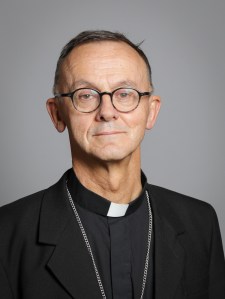
UK Internal Market Bill: Bishop of Leeds supports removal of clauses on Northern Ireland and international law

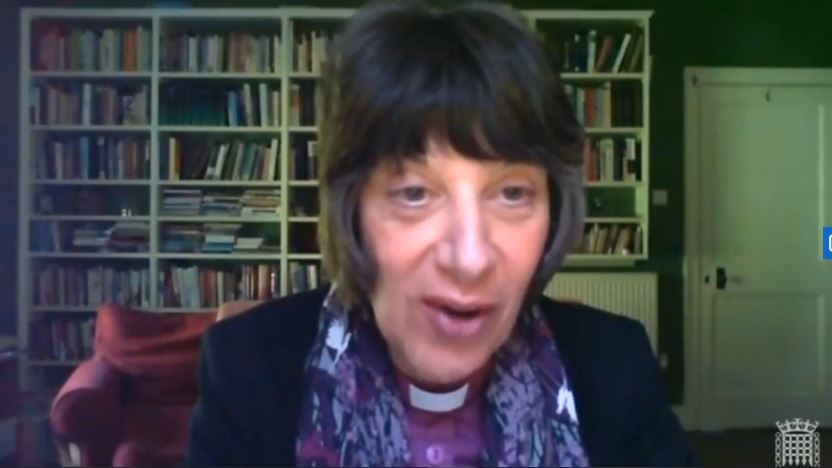
On 9th November 2020 the House of Lords debated and voted on the Government’s UK Internal Market Bill during its Committee stage. A cross-party group of Peers had tabled motions that all the clauses of Part 5 of the Bill, which covered Northern Ireland, international law, and executive powers,  should not remain in the Bill. These successfully passed by large majorities across two votes. The Bishop of Leeds acted as a sponsor of two of those motions, and spoke in the debate on whether the clauses of Part 5 should ‘stand part’ of the Bill:

The Lord Bishop of Leeds [V]: My Lords, it is a great pleasure to follow the speech by the noble Baroness, Lady Suttie. I endorse completely the points made by the noble and learned Lord, Lord Judge, at the outset of this debate. I hope the Government will listen carefully to the advice from the noble Lord, Lord Empey, on the alternatives to what is before us. This is not an either/or situation.​

I have read every word of the Second Reading and Committee debates and the reports—especially from the Constitution Committee. I have even reread Tom Bingham’s book on the rule of law. I ask myself whether I am missing something, but I still come back to the point of principle. I accept the Government’s intention in this Bill, but not the means. Continue reading “UK Internal Market Bill: Bishop of Leeds supports removal of clauses on Northern Ireland and international law”

UK Internal Market Bill – Archbishop supports amendments on Northern Ireland impact

On 9th November 2020 the House of Lords debated and voted on the Government’s UK Internal Market Bill during its Committee stage. A cross-party group of Peers had tabled motions that all the clauses of Part 5 of the Bill, which covered Northern Ireland, international law, and executive powers,  should not remain in the Bill. These successfully passed by large majorities across two votes.

The Archbishop of Canterbury had also sponsored an amendment with Lord Eames that Ministers report on the effect of the Bill’s provisions on peace and reconciliation in Northern Ireland, which he spoke to during the debate:

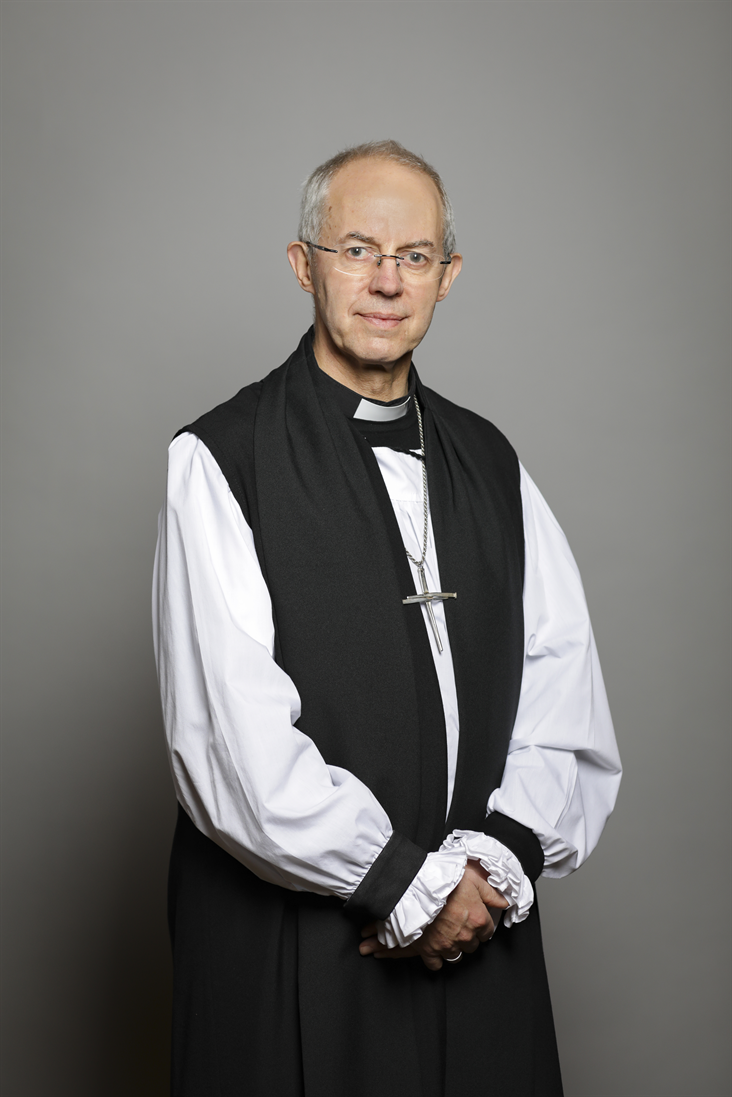
The Archbishop of Canterbury [V]: My Lords, I will speak to Amendment 161*, to which I have added my name, alongside the noble and right reverend Lord, Lord Eames, the noble Lord, Lord Hain, and the noble Baroness, Lady Ritchie of Downpatrick. The previous speeches have all been both moving and deeply eloquent, and I shall therefore be very brief.

As the noble and right reverend Lord, Lord Eames, so powerfully explained, the purpose of our amendment is simply to put on the record a concern that this Bill in its current form fails to take into account the sensitivities and complexities of Northern Ireland, and could have unintended and serious consequences for peace and reconciliation. The noble and right reverend Lord spent 20 years as Archbishop of Armagh, between 1986 and 2006, and the force of his words was most remarkable. He has experience of everything from the funerals in small churchyards of those caught up in the Troubles through to negotiations behind the scenes for the Belfast agreement. He speaks with the integrity and authority that those 20 years have earned him, and I trust that the House will listen carefully. Continue reading “UK Internal Market Bill – Archbishop supports amendments on Northern Ireland impact”

Immigration Bill: Bishop of Southwark supports Dubs amendment on child refugees and family reunion

On 10th November the House of Lords considered the Government’s Immigration and Social Security Co-ordination (EU Withdrawal) Bill.  Lord Dubs pressed again an amendment on child refugees and family reunion, his earlier amendment to the Bill having been rejected in a vote in the House of Commons. The Bishop of Southwark spoke in support of the amendment. Lord Dubs did not press it to a vote, accepting some concessions from the Government in its place.

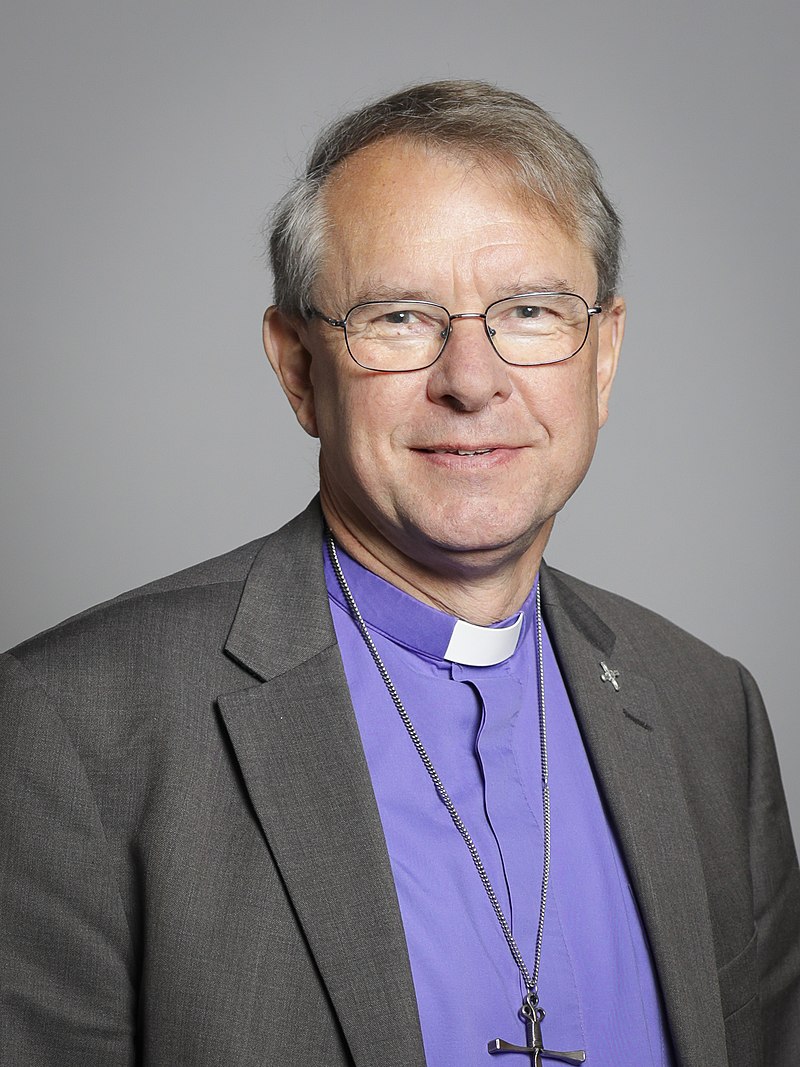
The Lord Bishop of Southwark: My Lords, I speak in favour of the amendment moved by the noble Lord, Lord Dubs. In doing so, I speak not only on my account but also in place of the right reverend Prelate the Bishop of Durham, who is locked down in the north-east and therefore, because of the procedures for consideration of Commons amendments, is unable to speak on this amendment, although that had been very much his intention.

Family life and kin relationships are vital in many parts of the world to ensure survival. Even in the UK, family means the difference between misery, destitution and poor mental health and a life where, even in the most difficult circumstances, there is practical care, support and love. Thus, I, too, welcome the Government’s steps towards ensuring safe and legal routes, including the commitment in case of a no-deal Brexit, to pursue bilateral negotiations on arrangements for family reunion, which I trust they will seek to ensure are equivalent to the Dublin regulations. I welcome the Minister’s commitments and await with interest her further comments following what the noble Lord, Lord Dubs, just said.

However, a step in the right direction is not the end of the journey. Continue reading “Immigration Bill: Bishop of Southwark supports Dubs amendment on child refugees and family reunion”

Bishop of Durham asks if criminal justice Royal Commission will examine short sentences

On 10th November Lord Ramsbotham asked the Government “when they plan to announce (1) the chair, (2) the timeframe, and (3) the terms of reference, for the Royal Commission on criminal justice.” The Bishop of Durham asked a further question:

The Lord Bishop of Durham [V]: My Lords, prisoners serving short sentences for non-violent crimes often get stuck in a so-called revolving door, with serious consequences to their family relationships, housing and rehabilitation. Will the commission be considering reports into the issues around short sentences and consider alternatives to custodial sentences, to enable rehabilitation in the community? Continue reading “Bishop of Durham asks if criminal justice Royal Commission will examine short sentences”

Bishop of Oxford asks about employment rights in the gig economy

On 10th November the Bishop of Oxford received written answers to three questions, on employment conditions in the gig economy:

The Lord Bishop of Oxford: To ask Her Majesty’s Government what assessment they have made of (1) the impact, and (2) the effectiveness, of requiring employers in the gig economy to provide workers and contractors with a written statement of their core terms of employment. [HL9569]

Lord Callanan: In response to the Taylor Review, the Government recognised that there was a significant lack of awareness among individuals and employers about applicable rights and responsibilities in non-standard contracts. We therefore amended legislation so that the Employment Rights Act 1996 entitles both employees and workers to receive a written statement of employment particulars that sets out the position regarding remuneration and hours of work etc. Continue reading “Bishop of Oxford asks about employment rights in the gig economy”

Week in Westminster, 2nd-6th November 2020

Parliament met in Westminster and online this week. The Bishop of Winchester was on duty in the House of Lords and read prayers at the start of each sitting day.

He questioned Government plans to suspend public worship as part of the new coronavirus lockdown rules, both in response to the Prime Minister’s statement, and in the Lords debate on the Regulations. Both the Commons and the Lords passed the Regulations in a vote.

The Bishop also asked Government about apprenticeships, and tax avoidance by corporations in less-developed countries.

The Bishop of Durham received answers to written questions on the right to work for asylum seekers, human rights and refugees in Burundi and relations between Burundi and Rwanda.

The Bishop of St Albans asked Government about the suspension of evictions, targets for disabled access homes, and possible ethnic cleansing of Armenians in Nagorno Karabakh. He received written answers to questions on gambling and the armed forces, the behaviour of the Azerbaijan military, human rights in China, and broadband funding.

The Bishop of Leeds received answers to written questions on the military conflict in Nagorno Karabakh.

Vote: Health Protection (Coronavirus) (Restrictions) (England) (No. 4) Regulations 2020

On 4th November 2020 the House of Lords voted on a motion from Lord Robathan that would have prevented the Government’s new coronavirus Regulations from coming into effect. The motion was overwhelmingly rejected. Continue reading “Vote: Health Protection (Coronavirus) (Restrictions) (England) (No. 4) Regulations 2020”

Bishop of Winchester protests Government suspension of public worship

On 4th November 2020 the House of Lords debated the Government’s Health Protection (Coronavirus) (Restrictions) (England) (No. 4) Regulations 2020. The Regulations introduce a second coronavirus lockdown in England, including the susp0ension of public worship. The Bishop of Winchester responded:

The Lord Bishop of Winchester [V]: My Lords, I am grateful to Her Majesty’s Government for seeking to ensure that the appropriate measures are in place to protect the most vulnerable and restrict the spread of this virus. It is important that we do not prolong such stringent lockdown measures because of the way that they impact on the mental, physical and, indeed, spiritual well-being of the population. However, I will not be supporting the fatal Motion. I recognise the exceptional nature of these times, and welcome that the regulations will enable places of worship to remain open for private prayer and broadcasting acts of worship. Creating such broadcast acts of worship often requires a team of people, both amateurs and professionals. I would welcome more clarity from the Minister on the number of people allowed to do this.

Clergy across the country have worked hard to ensure that our church buildings are Covid-secure for public worship, education settings, food banks and other essential services. In most places, by distancing and limiting congregation sizes, communal worship can safely take place without the need for an outright ban.

Religious worship is not a leisure activity: the freedom to worship and to assemble for this purpose is a right that we enjoy in this country and strongly advocate for in other countries. Continue reading “Bishop of Winchester protests Government suspension of public worship”

Bishop of St Albans asks whether ban of evictions will be extended

On 4th November 2020 the House of Lords heard the repeat of a Government statement on economic support during the second Covid-19 lockdown. The Bishop of St Albans asked a question in response:

The Lord Bishop of St Albans [V]: My Lords, there has been a particular problem in the rental market, whereby renters and landlords have suffered as a result of these latest measures. Given the temporary protection from eviction for those living in tier 2 and 3 areas, could the Government confirm whether an eviction ban will now be extended across the country and whether they will now develop a strategy to help tackle arrears brought on by Covid to avoid a tragic spike in homelessness? Continue reading “Bishop of St Albans asks whether ban of evictions will be extended”

Bishop of St Albans asks about targets for disabled-access homes

On 4th November 2020 Baroness Greengross asked the  Government “what steps they are taking to ensure that changes to the planning system will deliver more homes that are accessible for people with disabilities.” The Bishop of St Albans asked a further question:

The Lord Bishop of St Albans [V]: My Lords, with regions such as the north-west, the north-east and Yorkshire hosting less than one disabled-access home ​for every 100 homes, and regions such as the West Midlands hosting just over one disabled-access home for every 300 homes, given that 15.2% of the population is elderly and 18% of the population is disabled, is it now time that the Government mandated targets for disabled-access homes rather than simply relying on local authorities? Continue reading “Bishop of St Albans asks about targets for disabled-access homes”