Public Authorities (Fraud, Error and Recovery) Bill: Bishop of Leicester speaks at third reading

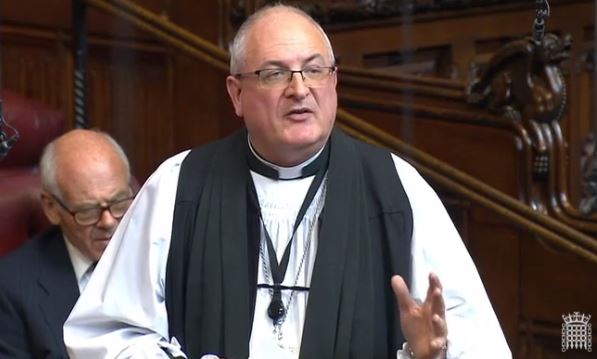
The Bishop of Leicester spoke at the third reading of the Public Authorities (Fraud, Error and Recovery) Bill on 23rd October 2025, querying whether the government minister would provide written confirmation of actions taken with regards to managing overpayments:

The Lord Bishop of Leicester: My Lords, I support this Bill and add my thanks to all those who have engaged so thoroughly in its detail. It has been an important learning experience for me in the processes of your Lordships’ House, an experience that I hope I can bring to bear on other business in this place.

Continue reading “Public Authorities (Fraud, Error and Recovery) Bill: Bishop of Leicester speaks at third reading”

Public Authorities (Fraud, Error and Recovery) Bill: Bishop of Leicester supports amendments on protections for those in poverty

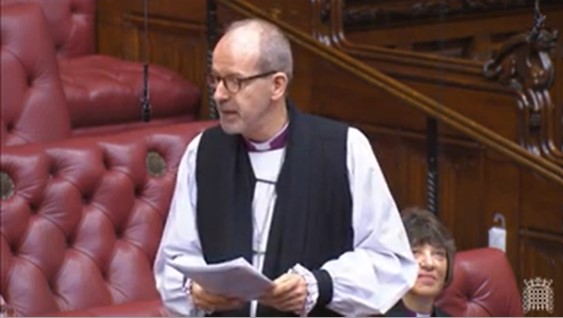
The Bishop of Leicester spoke in support of an amendment to the Public Authorities (Fraud, Error and Recovery) Bill which would provide protections for those in poverty regarding benefit overpayments on 21st October 2025:

The Lord Bishop of Leicester: My Lords, I am pleased to have added my name to this amendment. As this is the first time that I have spoken at this stage, I want to thank the Ministers for their careful consideration of the concerns raised by noble Lords, as well as all those who have engaged with such diligence on this matter. For the record, this is an important Bill. Attempts to commit fraud will not stop as a result of this Bill—that will never be possible—but it will be far harder for those making these attempts, and that is absolutely right, as is the ability to recover overpayments.

The principles behind this amendment are fairness in the face of the various reasons for an overpayment being made, including error by the department, and affordability, ensuring that those already in poverty are not pushed further into it. Let us remember who will bear the brunt of these new powers: people who are reliant on benefits, which independent research suggests are already insufficient to meet people’s basic needs. With the requirement to pay off their debts via universal credit deductions of up to 15% of the standard allowance, there is a real risk that many will, I fear, be pushed even deeper into poverty.

Continue reading “Public Authorities (Fraud, Error and Recovery) Bill: Bishop of Leicester supports amendments on protections for those in poverty”

Crime and Policing Bill: Bishop of Derby speaks at second reading

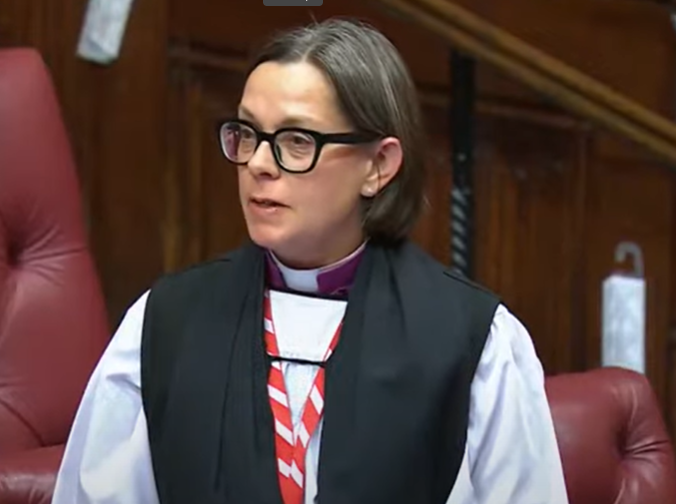
The Bishop of Derby spoke at the second reading of the Crime and Policing Bill on 16th October 2025, confirming that the Bishops Benches are committed to working proactively on the bill:

The Lord Bishop of Derby: My Lords, I commend this Government’s mission to achieve safer streets and applaud particularly the aim of halving both knife crime and violence against women and girls in a decade. The Bill touches on a wide range of complex and important issues, and I will raise just a few.

Reporting of child sexual abuse and the decriminalisation of abortion are of particular interest to my colleagues on these Benches. Indeed, noble Lords may have seen the Church’s statement in response to the debate in the other place on the decriminalisation of women seeking abortion.

Continue reading “Crime and Policing Bill: Bishop of Derby speaks at second reading”

Border Security, Asylum and Immigration Bill: Bishop of Leicester supports amendments on protecting family life for migrants

On 13th October 2025, the Bishop of Sheffield spoke in support of three amendments to the Border Security, Asylum and Immigration Bill on support for family life and for refugee children separated from their parents:

The Lord Bishop of Sheffield: My Lords, I will speak in support of three amendments in this group, one to which I have put my name and two to which the right reverend Prelate the Bishop of Chelmsford has put hers; as we have heard, she regrets that she cannot be in her place today. I refer to Amendment 177 in the name of the noble Lord, Lord Dubs, Amendment 178 in the name of the noble Baroness, Lady Hamwee, and Amendment 203K in the name of the noble Baroness, Lady Lister.

It is not just the Christian Church that regards the family as more than a merely biological unit; it is the fundamental God-given building block of community life and the source of belonging and stability for children. The former Home Secretary recognised this when she wrote in 2020:

Continue reading “Border Security, Asylum and Immigration Bill: Bishop of Leicester supports amendments on protecting family life for migrants”

Terminally Ill Adults (End of Life) Bill: Archbishop of York speaks at second reading, highlighting risks of legislation

The Archbishop of York spoke at the second reading of the Terminally Ill Adults (End of Life) Bill on 19th September 2025, pointing out the need for better palliative care in the UK and the risks of implementing this legislation:

The Lord Archbishop of York: My Lords, it is an honour to follow the noble Baroness, Lady Hollins. I will of course speak for myself, but I also know that I represent views held by many faith leaders—not just Christian leaders—across our nation, with whom I have been in discussion and who have written to me.

Jesus teaches us that how we live our lives in relationship to others is vital for the health of our society and our own personal well-being. We belong with and for each other. The Bill is wrong because it ruptures relationships, serving one need but creating many others.

The noble Lord, Lord Baker, and several others in this important and moving debate gave the game away early on: no Government, he said, will be prepared to provide palliative and social care in the way it is needed, thus revealing that the Bill’s impact will be economic as well as social. Several speakers said there were too many safeguards; others, that provision for assisted dying ought to be expanded.

Continue reading “Terminally Ill Adults (End of Life) Bill: Archbishop of York speaks at second reading, highlighting risks of legislation”

Terminally Ill Adults (End of Life) Bill: Bishop of Chichester stresses sanctity of life

The Bishop of Chichester spoke at the second reading of the Terminally Ill Adults (End of Life) Bill on 19th September 2025, stressing the principle of the sanctity of life and questioning the ethical foundations of the bill:

The Lord Bishop of Chichester: My Lords, it is a privilege to follow the noble Lord, Lord Curry. I begin by acknowledging reverence for all contributors to this debate, which touches on our deepest emotions: lacrimae rerum, the things of which tears are made.

The noble Lord, Lord Carlile of Berriew, reminded us that, since the end of capital punishment, causing the death of another citizen is not allowed in our law, other than in war. The noble Lord, Lord Herbert of South Downs, was not alone in describing the introduction of a provision in law to cause death as a “crossing the Rubicon” moment. Although the right to life, enshrined in law, is a moral principle consistent with the Christian faith, it should not be regarded as the imposition of Christianity on the pluralist democracy we are proud to be. However, many Christians, including myself, see the Bill as crossing the Rubicon, and this is why.

Continue reading “Terminally Ill Adults (End of Life) Bill: Bishop of Chichester stresses sanctity of life”

Children’s Wellbeing and Schools Bill: Bishop of Chelmsford supports amendments on bullying and children with imprisoned parents

The Bishop of Chelmsford spoke in favour of two amendments to the Children’s Wellbeing and Schools Bill on 16th September 2025, first on introducing a duty on schools to record incidences of racism or interfaith bullying, and secondly on the commissioning of a report on improving educational attainment for children with a parent in prison:

The Lord Bishop of Chelmsford: My Lords, I speak in support of Amendment 464 knowing that, had my right reverend friend the Bishop of Lincoln been in his place, he would very much have wanted to contribute to the debate. If passed, this amendment would introduce a duty on schools to record and report any incidents of racism or faith-based bullying on school premises. 

It would also help diocesan boards of education in collating and monitoring such cases and better assisting those church schools which might benefit from support.

In preparing for this speech, I spoke to our own director of education in Chelmsford diocese, whose team oversees 139 church schools. She told me that this proposed amendment had the potential to help the board of education strengthen anti-bullying and inclusive practices in partnership with schools.

Continue reading “Children’s Wellbeing and Schools Bill: Bishop of Chelmsford supports amendments on bullying and children with imprisoned parents”

Terminally Ill Adults (End of Life) Bill: Bishop of London opposes legislation and calls for comprehensive funding of palliative care system

The Bishop of London spoke at the second reading of the Terminally Ill Adults (End of Life) Bill, opposing the bill and outlining the need for fully funded palliative and social care services in the UK:

The Lord Bishop of London: My Lords, as the noble Lord, Lord Kamall, has already pointed out, we in this Chamber share the same goal: for people to die with dignity and compassion. They are critical concerns for those who, like me, believe that the Bill is deeply flawed. Noble Lords will know that I am a former government Chief Nursing Officer, and I chaired the UK Commission on Bereavement. As a nurse, a priest, a daughter and a granddaughter, I have had the privilege to be with many people as they die. Most people die well although, as we have heard and will continue to hear, that is not always the case. I have known people to experience some of the most valuable days of their life as it comes to an end, including those with terminal illnesses.

Continue reading “Terminally Ill Adults (End of Life) Bill: Bishop of London opposes legislation and calls for comprehensive funding of palliative care system”

Children’s Wellbeing and Schools Bill: Bishop of Oxford supports amendment on faith based education provision

The Bishop of Oxford spoke in favour of an amendment to the Children’s Wellbeing and Schools Bill on behalf of the Bishop of Manchester on 10th September 2025, outlining the unintended effects of the bill on volunteer run-settings, including faith based provision:

The Lord Bishop of Oxford: My Lords, it is a pleasure to follow the noble Lord, Lord Lucas, and to associate myself with his remarks. I speak to Amendment 427C on behalf of my colleague, the right reverend Prelate the Bishop of Manchester, in whose name the amendment stands. He very much regrets his inability to attend today’s Committee debate. His amendment offers a reasonable and practical solution to the finely balanced tension between freedom and regulation in education provided by religious bodies.

As things stand, the Bill recognises two types of full-time education: education undertaken in either a school or an independent educational institution. The latter would need to be registered according to the 2008 Act and the requirement to register would apply to education that is more than “part time”. The need to include education provided by religious bodies in national mechanisms for oversight is well understood by all. The Church of England, for example, has taken enormous strides forward in both safeguarding training and safeguarding processes in local parishes that welcomed an average of 95,000 children each week in 2023.

Continue reading “Children’s Wellbeing and Schools Bill: Bishop of Oxford supports amendment on faith based education provision”

Votes: Employment Rights Bill

On 23rd July 2025, the House of Lords debated the Employment Rights Bill. Votes were held on amendments to the bill, in which Bishops took part:

Continue reading “Votes: Employment Rights Bill”