Terminally Ill Adults (End of Life) Bill: Bishop of Chester raises duty of care towards families

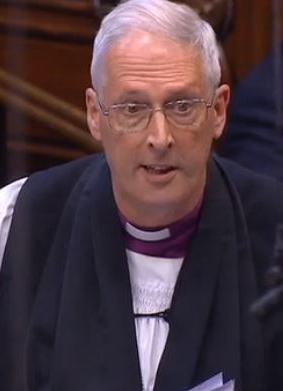
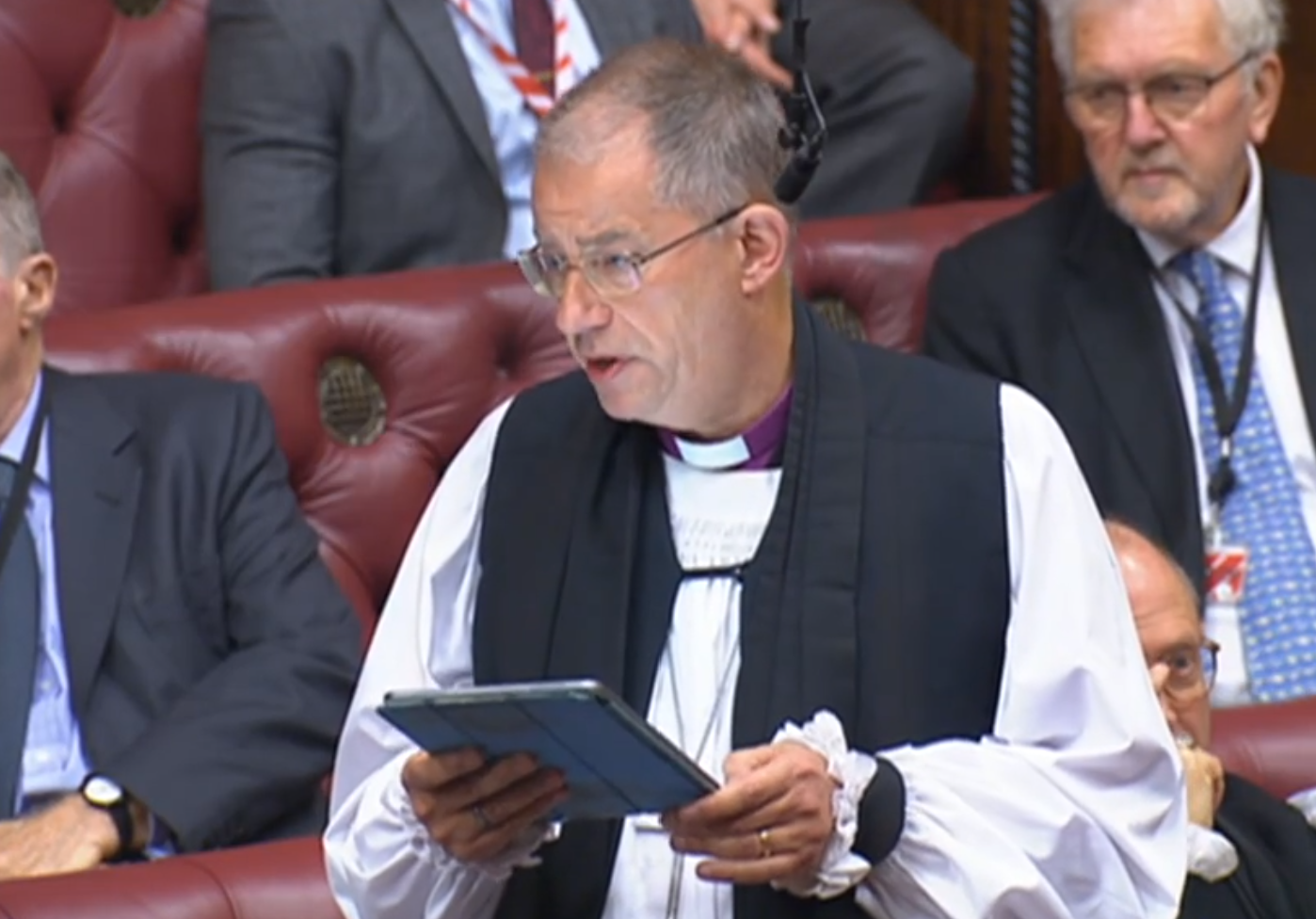
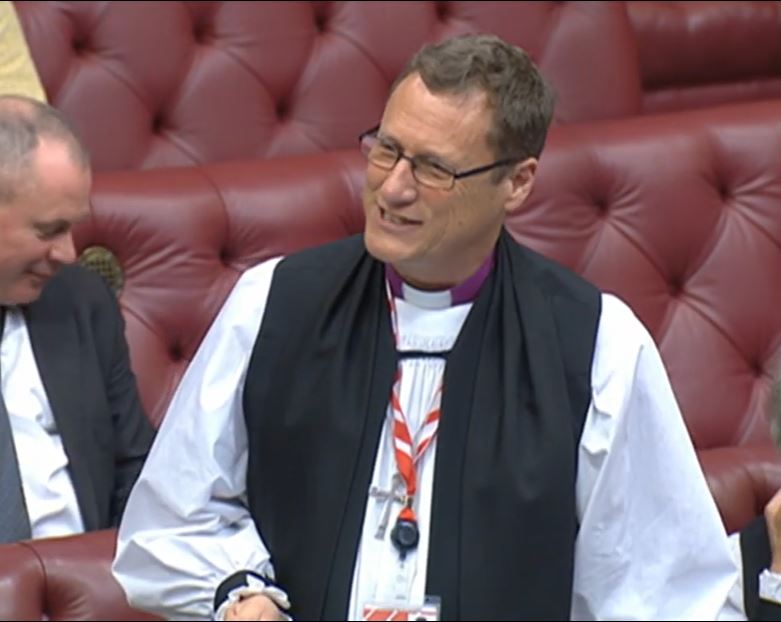
The Bishop of Chester spoke during a debate on the Terminally Ill Adults (End of Life) Bill on 16th January 2026, noting the responsibility of care towards families of the deceased affected by the bill:

The Lord Bishop of Chester: My Lords, this is an important and moving debate. It is an honour to speak in it and to follow some of the previous contributions. These amendments highlight the fact that eligibility is not the same as motivation. I agree with almost everything that has been said before me; I will not delay the Committee by repeating those points.

There are two things that I want to bring to your Lordships’ attention. First, I remind noble Lords of points made by my right reverend friend the Bishop of Gloucester. The Bill, if passed, will apply to those in our prison system, for whom there will be very particular motivations, which we need to make sure can be fairly applied to them.

Continue reading “Terminally Ill Adults (End of Life) Bill: Bishop of Chester raises duty of care towards families”

Children’s Wellbeing and Schools Bill: Bishop of Gloucester supports amendment to prohibit physical punishment of children

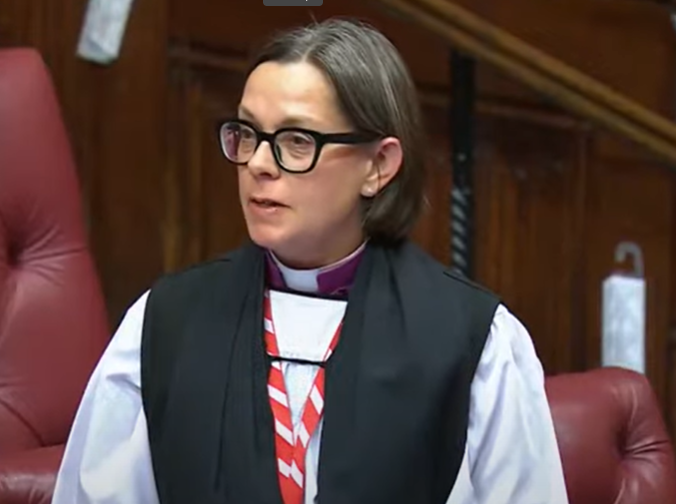
The Bishop of Gloucester spoke in support of an amendment to the Children’s Wellbeing and Schools Bill aimed at prohibiting the physical punishment of children on 14th January 2026:

The Lord Bishop of Gloucester: My Lords, I support Amendment 97. The abolition of the physical punishment of children is something that many of us on these Benches have long endorsed. My right reverend friends the Bishop of Manchester and the Bishop of Derby in particular wanted to reiterate that support alongside mine.

The amendment is eminently sensible, as we have just heard. I was pleased to read in the report from Wales that the introduction of the role of the out-of-court parenting support worker has significantly facilitated the implementation of this Act, as we have heard. My concern when we talk about legislation with penalties is always the unintended consequences, in this case for parents and wider families—we do not need any more children being impacted by parental imprisonment—but it is music to my ears that these parenting support workers in Wales have been instrumental in engaging with families, offering guidance on positive parenting strategies and providing early preventive support to resolve those issues, as we have heard, before they escalate to criminal proceedings. In short, I always support evidence-based policy-making, and this seems like a sensible step in the right direction on this issue. I support Amendment 97.

Hansard

Crime and Policing Bill: Bishop of Manchester speaks to amendments on policing of public gatherings

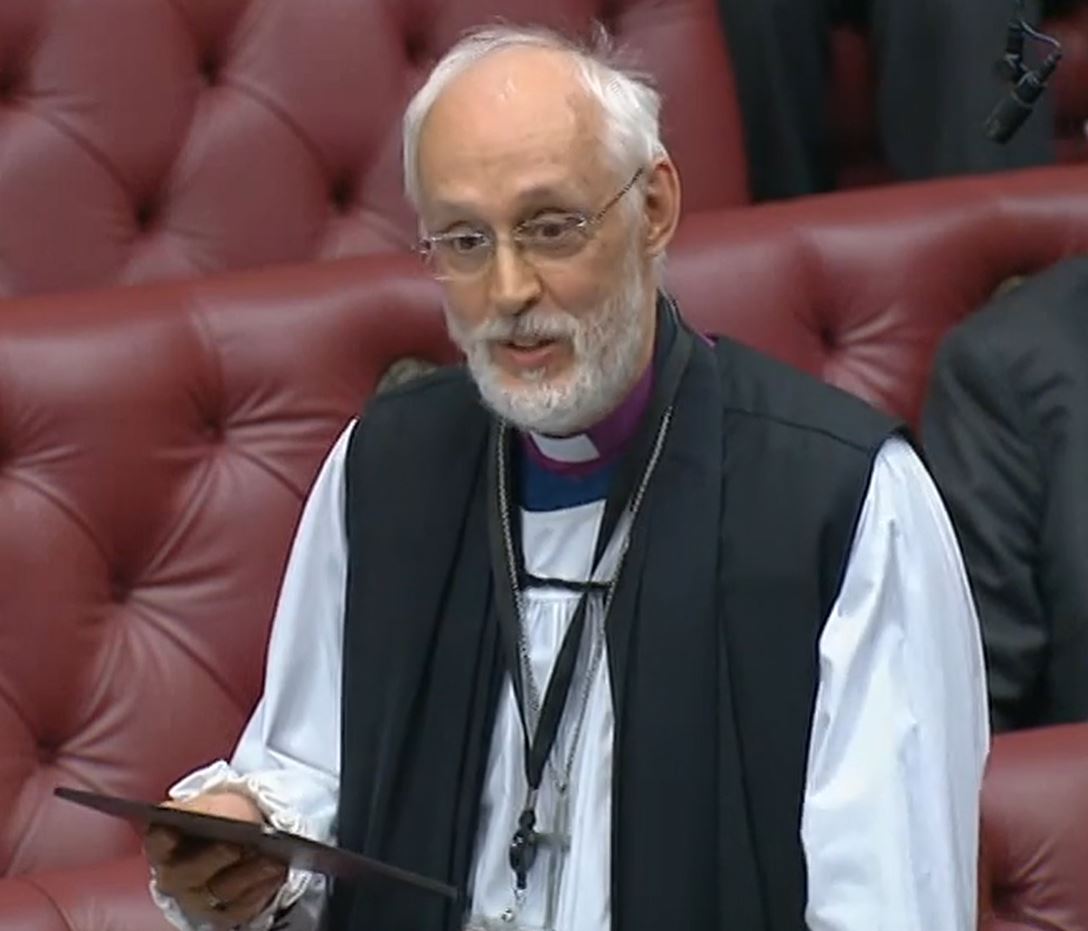
The Bishop of Manchester spoke to two groups of amendments on regulation of public gatherings during a debate on the Crime and Policing Bill on 13th January 2026, pointing out the possible unintended impact of religious processions and events:

The Lord Bishop of Manchester: My Lords, the more I listen to the debate this afternoon, the more worried I am getting. It seems to me that, over recent years, we have successively tightened up regulations around protests, including quite peaceful protests, making it harder and harder for people to express publicly their deep concerns around a whole range of issues. I am not sure that we need more clarity; that is for judges and juries to determine on the details of a particular case. The whole principle of the jury system is that we are judged by our peers and that, if we have undertaken some activity which has brought us before the courts, it is for other people like us to determine on the particular instances. They can take into account the culture and context, in a way that is impossible to do by way of legislation. I am quite wary about over- specifying here. Sometimes clarity is not necessarily the best thing to achieve.

Continue reading “Crime and Policing Bill: Bishop of Manchester speaks to amendments on policing of public gatherings”

Bishop of Norwich highlights work of the CofE Pensions Board during debate on historic mining pollution

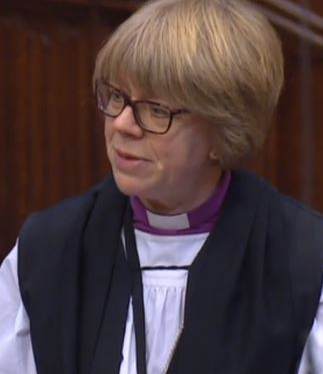
The Bishop of Norwich spoke in a debate on the UK’s responsibility to address historic mining pollution in former British colonies on 8th January 2026, detailing the work of the Church of England Pensions Board in this area:

The Lord Bishop of Norwich: My Lords, I thank the noble Lord, Lord Oates, for his excellent introduction, because stories touch both the heart and the mind, harrowing as those stories of the people of Kabwe were that he shared with your Lordships.

This debate is timely because of the geopolitical tensions that we face currently, many of them connected to minerals needed to power our economies today as well as the economy of the future. Although much of the attention is focused on new mineral deposits, a key issue that is deeply relevant to the whole mining sector is how the legacy is addressed. Many companies that existed in the past no longer exist or have been subsumed into very different entities today. Some of these are still listed on the London Stock Exchange and therefore still have a relationship with their historic legacy, while others do not. The consequence is that many countries to which the UK has historic ties have legacy mine sites that can be anything from waste from a site, such as tailings waste, through to the old mine site itself.

Through the Church of England Pensions Board, which is a £3.6 billion pension fund serving the long-term interests of 44,000 members who have been members of the clergy or otherwise working for the Church, the role of mining has been a particular focus in recent years. The board recognises the systemic importance of mining to many of the other sectors upon which modern life depends and which the board is also invested in, such as aviation, shipping, construction, autos, technology and energy, to name but a few. But a particular focus of the board’s work has been on this issue of legacy, particularly related to mine waste, often contained in tailings dams, which, if not managed correctly, can cause significant social and environmental impacts. We have seen major disasters such as at Brumadinho in Brazil, killing 272 people, and at Jagersfontein in South Africa, killing two people and causing significant environmental damage.

Continue reading “Bishop of Norwich highlights work of the CofE Pensions Board during debate on historic mining pollution”

Bishop of Manchester speaks in debate on current state of broadcasting in the UK

The Bishop of Manchester spoke in a debate on recent developments in broadcasting in the UK on 8th January 2025, highlighting the value of public service broadcasting and the need to retain a strong BBC:

The Lord Bishop of Manchester: My Lords, I declare my interests as set out in the register. I am regularly commissioned to present “Thought for the Day” on the BBC, as well as weekday and Sunday services. I also occasionally work with a range of other UK and global broadcasters, from GB News to Times Radio and LBC, providing comment on religious and ethical news stories.

As the noble Lord, Lord Fowler, has reminded us, broadcasting operates in an international context of increasing polarisation against a background where the greatest global political powers are retreating rapidly into levels of imperialist control and expansionism not previously seen in most of our lifetimes. It is a context in which truth is subservient to expediency and honesty is sacrificed to personal or political advantage. Many broadcasting organisations, especially those which are politically aligned, have little interest or incentive, except where regulators require it, to do other than collude with the political masters of the age. In such a world, the place of broadcasters who seek to offer a balanced range of perspectives and prioritise facts over partisanship has never been more vital. Public service broadcasting—and in the UK that does mean particularly the BBC—with a funding mechanism not wholly dependent on courting advertisers or placating the government of the day, enables a level of impartiality, and thereby public trust, that exists both here and beyond these shores. Moreover, the BBC, uniquely among mainstream broadcasters, continues to afford a place for the religious and ethical input necessary to support our British values.

Continue reading “Bishop of Manchester speaks in debate on current state of broadcasting in the UK”

Crime and Policing Bill: Bishop of Manchester raises issue of women’s safety on public transport

The Bishop of Manchester spoke in a debate on amendments to the Crime and Policing Bill on 7th January 2026, highlighting the issue of safety at night on public transport for women and girls:

The Lord Bishop of Manchester: My Lords, I am grateful for this short debate. I would like to widen it a little beyond railways. I am blessed in living in Greater Manchester at the heart of a major Metrolink tram network, which has many similarities to the railways. There are often very few staff late at night, particularly on the trams, and women and girls are especially vulnerable on those occasions. This Bill, if it is not just about the rail network, may be the better Bill to cover these issues and ensure that women and girls are safe and protected from violence on our whole public transport network.

Hansard

Sentencing Bill: Bishop of Gloucester tables amendment defining the purpose of imprisonment

During a debate on the Sentencing Bill on 6th January 2025, the Bishop of Gloucester tabled her amendment to the bill, inserting a new clause which “would define the purposes of imprisonment in law and require the courts and the Secretary of State to have regard to the purposes of imprisonment:

The Lord Bishop of Gloucester: After Clause 4, insert the following new Clause—

“Purposes of imprisonment(1) Where a court is imposing sentence the court must have regard to the purposes of imprisonment.(2) The Secretary of State must have regard to the purposes of imprisonment when exercising the Secretary of State’s duties under this Act. 

(3) For the purposes of subsections (1) and (2) the purposes of imprisonment are—(a) the incapacitation of prisoners in order to restrict their ability to re-offend in the community,(b) the rehabilitation of prisoners under safe and decent conditions to reduce re-offending,(c) the deterrence of prisoners and others from committing further offences, and(d) the just punishment of prisoners, including provision to achieve justice for the victims of crime.”Member’s explanatory statement

This new clause would define the purposes of imprisonment in law and require the courts and the Secretary of State to have regard to the purposes of imprisonment.

My Lords, I am bringing back this amendment on Report as I do not think it was adequately addressed in Committee. Amendment 52, in my name and that of the noble Lord, Lord Moylan, would define in law the purposes of imprisonment and require the courts and the Secretary of State to have regard to the purposes of imprisonment.

Continue reading “Sentencing Bill: Bishop of Gloucester tables amendment defining the purpose of imprisonment”

Bishop of Derby takes part in end of year tributes

The Bishop of Derby joined in end of year tributes to the staff of the House of Lords and those who have retired in 2025:

The Lord Bishop of Derby: My Lords, I shall not detain the House long, but on behalf of these Benches I echo the appreciative comments that we have just heard from the Front Benches about all those who have retired, or are about to retire, as colleagues, working alongside us here. It is a real privilege to have the final opportunity on behalf of us all in your Lordships’ House to thank those who work with us, both front of house and behind the scenes, for their outstanding care and service in keeping this House and our work here running smoothly.

As we near the end of this year’s journey through Advent and approach Christmas, I know that all Members will join me in wishing not just each other but all our colleagues here a restorative recess. I pray that they may know the joy of the angels, the eagerness of the shepherds, the perseverance of the wise men, the obedience of Joseph and Mary, and the peace of the Christ child this Christmas. Happy Christmas, and a good New Year when it comes.

Hansard

Biodiversity Beyond National Jurisdiction Bill: Bishop of Norwich supports amendments on ocean pollution

The Bishop of Norwich spoke in support of amendments to the Biodiversity Beyond National Jurisdiction Bill aimed at responding to risks of plastic pollution in oceans and protection of deep seabed environments on 16th December 2025:

The Lord Bishop of Norwich: My Lords, I support Amendments 6, 8 and 10. I pay tribute to the Minister for the commitment that she is giving to the Bill. It is absolutely right that we align ourselves with the treaty and are able to be participants at the first Conference of the Parties. I thank her for the thoroughness with which she is going through it.

Continue reading “Biodiversity Beyond National Jurisdiction Bill: Bishop of Norwich supports amendments on ocean pollution”

Crime and Policing Bill: Bishop of Manchester raises point on safeguarding in private tutoring

The Bishop of Manchester raised a point on the inclusion of private music tuition under safeguarding regulations during a debate on the Crime and Policing Bill on 15th December 2025:

The Lord Bishop of Manchester: My Lords, one area that is of great concern to me is private music tuition. I have had some pretty horrendous safeguarding cases to deal with in churches, where a church musician who has committed some serious offences has gone on to privately tutor underage pupils. That particular form of tuition—which is very often done privately, arranged by parents who see an advertisement on the internet or in a newspaper—needs to be included.

Continue reading “Crime and Policing Bill: Bishop of Manchester raises point on safeguarding in private tutoring”