Bishop of Leeds calls on Government to protect children from effects of reduction in benefit cap

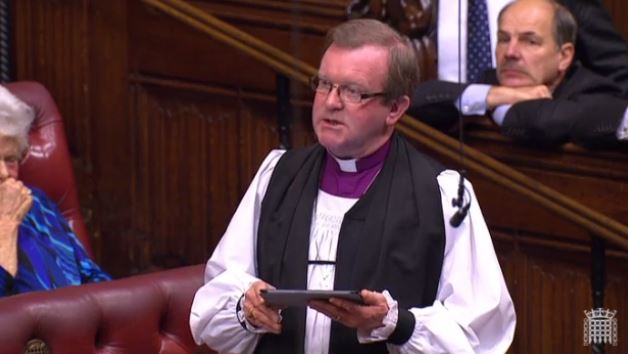
Leeds160620On 8th November 2016 the House of Lords debated a motion from Liberal Democrat Peer Lord Kirkwood to regret the changes to the benefit cap introduced by the Government and taking effect that week. The Bishop of Leeds, Rt Revd Nick Baines, supported the motion:

Lord Kirkwood of Kirkhope: That this House regrets that the Government have not, in advance of the entry into force of the Benefit Cap (Housing Benefit and Universal Credit) (Amendment) Regulations 2016 (SI 2016/909), made additional support available to those individuals affected by the benefit cap to find work.

The Lord Bishop of Leeds: My Lords, we have heard a number of impressive figures and statistics this evening. It seems to me that the principle underlying all this is that you can save money with one hand but you will pay it out with another. According to End Child Poverty statistics released this month, we have 3.5 million children living in poverty in the United Kingdom in the 21st century. In some regions, up to 47% of children are living in poverty. In my own diocese, in the Bradford local authority area, 32.7% of children are living in poverty after housing costs. The national average is 29%. In Leeds Central, it is 41.8%. If children are living in housing and food poverty—as we know they are from food banks and all the other stuff we see on the ground in our cities, towns and rural areas—then we will end up paying out through the National Health Service and in other ways for the consequences of what children do not have at present. Continue reading “Bishop of Leeds calls on Government to protect children from effects of reduction in benefit cap”
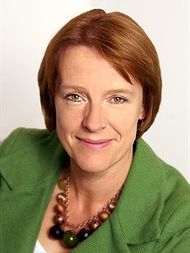
Caroline Spelman MP highlights the role of church schools in promoting excellence and social integration

On 8th November 2016 the House of Commons debated a motion from Labour’s Lisa Nandy MP “That this House notes recent proposals by the Government to expand the role of grammar and faith schools; and calls on the Government to conduct a full assessment of the evidence relating to the effect of grammar schools and faith schools on children’s learning.” The Second Church Estates Commissioner, Rt Hon Dame Caroline Spelman MP, spoke in the debate about the important role of Church of England schools:

Caroline SpelmanThe Second Church Estates Commissioner (Dame Caroline Spelman): I rise to speak on behalf of the Church of England in this important Back-Bench debate. The Church has a long and successful history of educating children in our country. It provided education before the state did. In fact, it is still the largest provider of education besides the state. It has 4,700 schools, most of which are primaries, with 200 secondary schools. Some 84% of its primary and 74% of its secondary schools are good or outstanding.

Many of the remaining schools are in remote rural locations, although I should point out that there are some excellent rural schools. The challenge of trying to sustain a class for each year group in a remote rural area and the difficulty in attracting teachers there make it hard to achieve higher standards in those schools. The Church is committed to raising standards, and with the help of digital means and remote learning methods, it is possible to bring the best teaching to such schools. The Church has fought to sustain these schools for the sake of social cohesion, where other institutions might by now have given up. I am sure that hon. Members with rural constituencies will immediately identify with the importance of the village school, which, with the parish church, may be the only institutional hub for such communities. That underlines the importance of keeping them sustainable.

I want to scotch the myth that Church schools are forces for segregation. That could not be further from the truth. Continue reading “Caroline Spelman MP highlights the role of church schools in promoting excellence and social integration”

Bishop of Portsmouth highlights uncertainties for Higher Education of EU withdrawal

My background covers different sorts of universities: Hertfordshire and Portsmouth, Oxford and Cambridge, and Durham and Manchester. I studied in three, taught economics in two, was a chaplain in another and have been a governor in two. I draw your Lordships’ attention to my entries in the register of interests.

In such very varied universities, the present excruciating uncertainty following the Brexit vote is having a significant impact in a range of areas.

Continue reading “Bishop of Portsmouth highlights uncertainties for Higher Education of EU withdrawal”

Bishop of Portsmouth says social mobility needs to be about more than helping people to ‘just manage’.

“It is hard, and sometimes impossible, to seek a new or better job or to support your children in their education if your daily preoccupation has to be with getting by.” – Bishop of Portsmouth, 27/10/16 

BishPortsspeechtaxcredits

On 27th October 2016 the House of Lords debated a motion from Lord Holmes of Richmond “To move that this House takes note of Her Majesty’s Government’s plans to promote social mobility.” The Bishop of Portsmouth, Rt Revd Christopher Foster, took part in the debate:

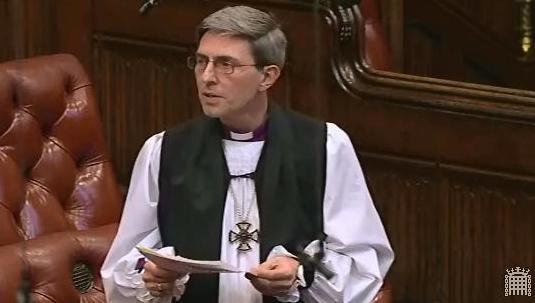
The Lord Bishop of Portsmouth: My Lords, in these few minutes I should like to set the concern and aspirations for social mobility—already so well introduced by the noble Lord, Lord Holmes, and other noble Lords—in the context of the challenges faced by many people, some in my own diocese, who face the daily grind and trial of simply getting by for the day or, at best, the week. The Prime Minister has referred to the need to focus on “just managing” families, and I agree with her, but surely the task is to help make it possible for them to do better than just manage, enabling their energy to be taken up not just in dealing with the everyday challenges but in improving life chances for themselves and their families, including social mobility. Continue reading “Bishop of Portsmouth says social mobility needs to be about more than helping people to ‘just manage’.”

Bishop of Winchester calls for universities to confront and combat anti-Semitism

On 27th October 2016 the House of Lords held a short debate on a question from Baroness Deech, “to ask Her Majesty’s Government what steps they propose to take to combat anti-Semitism, in particular in universities.” The Bishop of Winchester, Rt Revd Tim Dakin, spoke in the debate:

Bishop of WinchesterThe Lord Bishop of Winchester: My Lords, I also thank the noble Baroness, Lady Deech, for initiating this debate.

Despite there being Jewish societies in over 60 universities, a study in 2011 found that half of all Jewish students in the UK attend only eight universities. Safety in numbers seems to be key, as Nottingham, Leeds, Birmingham and Manchester all boast Jewish societies with over 1,000 members. None the less, we know that Jewish staff and students experience anti-Semitism in a significant number of higher education institutions today. As the recent Universities UK task force report on hate crime makes clear, anti-Semitism is a practice for which there is no place in universities, nor in the Church or society at large. Continue reading “Bishop of Winchester calls for universities to confront and combat anti-Semitism”

Bishop of St Albans highlights problems of poor broadband services in rural areas

On 27th October 2016 the House of Lords held a short debate on a question from Lord Foster of Bath “to ask Her Majesty’s Government what plans they have to ensure the rollout of superfast fibre broadband to homes across the country.” The Bishop of St Albans, Rt Revd Alan Smith, spoke in the debate:

StAlbans171115The Lord Bishop of St Albans: My Lords, my thanks, too, go to the noble Lord, Lord Foster, for securing this important debate. I, too, want to address rural issues and I declare an interest as president of the Rural Coalition. Many of our members are deeply concerned about this area. As other noble Lords have mentioned, nearly half of rural households in the UK currently struggle with broadband speeds of less than 10 megabits per second. Around one in five rural households can only access broadband speeds of under 5 megabits per second, and a significant proportion cannot access any broadband at all. This lack of connectivity acts as a huge obstacle to the growth of the rural economy and to rural sustainability. This is even more important as we get ourselves geared up for Brexit. Continue reading “Bishop of St Albans highlights problems of poor broadband services in rural areas”

Bishop of Derby: participants in Fit for Work Scheme are assets with gifts and contributions to make


On 19 October 2016 Lord Luce led a short debate in the House of Lords on a question: “To ask Her Majesty’s Government what progress has been made with the Fit for Work scheme in enabling those with long-term health problems like chronic pain to return to or stay in work.” The Bishop of Derby, Rt Revd Alastair Redfern, made a speech:

Derby 191115cThe Lord Bishop of Derby: My Lords, I, too, thank the noble Lord, Lord Luce, for introducing this debate with his characteristic mastery of the territory, context and issues.

I shall look at the progress of the Fit for Work scheme. As the noble Baroness, Lady Thomas, hinted, there has been a lot of negativity. I remember that when it was first introduced the press called it a test about whether people were fit for work. There have been pilots and a lot of chunter about the slow development of the rollout. We need to remember that it is a huge shift for the medical professional, employers and employees, and we need to encourage the Government to look carefully at the rollout to see what can be learned as it unfolds. As the noble Lord, Lord Fink, mentioned, there may be issues about how small businesses can access this opportunity. Continue reading “Bishop of Derby: participants in Fit for Work Scheme are assets with gifts and contributions to make”

Bishop of Leeds speaks about the importance of peace and stability after the EU Referendum

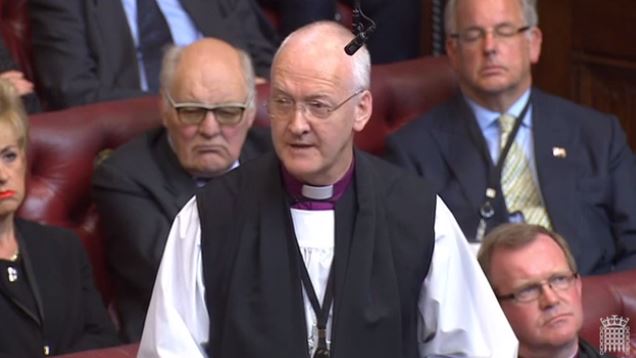
Leeds160620On 18th October 2016, Lord Collins of Highbury asked the government what assessment they have made of the potential effect on peace and stability in Europe and around the world of the United Kingdom leaving the European Union. The Bishop of Leeds, Rt Revd Nick Baines, spoke in the debate about the importance of continued interdependence for peace and stability.

The Lord Bishop of Leeds My Lords, recognising that this debate and that to come on Thursday belong together, although I cannot be here on Thursday, I offer this statement by the German theologian Jürgen Moltmann in a book that I finished reading on the train today:

“A free society is not an accumulation of independent individuals; it is a community of persons in solidarity”.

I quote this because the same might equally be applied to nations. It bears repetition that the language and discourse of the referendum—shamelessly, in my view, fuelled by misrepresentations and misleading promises, now apparently acceptable in a so-called “post-factual” world—paid little or no attention to the needs or securities of our international neighbours. They focused purely on the national interests of Britain, as if we can live in isolation or that we can be secure without ensuring the security of our neighbours. I invoke the poet John Donne: in a globalised world, Britain cannot simply see itself as an island. Continue reading “Bishop of Leeds speaks about the importance of peace and stability after the EU Referendum”

Bishop of St Albans encourages partnerships between libraries and rural churches

St Albans 2On the 13th October 2016 Lord Bird led a debate in the House of Lords: “That this House takes note of the cultural, civic and educational significance of libraries, bookshops and booksellers in the United Kingdom.” The Bishop of St Albans the Rt Revd Alan Smith, spoke about the impact closure could have on rural communities and the importance of imaginative partnerships which are developing between libraries and churches.

The Lord Bishop of St Albans: My Lords, I, too, add my congratulations the noble Lord, Lord Bird, for securing this debate. I want to speak today about the future of libraries and other shared community spaces in rural areas, as a vital contributor to rural sustainability. I should declare an interest as the president of the Rural Coalition, which brings together a range of rural interest groups, and as a bishop responsible for a large number of rural parishes across Bedfordshire and Hertfordshire.

Continue reading “Bishop of St Albans encourages partnerships between libraries and rural churches”

Bishop of Norwich speaks on educational selection and grammar schools

norwich121016bOn 13th October 2016 Baroness Andrews led a debate in the House of Lords “that this House takes note of the Government’s proposals for the extension of grammar schools and selection in education”. The Bishop of Norwich, the Rt Revd Graham James spoke in the debate:

The Lord Bishop of Norwich: My Lords, I am grateful to the noble Baroness, Lady Andrews, for securing this debate. The right reverend Prelate the Bishop of Ely, our lead bishop on education, cannot be in his place today, but I am glad to contribute from these Benches and to hear an excellent maiden speech from the noble Baroness, Lady Vere.

Like many others in your Lordships’ House, I attended a grammar school. I was also the first in my family to receive a university education. At Northampton Grammar School for Boys, as it then was, you imbibed an ethos and culture which simply assumed you would seek university entrance. My grammar school was hierarchical, full of petty rules and almost entirely male—the perfect preparation for a career in the Church of England. Continue reading “Bishop of Norwich speaks on educational selection and grammar schools”