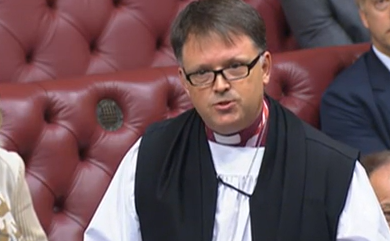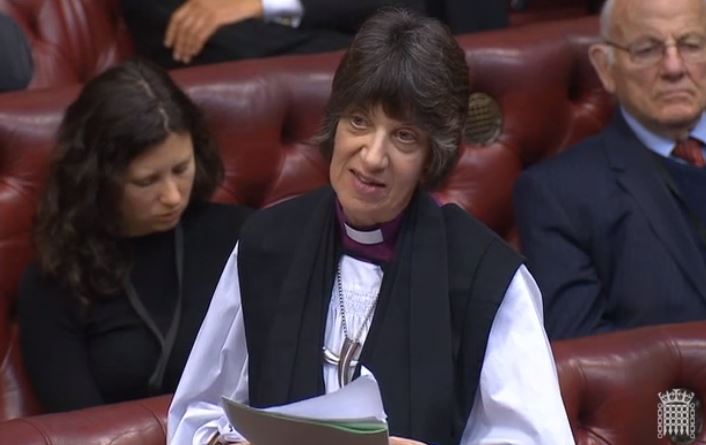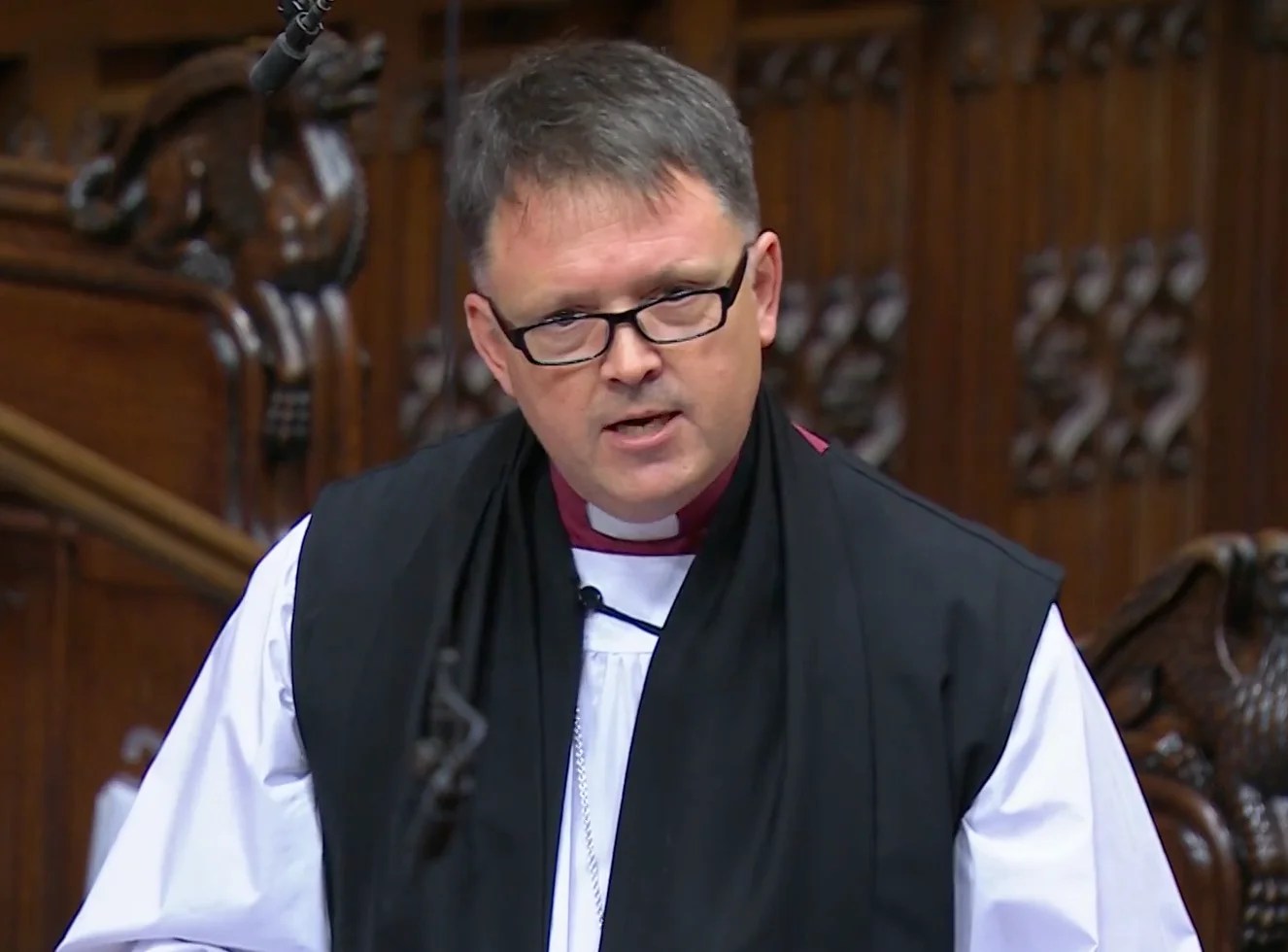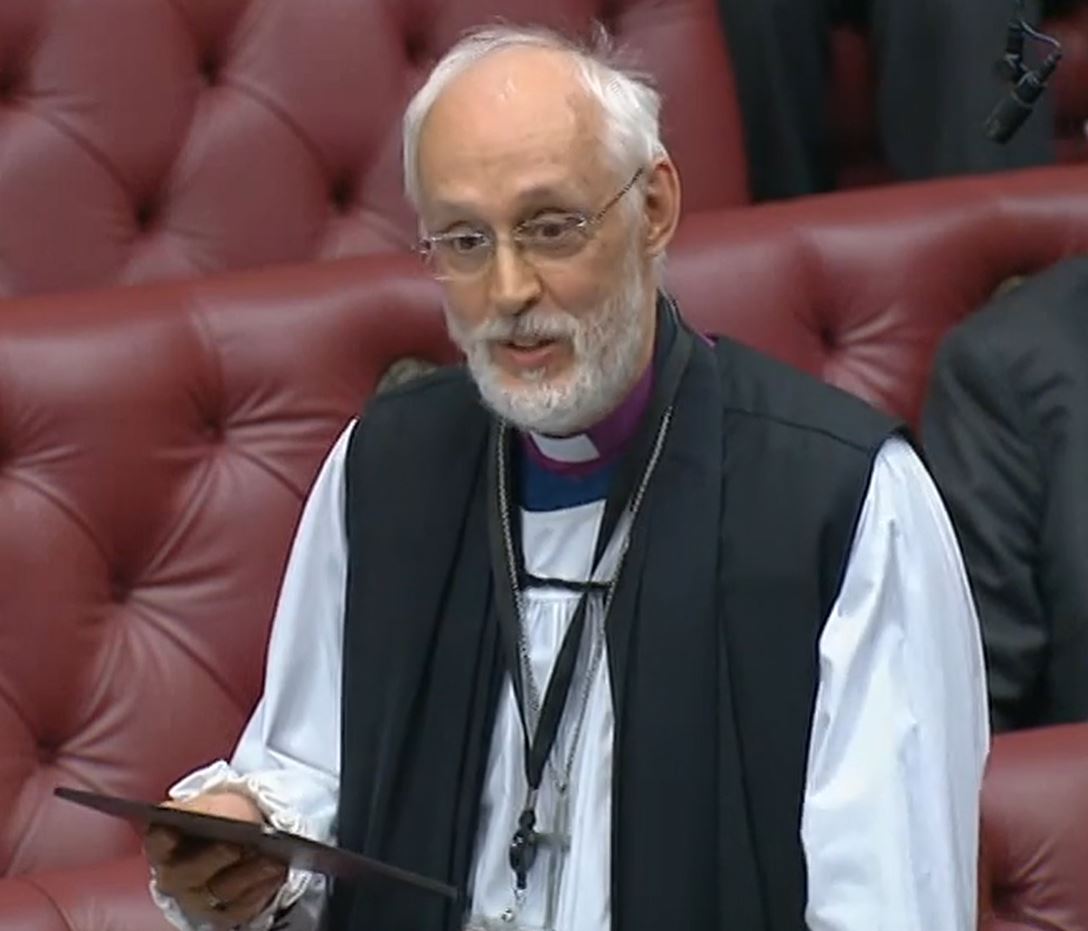
Terminally Ill Adults (End of Life) Bill: Archbishop of York speaks at second reading, highlighting risks of legislation

The Archbishop of York spoke at the second reading of the Terminally Ill Adults (End of Life) Bill on 19th September 2025, pointing out the need for better palliative care in the UK and the risks of implementing this legislation:

The Lord Archbishop of York: My Lords, it is an honour to follow the noble Baroness, Lady Hollins. I will of course speak for myself, but I also know that I represent views held by many faith leaders—not just Christian leaders—across our nation, with whom I have been in discussion and who have written to me.

Jesus teaches us that how we live our lives in relationship to others is vital for the health of our society and our own personal well-being. We belong with and for each other. The Bill is wrong because it ruptures relationships, serving one need but creating many others.

The noble Lord, Lord Baker, and several others in this important and moving debate gave the game away early on: no Government, he said, will be prepared to provide palliative and social care in the way it is needed, thus revealing that the Bill’s impact will be economic as well as social. Several speakers said there were too many safeguards; others, that provision for assisted dying ought to be expanded.

Continue reading “Terminally Ill Adults (End of Life) Bill: Archbishop of York speaks at second reading, highlighting risks of legislation”

Terminally Ill Adults (End of Life) Bill: Bishop of Chichester stresses sanctity of life

The Bishop of Chichester spoke at the second reading of the Terminally Ill Adults (End of Life) Bill on 19th September 2025, stressing the principle of the sanctity of life and questioning the ethical foundations of the bill:

The Lord Bishop of Chichester: My Lords, it is a privilege to follow the noble Lord, Lord Curry. I begin by acknowledging reverence for all contributors to this debate, which touches on our deepest emotions: lacrimae rerum, the things of which tears are made.

The noble Lord, Lord Carlile of Berriew, reminded us that, since the end of capital punishment, causing the death of another citizen is not allowed in our law, other than in war. The noble Lord, Lord Herbert of South Downs, was not alone in describing the introduction of a provision in law to cause death as a “crossing the Rubicon” moment. Although the right to life, enshrined in law, is a moral principle consistent with the Christian faith, it should not be regarded as the imposition of Christianity on the pluralist democracy we are proud to be. However, many Christians, including myself, see the Bill as crossing the Rubicon, and this is why.

Continue reading “Terminally Ill Adults (End of Life) Bill: Bishop of Chichester stresses sanctity of life”

Children’s Wellbeing and Schools Bill: Bishop of Chelmsford supports amendments on bullying and children with imprisoned parents

The Bishop of Chelmsford spoke in favour of two amendments to the Children’s Wellbeing and Schools Bill on 16th September 2025, first on introducing a duty on schools to record incidences of racism or interfaith bullying, and secondly on the commissioning of a report on improving educational attainment for children with a parent in prison:

The Lord Bishop of Chelmsford: My Lords, I speak in support of Amendment 464 knowing that, had my right reverend friend the Bishop of Lincoln been in his place, he would very much have wanted to contribute to the debate. If passed, this amendment would introduce a duty on schools to record and report any incidents of racism or faith-based bullying on school premises. 

It would also help diocesan boards of education in collating and monitoring such cases and better assisting those church schools which might benefit from support.

In preparing for this speech, I spoke to our own director of education in Chelmsford diocese, whose team oversees 139 church schools. She told me that this proposed amendment had the potential to help the board of education strengthen anti-bullying and inclusive practices in partnership with schools.

Continue reading “Children’s Wellbeing and Schools Bill: Bishop of Chelmsford supports amendments on bullying and children with imprisoned parents”

Terminally Ill Adults (End of Life) Bill: Bishop of London opposes legislation and calls for comprehensive funding of palliative care system

The Bishop of London spoke at the second reading of the Terminally Ill Adults (End of Life) Bill, opposing the bill and outlining the need for fully funded palliative and social care services in the UK:

The Lord Bishop of London: My Lords, as the noble Lord, Lord Kamall, has already pointed out, we in this Chamber share the same goal: for people to die with dignity and compassion. They are critical concerns for those who, like me, believe that the Bill is deeply flawed. Noble Lords will know that I am a former government Chief Nursing Officer, and I chaired the UK Commission on Bereavement. As a nurse, a priest, a daughter and a granddaughter, I have had the privilege to be with many people as they die. Most people die well although, as we have heard and will continue to hear, that is not always the case. I have known people to experience some of the most valuable days of their life as it comes to an end, including those with terminal illnesses.

Continue reading “Terminally Ill Adults (End of Life) Bill: Bishop of London opposes legislation and calls for comprehensive funding of palliative care system”

Children’s Wellbeing and Schools Bill: Bishop of Oxford supports amendment on faith based education provision

The Bishop of Oxford spoke in favour of an amendment to the Children’s Wellbeing and Schools Bill on behalf of the Bishop of Manchester on 10th September 2025, outlining the unintended effects of the bill on volunteer run-settings, including faith based provision:

The Lord Bishop of Oxford: My Lords, it is a pleasure to follow the noble Lord, Lord Lucas, and to associate myself with his remarks. I speak to Amendment 427C on behalf of my colleague, the right reverend Prelate the Bishop of Manchester, in whose name the amendment stands. He very much regrets his inability to attend today’s Committee debate. His amendment offers a reasonable and practical solution to the finely balanced tension between freedom and regulation in education provided by religious bodies.

As things stand, the Bill recognises two types of full-time education: education undertaken in either a school or an independent educational institution. The latter would need to be registered according to the 2008 Act and the requirement to register would apply to education that is more than “part time”. The need to include education provided by religious bodies in national mechanisms for oversight is well understood by all. The Church of England, for example, has taken enormous strides forward in both safeguarding training and safeguarding processes in local parishes that welcomed an average of 95,000 children each week in 2023.

Continue reading “Children’s Wellbeing and Schools Bill: Bishop of Oxford supports amendment on faith based education provision”

Bishop of Oxford speaks in debate on report on the crimes of Daesh (ISIL)

The Bishop of Oxford spoke in a debate on a report from the Joint Committee on Human Rights on the crimes of Daesh on 10th September 2025, highlighting the ongoing issue of British citizens who were members of Daesh and the need to bring them to justice, and noting the need to care for the number of children detained with their parents who had been Daesh members:

The Lord Bishop of Oxford: My Lords, I, too, congratulate the Joint Committee on Human Rights on its detailed and courageous report, and the noble Lord, Lord Alton, on bringing this debate. With others, I am sorry that he cannot be with us today. I, too, received the graphic photographs of his serious injuries.

Continue reading “Bishop of Oxford speaks in debate on report on the crimes of Daesh (ISIL)”

Universal Credit Bill: Bishop of Newcastle raises impact of bill on disadvantaged communities

The Bishop of Newcastle spoke at the second reading of the Universal Credit Bill on 22nd July 2025, expressing concern regarding the potential impact of the bill on those with disabilities and the need to tackle the underlying causes of poverty and ill health:

The Lord Bishop of Newcastle: My Lords, I begin by offering my congratulations to the noble Baroness, Lady Shawcross-Wolfson; I look forward to her maiden speech, and acknowledge the valedictory speech of the noble Baroness, Lady Bryan. I also thank Ministers for listening to concerns about the Bill when it was initially brought forward.

A functional social security system tackles poverty and supports people to live full lives. With that, the system needs to retain public confidence, expressing the best of our values. It must also strike a balance between supporting people who are able to work and ensuring that people who cannot work are protected and cherished for who they are. We need economic growth—that is not disputed; this is, after all, a money Bill—but I am concerned for those who are left behind or who do not fit the model of financial productivity at the rate that seems to be desired.

Continue reading “Universal Credit Bill: Bishop of Newcastle raises impact of bill on disadvantaged communities”

Bishop of Bristol calls for peacebuilding initiatives alongside Strategic Defense Review

The Bishop of Bristol made her final speech in the House of Lords during a debate on the Strategic Defence Review on 18th July 2025:

The Lord Bishop of Bristol: My Lords, I am grateful to the noble Lord, Lord Robertson, for bringing the SDR to debate to this House, and I look forward to continuing to hear this House’s wide-ranging expertise. I also look forward to the maiden speech of the noble Lord, Lord McCabe.

George Bell, formerly the Bishop of Chichester, thought deeply about the ethics of international relations and spoke, on occasions controversially, in this House about his conclusions. Speaking more generally of the Church in wartime—and I too believe that we are in a time of considerable risk of war—he asserted that the task of the Church, in its service and witness, was to be the Church, and often, that would be in practical endeavour within a whole-society response.

Last weekend the General Synod of the Church of England in York responded to the current international threat level very practically by providing new legislative arrangements to hold the records of military chaplains centrally, not locally. That will allow chaplains, regular or reservists, to be licensed to move much more rapidly into operation. I commend this new legislation to members of the Ecclesiastical Committee and to the whole House, as the Church seeks to support the aim of increasing agility in deployment.

Continue reading “Bishop of Bristol calls for peacebuilding initiatives alongside Strategic Defense Review”

Renters Rights Bill: Bishop of Manchester moves amendment on Decent Homes Standard

On 15th July 2025, the Bishop of Manchester moved his amendment 105 to the Renters Rights Bill, and spoke in support of two further amendments:

The Lord Bishop of Manchester: 105: Clause 101, page 134, line 11, leave out from “(homelessness)” to end of line 13

Member’s explanatory statement: This amendment would make the Decent homes standard apply to all homeless temporary accommodation provided under the Housing Act 1996.

My Lords, I declare my interests as set out in the register. My wife and I own one apartment; it is in the West Midlands, and it is let out. Nothing in this amendment or any others in this group would provide me with any advantage that I can foresee.

Amendment 105 seeks to extend the decent homes standard to temporary accommodation. As I said in Committee—and hence I can be extremely brief today—those in temporary accommodation are among the most vulnerable in our society. They are already battling against major disadvantages, and being placed in properties that fail the standard simply adds to their burden.

Continue reading “Renters Rights Bill: Bishop of Manchester moves amendment on Decent Homes Standard”

Bishop of Norwich calls for community-based approach to energy innovation

The Bishop of Norwich spoke in a debate on the National Policy Statement for Energy on 9th July 2025, stressing the need for a community-based approach to energy innovation:

The Lord Bishop of Norwich: My Lords, I am grateful to the Minister for his introduction, as there are many things within these documents to praise. 

They set out a positive direction for future energy infrastructure, which broadly aligns with clean power by 2030 and net zero by 2050. Although I—and, I am sure, many others—welcome a whole-system approach to energy infrastructure planning, delivery has remained fragmented. Let us hope, to coin a phrase, that the wind might now change.

I have just come from the mass climate lobby outside, in Parliament Square. I am not usually someone who joins such events but, for me, it is vital for us to hear the Climate Coalition and the great many people who are raising this issue of climate change and nature loss, because it seems to be slipping down political agendas. Some of the coalition’s aims are to cut bills, back UK jobs and secure a greener, fairer future for all. Another is to restore nature to create a safer and healthier future. With these aims still fresh in my mind from the crowd outside, my remarks will address three areas: first, the cost of connection and district heating networks, especially for those organisations that create the warp and weft of community life; secondly, the capacity of the grid to receive the quantity of renewable energy that we need produced; and, thirdly, mitigating the impact of infrastructure projects on people, nature and landscapes.

Continue reading “Bishop of Norwich calls for community-based approach to energy innovation”