On 28th May 2021, the House of Lords debated a motion to pass the Abortion (Northern Ireland) Regulations 2021. Votes were held on amendments to the motion, in which Bishops took part.

On 28th May 2021, the House of Lords debated a motion to pass the Abortion (Northern Ireland) Regulations 2021. Votes were held on amendments to the motion, in which Bishops took part.
On 28th April 2021, the Bishop of Carlisle spoke in opposition to the passage of the Abortion (Northern Ireland) Regulations, citing the issue of devolution and the inclusion in the regulations of the legalisation of abortion in cases of severe foetal impairment:

The Lord Bishop of Carlisle: My Lords, we are all aware of the sensitivities surrounding abortion, as the noble Viscount, Lord Younger, has observed, and also of the wide range of deeply held views that it provokes. However, whatever our own particular standpoint on abortion per se, which is, as the House has been reminded, now legal in Northern Ireland, there are two specific aspects of these regulations which must be of general concern. One has to do with devolution, as we have already been reminded. To quote from a recent statement issued by the Archbishop of Armagh:
“It is a matter of regret that the Secretary of State for Northern Ireland intends to seek powers from Parliament to give direction to the Department of Health in Northern Ireland around what is clearly a devolved matter.”
Continue reading “Abortion (Northern Ireland) Regulations 2021: Bishop of Carlisle raises issues of devolution and stipulations on foetal disability” On 30th December the Bishop of Coventry received written answers to three questions on abortion and the two-child benefit limit:
The Lord Bishop of Coventry: To ask Her Majesty’s Government what assessment they have made of the reported rise in the number of abortions among women with two or more children. [HL11398] Continue reading “Bishop of Coventry asks Government about rise in abortions and link to two-child benefit limit”
On 15th June 2020 two votes took place on the Government’s Abortion (Northern Ireland) Regulations. Eight bishops took part across both Divisions of the House. The debate can be read here.
Continue reading “Votes: Abortion (Northern Ireland) Regulations”
On 15th June the House of Lords debated the Government’s “Abortion (Northern Ireland) (No. 2) Regulations 2020”. The Rt Revd James Newcome, Bishop of Carlisle, spoke in support of an amendment to negative the Regulations, highlighting its effects on abortion on grounds of disability. In two subsequent votes, he and other bishops voted against, but the House of Lords passed the Regulations without amendment by large majorities.
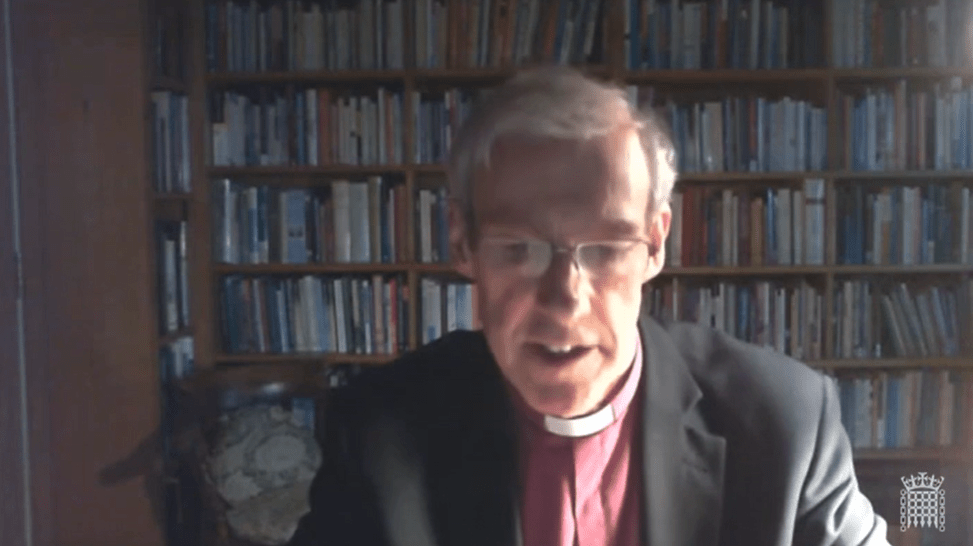
The Lord Bishop of Carlisle: My Lords, I support the amendment from the noble Baroness, Lady O’Loan, and will focus on the proposal in Regulation 7 that abortion for disabilities including Down’s syndrome should be available during the first 12 weeks without question or counselling and then potentially through to birth.
Continue reading “Bishop of Carlisle opposes Abortion (Northern Ireland) Regulations”
On 26th January 2018 Baroness O’Loan introduced her private member’s bill, the Conscientious Objection (Medical Activities) Bill [HL], for its Second Reading debate in the House of Lords. The Bishop of Peterborough, Rt Revd Donald Allister, spoke in support of it:
 The Lord Bishop of Peterborough: My Lords, yesterday, the River Restaurant downstairs helped us to celebrate Burns Night all day. I thoroughly enjoyed the Scotch broth at lunchtime, but I resisted the main course as I was eating out in the evening. I even resisted the whisky bread-and-butter pudding. The main course which I resisted was vegetarian haggis, celebrating Robert Burns in a way that respected the consciences of those who do not want to eat meat. That is a very proper and good thing to do. There is no legal requirement to provide vegetarian haggis, but it was welcome to many and I think that I would have enjoyed it. Continue reading “Bishop of Peterborough supports Conscientious Objection (Medical Activities) Bill”
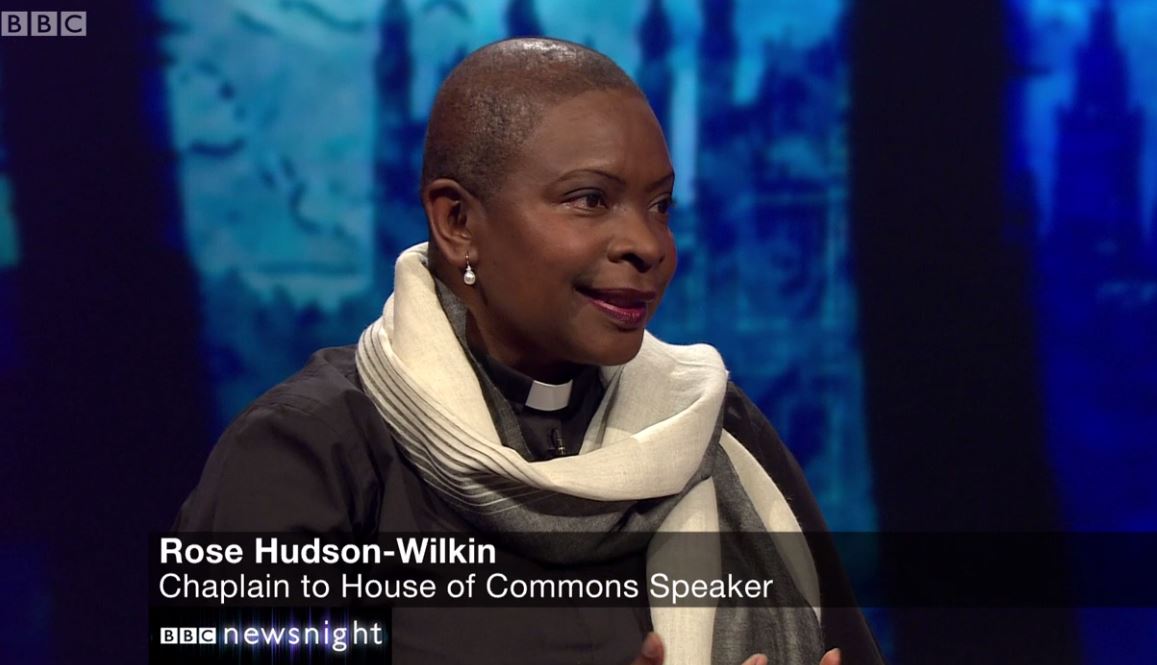
Reverend Rose Hudson-Wilkin, Chaplain to the Speaker of the House of Commons, appeared on BBC2’s Newsnight programme on 7th September 2017, discussing faith and politics alongside Guardian columnist Polly Toynbee. The interview was preceded by a clip of an appearance by Jacob-Rees Mogg MP on ITV’s Good Morning Britain, where he had been asked about the influence of his Roman Catholicism on his position on abortion and other matters. A transcript of the interview is below:
On 27th January 2017 Lord Shinkwin’s Abortion (Disability Equality) Bill was considered in Committee in the House of Lords. An amendment from Baroness Massey of Darwen, requiring the Secretary of State to review “the impact of this Act on disabled children, their families and carers, and the provision of support services” was debated and accepted. The Bishop of Durham, Rt Revd Paul Butler, supported the amendment and the overall purpose of the Bill:
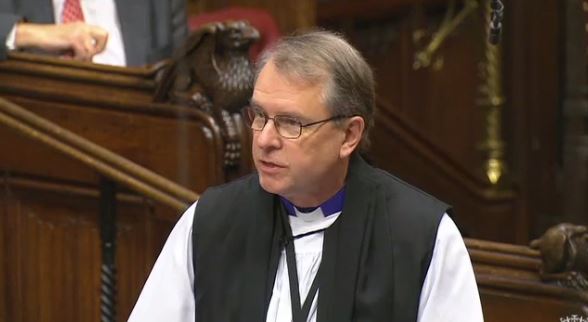 The Lord Bishop of Durham: My Lords, I was unable to be present at Second Reading but my noble friend the right reverend Prelate the Bishop of Bristol spoke on this matter, welcoming the Bill, and I add my support. I also welcome the amendment because I believe that, as others have already said, such a review would be very helpful. Continue reading “Abortion (Disability Equality) Bill: Bishop of Durham backs review of impact on disabled children, families and carers”
“Not only children but adolescents and adults with Down’s syndrome live valued and valuable lives, contributing greatly to the welfare of those around them. All of this is undermined by the continued existence on our statute book of a law that, in effect, states that Down’s syndrome is a ground for abortion.” – Bishop of Bristol, 21/10/16
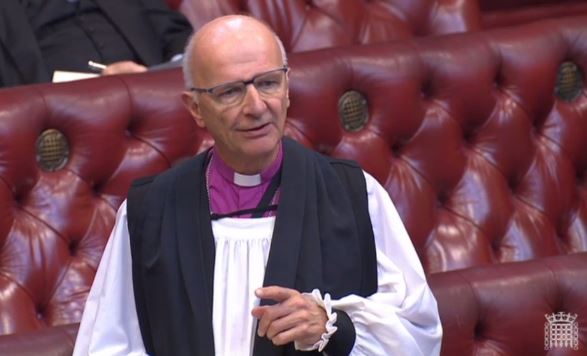 On the 21st October 2016 Conservative Peer Lord Shinkwin led a debate on the Second Reading of his Abortion (Disability Equality) Bill. The Bishop of Bristol, Rt Revd Mike Hill, spoke in support of the Bill.
The Lord Bishop of Bristol: My Lords, I too am grateful to the noble Lord, Lord Shinkwin, for introducing this Bill. I understand that its focus is the principle of disability equality, not some underhand attempt to limit women’s access to abortion services. Noble Lords will, of course, have a variety of opinions on the ethics of abortion, but that is not, in principle, the focus of the Bill. It needs to be said that, in general, historically and indeed today, churches and other faith groups have always maintained a cautious approach to how the rights of women and the rights of the unborn child can somehow be maintained without, we hope, falling in to those who reside at the extremes of arguments around ethics on both sides of this debate. Continue reading “Bishop of Bristol supports Abortion (Disability Equality) Bill”
On Monday 7th December, the House of Lords debated the Government’s Welfare Reform and Work Bill during its first day of Committee. The Bishop of Portsmouth, Rt Revd Christopher Foster, spoke to an amendment he had tabled to require Government to assess the impact of the proposed two-child limit for new claimants on families and faith communities. His speeches opening and closing the debate on his amendment are included below, along with an extract of the Minister’s reply. The full debate, including speeches by other Members, can be seen at: Parliament.uk
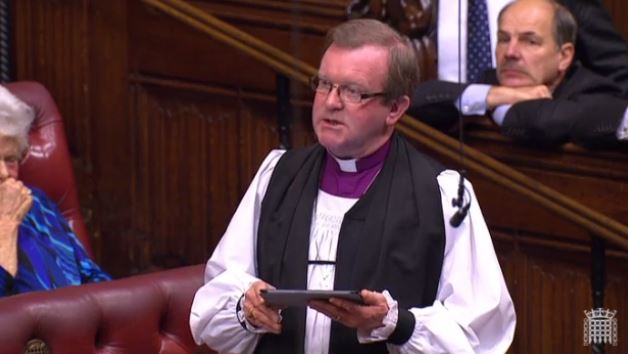 The Lord Bishop of Portsmouth: My Lords, I tabled Amendment 21 to highlight the impact of this measure on different faith communities who share our concerns with this part of the Bill in particular. Noble Lords who attended the special briefing we organised two weeks ago will have heard Chaya Spitz, chief executive of the Interlink Foundation, speak passionately about the implications for the Orthodox Jewish community that she represents and is a member of. For her community, larger families are the norm and the central pivot around which everything else revolves. There is a positive, faith-based imperative to have children, to create the next generation in service of God. There is also a commonly held conscientious objection to the use of artificial contraception, except in prescribed circumstances, and to abortion, except in rare circumstances. By limiting financial support to the first two children, this policy is making a judgment that touches on deeply personal and strongly held religious and cultural beliefs about the family, and that threatens the viability of whole faith communities.
 The Church of England in Parliament
You must be logged in to post a comment.