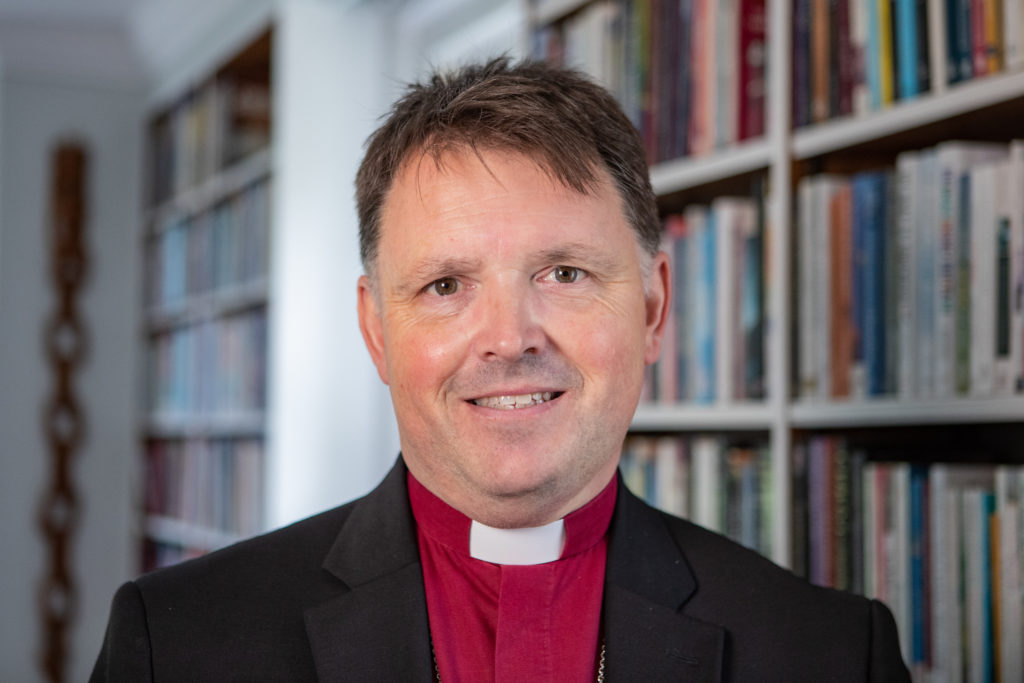
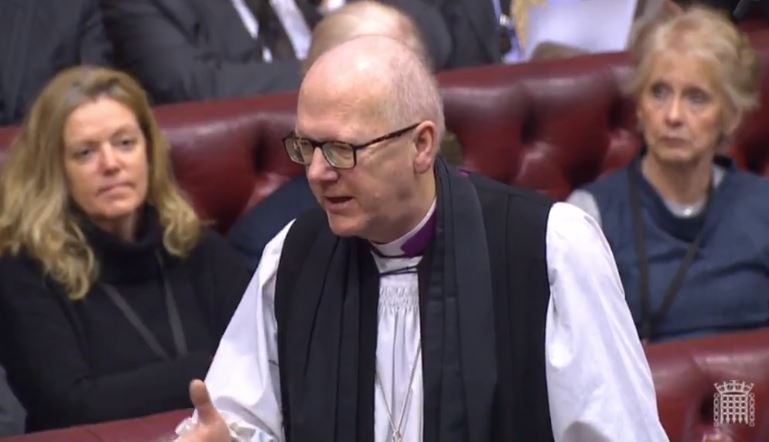
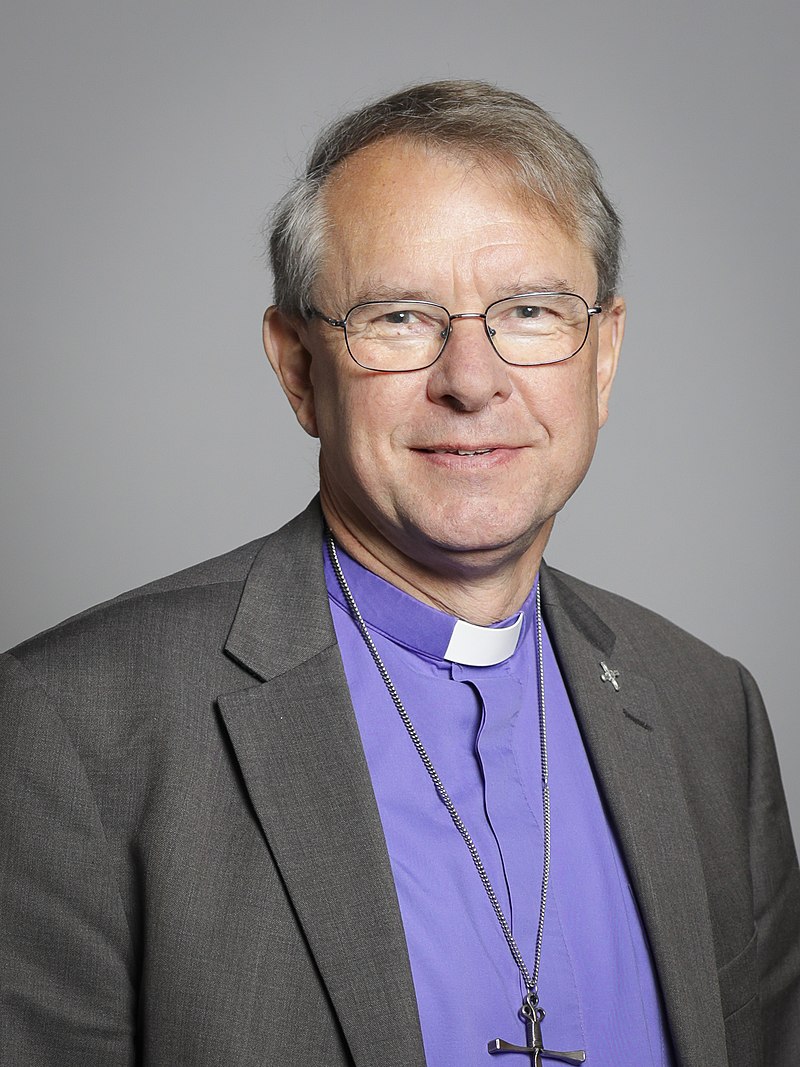
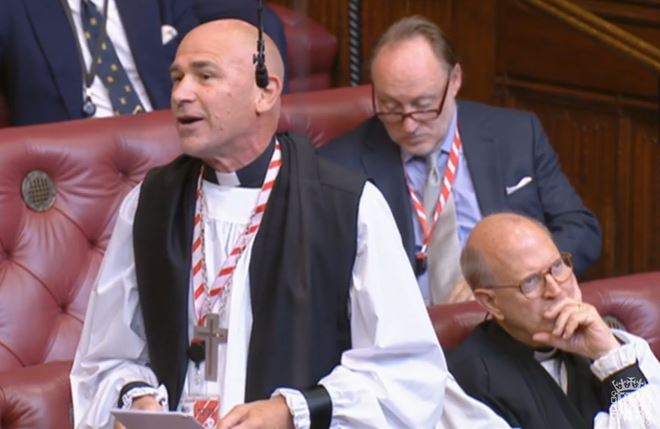
Bishop of Hereford asks about government approach to intrafaith issues and community relations

The Bishop of Hereford received the following written answer on 24th May 2024:

The Lord Bishop of Hereford asked His Majesty’s Government what assessment they have made of the review by Colin Bloom Does government ‘do God?’ An independent review into how government engages with faith, published on 26 April 2023, in particular, the recommendation that “more could be done to resource and equip policy makers and officials to increase their level of awareness and discernment regarding intrafaith issues concerning exploitation and abuse”; and what steps they are taking in response.

Continue reading “Bishop of Hereford asks about government approach to intrafaith issues and community relations”

Bishop of St Norwich asks about assistance for faith groups working in conservation and environmental restoration

The Bishop of Norwich received the following written answer on 6th February 2024:

The Lord Bishop of Norwich asked His Majesty’s Government what financial assistance they are providing to support projects undertaken by faith groups and others to support ecosystem conservation, protection and restoration internationally.

Continue reading “Bishop of St Norwich asks about assistance for faith groups working in conservation and environmental restoration”

Bishop of St Albans asks about methods to increase vaccine uptake

The Bishop of St Albans asked a question on whether the government would work with leaders of faith communities to increase vaccine uptake on 22nd January 2024, following a discussion on a rise in measles cases in the UK:

The Lord Bishop of St Albans: My Lords, on the relatively low take-up in minority communities, either the message is not getting through, sometimes for language reasons, or there is a lack of trust. There is quite a lot of evidence, not least in other parts of the world, that the way to address that is to clearly target the recognised community leaders so that they can act as brokers. What attempts are being made to work in our gurdwaras, temples and mosques in particular, to get those leaders to commend these vaccinations to the people with whom they are in direct contact?

Continue reading “Bishop of St Albans asks about methods to increase vaccine uptake”

Bishop of Durham asks about role of faith leaders in Israel & Gaza

On 12th December 2023, the Bishop of Durham asked a question on the involvement of faith leaders in diplomatic conversations on the situation in Israel & Gaza:

The Lord Bishop of Durham: My Lords, this tragic situation is also caught up in the complexity of the religious faiths of the region. In what way are faith leaders involved in the diplomatic conversations to seek to bring peace?

Continue reading “Bishop of Durham asks about role of faith leaders in Israel & Gaza”

Bishop of Durham asks about family hub partnerships

The Bishop of Durham received the following written answer on 28th November 2023:

The Lord Bishop of Durham asked His Majesty’s Government what level of accountability local authorities have to His Majesty’s Government to ensure that they are meeting the expectation of partnering with the voluntary, community and faith sector in implementing family hubs.

Continue reading “Bishop of Durham asks about family hub partnerships”

Bishop of Sheffield highlights work done by faith communities and charities to support newly released prisoners

The Bishop of Sheffield asked a question a question on support for faith communities’ projects to help newly released prisoners, following a government statement on prison capacity on 17th October 2023:

The Lord Bishop of Sheffield: My Lords, nine days ago it was my privilege to lead Sunday worship at HMP Doncaster, where I was reminded by the chaplain that many faith communities and charities do excellent work supporting newly released prisoners as they resettle into their communities, with a demonstrably positive impact on reoffending rates. What more can be done to support such projects?

Continue reading “Bishop of Sheffield highlights work done by faith communities and charities to support newly released prisoners”

Bishop of Leicester asks about long-term strategy for supporting interfaith relations in UK

The Bishop of Leicester spoke in a debate on the Abraham Accords between Israel, the UAE, and Bahrain and what steps the UK the government will take to ensure the success of the Accords on 14th September 2023, emphasising the need for supporting communication between faith communities in the UK as well as abroad:

The Lord Bishop of Leicester: My Lords, I add my thanks to the noble Lord, Lord Polak, for securing this short debate and my admiration and gratitude to all those who have supported and championed the Abraham accords all across the Middle East and beyond. They are truly an historic achievement, and I applaud the courage of all those who seek to bring peace to this long-troubled region. I add my thoughts and indeed prayers for the people of Morocco as well.

Noble Lords have already mentioned a number of reasons for why the accords are so significant for the region as well as for the UK. I wish to add to this debate my observation that, at the same time as supporting peace efforts in the Middle East itself, we must be proactive in addressing the tensions which conflict in the Middle East can cause here in the UK. We saw an example of this during the May 2021 Gaza conflict, when there was a steep increase in hate crimes committed against both Muslims and Jews in this country. We cannot presume, therefore, that peaceful coexistence between Jewish and Muslim communities will come about automatically in the UK simply because we are at a geographical remove from the Middle East. It is by no means impossible, but it does not come of its own accord.

Continue reading “Bishop of Leicester asks about long-term strategy for supporting interfaith relations in UK”

Extreme Risk Management: Bishop of Leicester highlights benefits of including faith groups in planning for response to crises

On 12th January 2022, the House of Lords debated a motion to take note of a report from the Risk Assessment and Risk Planning Committee: Preparing for Extreme Risks: Building a Resilient Society (Session 2021–22, HL Paper 110). The Bishop of Leicester spoke in the debate, advocating for greater inclusion of faith groups in emergency planning:

The Lord Bishop of Leicester: My Lords, I, too, am grateful for the Select Committee’s work in tackling such an important subject and, in particular, I concur with the authors’ recognition that,

“the UK must move away from a risk management strategy which … often ignores or fails to appreciate the interconnected nature of our society”,

and that we must instead,

“produce a risk management system that ties all sectors of society together.”

Interdependence is a fundamental part of human nature and policies that follow the grain of that nature are far more likely to succeed.

I was disappointed, therefore, that although the report advocated for a whole-society approach, no reference was made to the role of faith groups in emergency planning and response. Faith groups and leaders across the country were an integral part of the response to Covid-19. A 2020 report by the All-Party Parliamentary Group on Faith and Society, based on research with local authorities, found that faith communities were instrumental in local responses by offering buildings, running food banks, information-sharing, befriending, collecting, cooking and delivering food, and providing volunteers for local authority programmes. Accordingly, the APPG found that local authorities developed a new-found appreciation for the agility, flexibility and professionalism of faith-based organisations, and that local authorities were keen to continue and build on those relationships in the future.

Continue reading “Extreme Risk Management: Bishop of Leicester highlights benefits of including faith groups in planning for response to crises”

Archbishop of Canterbury asks about climate change

The Archbishop of Canterbury asked a question during a debate on behaviour change for net-zero on 31st March 2022:

The Lord Archbishop of Canterbury: My Lords, like the Government, the Church of England has targets for reaching net-zero carbon, in our case by 2030. Churches across the Anglican Communion are deeply affected by climate change. For example, Madagascar recently had four cyclones in two months. We are working right across the communion on this question. This week, we have had a gathering of archbishops from across the communion representing more than 100 countries. Will the Minister set out the plans that the Government have to work further with faith communities, which have unique distribution and contacts, from the grass roots to the highest level, both nationally and internationally, and will he commend the work that they are already doing?

Continue reading “Archbishop of Canterbury asks about climate change”

Bishop of St Albans speaks in debate on vaccination requirements, highlighting issues regarding vaccination and people of faith

On 14th December 2021, the House of Lords debated a motion to approve the Health and Social Care Act 2008 (Regulated Activities) (Amendment) (Coronavirus) (No. 2) Regulations 2021, which would extend vaccination requirements in health and social care settings. The Bishop of St Albans gave a speech on the issue of vaccine hesitancy, highlighting concerns people of faith might have regarding vaccination:

The Lord Bishop of St Albans: My Lords, I think many of us are grateful for the comments from the noble Baroness, Lady Noakes, about process and impact assessments, and I echo those.

I shall make one or two comments about the substantive issues. Incidentally, we have been thanking the Government and medics for the rollout, but I want to pay tribute to the people who are going to be sitting up half the night: the managers of GP practices—they are the ones who get people there to get the vaccine. Very often they are forgotten, so I want to make that point.

Continue reading “Bishop of St Albans speaks in debate on vaccination requirements, highlighting issues regarding vaccination and people of faith”