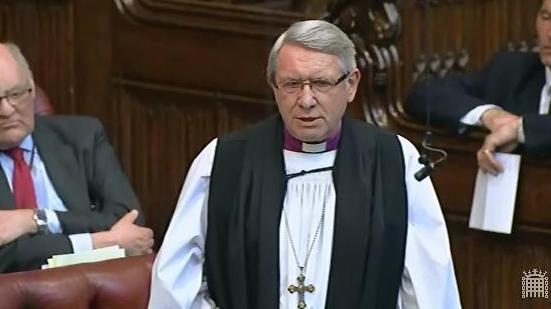
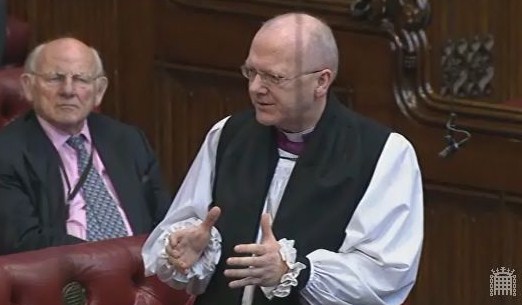
Prisons and the problem of indeterminate sentences – speech by Bishop of Lichfield

“I spent some time recently with an intelligent and engaging Somali prisoner …This man was given an 18-month tariff, but last Christmas was his ninth in prison. What an injustice, and what a huge expense.” – Bishop of Lichfield

On 27th March 2014 the Bishop of Lichfield took part in a debate tabled by Lord Wigley, ‘to ask Her Majesty’s Government what steps they are taking to address the position of individuals serving indeterminate sentences on public protection grounds who have already passed their tariff’.

The Lord Bishop of Lichfield: My Lords, I am most grateful to the noble Lord, Lord Wigley, for his initiative and to the noble Lord, Lord Dholakia, and the noble and learned Lord, Lord Phillips, for their very helpful introductions.14.03.27 Bishop of Lichfield

As a general principle, it is accepted in this country that people should be sent to prison because they have been convicted of an offence rather than because of the risk that they will offend. Indeterminate tariffs are even now available for the most serious offences, in the form of life sentences, and extended sentences now provide a way to manage and contain risk in relation to those convicted of serious violent and sexual offences which do not call for a life sentence. Continue reading “Prisons and the problem of indeterminate sentences – speech by Bishop of Lichfield”

Shrinking the economic gap between London and the regions: Budget speech by Bishop of Sheffield

“If we do nothing, we will see the gap between London and the regions continue to widen to the detriment of the whole country. I urge the Government and this House to address this problem with imagination, courage and vigour” – Bishop of Sheffield

On 27th March Peers debated the Chancellor’s 2014 Budget statement. The Bishop of Sheffield spoke of the need to rebalance the economy so that the proceeds of renewed economic growth could be shared across the regions. He suggested this could be the task of a cross-party parliamentary commission.

14.03.27 Bishop of SheffieldThe Lord Bishop of Sheffield: My Lords, the prophet Jeremiah wrote a short but remarkable letter to his contemporaries long ago who had been sent into exile in Babylon. The letter has shaped Jewish and Christian thought on how communities of faith should engage with the wider society down all the generations since. The prophet’s advice is to,

“seek the welfare of the city where I have sent you … for in its welfare you will find your welfare”.

Continue reading “Shrinking the economic gap between London and the regions: Budget speech by Bishop of Sheffield”

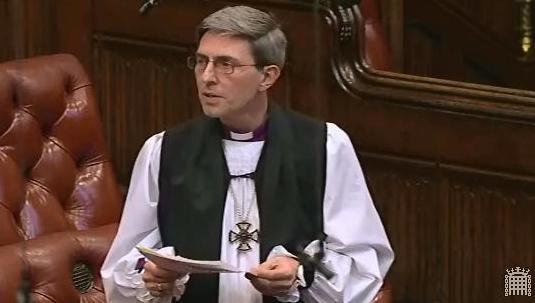
Freedom and Responsibility: Budget speech by the Bishop of Chester

On 27th March Peers debated the Chancellor’s 2014 Budget statement. The Bishop of Chester, Rt Rev Peter Forster, cautioned that if society were to experience renewed growth and prosperity, it should guard against recreating the problems of the past 30 years. He argued for an emphasis on strengthened social institutions, including families, continued commitment to overseas aid, and improved financial education.

14.03 Bishop of ChesterThe Lord Bishop of Chester:  My Lords, the reason that the Bishops sit on the government side of the Chamber, I am told, is the recognition that the task of government is so difficult that the Government need all the help available to them. Managing the economy in recent years has been an enormously difficult task and we can only express relief and, indeed, gratitude that things seem to be moving on to a more normal plane despite all the challenges ahead, about which the Chancellor himself is fairly candid. Continue reading “Freedom and Responsibility: Budget speech by the Bishop of Chester”

“Problematic” UK visa and immigration system affecting international work of churches – speech by Bishop of Chester

when we try to get the visa and immigration authorities to tell us what we have to do as a diocese and what the conditions are, we find that letters get lost. My colleague who deals with this is in despair. We write letters but nothing comes back. Time is ticking away and the training curacy of the chap I am talking about is coming to an end.” – Bishop of Chester

Lord Steel of Aikwood tabled a question for short debate: ‘to ask Her Majesty’s Government what is their assessment of the operation and accountability of UK Visas and Immigration. The Bishop of Chester raised some examples of failures in the system.

The Lord Bishop of Chester:

14.03 Bishop of ChesterMy Lords, I associate myself very closely with all that has been said, although the second half of the contribution from the noble Lord, Lord Phillips, focused a bit too much on mammon for my level of expertise. However, I take him as an authority on that aspect. The introduction the noble Lord, Lord Steel, gave, was powerful and shocking in equal measure, and made the case on its own. I can say to the noble Baroness, Lady Neville-Jones, that I am aware of the Hereford situation; indeed, clergy are among those who are able to come under the scheme she mentioned.

Continue reading ““Problematic” UK visa and immigration system affecting international work of churches – speech by Bishop of Chester”

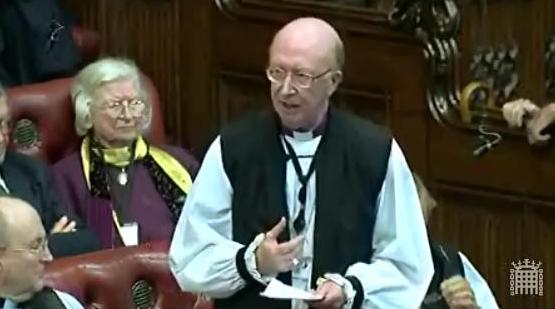
The role of the church and education in promoting creative skills – speech by Bishop of St Albans

“Britain has a wonderful tradition of musical performance and singing. We play a little part in that with our heritage of music in our cathedrals, collegiate institutions and some parish churches. It is there that many of these young people discover not only that they have a voice but how to train it.” – Bishop of St Albans

In the House of Lords on 20th March 2014 Baroness Andrews tabled a question for short debate: “To ask Her Majesty’s Government what proposals they have to promote the role of the creative skills sector in the United Kingdom economy.”14.03 Bishop of St Albans

The Bishop of St Albans spoke of the role of education in fostering creative skills and the ongoing place of churches and cathedrals in encouraging music, arts and craft. Continue reading “The role of the church and education in promoting creative skills – speech by Bishop of St Albans”

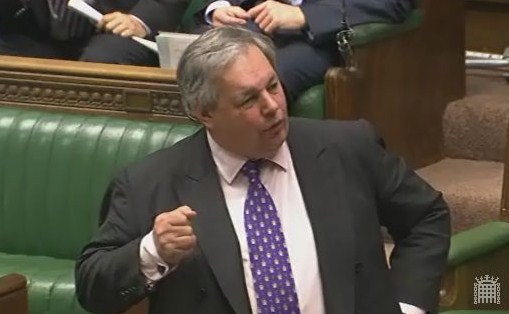
MPs Celebrate Contribution of Women to the Ordained Ministry of the Church of England

In Westminster Hall on Thursday 20th March 2014, Rt Hon Caroline Spelman MP led a short debate on the role and contribution of women to the ordained ministry of the Church of England. 14.03.20 WH debate 4The debate celebrated the 20th anniversary of the ordination of the first women as priests in the CofE and looked ahead, both to the ongoing process to legislate for female bishops, as well as enabling them to sit in the House of Lords without delay. Sir Tony Baldry MP responded in his capacity as Second Church Estates Commissioner, and contributions were made by Rt Hon Ben Bradshaw MP, Sir Peter Bottomley MP and Helen Goodman MP. The Equalities Minister Helen Grant MP was also present to hear the speeches.

A full transcript is reproduced here and a recording of the debate can also be watched on the UK Parliament website here. Continue reading “MPs Celebrate Contribution of Women to the Ordained Ministry of the Church of England”

Ukraine Crisis – the Religious Dimension. Speech by Bishop of St Albans

Even if this crisis has cast a Cold War shadow over Europe, it is important that we remain in dialogue with the Russian Orthodox Church. That is not always an easy task” – Bishop of St Albans.

On March 18th Foreign Office Minister Baroness Warsi moved ‘that this House takes note of the situation in Ukraine.’ The Bishop of St Albans, Rt Rev Alan Smith, spoke of the religious dimension to the crisis in Crimea between Russia and Ukraine:

14.03 Bishop of St AlbansThe Lord Bishop of St Albans:

My Lords, I am grateful to the noble Baroness for this debate and for her helpful setting out of the situation. We have heard some fascinating background regarding the very complex history behind the situation. My comments will focus on the religious dimension, which has not been drawn out very fully so far.

Continue reading “Ukraine Crisis – the Religious Dimension. Speech by Bishop of St Albans”

Bishop of Winchester on teacher training, education and social mobility

“I question whether the Government’s policies for improving the quality of teaching have been fully effective and will enable social mobility. I am particularly concerned about the School Direct programme. In fact, I suggest there is an urgent case for rethinking arrangements around initial teacher training before a crisis develops.” – Bishop of Winchester

The Bishop of Winchester gave a speech in a House of Lords debate on 13th March 2014, tabled by the Education Minister Lord Nash.

The debate title was: ‘that this House takes note of the role of primary and secondary education in improving social mobility.’

The Lord Bishop of Winchester:13.05 Bishop of Winchester

My Lords, I, too, am grateful to the noble Lord, Lord Nash, for the opportunity of this debate. I shall focus on the impact made by initial teacher training on social mobility. Continue reading “Bishop of Winchester on teacher training, education and social mobility”

Bishop of Newcastle on role of education in improving social mobility in the north-east

“…she went away to university but then, crucially, returned to give back to the wider community the benefits of the education that she had received. We need more people like her—people not using their education to escape from the area, but realising that with well trained minds and warm hearts they have much to give for the common good..” – Bishop of Newcastle

The Bishop of Newcastle gave a speech in a House of Lords debate on 13th March 2014, tabled by the Education Minister Lord Nash.

 The debate title was: ‘that this House takes note of the role of primary and secondary education in improving social mobility.’

The Lord Bishop of Newcastle:

14.03 Bishop of NewcastleMy Lords, I, too, welcome this debate about the role of primary and secondary education in improving social mobility, and I want to speak from my experience as a bishop in the north-east of England for the past 16 years.

Continue reading “Bishop of Newcastle on role of education in improving social mobility in the north-east”

Women in the Church: Bishop of Chester’s speech in Lords debate on International Women’s Day

The Bishop of Chester spoke during the International Women’s Day debate on the contribution of women in the economic life of the United Kingdom and worldwide. He updated the House on the progress being made by the Church of England to allow the consecration of women as bishops, and used the example of this process to examine the challenges faced by many women in the economy to be accepted in their own right. He also spoke of the role of women in the wider life of the church.

14.03 Bishop of ChesterThe Lord Bishop of Chester: My Lords, the noble Baroness could well have said, “Bishops’ Benches: 26 men, no women”, but I am glad that she did not, although I am sure that others will. I rise with an appropriate hesitancy as the first male speaker in a debate in which only 22% of the speakers will be men. The majority of those listening are also women, which is a pity. However, I look forward to the speech of the noble Lord, Lord Palumbo, whom I can only describe as a fellow Daniel in the lion’s den on this occasion.

Indeed, those who inhabit these Benches might be seen as somewhat handicapped in advocating the fuller involvement of women in the wider life of our society. As we are regularly reminded, ours are the only Benches from which women are currently excluded. I hope that I can say something today about that and about the wider significance of the struggles of the church over the full involvement of women in its life. Continue reading “Women in the Church: Bishop of Chester’s speech in Lords debate on International Women’s Day”