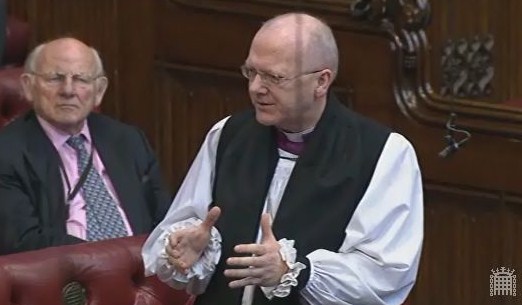
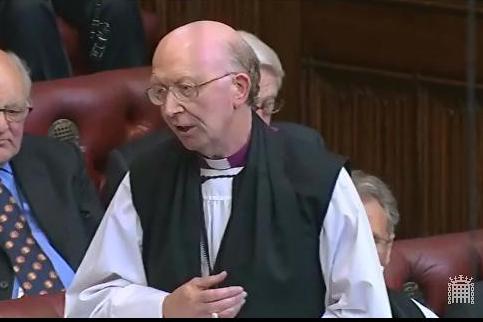
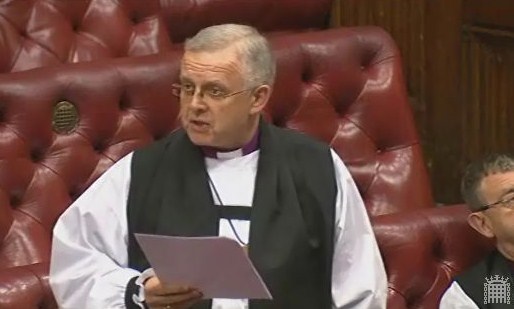
Bishop of St Albans warns against increased use of Magnitsky sanctions

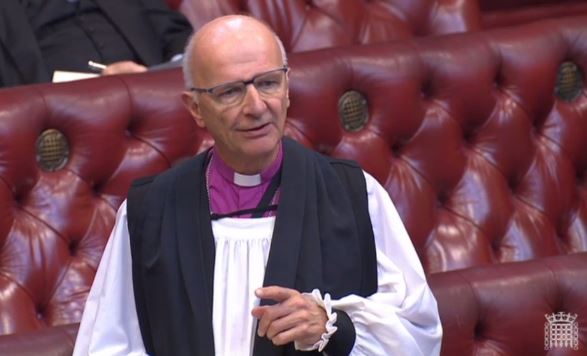
The Bishop of St Albans spoke in a Grand Commitee debate on the effectiveness of the Magnitsky sanctions on 24th June 2021, arguing for better cooperation with international partners and support for international law, and warning of the danger of overreliance on sanctions in global affairs:

The Lord Bishop of St Albans: My Lords, I too agree that there are occasions when these Magnitsky sanctions may be the best available option to us. However, the increased use of such sanctions is a worrying sign that the organs of international arbitration such as the UN or the ICJ may be losing their effectiveness. These were the very institutions established in response to the tit-for-tat foreign policy that defined the 19th and early 20th centuries, with all their resulting catastrophes.

Our Government are a big advocate of the concept of “Global Britain”, an ambiguous phrase that sometimes means leading as a force for good in the world but at other times is simply a declaration that Britain is open for international business. My concern is that these conflicting visions of global Britain are sometimes mutually exclusive, and that when dealing with human rights abuses there may be a tendency to take the route of least domestic economic disruption.

Continue reading “Bishop of St Albans warns against increased use of Magnitsky sanctions”
Bishop of Leeds asks about public confidence in the law following collapse of trial in the Hillsborough disaster case

The Bishop of Leeds asked a question on public confidence in the law and the justice system following a Commons Urgent Statement on the collapse of a trial associated with the Hillsborough disaster:

The Lord Bishop of Leeds: My Lords, what have the Government learned about the process of justice and public confidence in law, when a trial can collapse one day and a defence counsel stands in the street outside the court and maintains unequivocally that this proves that there has not been a cover-up, yet almost the next day the police admit such cover-ups and compensation is duly paid?

Lord Wolfson of Tredegar (Con, Ministry of Justice): My Lords, as Prime Minister David Cameron said when he made the apology in the other place, the families

“suffered a double injustice: the injustice of the … events”

themselves,

“the failure of the state to protect”

them

“and the indefensible wait to get to the truth;”

Continue reading “Bishop of Leeds asks about public confidence in the law following collapse of trial in the Hillsborough disaster case”

Bishop of Gloucester leads debate on positive impact of women’s centres in the justice system

On the 12th of September The Rt Revd Rachel Treweek, Bishop of Gloucester, led a debate in the House of Lords on a motion ‘to ask Her Majesty’s Government what assessment they have made of the ability of women’s centres to improve outcomes in the justice system’.  Her speech introducing the debate,  and the response of the Minister, are reproduced below. The speeches by other Members contributing to the debate can be seen at Parliament.uk 

Gloucester071117 bThe Lord Bishop of Gloucester: My Lords, it is a great honour and privilege to introduce this debate. I thank all noble Lords who have agreed to contribute to it; I am especially grateful to the noble Baroness, Lady Sater, for choosing to make her maiden speech in it. I know that her extensive experience in business and the charitable sector, as well as her time working on the Youth Justice Board and as a magistrate, will inform many excellent contributions to this House. I look forward to her speech. Continue reading “Bishop of Gloucester leads debate on positive impact of women’s centres in the justice system”
Queen’s Speech 2017: Bishop of Bristol welcomes inclusion of measures on domestic violence

On 27th June 2017 the House of Lords debated the measures in the Queen’s Speech for justice and home affairs. The Bishop of Bristol, Rt Revd Mike Hill, spoke in the debate, on mental health, domestic violence and prisons.

The Lord Bishop of Bristol: My Lords, I welcome the opportunity to contribute to this important debate on the gracious Speech. I thank the noble Lords who have spoken thus far in what has been an interesting debate today.

I would like to draw attention to two or three things. The first is the fairly well hidden-away commitment in the gracious Speech to reform mental health legislation in order that mental health services might be prioritised in the NHS. Like much in the speech, the detail is particularly lacking at this point but I hope that noble Lords will join me in saying that that is an important and welcome development. Continue reading “Queen’s Speech 2017: Bishop of Bristol welcomes inclusion of measures on domestic violence”

Bishop of Rochester presses government to work for acess to justice for all

On 18th March 2015 the Bishop of Rochester, Rt Rev James Langstaff, asked a question in the House of Lords on the Government’s response to a report on access to justice. He followed it with a supplementary question to the Minister. Those exchanges, along with a transcript of all subsequent questions on the same by Peers, are below.

TBishop of Rochesterhe Lord Bishop of Rochester: To ask Her Majesty’s Government what steps they plan to take in response to the recommendations of the recently published Theos report Speaking Up.

Lord Faulks (Minister of State, Ministry of Justice): My Lords, the Government have noted the Theos report. We carefully considered the matters raised in it, including access to justice, when developing our policy on legal aid reform. The Government have already committed to a review of the impact of the LASPO Act three to five years after implementation. Even after reform, our legal aid system will remain one of the most expensive in the world at £1.5 billion per year. Continue reading “Bishop of Rochester presses government to work for acess to justice for all”

St Albans- Support for Vulnerable Defendants (Written Answer)

On 10th February 2015, the Bishop of St Albans, the Rt Revd Alan Smith, received an answer to a written question on the subject of support for vulnerable defendants in the criminal justice system.

Bishop of St AlbansThe Lord Bishop of St Albans: To ask Her Majesty’s Government what plans they have to ensure that support is made available for vulnerable defendants by registered intermediaries in the criminal justice system, as currently is the case for vulnerable witnesses.

Continue reading “St Albans- Support for Vulnerable Defendants (Written Answer)”

Bishop of Rochester calls for greater co-ordination between Troubled Families programme and young offenders policy

On 27th October 2014, Lord Horam asked Her Majesty’s Government what progress is being made with the Troubled Families programme. The Bishop of Rochester, the Rt Revd James Langstaff, asked a supplementary question:

Bishop of RochesterThe Lord Bishop of Rochester: My Lords, tomorrow morning the Prison Reform Trust will publish the latest edition of its well regarded Bromley Briefings Prison Factfile. Among other things that will show the continuing correlation between exclusion from school, being brought up in care and offending behaviour. In the light of this and of other responses already given, can the Minister give an assurance that the Troubled Families programme is being well co-ordinated with the Ministry of Justice’s young offenders policy?

Lord Ahmad of Wimbledon: I can give the right reverend Prelate that assurance. Indeed, in a previous incarnation when I was the Whip for the justice department, I saw the importance of many rehabilitation programmes directly through visits programmes. He raises an important part of the mix that defines troubled families. As he is well aware, one of the key elements is youth crime and targeting youth crime and anti-social behaviour. Again, what we are seeing, for the first time I believe, is not just departments working together, but people at a local level working well together to ensure that all people involved, whether in youth crime, those involved in not attending school, as my noble friend said, or those who are not in employment, get sustainable solutions for the long term.

(via Parliament.uk)

Bishop of Oxford raises concerns about access to justice and care of troubled children during debate on Criminal Justice and Courts Bill

“It is disturbing when the Bar Council says that when combined with other recent government measures for changing the law of judicial review, these changes, if enacted in their current form, will immunise government and other public authorities from effective legal challenge” – Bishop of Oxford, 30/6/14

On 30th June 2014, the Bishop of Oxford, the Rt Revd John Pritchard, took part in the Second Reading debate on the Government’s Criminal Justice and Courts Bill. During his speech, he focused on two particular areas of concern – the proper care of troubled children and the role of ‘secure colleges’ and the need for a fair and effective system of judicial review and legal aid to be available to all, regardless of their material situation.

Bishop of OxfordThe Lord Bishop of Oxford: My Lords, I am not among those who decry the frequency with which criminal justice Bills come along. The world is changing fast and the shapes assumed by criminality change no less quickly. It is important to respond to change and to take care that the unchanging core of justice—a British value if ever there was one, as well as a Biblical value—is honoured both in the detail and in the overall direction of policy on the criminal law and its enforcement. Continue reading “Bishop of Oxford raises concerns about access to justice and care of troubled children during debate on Criminal Justice and Courts Bill”

Restorative Justice: Bishop of Peterborough Calls For Greater Use

Baroness Gardner of Parkes asked Her Majesty’s Government how many offenders received multiple cautions in the past year; and what plans they have to review the guidance to the police on the use of cautions for serious crimes.

The Bishop of Peterborough asked a supplementary question:14.02 Peterborough

The Lord Bishop of Peterborough: My Lords, the Minister mentioned restorative justice. Does he agree that, alongside limited use of cautions, a greater use of restorative justice interventions could be of great help, both in reducing reoffending and in supporting victims?

Lord Faulks: My Lords, I agree with the right reverent Prelate. There is a great case for restorative justice in appropriate cases, and it is indeed an option for it to be part of the conditional caution. There is increasing approval in this House and outside of its use.

(via Parliament.uk)

Votes – Anti-social Behaviour, Crime and Policing Bill

House of Lords Division Lobby

On 8th, 14th, 20th and 22nd January 2014, seven bishops took part in votes on amendments to the Government’s Anti-social Behaviour, Crime and Policing Bill, during its Report Stage.

Continue reading “Votes – Anti-social Behaviour, Crime and Policing Bill”