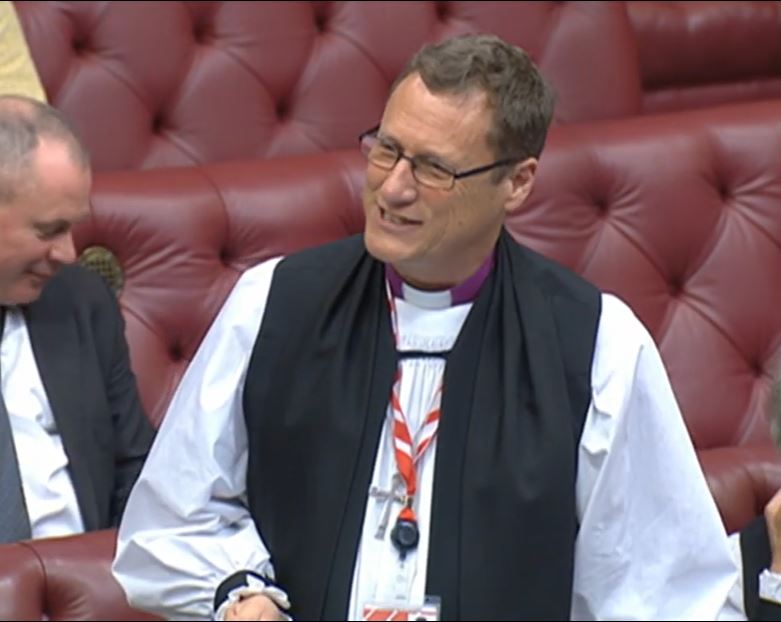
Crime and Policing: Bishop of Leicester tables amendment on access to abortion services for under-18s

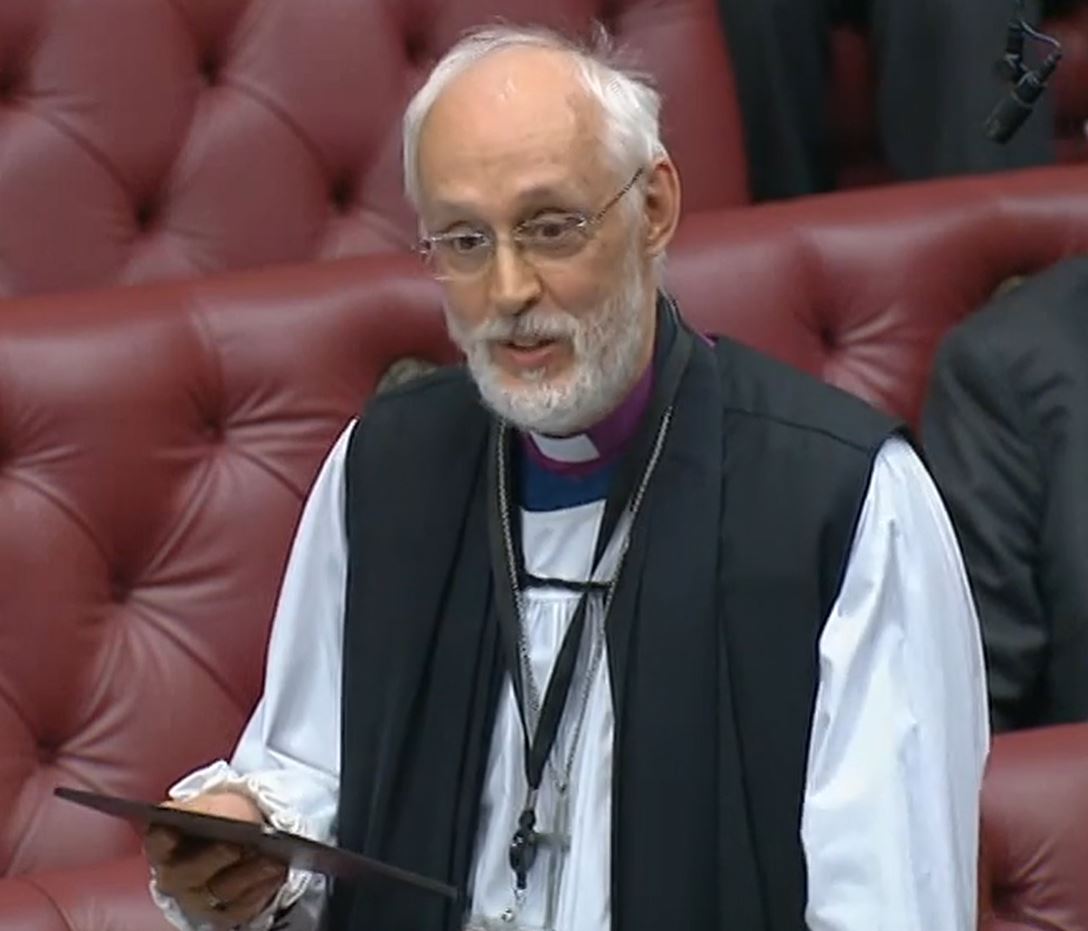
During a debate on the Crime and Policing Bill on 18th March 2026, The Bishop of Leicester spoke in support of his amendment 426D, which would seek “to ensure that a pregnant woman or girl under 18 years old would need to have an in-person consultation before they could be prescribed drugs to end a pregnancy, so that potential safeguarding needs are identified.”

The Lord Bishop of Leicester: My Lords, I shall speak to the amendment in my name, Amendment 426D. I start by thanking the Minister for meeting me a couple of weeks ago to discuss this matter—and I want to be direct at the outset about what the amendment would do and would not do.

The amendment is distinct from Amendment 425, which stands on its own merits, and which your Lordships will consider on its own terms. This amendment says nothing about adult women’s access to abortion, nothing about where medication is taken and nothing about the broader questions that have been part of our debate up till now. It rests entirely on one safeguarding principle—that when a child is the patient, a professional should meet her before prescribing. I believe that that is something that your Lordships can support, regardless of the views that you hold on everything else before the House today.

Continue reading “Crime and Policing: Bishop of Leicester tables amendment on access to abortion services for under-18s”
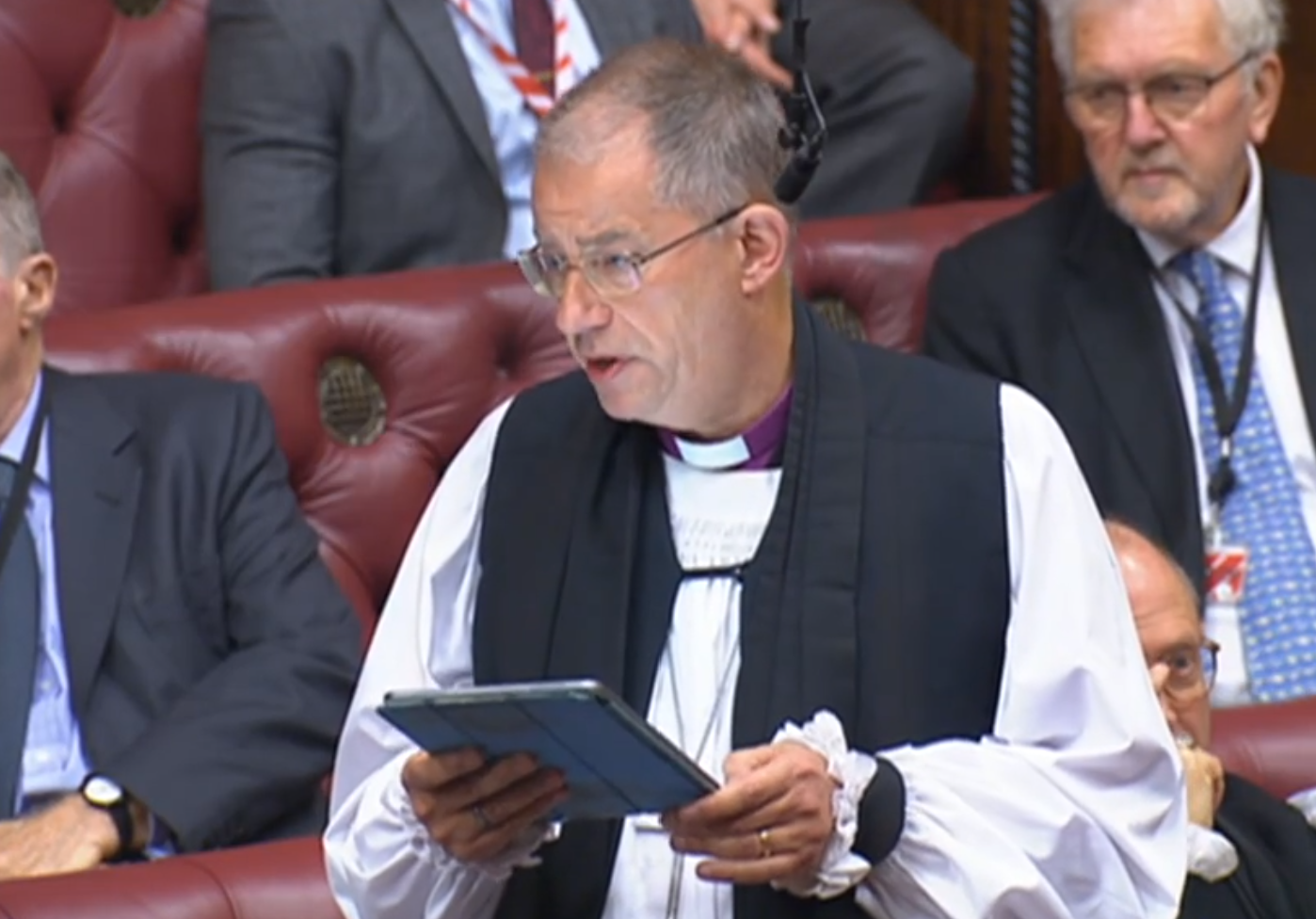
Crime and Policing Bill: Archbishop of Canterbury speaks in debate on abortion law

The Archbishop of Canterbury spoke during a debate on the proposed clause 208 of the Crime and Policing Bill on 18th March 2026, which would seek “to add the requirement of DPP consent for the institution of the criminal proceedings in Clause 208 against a woman acting in relation to her own pregnancy and reduces the limitation period for the offence,”, opposing the clause and supporting amendments on the safeguarding of under-18s accessing abortion services:  

The Lord Archbishop of Canterbury: My Lords, many noble Lords will know that the Church of England’s view on abortion is one of principled opposition, recognising that there can be limited conditions under which abortion may be preferable to any available alternatives. This is based on the belief of the infinite worth and value of every human life, however old or young, and including life not yet born. The infinite value of human life is a fundamental Christian principle that underpins much of our legal system and has shaped existing laws on abortion. All life is precious. We therefore need to recognise that women confronted with the very complex and difficult decision to terminate a pregnancy deserve our utmost understanding, care and practical support as they face what is often a heart-wrenching decision.

However, I cannot support Clause 208. Though its intention may not be to change the 24-week abortion limit, it undoubtedly risks eroding the safeguards and enforcement of those legal limits and, inadvertently, undermining the value of human life.

Continue reading “Crime and Policing Bill: Archbishop of Canterbury speaks in debate on abortion law”

Crime and Policing Bill: Bishop of Oxford supports amendments on tech safety

The Bishop of Oxford spoke in support of amendments to the Crime and Policing Bill tabled by Baroness Kidron on regulation of chatbots and the need for safety infrastructure in technology:

The Lord Bishop of Oxford: My Lords, I also support the amendments in the name of the noble Baroness, Lady Kidron, and others, and thank them all most warmly. They seem to me appropriately comprehensive and detailed. I have been following the developments in chatbots for a year now: they are massive, they are rapid, they are driven by the pursuit of profit and shareholder value, and not by the welfare of individuals, whether adults or children. There is a tsunami of harm coming towards us, affecting not only the most vulnerable but the whole of our society. We urgently need this kind of regulation and risk assessment for chatbots.

Continue reading “Crime and Policing Bill: Bishop of Oxford supports amendments on tech safety”

Votes: Crime and Policing Bill

On 18th March 2026, the House of Lords debated the Crime and Policing Bill, including amendments on protest, terrorism, and abortion. Bishops took part on votes on several amendments:

Continue reading “Votes: Crime and Policing Bill”

Crime and Policing Bill: Bishop of Manchester supports amendments on civil accountability

On 11th March 2026, the Bishop of Manchester spoke during a debate on an amendment to the Crime and Policing Bill tabled by Lord Davies of Gower which “would prevent the Independent Office for Police Conduct from investigating an officer where that officer has already been investigated and acquitted in court for the same conduct matter,”, opposing the amendment and stressing the need for accountability in civil proceedings:

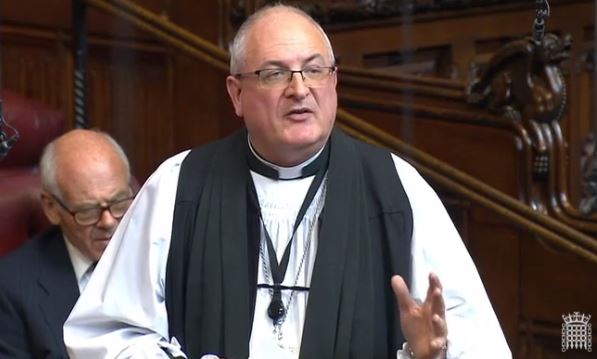
The Lord Bishop of Manchester: My Lords, can I add my two-penn’orth to this? I declare my interest as the co-chair of the national police ethics committee, but I am speaking more as a serving Bishop. I have to hear disciplinary complaints against clergy. Sometimes those clergy have committed something which is being investigated first by the police. To answer the point from the noble Lord, Lord Hogan-Howe, often the police tell us, “We don’t want you interfering until we have finished”. If the result of the criminal proceeding is that the person is convicted, I can then do quite a summary process in terms of applying a penalty or perhaps depriving that member of the clergy from serving in their parish, perhaps banning them from ministry for a time or for life. But all of that is very much on that balance of probabilities, on the civil standard. It is very different from the criminal standard.

Continue reading “Crime and Policing Bill: Bishop of Manchester supports amendments on civil accountability”

Votes: Crime and Policing Bill

On 11th March 2026, the House of Lords debated the Crime and Policing Bill. Votes were held on amendments to the bill, in which a Bishop took part:

Continue reading “Votes: Crime and Policing Bill”

Crime and Policing Bill: Bishop of Norwich supports amendment on protecting war memorials

During a debate on the Crime and Policing Bill on 9th March 2026, the Bishop of Norwich spoke in support of an amendment aimed at broadening the protections provided to war memorials under the provisions of the bill:

The Lord Bishop of Norwich: My Lords, I support Amendment 370 in the names of the noble Lords, Lord Parkinson of Whitley Bay and Lord Blencathra. Across this nation, war memorials, often raised by public subscription of pennies here and tuppences there, stand to hold memories of those who gave their lives—sons and daughters, brothers and sisters, cousins and parents. They are carved in stone, metal, wood or marble. The Whipsnade Tree Cathedral in Bedfordshire is a living memorial planted by Edmond Blyth, a World War I veteran, to commemorate his friends who were lost. They are physical embodiments of sacrifice, courage and collective memory, often within the curtilage of parish churches, each name both precious to someone and precious in the sight of God—ordinary people called to do the most extraordinary things in very challenging times. When they are damaged, it is a hit in the stomach for the whole of that community. It damages how we build our life together.

Continue reading “Crime and Policing Bill: Bishop of Norwich supports amendment on protecting war memorials”

Votes: Crime and Policing Bill

On 9th March 2026, the House of Lords debated the Crime and Policing Bill. Votes were held on amendments to the bill, in which a Bishop took part:

Continue reading “Votes: Crime and Policing Bill”

Crime and Policing Bill: Bishop of Lincoln speaks to amendments on decriminalisation of abortion

On 2nd February 2026, the Bishop of Lincoln spoke in a debate on amendments relating to the decriminalisation of abortion in the Crime and Policing Bill, highlighting the importance of supporting women and the need for a change in the way police investigations of terminations of pregnancies are carried out, while reiterating opposition to full decriminalisation on the grounds of the sanctity of life:

The Lord Bishop of Lincoln: My Lords, I am one of those old men. I am also a single man, so I have no children of my own, but I am regularly in contact with very young families through baptism. Only last Thursday, I was in hospital in an acute cardiac unit for babies, anointing a two week-old baby who had just had open-heart surgery. So I know quite a lot about babies through a very long ministry. I also offer my thanks to the noble Lord, Lord Winston, for a television series that he oversaw about seeing a pregnancy from conception to delivery some years ago. That series reinforced my conviction about the sanctity of life.

Continue reading “Crime and Policing Bill: Bishop of Lincoln speaks to amendments on decriminalisation of abortion”

Crime and Policing Bill: Bishop of Manchester speaks to amendments on policing of public gatherings

The Bishop of Manchester spoke to two groups of amendments on regulation of public gatherings during a debate on the Crime and Policing Bill on 13th January 2026, pointing out the possible unintended impact of religious processions and events:

The Lord Bishop of Manchester: My Lords, the more I listen to the debate this afternoon, the more worried I am getting. It seems to me that, over recent years, we have successively tightened up regulations around protests, including quite peaceful protests, making it harder and harder for people to express publicly their deep concerns around a whole range of issues. I am not sure that we need more clarity; that is for judges and juries to determine on the details of a particular case. The whole principle of the jury system is that we are judged by our peers and that, if we have undertaken some activity which has brought us before the courts, it is for other people like us to determine on the particular instances. They can take into account the culture and context, in a way that is impossible to do by way of legislation. I am quite wary about over- specifying here. Sometimes clarity is not necessarily the best thing to achieve.

Continue reading “Crime and Policing Bill: Bishop of Manchester speaks to amendments on policing of public gatherings”