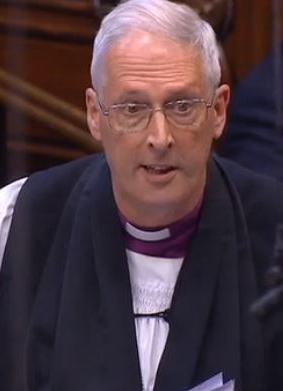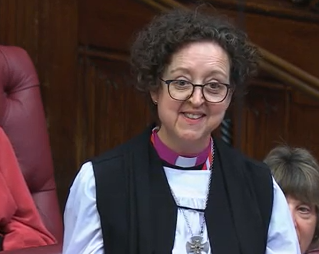
King’s Speech Debate: Bishop of St Edmundsbury & Ipswich makes maiden speech

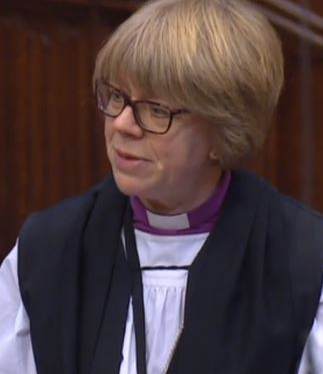
The Bishop of St Edmundsbury and Ipswich made her maiden speech in the King’s Speech debate on the topic of justice and accountability in the criminal justice system on 18th May 2026:

The Lord Bishop of St Edmundsbury & Ipswich: My Lords, I am grateful for the opportunity to make my maiden speech in this House. I begin by expressing my sincere gratitude for the warm welcome I have received from all sides. I thank the officers and staff of this House for their patience, professionalism and kindness in guiding new Members through these early days. As Bishop of St Edmundsbury and Ipswich, I serve the people of Suffolk, that great east of England county upon which the sun rises first each morning. I aim to join those who live out the particular Suffolk virtue of quiet service: people getting on with the task, often without applause, motivated by a genuine desire to make their communities better places for all.

My academic literary research before ordination took me deep into the works of the great Elizabethan poet, Edmund Spenser, whose Fairie Queene examines some of the private and public virtues needed to uphold the common good and the bonds of society. Whether biblically or classically rooted, virtue is much needed. Leadership in this current age needs to refocus on the common good, the social bonds and contracts that hold individuals together as communities. Of course, I include in that a matter at the heart of our debate today in response to His Majesty’s gracious Speech: justice, with a specific interest in the realities of and responses to miscarriages of justice. I thank my right reverend friend the Bishop of Gloucester, from whom we will hear later in this debate, for her energy, commitment and expertise over the years in urging us to reimagine a better criminal justice system for all. I welcome the Government’s desire to improve the courts and look forward to seeing their proposed legislation in these areas.

Continue reading “King’s Speech Debate: Bishop of St Edmundsbury & Ipswich makes maiden speech”
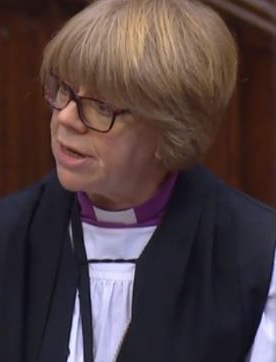
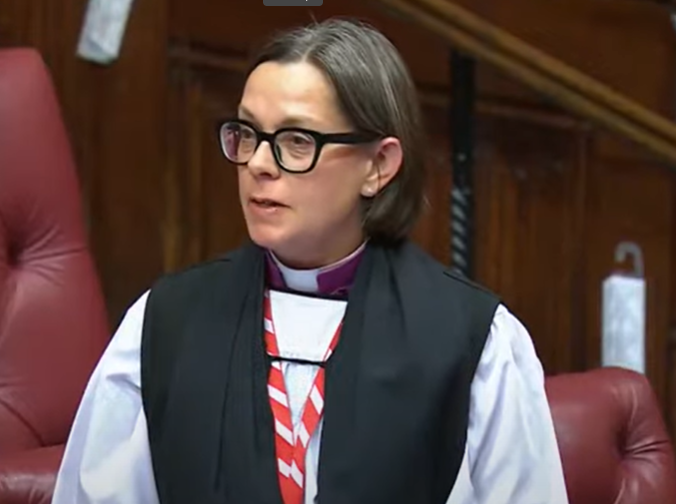
Kings Speech Debate: Archbishop of Canterbury speaks on importance of social integration and community relations

The Archbishop of Canterbury gave a speech during the King’s Speech debate on 18th May 2026, emphasising the importance of integration and understanding in society:

The Lord Archbishop of Canterbury: My Lords, it is a pleasure to respond to His Majesty’s gracious Speech today. I too look forward to the maiden speeches of the noble Lord, Lord Case, and my right reverend friend the Bishop of St Edmundsbury and Ipswich.

We face serious challenges at home and abroad, and I continue to pray for those who carry responsibilities of office as we seek to meet these challenges together. At my installation at Canterbury Cathedral, I spoke about the presence and importance of hope. As a Christian, I believe that we have hope because we have a God who walks with us, even when circumstances feel overwhelming.

Continue reading “Kings Speech Debate: Archbishop of Canterbury speaks on importance of social integration and community relations”

Kings Speech Debate: Bishop of Newcastle advocates for greater regional opportunities

The Bishop of Newcastle took part the debate on the King’s Speech on 14th May 2026, advocating for further regional opportunities for the northeast of England:

The Lord Bishop of Newcastle: My Lords, I am pleased to speak in this debate on the gracious Speech and wish all noble Lords well in this new Session. I declare an interest as president of the Rural Coalition.

It is an honour to follow the noble Lord, Lord Burns, particularly with his north-east roots. I speak from the perspective of the region in which my diocese is located, the north-east. These are communities with deep resilience and enormous potential but which continue to live with the consequences of economic inequality, industrial transition and social fragmentation.

There is much that gives cause for confidence. We see innovation emerging from our universities and wider research communities, growing expertise in clean energy, digital technology and advanced manufacturing, and renewed confidence in sectors helping to shape the industries of the future. The North East Space Skills and Technology Centre, based at Northumbria University, is a notable example of combining public funding, university match funding and private sector aerospace investment—a model that is about long-term economic development.

Continue reading “Kings Speech Debate: Bishop of Newcastle advocates for greater regional opportunities”

Bishop of Norwich joins tributes to departing Senior Deputy Speaker of the House of Lords

On 13th May 2026, the Bishop of Norwich joined in tributes to the departing Senior Deputy Speaker, Lord Gardiner of Kimble, and in welcoming the new Senior Deputy Speaker, Lord Ponsonby of Shulbrede, during the first day of the new parliamentary session:

The Lord Bishop of Norwich: My Lords, it is a pleasure to follow the noble Earl, Lord Kinnoull, to stand on behalf of these Benches in support of the Motion from the noble Baroness the Lord Privy Seal and to congratulate the noble Lord, Lord Ponsonby, on his appointment.

It is also a pleasure to thank, on behalf of these Benches, the former Senior Deputy Speaker, the noble Lord, Lord Gardiner. Newbies have been enormously grateful for the warmth of his welcome to those of us on these Benches and for his gentle guidance when learning the procedures of your Lordships’ House, such as the nod, the smile, and the twinkle in the eyes that have meant to the unsure, “Yes, you’re next”. The noble Lord has been a steady and kindly presence, for which we are most grateful.

Continue reading “Bishop of Norwich joins tributes to departing Senior Deputy Speaker of the House of Lords”

Terminally Ill Adults (End of Life) Bill: Archbishop of Canterbury restates principled opposition to bill

The Archbishop of Canterbury also spoke in the final debate on the Terminally Ill Adults (End of Life) Bill on 24th March 2026, reiterating her opposition to the bill and the need for a different approach to scrutiny and debate should the bill return to the House:

The Lord Archbishop of Canterbury: My Lords, I shall briefly make some reflections. It is a great privilege to follow my friend, the noble Baroness, Lady Rafferty; I thank her for her contribution. I recognise the enormous amount of work that has gone into this Committee stage. I am grateful to the noble and learned Lord, Lord Falconer, for meeting me; I thank him for the time that he has given me.

Noble Lords will know that I oppose the Bill in principle, both as a priest and as a nurse, but it is clear that some things unify us. Whether we support the Bill or oppose it, we are unified by the fact that we want people to die in a dignified, pain-free and compassionate way, with the least possible fear. I also believe that we are unified in the belief that there needs to be investment in palliative care now. I welcome the new modern framework for palliative care that the Government have introduced, but recognise that financial investment still needs to occur.

Continue reading “Terminally Ill Adults (End of Life) Bill: Archbishop of Canterbury restates principled opposition to bill”

Terminally Ill Adults (End of Life) Bill: Bishop of Newcastle speaks to concerns surrounding gravity of the bill

On 24th April 2026, the Bishop of Newcastle spoke in the final committee debate on the Terminally Ill Adults (End of Life) Bill before the prorogation of Parliament, stressing the serious nature of the issues contained in the bill and the concerns raised by the ongoing debate in the House of Lords:

The Lord Bishop of Newcastle: My Lords, I speak as one of the Lords spiritual and as a member of the Select Committee that examined the Bill. I do so with a deep sense of responsibility for the integrity of our legislative process and for the dignity and protection of those whose lives may be most directly affected by what we decide. I have been deeply moved by the personal stories that have been shared by noble Lords in recent months and wish to acknowledge the stories that my noble friend shared with us just now. My own dear cousin died earlier this week from a condition that could at many stages have been described as terminal. She continued resolutely to live life to its fullness, and her sudden death is a matter of great sadness to me.

In our context, where questions of life, death, care and conscience are so closely intertwined, the quality of our scrutiny is not a procedural detail. It is a moral necessity. Some may dismiss my contribution as one grounded in a faith, but this is as legitimate and significant as any other viewpoint, whether grounded in faith, belief or none. While my faith informs my alarm at our designation of dignity or the lack of it, it is from my experience on the Select Committee that I have found that, the more closely we have examined this Bill, the more concerns have come into focus, not fewer. For a Bill of this magnitude in terms of societal change, the highest level of scrutiny is imperative. Within our proceedings, there has been an acknowledgement, even from those closely involved in the Bill, that it is not yet in a settled or satisfactory form. When such admissions are made, it is incumbent on us to listen with care.

Continue reading “Terminally Ill Adults (End of Life) Bill: Bishop of Newcastle speaks to concerns surrounding gravity of the bill”

Bishop of Manchester highlights role of faith communities in civil preparedness

The Bishop of Manchester spoke in a debate on civil preparedness on 20th April 2026, speaking on the role of faith groups and the importance of civil liberties:

My Lords, I share the gratitude already expressed to the noble Baroness, Lady Harris of Richmond, for securing this debate. In the short time available I will make just three brief observations, and I assure the Minister that none of them would lead to much expense.

First, on faith communities, I applaud that documents often refer to faith communities, but sometimes we appear to be wrapped up into a generic voluntary, community and faith sector. Faith groups are not just another example of voluntary or community activity; their reach goes much deeper into every corner of society. Their numbers far outweigh other bodies. They have different decision-making structures and are often networked in complex but effective ways, and many have significant links to the memberships of international bodies.

Our faith groups can and will have a major role to play in any situation that requires civil engagement and response, but that requires them to be seen as what they are, not lumped into a more convenient category. I am very grateful in my own diocese that the Greater Manchester Combined Authority fully recognises that distinctiveness. Having a very informed and supportive mayor means that we are recognised for who we are, and I believe that we make a major contribution already to civil society, as we could in terms of preparedness for a war situation.

Continue reading “Bishop of Manchester highlights role of faith communities in civil preparedness”

Bishop of Chester speaks in debate on civil preparedness for conflict

The Bishop of Chester spoke in a debate on civil preparedness for war, stressing the need to rebuild trust and social support in society on 20th April 2026:

The Lord Bishop of Chester: My Lords, I add my gratitude to the noble Baroness, Lady Harris, for bringing this vital Question forward, and I declare my interest, having served for a brief while in chaplaincy in our Armed Forces. Both the SDR and the 2025 resilience action plan raise this whole-of-society approach as a “fundamental element” of our national security. We have heard comparisons with the Nordic states. I would also draw comparisons with such countries as Ukraine and Taiwan, except the difference is that social inequality is far greater in this nation.

I had intended to make some erudite points about faith communities, which are brought in by the resilience action plan—I am sure that my right reverend friend the Bishop of Manchester will make them far more eloquently than I could—but I was hijacked by an accidental focus group that I found myself conducting over the weekend. As I discussed this matter with my nieces, nephews and godchildren—a group of highly intelligent 18 to 27 year-old adults—some clear and, for me, shocking themes emerged.

Continue reading “Bishop of Chester speaks in debate on civil preparedness for conflict”

Bishop of Southwark supports regret motions on changes to immigration regulations

On 14th April 2026, the Bishop of Southwark spoke in support of two regret motions regarding the Statement of Changes in Immigration Rules published on 5th March 2026, expressing concern regarding the impact of the changes on refugees, family reunion, and discourse surrounding migration:

The Lord Bishop of Southwark: My Lords, it is a privilege to follow noble Members of this House speaking with wisdom, compassion and conviction. I understand that, in the current polarised climate, the Government want an immigration policy that is not only capable of exercising control over migration into this country but is demonstrably seen to be doing so. In that endeavour, the recent summary of immigration statistics, published for the year ending 31 December 2025, indicates a marked reduction in inward migration in most categories, although that of illegal channel crossings—itself not the largest category by some margin—remains stubbornly immune to downward pressure.

I wish to offer some observations from these Benches that, while sympathetic to where Ministers find themselves, none the less owe a debt of gratitude to the regret Motions from the noble Lords, Lord German and Lord Dubs, for making it possible to have this debate—for which I express thanks.

Continue reading “Bishop of Southwark supports regret motions on changes to immigration regulations”

Bishop of Southwark pays tribute to departing Clerk of Parliaments

The Bishop of Southwark joined in tributes to the departing Clerk of Parliaments, Simon Burton, on 13th April 2026:

The Lord Bishop of Southwark: My Lords, from these Benches I echo the comments of those noble Lords who have gone before me. I pay tribute to Simon Burton, whose service as Clerk of the Parliaments has been of lasting value to the House.

The strength of our parliamentary life depends not only on those who speak in debate but on those who ensure that our work is carried out with integrity, order and constitutional faithfulness. In that vital task, Simon has served with distinction. As Clerk of the Parliaments, he has been both guardian of ancient custom and wise guide through modern complexity. He has exercised that responsibility with clarity of judgment, intellectual rigour and an unfailing sense of proportion.

Continue reading “Bishop of Southwark pays tribute to departing Clerk of Parliaments”